%20(1).jpg)
%20(1).jpg)
Different Types of Alopecia Explained: Causes, Signs and Next Steps

Could a widening parting, a round bald patch and sudden hair shedding point to different causes? Yes. Hair loss can be temporary or progressive, and its pattern alone doesn’t always reveal what’s happening beneath the surface. With the different types of alopecia explained clearly, you can better understand what certain signs may suggest without trying to diagnose yourself.
It’s understandable to feel concerned when your hair changes, particularly when you’re unsure whether it will grow back or continue to thin. This guide explains how common forms differ, including pattern hair loss, alopecia areata, telogen effluvium, traction alopecia and scarring alopecia. You’ll learn about their typical patterns and possible triggers, as well as signs that call for a professional assessment. The right next step depends on the cause: a clinical assessment can help clarify the diagnosis and whether restoration or another management approach is appropriate. No single treatment suits every type of alopecia, so understanding the cause comes first.
Table of Contents
Different types of alopecia explained: what the term means
Alopecia is a broad term for hair loss, not one diagnosis. It can describe gradual thinning in a particular pattern, distinct patches of hair loss, shedding across the scalp, temporary changes or loss associated with damage to hair follicles.
Alopecia is the umbrella term for hair loss; a specific alopecia diagnosis identifies the condition and cause behind it. The appearance of your hair may offer clues, but it can’t establish the cause on its own. The Hair loss (alopecia) overview introduces common classifications, but a clinical assessment is needed to interpret what’s happening in your individual case.
For a further overview of alopecia, you can watch this video:
How clinicians describe the pattern of hair loss
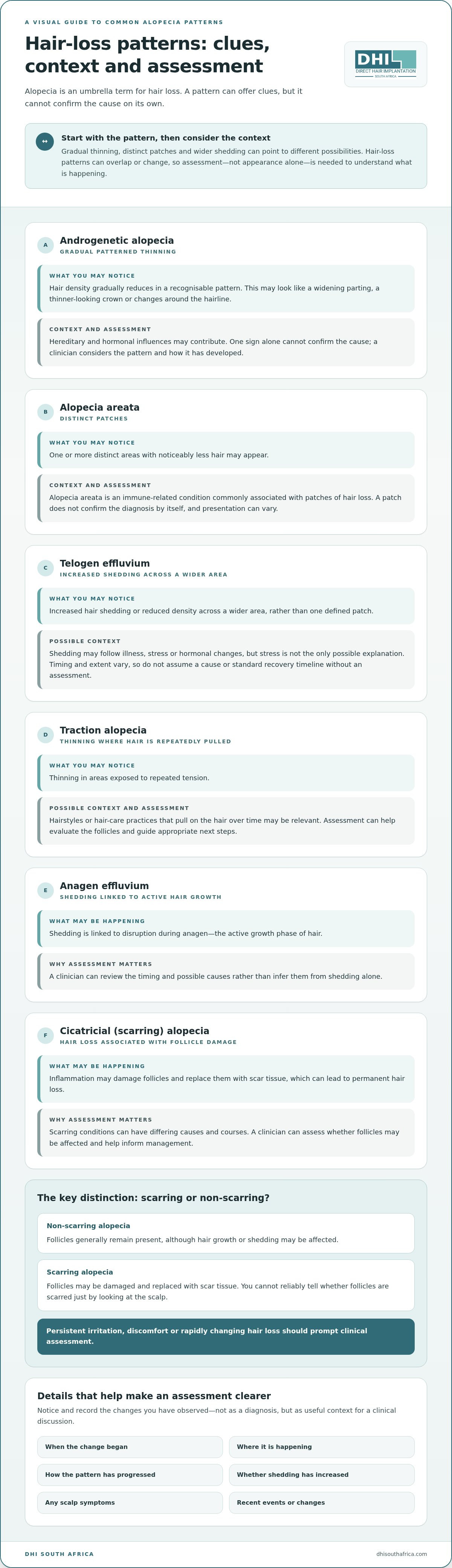
Patterned thinning means hair gradually becomes less dense in a recognisable area, such as around the parting or hairline. Patchy loss describes one or more distinct areas with noticeably less hair. Diffuse shedding refers to increased hair fall or reduced density across a wider area of the scalp, rather than a single defined patch.
Clinicians consider when the change began, where it appears and how it has progressed. These details help build a clearer picture, but patterns can overlap or change over time. A particular appearance isn’t proof of one specific cause.
Scarring and non-scarring alopecia: the central distinction
In non-scarring alopecia, follicles generally remain present, although hair growth or shedding may be affected. In scarring alopecia, inflammation may damage follicles and replace them with scar tissue, which can lead to permanent hair loss. This distinction matters because the condition affecting the follicles can shape the appropriate next steps.
You can’t reliably tell whether follicles are scarred just by looking at your scalp. Persistent irritation, discomfort or rapidly changing hair loss should prompt clinical assessment. An individual evaluation can clarify the likely diagnosis and help guide decisions before choosing a treatment or restorative option.
Common non-scarring alopecia types and how they can look different
These common forms can affect the scalp in different ways, but appearance is only one part of understanding the cause. Patterned thinning, distinct patches and widespread shedding can offer clues, yet similar changes may have different explanations. They’re useful descriptions to discuss with a clinician, not diagnoses to make from appearance alone.
Patterned thinning tends to develop gradually, alopecia areata is often associated with distinct patches, and telogen effluvium usually involves increased shedding across a wider area. The way hair loss appears can vary, and more than one factor may be involved.
Androgenetic alopecia and gradual patterned thinning
Androgenetic alopecia, also called male or female pattern hair loss, is a gradual reduction in hair density that follows a pattern. You might notice a widening parting, a thinner-looking crown or changes around the hairline, but one sign alone can’t confirm the cause. Hereditary and hormonal influences may contribute. For gender-specific context, read this female hair-loss guide.
Alopecia areata and telogen effluvium
Alopecia areata is an immune-related condition commonly associated with one or more distinct patches of hair loss. Its presentation can vary, so a patch doesn’t confirm the diagnosis by itself.
Telogen effluvium describes increased shedding that may be noticeable across a wider area rather than in a defined patch. It can follow a trigger such as illness, stress or hormonal changes, although stress isn’t the only possible explanation. The timing and extent of shedding vary, so don’t assume a cause or a standard recovery timeline without an assessment.
If you’re unsure which description fits, note where the change is happening, whether shedding has increased and how the pattern has evolved. A clinician can consider these details alongside your history to help identify the cause and discuss appropriate next steps. Explore DHI South Africa’s hair-loss treatment information to learn about options that may be considered following an individual assessment.
Traction, anagen, and scarring alopecia: less alike than they sound
These forms differ in how hair loss develops and what may be happening to the follicles. The pattern and surrounding context can help you explain what you’ve noticed, but they can’t confirm the cause. A clinician considers these clues alongside your individual history and scalp assessment.
Traction alopecia and anagen effluvium
Traction alopecia is associated with repeated pulling or tension on the hair. If the same areas are regularly under strain, thinning may appear where that tension is concentrated. The pattern can be useful to mention during an assessment, but it doesn’t confirm the diagnosis by itself.
Anagen effluvium describes shedding associated with disruption to the anagen phase, the active period of hair growth. It differs from traction-related loss, and the term alone doesn’t explain why shedding is happening. A clinician can review the timing, health history and possible triggers to understand the context.
Cicatricial alopecia and follicle damage
Cicatricial alopecia is another name for scarring alopecia. In this group of conditions, inflammation may damage hair follicles and lead to scar tissue. Causes, progression and management vary, and appearance alone can’t reliably show whether scarring is present.
If hair loss is changing quickly or you have persistent scalp irritation, seek a clinical assessment rather than trying to identify follicle damage yourself. Understanding the condition and follicle health helps guide suitable next steps. A personalised evaluation can clarify whether medical management or a restorative option is appropriate for your circumstances.
How to compare alopecia signs without self-diagnosing
Noticing changes can leave you wondering which of the different types of alopecia explained so far might fit. Your observations can make a clinical discussion more useful, but they can’t confirm a diagnosis. Hair loss may have several possible explanations, and assessment considers your history alongside what can be seen on the scalp.
What to record before a hair-loss assessment
Before your appointment, make a few notes. Keep them factual rather than trying to label the condition:
When it began: Note when you first noticed a change and whether it appeared suddenly or gradually.
Where it is happening: Record whether loss seems patchy, patterned or widespread, and whether the affected area is changing.
Shedding changes: Mention whether you’re seeing more hair fall than usual, and when you first noticed it.
Scalp symptoms: Describe any irritation, tenderness or other symptoms, including when they occur.
Relevant events or changes: Note recent health changes, medication changes and hair-care practices that may be useful to discuss.
If you take photographs over time, try to keep the lighting, angle and hairstyle similar. They may help show how the appearance has changed, but photographs aren’t a diagnostic substitute.
Why similar symptoms can have different explanations
Visible thinning or increased shedding can occur for different reasons. A similar-looking change doesn’t necessarily mean the underlying cause is the same, and the pattern may not tell the whole story. A clinician can consider your account of when the change began and how it has progressed alongside a scalp examination. Any further assessment depends on the individual situation.
Seek prompt clinical assessment for sudden or progressive hair loss, pain, scalp inflammation or other changes that concern you. This doesn’t mean a particular diagnosis is certain; it helps ensure the change is considered in context. You can read more about hair-loss information and explore hair-loss treatment options once the cause has been assessed. Diagnosis comes first, so management can be considered in light of your circumstances.
Arrange a hair-loss assessment
Choosing the next step after understanding your alopecia type
Learning about the different types of alopecia explained in this guide can help you describe what you’ve noticed, but it doesn’t determine which treatment is right for you. That depends on the diagnosis, the condition of the hair follicles, your goals and your personal circumstances. The next step is to understand the cause before weighing up possible approaches.
Some options aim to medically manage an underlying cause; others focus on cosmetic appearance or hair restoration. These approaches serve different purposes, and they aren’t interchangeable. A personalised assessment helps clarify which options are relevant to your situation, rather than relying on a product or procedure that may not address the cause.
When hair restoration may enter the discussion
A specialist may discuss restoration only after assessing the pattern and cause of hair loss, as well as follicle condition and individual suitability. Direct Hair Implantation (DHI) is one hair-restoration option, but it isn’t a universal response to alopecia. The type of loss and your assessment findings matter. Explore the hair transplant information for an overview of this approach.
What an individualised consultation can clarify
An assessment can help clarify the likely type of hair loss and establish whether medical management, a restorative option or another approach is worth discussing. Your goals also matter: you may be seeking to address the underlying cause, change the appearance of thinning or understand what options are appropriate. The treatment overview introduces the range of approaches available, while an individual evaluation helps put them into context.
There’s no need to decide on a treatment before you understand the diagnosis. A considered discussion can help you make an informed next-step decision without assuming a particular outcome.
Explore a personalised hair-loss assessment
Take the next step with a clearer understanding
Alopecia describes a range of hair-loss conditions, not one diagnosis. Patterned thinning, distinct patches and widespread shedding can offer useful clues, but they can’t reveal the cause on their own. Understanding the different types of alopecia explained in this guide is a starting point, not a substitute for individual assessment.
The right next step depends on the diagnosis, follicle condition, your goals and personal circumstances. Medical management may address an underlying cause, whilst cosmetic or restorative options serve different purposes. Hair restoration isn’t suitable for every type of alopecia, so treatment decisions should follow a professional evaluation.
DHI South Africa provides hair-loss diagnosis and specialist consultations. An individual assessment can help clarify what may be causing your hair loss and which medical or restorative approaches are relevant to you, without assuming a particular outcome.
Explore a personalised hair-loss assessment
Clarity comes first. With the right guidance, you can consider your next steps with greater confidence.
Frequently Asked Questions
What are the main types of alopecia?
The main types include androgenetic alopecia, alopecia areata, telogen effluvium, traction alopecia, anagen effluvium and scarring, or cicatricial, alopecia. They may cause gradual patterned thinning, distinct patches or more widespread shedding, and differ in their possible causes and effects on follicles. This guide to the different types of alopecia explained how these patterns can vary, but a clinical assessment is needed to identify the cause in an individual case.
Is alopecia always permanent?
No, alopecia isn’t always permanent. Some forms, such as certain episodes of diffuse shedding, may be temporary, whilst other conditions can cause ongoing or progressive hair loss. In scarring alopecia, follicle damage may lead to permanent loss in affected areas. The outlook depends on the specific diagnosis and follicle condition, so it’s best not to assume that hair will or won’t regrow based on appearance alone. An assessment can clarify the likely cause and appropriate next steps.
Can stress cause alopecia?
Stress may be one possible trigger for telogen effluvium, a form of increased shedding that can appear across the scalp. It isn’t the only possible trigger, and stress doesn’t explain every type of hair loss. Illness, hormonal changes and other circumstances may also be relevant. If shedding follows a stressful period, note when it began and any other changes in your health or routine, then discuss them during an assessment rather than assuming stress is the cause.
How can I tell whether I have alopecia areata or telogen effluvium?
Alopecia areata is commonly associated with distinct patches of hair loss, whilst telogen effluvium more often involves increased shedding across a wider area. These patterns can offer clues, but they can’t confirm the diagnosis, and presentation may vary. Make a note of when the change began, where you notice it and whether shedding has increased. A clinician can consider these details alongside your history and scalp examination to help distinguish possible causes.
What happens if alopecia is left untreated?
The effects depend on the type and cause. Some hair loss may settle, whilst other forms can continue or change over time. With scarring alopecia, follicle damage may become permanent, so assessment is important if loss is progressing or the scalp remains irritated. Avoid delaying care because you’re unsure which category fits. A clinical diagnosis can clarify what may be happening and whether management of an underlying cause or another approach should be considered.
Can alopecia affect women as well as men?
Yes. Alopecia affects women as well as men, although the pattern and possible cause can differ between individuals. Women may notice gradual changes such as reduced density or a widening parting, but these signs don’t identify a diagnosis by themselves. Patchy loss and increased shedding can also occur. If you’re concerned about a change, record when it started and how it has developed, then discuss it with a clinician for an individual assessment.
Is a hair transplant suitable for every type of alopecia?
No. A hair transplant isn’t suitable for every type of alopecia, and it shouldn’t be treated as a universal response to hair loss. Suitability depends on the diagnosis, the condition of the follicles, the pattern of loss, your goals and personal circumstances. DHI South Africa offers hair-loss diagnosis and specialist consultations to help clarify relevant options. Direct Hair Implantation may be discussed when appropriate, but treatment decisions follow individual assessment and no outcome can be assumed.


Comments