

DHI Hair Transplant Recovery Time and Healing Stages

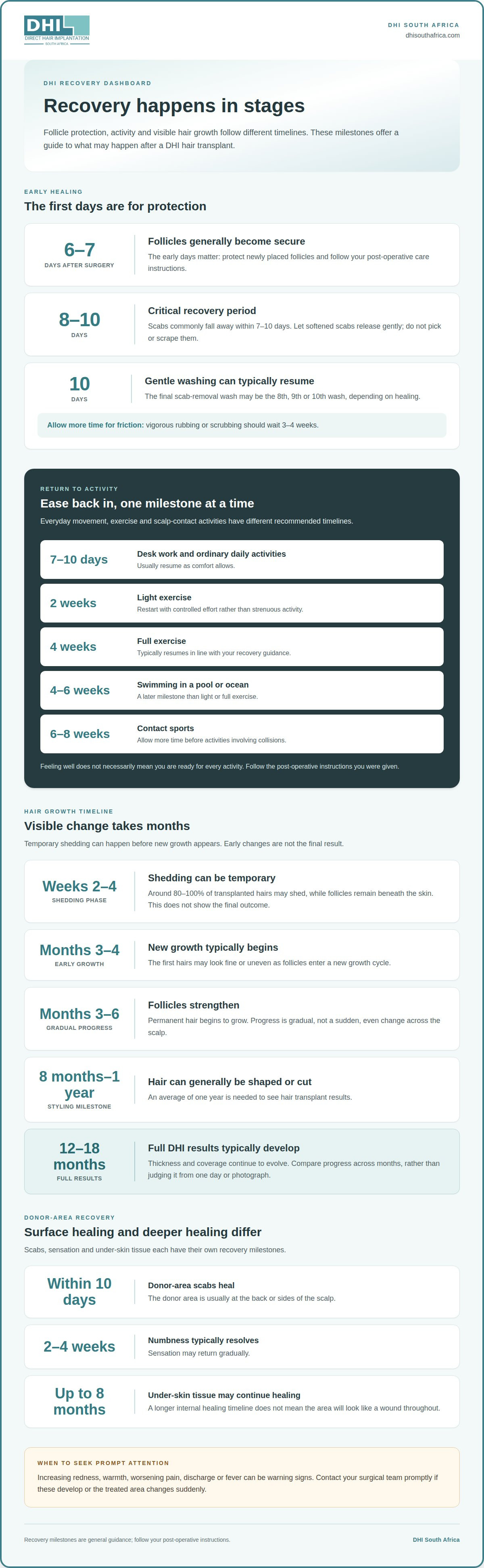
The first week after a DHI hair transplant is crucial for protecting newly placed follicles. Grafts generally become secure 6-7 days after surgery, while the critical recovery period lasts about 8-10 days. The DHI hair transplant healing process then continues over months: new growth typically begins around months 3 to 4, and full results usually develop 12 to 18 months after the procedure.
It’s natural to watch your scalp closely and wonder whether redness, scabs or shedding mean something is wrong. These changes can be part of recovery, and understanding the stages can help you know what to expect without judging the final outcome too soon.
This guide covers early aftercare, healing in the donor area, changes to activity limits and why grafts need protection in the first days. It also explains when hair growth may appear and how the timeline progresses towards fuller results.
Table of Contents
Expected time to see final results
The DHI hair transplant healing process unfolds over months, not days. Transplanted hairs commonly shed during weeks 2 to 4, while follicles remain beneath the skin. This temporary shedding, often called shock loss, can affect 80 to 100% of transplanted hairs. Shedding at this stage doesn’t show what your final result will look like.
New growth typically begins around months 3 to 4. At month 3, the first visible hairs may appear in 10 to 20% of implanted follicular units. Those early hairs can look fine or uneven as follicles enter a new growth cycle. Between 3 and 6 months, transplanted follicles strengthen and permanent hair begins to grow. Progress is gradual, rather than a sudden, even change across the scalp.
Visible density takes longer to develop. An average of one year is needed to see hair transplant results, while full DHI results typically develop 12 to 18 months after surgery. The distinction matters: early growth is not the same as the final appearance. Hair thickness and coverage continue to evolve, so compare progress across months rather than judging it from one day or photograph.
Scabs usually fall away 7 to 10 days after the procedure. The final scab-removal wash may take place on the 8th, 9th or 10th wash, depending on healing. Follow the washing instructions and allow softened scabs to release gently. Avoid picking or scraping them, which can irritate healing skin. Normal gentle washing can typically resume after 10 days, but vigorous rubbing or scrubbing should wait 3 to 4 weeks. For relevant local context, read this South African hair transplant guidance.
Redness typically fades within 2 to 4 weeks, before final growth appears. From 8 months to 1 year, hair can generally be shaped, lengthened or cut. Before-and-after photographs are taken at least 1-2 years after transplantation, allowing growth time to mature. Use consistent lighting and angles when comparing your own photographs; subtle changes can be difficult to notice between check-ins.
Infection or another complication needs prompt attention. Warning signs include increasing redness, warmth, worsening pain, discharge or fever, rather than steady improvement. Contact your surgical team promptly if these symptoms develop or the treated area changes suddenly.
Donor-area healing
The donor area is where follicles are taken, usually from the back or sides of the scalp. After DHI, scabs in this area heal within 10 days post-surgery. That visible change is an early milestone, not proof that every layer beneath the skin has finished recovering. The surface can look settled while deeper tissue continues to heal.
Numbness in the donor area typically resolves within 2 to 4 weeks for most DHI patients. Sensation may return gradually rather than changing all at once. Complete under-skin tissue healing can take up to 8 months after surgery. These timelines describe different stages: scabs relate to surface healing, numbness to sensation, and the longer period to deeper tissue recovery.
Those stages help explain why “healed” can mean different things. At 10 days, donor-area scabs may have healed; at 2 to 4 weeks, numbness typically resolves; beneath the skin, tissue healing can continue for months. The longer timeline doesn’t mean the area will look like a wound throughout that period. It refers to healing under the surface.
How does DHI healing compare with FUE hair transplant recovery? DHI describes direct implantation, while FUE refers to follicular unit extraction. The terms describe different parts of the procedure, not different recovery schedules. Consider the donor and recipient areas separately instead of assuming one technique means faster overall recovery.
The stages after DHI include early surface healing, gradual return of sensation, and deeper tissue repair. During the first 10 days, scabs in the donor area heal. Over the following 2 to 4 weeks, numbness typically resolves. Under-skin tissue healing may continue for up to 8 months. These milestones are useful reference points, but they describe separate processes, not a single finish line.
Keep the donor area protected during the early healing period and follow the postoperative instructions provided for washing and care. Avoid picking at scabs, as disturbing healing skin can interfere with its recovery. If you’re planning a procedure, understanding hair transplant care and recovery can help you prepare for the different healing stages.
Exercise and activity restrictions
Returning to movement after a DHI hair transplant is gradual, not an all-at-once decision. Desk work and ordinary daily activities can usually resume after 7 to 10 days. Light exercise typically restarts at 2 weeks, while full exercise can typically resume at 4 weeks. These stages give healing skin time before more strenuous movement.
Exercise can raise your heart rate and cause sweating, while some activities put pressure on the scalp or risk accidental contact. A gentle walk and a demanding gym session are not equivalent. Follow the staged timeline rather than assuming that feeling well means you’re ready for every workout. Your post-operative instructions remain important throughout your return to activity.
First 7 to 10 days: Prioritise rest and routine daily activities, such as desk work, as comfort allows.
At 2 weeks: Light exercise can typically resume. Keep the effort controlled rather than jumping straight into a strenuous session.
At 4 weeks: Full exercise can typically resume, following the recovery guidance you received.
At 4 to 6 weeks: Swimming in a pool or ocean can typically resume.
At 6 to 8 weeks: Contact sports can typically resume, allowing more time before activities involving collisions.
Swimming and contact sport have separate timelines because they bring different demands. Pool or ocean swimming is generally placed at 4 to 6 weeks, whereas contact sports are placed at 6 to 8 weeks. Don’t use the earlier swimming milestone to infer that a collision-risk activity is also suitable. Each activity has its own point in the recovery schedule.
Aftercare guidance also advises avoiding exercise and swimming after the final wash. Treat the final wash as a washing milestone, not as permission to return to sport. The staged activity timings remain distinct: light exercise at 2 weeks, full exercise at 4 weeks, swimming at 4 to 6 weeks, and contact sports at 6 to 8 weeks.
Plan your return around what you actually do. A desk-based working day after 7 to 10 days differs from lifting weights, swimming laps or playing rugby. If your routine combines activities, follow the later timeline for the most demanding element. For example, returning to desk work doesn’t mean you’re ready for contact training.
Protect your scalp by returning to activity gradually. Stop if exercise causes discomfort or pulls at the treated area, and follow the separate recovery guidance for swimming and contact sports. These practical limits can help you plan work, training and social activities during DHI recovery.
First wash and early postoperative care
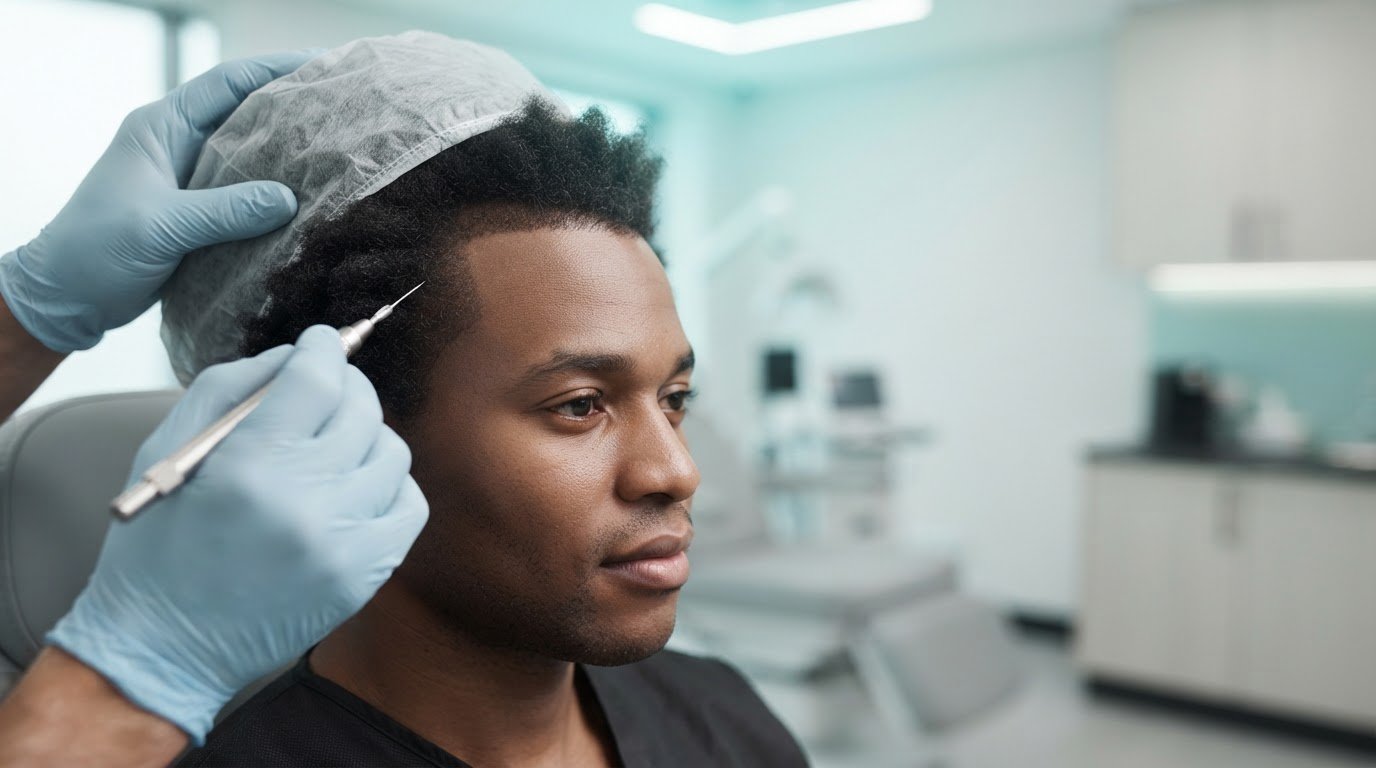
The first wash is a controlled part of early care, not an invitation to scrub. Wound care and the first wash are performed one or two days after surgery. Gentle washing typically starts around day 3 to 5, following the specific instructions you receive. These timings describe different stages: an initial wash, then careful washing as the scalp heals.
During the first night, sleep with your head elevated at 45 degrees. For ten days after surgery, sleeping on your back helps avoid disturbing the grafts. A forehead band worn for four days can help manage swelling. Keep these measures distinct: the band has a shorter recommended period, while back-sleeping continues through the early graft-protection stage.
Washing and scab care should remain gentle. Follow the prescribed routine rather than loosening scabs with fingernails or rubbing. The instructions describe starting foam before the fifth wash to hydrate the skin and soften scabs. Scabs should be removed by the 10th wash at the latest, with the final scab-removal wash taking place on the 8th, 9th or 10th wash, depending on healing.
First wash: Wound care and washing take place one or two days after surgery.
Gentle washing: Begin around day 3 to 5, according to your aftercare routine.
Foam: Start before the fifth wash to soften scabs and hydrate skin.
Scab removal: The final wash is the 8th, 9th or 10th wash, depending on healing.
After ten days: Normal gentle hair washing can typically resume.
Even after normal gentle washing resumes at day 10, vigorous rubbing or scrubbing should wait until 3 to 4 weeks after surgery. That distinction matters: water and gentle cleansing are not the same as friction against healing skin. Avoid pulling at scabs, and let the washing routine loosen them gradually.
Follow-up visits assess your scalp and healing, while medication instructions are part of your individual post-operative plan. Use medicines only as directed, and raise concerns at follow-up rather than changing doses yourself. The first month remains an important period for following aftercare instructions, including guidance on washing, sleeping and protecting the treated area.
When washing, use light, controlled movements, especially around the implanted area. If your procedure-specific instructions differ from a general timeline, follow the instructions you were given. Careful washing through the first month helps protect healing skin and allows scabs to release naturally.
When transplanted grafts become secure
Transplanted grafts are generally secure 6-7 days after surgery. The critical recovery period lasts about 8-10 days. These milestones explain why the first week needs careful handling, even when the scalp looks settled. “Secure” describes graft stability, not the end of healing or permission to resume every activity.
During implantation, each follicular unit sits in a small recipient site. As healing progresses, surrounding tissue helps hold it in place. The first days matter because rubbing, picking or accidental knocks can disturb the treated area. By days 6-7, grafts are generally secure, but gentle care remains sensible through the critical 8-10-day period.
Think of security as a gradual change, not a switch that flips overnight. A graft may be more vulnerable early on than after several days of healing. The 6-7-day milestone gives a useful guide, while the broader 8-10-day window highlights why restraint still matters after that point.
Days 1 to 5: Treat the implanted area gently and avoid touching or rubbing it unnecessarily.
Days 6-7: Grafts are generally secure, though healing continues.
Through days 8-10: Regard this as the critical recovery period and continue careful aftercare.
A loose hair or small scab can be concerning, but appearance alone can’t show whether a follicle remains in place. Don’t test graft security by tugging, scraping or repeatedly inspecting your scalp. Follow your washing instructions and let scabs release through the recommended gentle routine.
Security also doesn’t mean the scalp is ready for friction or impact. The first-week graft milestone is separate from later decisions about exercise, swimming or contact sports. For example, reaching day 7 doesn’t mean contact training is appropriate. Each activity has its own recovery timing, so don’t use graft security as a substitute for those limits.
The clearest takeaway is practical: protect the recipient area most carefully during the first days, then continue gentle aftercare through the 8-10-day critical period. At 6-7 days, grafts are generally secure, but “secure” is not the same as fully healed. Avoid manipulating the scalp to check progress; careful observation and adherence to instructions are safer than testing the follicles yourself.
DHI graft survival rates are stated as 90 to 95%. The DHI hair transplant page describes 10 - 15 days after surgery as the period when wounds heal and scabs fall off.
After a DHI hair transplant, patients are advised to sleep on their backs for ten days to avoid disturbing the grafts.
DHI South Africa: Direct Hair Implantation (DHI)
DHI South Africa offers Direct Hair Implantation (DHI) for people considering surgical hair restoration and seeking clear information about recovery. Understanding the healing stages can help you discuss aftercare, graft security and the gradual timeline for new growth as part of your treatment planning.
DHI South Africa also offers GFC Treatment, Regenera Activa and PRP Hair Loss Treatment as non-surgical options. These are distinct from hair transplantation and provide different treatment avenues to discuss in relation to your hair concerns.
A conversation about your goals and the recovery period can help you understand what to expect from DHI and its aftercare. For guidance on the next step, contact DHI South Africa.
Make your next step an informed one
Recovery planning is also a chance to consider how treatment fits your everyday life. Think about your work, exercise routine, support at home and the time you can set aside for aftercare. These practical details can help you prepare for the experience, not just the procedure itself.
Understanding the DHI hair transplant healing process gives you a grounded starting point for discussing your goals and concerns. Bring the questions that matter to you, whether they’re about aftercare, returning to normal routines or what to expect as your hair changes. Your priorities can help shape a conversation about suitable treatment options and next steps.
Taking time to understand your choices is part of making a considered decision. Contact DHI South Africa to discuss your hair restoration needs and explore a way forward that feels right for you.
Move ahead with clarity, at a pace that feels comfortable.
Frequently Asked Questions
What is the DHI Hair Transplant Recovery Time?
Recovery has an early phase and a longer period of hair development, so there isn’t one finish date. Consider practical recovery separately from when you can assess the cosmetic result. For planning, think about when you’ll feel comfortable returning to your usual routine and when you can attend follow-up care. Keeping these expectations separate can make the process easier to plan.
What should I avoid during DHI recovery?
Avoid testing the treated area by tugging at hairs, lifting scabs or repeatedly touching your scalp. These actions add friction without showing whether healing is progressing well. Don’t change prescribed aftercare or medication based on online advice. If a new symptom worries you, note when it began and how it changes, then share those details with your treating team.
When do transplanted hairs start growing after DHI?
New growth commonly starts around months 3 to 4, although the first changes may be subtle. A useful way to assess progress is to take photographs from the same angle and in similar lighting, then compare them over time. Avoid judging growth from daily mirror checks, which make gradual changes difficult to recognise. The photographs can also help you describe your observations during follow-up.
What is the day-by-day recovery timeline after DHI hair transplantation?
The first days focus on protecting the treated scalp and following the aftercare routine. Swelling can peak on days 2 to 4; later, scabs loosen as the skin heals. Rather than treating each day as a separate test, keep a simple daily note of symptoms and care completed. This gives you a clearer record if you need to discuss a change with your treating team.
How should you wash and care for the scalp after a DHI hair transplant?
Follow the washing sequence provided for your procedure, and keep each wash gentle. Before washing, prepare the recommended products and clean supplies so you don’t have to search for them mid-routine. Let water and prescribed care soften scabs, and don’t pick at them. If an instruction is unclear, ask your treating team to explain that step rather than improvising.
How long do redness, scabbing, swelling, and tenderness last after DHI?
Redness often fades over 2 to 4 weeks, scabs usually lift within 7 to 10 days, and facial swelling may last 3-4 days. Tenderness varies, so track whether it eases or worsens rather than relying on a single check. A brief daily note can help distinguish gradual improvement from a new change that needs medical attention.
When do transplanted hairs shed, and when does new hair growth begin after DHI?
Shedding commonly occurs during weeks 2 to 4, with new growth generally beginning around months 3 to 4. These changes happen at different points, so record what you notice without pulling at hairs or trying to inspect individual follicles. Consistent photographs provide a more useful comparison than memory, especially when early growth looks fine or uneven.
When can you return to work, exercise, swimming, and wearing hats after DHI?
Desk work and daily activities generally resume after 7 to 10 days; light exercise can return at 2 weeks, and full exercise at 4 weeks. Swimming usually waits until 4 to 6 weeks, while contact sports take 6 to 8 weeks. For hats, avoid anything that presses on or rubs the treated area, and follow your specific aftercare guidance on when to wear one.

Comments