%20(1).jpg)
%20(1).jpg)
Does Scalp Micropigmentation Look Real? What Makes SMP Look Natural

What makes realistic scalp micropigmentation look convincing: the pigment itself, or how carefully it’s designed? If you’re concerned the result might look like a row of dots rather than closely cropped follicles, it’s a fair question: does scalp micropigmentation look real? It can look convincing when the pigment placement, shade and hairline are planned to suit your features. However, SMP creates the appearance of follicles, not real hair or its texture.
It’s understandable to feel unsure when freshly completed or heavily edited photos make results difficult to judge. What matters is how the treatment looks once healed and how naturally the design works with your existing hair, skin tone and preferred style.
This article explains what SMP can realistically imitate, what can make it more noticeable, and how to assess results. You’ll learn why hairline shape, skin contrast and gradual density matter, what to look for in healed images, and how SMP differs from hair transplantation. A personalised suitability assessment can help you discuss your goals and whether a visual treatment is the right fit.
Table of Contents
Does scalp micropigmentation look real? What it can, and cannot, imitate
How pigment, hairline design and skin contrast shape realistic SMP
SMP versus a hair transplant: which creates the look you want?
How to judge whether SMP results look natural before deciding
What to expect from an SMP suitability assessment with DHI South Africa
Does scalp micropigmentation look real? What it can, and cannot, imitate
Scalp micropigmentation (SMP) can look convincing when its design suits your scalp, existing hair and preferred style. It uses carefully placed pigment to create the visual impression of follicle openings. It doesn’t grow hair, move follicles or reproduce the length, movement and texture of real hair.
So, does scalp micropigmentation look real? The answer depends partly on what you expect it to look like. For a close-shaved style, small pigment impressions can suggest the appearance of short hair follicles across the scalp. If you keep your hair longer, SMP may create a sense of added visual density among existing hairs, but it won’t fill in with strands or behave like them.
What does scalp micropigmentation actually recreate?
SMP recreates the appearance of follicles, not the follicles themselves. The effect often reads most naturally with closely shaved hair, where the visible pigment pattern and surrounding stubble can work together to suggest a uniform, cropped look. With longer hair, pigment may provide contrast against areas of thinning, but it can’t create physical volume or hair texture.
A useful distinction is that SMP is a pigment-based cosmetic treatment, while hair transplantation relocates a person’s own follicles to another area of the scalp. These treatments create different results: one provides a visual impression, while the other can produce growing hair.
Realism is personal. Your skin tone, hair colour, the amount and pattern of existing hair, and the way you style it all affect how the pigment is perceived. A design that looks balanced with a close shave may not suit someone hoping for the appearance of longer, fuller hair.
When can SMP look less convincing?
An overly defined hairline can look out of place if it doesn’t suit your age, facial features or natural hair pattern. That isn’t inevitable. The hairline is a design choice, not simply a shape to draw across the forehead, and a subtle transition may feel more in keeping with your overall appearance.
Contrast matters, too. If the pigment appears markedly different from your surrounding hair or scalp, the pattern may stand out rather than blend visually. Placement and spacing also influence whether the result reads as a soft follicle effect or a series of distinct dots.
Look beyond fresh-treatment photographs. Images taken immediately after treatment may not show the settled, healed appearance, so they aren’t enough on their own to judge how natural the result looks. Consider healed results and whether the hairline and pigment transition sit comfortably beside existing hair. SMP is most convincing when the design reflects your real-life features and styling expectations, not an idealised image.
How pigment, hairline design and skin contrast shape realistic SMP
A natural-looking result comes from the relationship between several design choices, not pigment shade alone. Placement, spacing and colour all influence whether the marks read as a coherent follicle-like pattern that sits comfortably with your features and existing hair.
Natural-looking SMP depends on coordinated pigment placement, suitable spacing and shade, and a hairline designed for the individual. The right balance is personal: a pattern that appears subtle on one scalp may stand out on another. The Cleveland Clinic’s guide to scalp micropigmentation offers further medical information about the treatment and what it involves.
Why do pigment shade and spacing matter?
Each pigment impression needs to work with the marks around it and with any existing hair. If dots appear too isolated, too uniform or too distinct from nearby hair, the eye may register separate marks instead of an overall follicle effect. Placement and spacing help shape that impression, so there isn’t one pattern that suits everyone.
Shade selection needs to account for both your scalp and hair appearance. Choosing a tone simply because it matches your hair colour may not create the most balanced effect against your skin. The aim is to consider the whole area together, rather than apply a universal colour rule.
Perception can shift with the setting. Bright or direct lighting may make contrast more noticeable, while softer light or greater viewing distance can make individual impressions less distinct. Hairstyle matters too: closely shaved hair presents a different visual context from longer hair around areas of thinning.
What makes an SMP hairline look believable?
A hairline frames the face, so its shape can influence whether the overall design feels at home on you. An outline that’s very sharp or regular may create a different impression from a softer, more individual design. No single shape or position suits everyone.
Facial proportions, age, existing hair and the style you want to maintain should all inform the plan. For example, a design intended to work with a close-shaved look may need to be considered differently from one that sits alongside existing hair. During a personalised assessment, DHI South Africa’s medical professionals can discuss these factors with you and consider how the design relates to your preferred appearance.
If you’re weighing up your goals, you can explore SMP treatment information as a starting point for that conversation.
SMP versus a hair transplant: which creates the look you want?
A useful way to compare SMP and hair transplantation is to start with the result you want. SMP creates a pigment-based visual effect; transplantation moves your own follicles, which can grow hair in the treated area. Neither approach is universally better. Your goals, existing hair and individual suitability matter.
When might SMP match someone’s preferred appearance?
If you like a closely shaved look, SMP may suit your preference by creating the visual impression of short follicles without producing hair growth. It may also be considered for selected thinning or scalp-appearance concerns, where pigment can provide visual density around existing hair. The ISHRS guide to scalp micropigmentation outlines further uses of the treatment. Explore the hair-restoration treatment options to understand how different approaches address different goals.
How is SMP different from transplanted hair?
A transplant moves follicles from one area of the scalp to another, with the aim that they grow there. SMP places pigment in the scalp to simulate a follicle-like appearance. That difference affects more than the immediate look: one option involves growing hair that can be styled, while the other relies on a designed pigment effect. Each has distinct suitability and ongoing care considerations, so a personalised clinical assessment is important.
If you’re asking, “does scalp micropigmentation look real?”, consider whether you want a carefully designed shaved-hair effect or actual growing hair. For more detail on follicle-based restoration, read about hair transplantation with DHI. A consultation can help clarify which outcome better aligns with your expectations.
How to judge whether SMP results look natural before deciding
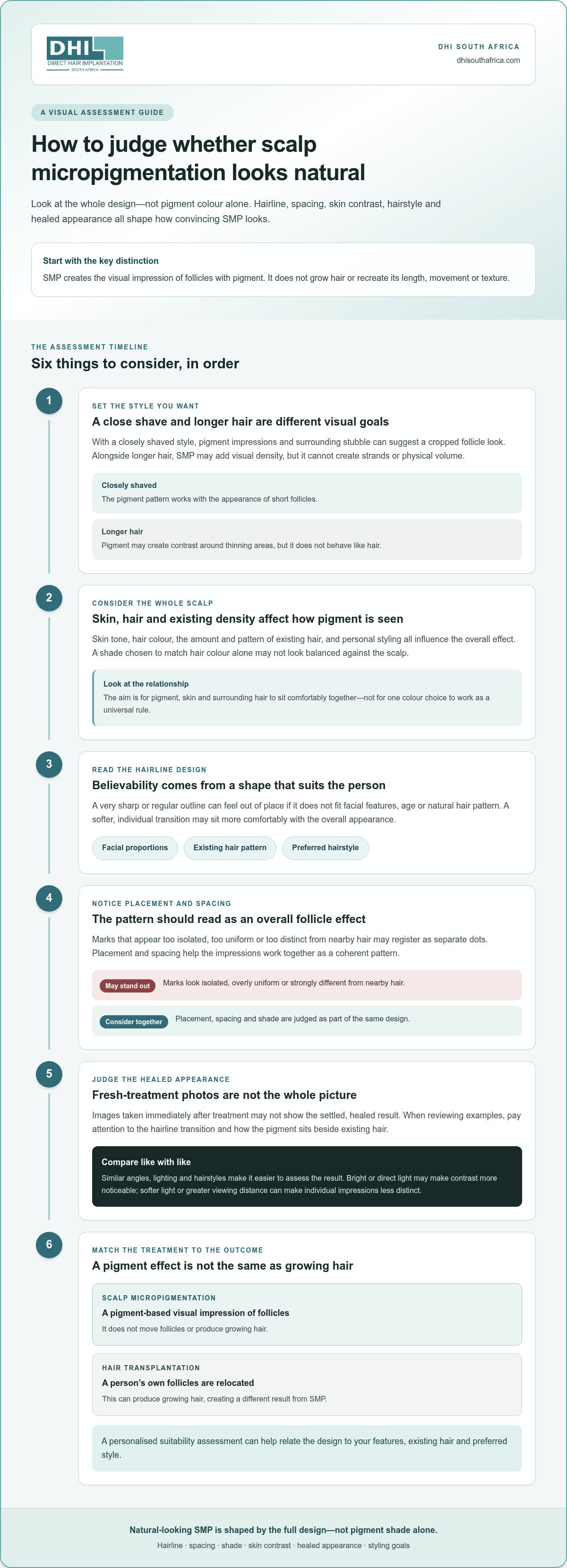
Photographs can help you understand the range of possible SMP designs, but one striking before-and-after image isn’t enough to predict how a result may look on you. To judge examples fairly, compare like with like and focus on the details that shape the overall impression.
What should you look for in SMP before-and-after photographs?
Use this checklist when reviewing examples:
Compare similar angles. A straight-on view can make a hairline look different from a view taken from above or from the side. Check whether the before and after show comparable perspectives.
Notice the lighting. Harsh light, shadows and different exposure can change how visible pigment appears. Similar lighting makes it easier to assess the result.
Check the hairstyle and surrounding hair. A close shave and longer existing hair create different contexts. Look for examples that reflect the style you expect to wear.
Study the hairline transition. Notice whether the edge appears balanced with the face and how pigment sits beside untreated areas or existing hair.
Look for consistent pigment placement. Ask whether the overall pattern appears cohesive, rather than focusing only on one close-up area.
Check the caption and treatment stage. The starting point and whether the photograph shows a healed result help you interpret what you’re seeing.
Healed results are more informative than images taken immediately after treatment, which may not represent the settled appearance. A useful comparison gives enough context to understand the person’s starting point, hairstyle and stage of treatment. DHI South Africa’s hair restoration results can serve as a visual reference, not a promise that your own outcome will look identical.
Which questions help clarify your expected result?
Use photographs to guide a conversation, not to make a decision by image alone. During a personalised assessment, consider asking:
How would the proposed design relate to my existing hair and the hairstyle I prefer?
How might the pigment appear under different lighting and at everyday viewing distances?
Which examples have a starting point and hair pattern most like mine, and are they healed results?
These questions help bring expectations into focus. A result viewed close-up on a screen can look different from one seen at a natural distance, so discuss both the fine details and the overall effect. If you’re wondering whether SMP could look natural for you, an individual assessment can consider your hair pattern, preferences and suitability, rather than relying on online images alone.
What to expect from an SMP suitability assessment with DHI South Africa
It’s reasonable to want a clearer idea of what SMP could look like before deciding whether to proceed. A personalised suitability assessment with DHI South Africa gives you space to discuss your hair-loss concerns, existing hair, preferred appearance and expectations with medical professionals. The aim is to consider your circumstances, not to assume that an online example will predict your result.
What happens during a personalised SMP discussion?
You can explain the style you’re hoping for, whether that’s a closely shaved appearance or a visual change alongside existing hair. You can also describe what concerns you most, such as the shape of a proposed hairline or how the design might sit with your current hair pattern.
The discussion should make SMP’s purpose clear: pigment creates a visual impression, not growing hair or real hair texture. A specialist can consider whether the look you have in mind is realistic for your individual features and clarify the distinction between the effect you want and what the treatment can provide. It’s a chance to raise questions and talk through expectations before deciding whether to proceed.
How can you take the next step with confidence?
Before an assessment, you may find it helpful to review hair-restoration treatment options and relevant patient results. Use examples to explain what appeals to you, while remembering that differences in starting point, hair pattern and personal features mean another person’s result can’t guarantee the same outcome for you.
If you’re wondering, “does scalp micropigmentation look real on me?”, the most useful answer comes from considering your goals and suitability individually. A personal discussion can help you understand whether SMP’s visual effect aligns with the appearance you want, and what questions to consider before deciding.
Choose a hair-restoration approach that fits your goals
So, does scalp micropigmentation look real? It can create a convincing follicle-like appearance when pigment placement, shade and hairline design suit the individual. But SMP creates a visual effect, not growing hair or real hair texture. A hair transplant, by contrast, relocates follicles with the aim of growing hair.
When reviewing results, look for healed examples with comparable hair patterns, hairstyles, angles and lighting. Notice how the hairline transitions and how the pigment sits beside existing hair. Online images can offer useful context, but they can’t tell you on their own whether SMP is right for your scalp, style or expectations.
DHI South Africa offers scalp micropigmentation. A personalised suitability assessment can help you discuss your concerns, preferred look and realistic expectations before considering next steps.
Take the time you need to understand your options. A considered decision starts with a clear picture of what you want and what each approach can offer. Request a personalised SMP suitability assessment with DHI South Africa.
Frequently Asked Questions
Does scalp micropigmentation look like real hair?
Scalp micropigmentation can create a convincing impression of closely cropped follicles, but it doesn’t look or behave exactly like real hair. The pigment forms small marks on the scalp; it doesn’t produce strands, texture, length or movement. The effect is often most suited to a close-shaved style. How natural it appears depends on how the design works with your skin, hair pattern and preferred look.
Can people tell if you have had scalp micropigmentation?
Some people may notice pigment, while others may read the overall effect as closely shaved hair. There’s no way to guarantee that SMP will go unnoticed. Its appearance can depend on the hairline design, shade and placement, as well as your hairstyle, lighting and viewing distance. A balanced result is designed around your features and existing hair, rather than relying on one standard pattern.
What makes scalp micropigmentation look unnatural?
SMP may look less natural if the hairline feels too sharp for your features, or if the pigment stands out against the surrounding scalp or hair. Dots that appear isolated or overly uniform can also draw attention to the pattern. Fresh-treatment photos may not show the healed appearance, so assess results with their treatment stage clearly explained and compare examples in similar lighting and hairstyles.
Does scalp micropigmentation look realistic on thinning hair?
SMP may create the appearance of added visual density amongst existing hairs, depending on your hair pattern and the look you want. It adds pigment, not strands, so it won’t increase physical hair volume or make hair longer. The contrast between scalp, pigment and surrounding hair affects the impression. A personalised suitability assessment can help clarify whether this visual approach aligns with your expectations.
Is scalp micropigmentation better than a hair transplant?
Neither option is better for everyone; they create different results. SMP uses pigment to simulate the appearance of follicles, while hair transplantation moves a person’s own follicles, with the aim of growing hair in the treated area. Consider whether you prefer a pigment-based look or growing hair, along with your styling expectations and individual suitability. A clinical assessment can help you compare options against your goals.
How do I know whether SMP will look natural on me?
You can’t reliably judge personal suitability from an online image alone. Look at healed examples with a similar hair pattern and intended style, and compare angles and lighting. Then discuss your existing hair, preferred hairline and expectations with a medical professional. DHI South Africa recommends a personalised suitability assessment, where the potential visual effect can be considered in the context of your features.
Can scalp micropigmentation be used with existing hair?
Yes, SMP may be used to create a visual impression of greater density alongside existing hair. The design needs to account for how the pigment will sit beside your hair and how the overall contrast appears. It won’t add strands or change the texture, length or movement of your hair. A personalised assessment can help determine whether the approach suits your hair pattern and preferred style.


Comments