

Side Effects of Long Term Minoxidil Use and What to Expect

The side effects of long term minoxidil use depend partly on whether you apply it to your scalp or take it by mouth. Topical minoxidil can cause dryness, itching, flaking or unwanted hair growth; irritation often settles within a few weeks. Oral minoxidil can also cause unwanted body-hair growth and, less commonly, symptoms affecting the heart or circulation. Minoxidil is a medicine used to support hair growth, and the topical and oral forms can have different risks.
It’s understandable to wonder whether a symptom is temporary or a reason to stop treatment. Mild scalp irritation may ease as your skin adjusts, but persistent or serious symptoms shouldn’t be dismissed as part of the process. Understanding how the side effects of long term minoxidil use differ by formulation can help you decide what to discuss with a healthcare professional. This article explains common effects, how long they may last, and what can happen when treatment stops.
Table of Contents
Common scalp irritation and unwanted hair growth
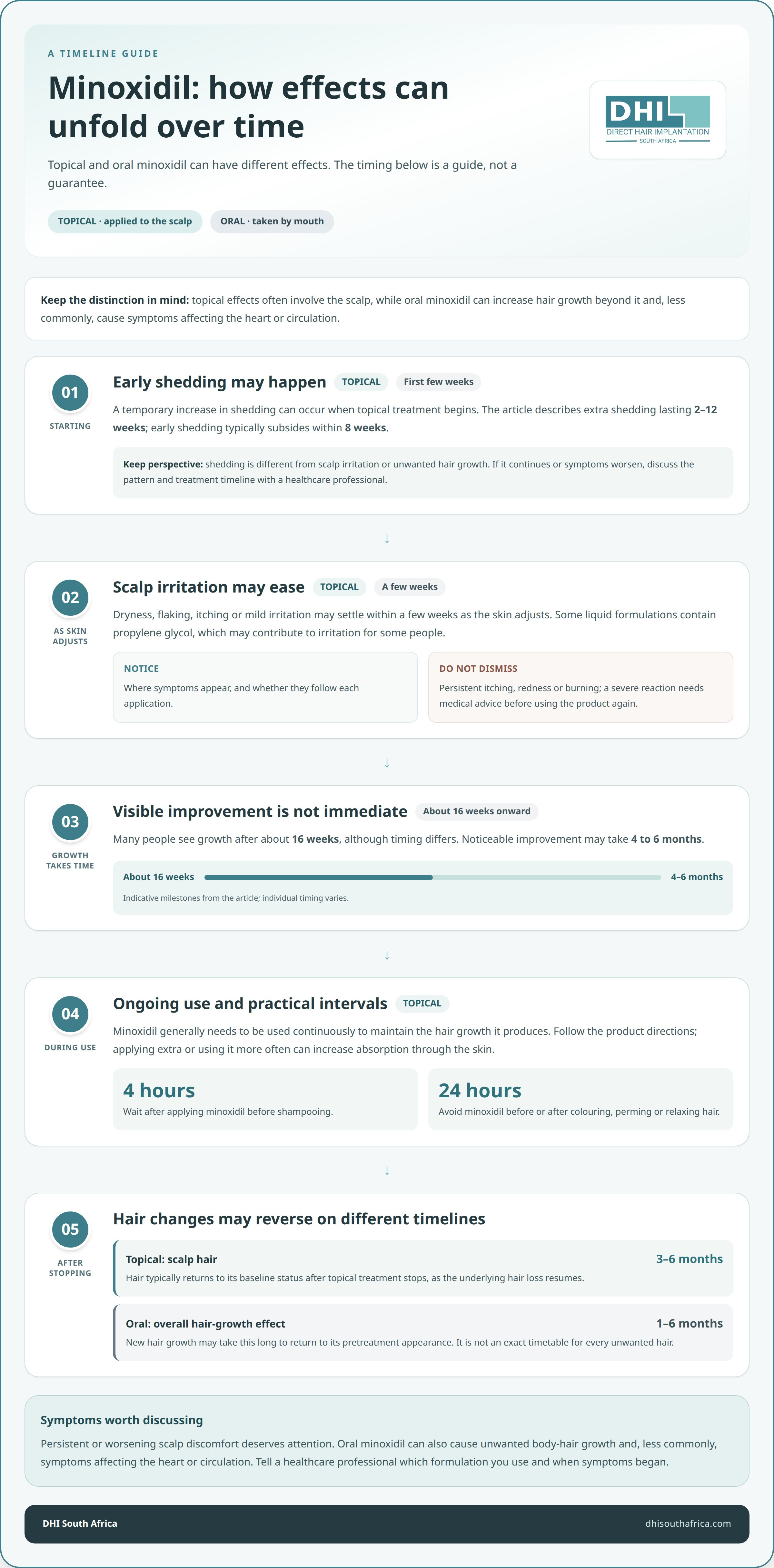
Topical minoxidil can cause scalp irritation, early shedding or unwanted facial hair. These effects aren’t always lasting: mild dryness often settles within a few weeks, and one study found facial hair growth in about 4% of women using topical treatment.
Scalp irritation and allergic reactions
Contact dermatitis is an inflamed skin reaction that can develop where topical minoxidil is applied. Redness, itching or burning may indicate irritation or an allergic reaction, rather than a normal part of hair growth. Symptoms can appear wherever the liquid touches your scalp, hairline or surrounding skin.
Damaged, irritated or sunburned scalp skin can absorb more minoxidil, increasing the chance of side effects. Conditions such as psoriasis or seborrhoeic dermatitis may also make redness and irritation more likely. Tell a doctor if itching, redness or burning persists after applying the medicine. If the reaction is severe, wash it off and seek medical advice before using it again.
Dryness, flakes and propylene glycol
Dryness and flaking can occur as the scalp responds to topical treatment. These symptoms may ease within a few weeks as the skin adjusts, but ongoing discomfort still deserves attention. Propylene glycol, an ingredient in some liquid formulations, may contribute to irritation for some people. The reaction can resemble dryness or contact dermatitis.
Notice whether symptoms follow each application and where they appear. Redness along the hairline, for example, may occur if liquid runs onto nearby skin. Follow the product directions, rather than applying extra minoxidil or using it more often, as this can increase absorption through the skin. Wash your hands after applying it to avoid transferring medicine to other areas.
Unwanted facial hair
Unwanted facial hair is a recognised effect of topical minoxidil, particularly if medicine reaches the face. In one study, about 4% of women using topical minoxidil on their heads experienced facial hair growth. Careful application to the scalp and handwashing afterwards can reduce unintended transfer.
Oral minoxidil can also increase hair growth beyond the scalp. About 80% of patients receiving it have reported increased growth, thickness and pigmentation of fine body hair; growth on the face, arms and back is a common side effect. The timing and extent can differ between people. Facial hair may lessen after treatment ends, but its duration varies, so persistent or distressing growth is worth discussing with a doctor.
Early shedding can occur during the first few weeks of topical treatment and typically subsides within eight weeks. This temporary change differs from scalp irritation or unwanted hair growth. Persistent burning, worsening redness or a rash shouldn’t be treated as a routine adjustment. Describe when symptoms began, which formulation you used and where they occur. These details help a doctor assess whether irritation, contact dermatitis or another cause is more likely.
Do minoxidil side effects go away?
Some effects ease, but the benefits of treatment can also fade after stopping. The timeline depends on the effect, formulation and continued use. The side effects of long term minoxidil use don’t all follow the same course.
Shedding and the timing of hair growth
Initial shedding is a temporary increase in hair loss that can occur after topical minoxidil begins. It matters because loose hairs may look alarming before new growth becomes visible. Extra shedding can last 2-12 weeks, and noticeable improvement may take 4 to 6 months.
Many people see growth after about 16 weeks, although timing differs. Keep to the recommended application rather than increasing the dose to speed progress. If shedding continues or symptoms worsen, discuss the pattern and treatment timeline with a healthcare professional.
Treatment duration and stopping
Minoxidil generally needs to be used continuously to maintain the hair growth it produces. After topical treatment stops, hair typically returns to its baseline status within three to six months. Gains may gradually be lost as the underlying hair loss resumes.
Hair styling also needs some planning: avoid minoxidil for 24 hours before or after colouring, perming or relaxing. After applying it, wait 4 hours before shampooing. These intervals help prevent hair treatments or washing from interfering with application.
Before combining minoxidil with another hair-loss treatment, consider the products and medicines involved. Minoxidil can interact with some blood-pressure medicines, heart medicines and erectile medicines such as sildenafil. Tell a healthcare professional about your current treatments and medicines before combining them.
Unwanted hair growth after stopping
Unwanted hair growth can occur beyond the scalp, particularly with oral minoxidil. After stopping oral treatment, new hair growth may take 1 to 6 months to return to its pretreatment appearance. This describes the overall hair-growth effect, not a guaranteed timetable for every unwanted hair.
After stopping topical treatment, scalp hair typically returns to baseline within three to six months. This timeframe shouldn’t be treated as an exact prediction for facial hair. The side effects of long term minoxidil use can vary. If unwanted growth persists or concerns you, explain when it began, where it appears and whether you used liquid or foam.
Common topical minoxidil side effects
Topical minoxidil side effects usually affect the skin locally rather than the whole body. The strength, formulation and amount applied all matter when considering irritation and following adult directions.
Common early side effects
Early reactions can include itching, redness, dryness and flaking around the application area. Ongoing discomfort may affect whether you can use the medication consistently. Applying more than directed or using it more often can increase absorption through the skin, so extra product isn’t a safe way to address thinning.
Use topical minoxidil on the scalp as directed, not on other areas. Tell a doctor if you have persistent burning, redness or itching. Wash off severe irritation and seek medical advice before applying the medication again.
Differences by strength and formulation
Topical minoxidil is available in 2% and 5% strengths, as liquid or foam. A 2% formulation was recommended for women in original formulations to reduce the possibility of facial hair growth; this doesn’t establish that every side effect is lower at that strength.
Directions also differ by formulation and user. Adults using solution are directed to apply 1 millilitre to the scalp twice daily; foam directions are half a capful twice daily. Some people who develop irritation with solution may tolerate foam better. Follow the directions for your specific product, rather than transferring one formulation’s dose to another.
Reported side-effect rates
About 99% of topical minoxidil’s effects are local to the skin. This figure describes where the effects occur, not the percentage of people who experience a side effect. It therefore shouldn’t be read as a personal risk estimate or as an overall rate of reactions.
The form and strength can help frame symptoms, but they don’t predict an individual response. For example, redness after applying 5% solution may be local irritation, while persistent symptoms need medical attention. Keep a note of the product, strength and application pattern to describe what you’re experiencing when you consult a healthcare professional.
Consistency matters for hair growth, but only when use follows the product directions. Adults are the intended users of topical minoxidil labelled for people aged 18 and older. If irritation makes regular application difficult, don’t increase or alter the dosage yourself; discuss the reaction and formulation with a healthcare professional.
Oral minoxidil cardiovascular side effects
Oral minoxidil enters the bloodstream, so its cardiovascular effects differ from scalp reactions. In South Africa, topical minoxidil is available over the counter in 2% and 5% solutions or foams. Costs vary by brand, strength and formulation; low-dose oral minoxidil for hair loss is sometimes prescribed off-label.
Cardiovascular adverse effects
Cardiovascular effects involve the heart or blood vessels. They matter because oral minoxidil can affect blood pressure. Reported symptoms include palpitations, dizziness, low blood pressure, chest pain, headaches and leg swelling. Unlike local itching after topical treatment, these symptoms may reflect effects beyond the scalp.
Oral minoxidil can also cause a faster heart rate. A resting pulse increase of 20 beats or more per minute warrants contacting a doctor right away. Sudden weight gain of 5 pounds or more while taking it also needs prompt medical attention, particularly alongside swelling or breathlessness.
The usual oral dose range for hair loss is 0.625 mg to 5 mg per day. This medicine can stimulate hair growth, but the dosage shouldn’t be adjusted to manage symptoms without medical guidance. Men and women taking oral minoxidil should report new chest pain, fainting or a fast, irregular heartbeat promptly.
Long-term cardiovascular risks
Ongoing exposure matters because oral minoxidil can affect fluid balance and heart function. Pericardial effusion, a build-up of fluid around the heart, is reported in 1% to 10% of patients receiving oral minoxidil. It may occasionally progress to cardiac tamponade, when pressure around the heart interferes with its function.
Abnormal ECG findings have been reported in up to 60% of patients receiving oral minoxidil. An ECG records the heart’s electrical activity; an abnormal finding does not, by itself, explain a person’s symptoms or establish lasting damage. New symptoms still need clinical assessment.
For people with heart disease, high blood pressure or a history of cardiac problems, potential risks need particular attention before treatment. Older patients are also advised to use oral minoxidil carefully. When assessing ongoing treatment, a clinician may consider medical history, current medicines, blood pressure and symptoms.
Seek urgent medical attention for chest pain, fainting, a fast or irregular heartbeat, rapid weight gain or swelling. These signs can indicate a significant cardiovascular reaction, whether treatment has been used briefly or long term. Keep a record of when symptoms began and the oral dose taken, so a clinician has clear information to assess.
Rare systemic side effects
Most topical minoxidil effects occur on the skin, but excessive absorption can affect the body. Applying more than directed, using it too often or applying it to damaged skin may increase absorption. Chest pain, fainting, a fast or irregular heartbeat, rapid weight gain and swelling need medical attention, even when minoxidil is applied to the scalp.
Oral minoxidil can cause effects beyond hair growth, including gastrointestinal disorders. These are reported in 1% to 10% of patients receiving oral treatment. Breast tenderness is reported in 0.1% to 1%. These figures describe reported effects, not a prediction of what any individual will experience.
Changes in blood-cell counts are rarer still. Leukopenia means a reduced white blood cell count; thrombocytopenia means a reduced platelet count. Both are reported in fewer than 0.1% of patients receiving oral minoxidil. Their rarity doesn’t make unexplained symptoms suitable for self-diagnosis, particularly during ongoing treatment.
Oral minoxidil for hair loss is sometimes prescribed off-label at low doses. That differs from topical minoxidil, which is available over the counter in 2% and 5% solutions or foams. A prescription dosage should not be increased to treat baldness without clinical guidance. The formulation matters: taking oral medicine and applying topical product create different routes of exposure.
Fluid retention is another systemic concern with oral treatment. Oral minoxidil is usually given with a diuretic to help prevent serious fluid accumulation. Consider a sudden weight change or new swelling alongside your dose and other symptoms, rather than dismissing it as unrelated. This is especially relevant if you have heart disease or high blood pressure.
The practical takeaway is to notice changes and respond, rather than assume every symptom is routine. Fainting or chest pain, for example, calls for prompt medical attention. Unexplained breast tenderness or persistent digestive symptoms also warrant clinical review. Keep the medicine’s name, route and dose available when describing symptoms, and don’t take extra doses to make up for missed treatment.
DHI South Africa
If minoxidil side effects are affecting your routine, or treatment hasn’t addressed your concerns, DHI South Africa can help you consider hair-loss care. A useful next step is to understand your hair-loss pattern, goals and relevant options. A discussion can also help distinguish a treatment concern from changes in hair density that need separate assessment.
Bring a clear account of what you’ve used, including whether it was topical or oral, its strength or dose, and when symptoms began. Mention effects such as persistent scalp irritation, unwanted hair growth or cardiovascular symptoms. This context can inform a hair-loss assessment, but serious symptoms such as chest pain or fainting need prompt medical attention, not a hair-restoration appointment.
Direct Hair Implantation (DHI) may be worth discussing if you’re considering a procedural approach to hair restoration. A consultation can explore whether this option aligns with your hair-loss pattern, expectations and treatment goals. It’s separate from managing minoxidil side effects and shouldn’t be treated as a way to address a medicine reaction.
If you’re exploring non-surgical options, GFC Treatment, Regenera Activa and PRP Hair Loss Treatment are also available. Discuss what each involves and how it relates to your concerns before deciding what to pursue. A useful conversation starts with your current hair loss and priorities, not the assumption that one treatment suits everyone.
You don’t need to make a decision simply because you’re concerned about long-term medication use. An assessment can clarify what has changed, what you hope to achieve and which options are relevant. If you’re still weighing up treatment, ask about the differences between procedural and non-surgical approaches and how each fits your goals.
Discuss minoxidil-related symptoms with the clinician responsible for your medication, particularly if they’re persistent or severe. Hair-restoration planning is a separate conversation about your hair and possible treatment choices. Keeping these questions distinct can make the next step clearer, without pressure to pursue a particular option.
If you’d like to discuss your hair-loss concerns and possible treatment options, contact DHI South Africa.
Frequently Asked Questions
What is Minoxidil?
Minoxidil is a medicine used to support hair growth, available as a scalp treatment or oral medicine. These forms aren’t interchangeable: the route affects how the treatment is used and which effects matter. If you’re reviewing a product, note its active ingredient, strength and formulation. This information helps distinguish minoxidil from other hair-loss medicines and gives a healthcare professional a clearer picture of your routine.
Can minoxidil cause heart problems?
Yes, oral minoxidil can affect the heart or circulation. When discussing symptoms, bring an up-to-date list of medicines and describe when the symptom began, what you were doing and whether it has recurred. For example, noting whether palpitations began after a dose gives a clinician useful context. Don’t rely on a symptom diary instead of seeking prompt care for severe or sudden symptoms.
Does minoxidil slow hair loss?
Minoxidil can support hair growth and help maintain the response while treatment continues, but it doesn’t address every possible cause of thinning. To assess progress, take photographs from consistent angles and in similar lighting, rather than relying on day-to-day impressions. Changes in styling, length and lighting can affect how dense hair looks, so a consistent record is more informative over time.
Does the body build tolerance to minoxidil?
A slower or less noticeable response doesn’t necessarily mean your body has developed tolerance. Hair changes can be gradual, and photographs taken under consistent conditions can help show whether the pattern has changed. Record missed applications, product changes and when you first noticed a plateau. This gives a healthcare professional a clearer timeline than changing the strength or dose yourself.
What happens if you stop?
Hair growth supported by minoxidil can be lost after treatment stops, and the original hair-loss pattern may become visible again. If you’re considering stopping, write down why, such as irritation, inconvenience or a change in treatment goals. If you take oral medication, include the prescribing clinician in that discussion. A clear record helps separate side-effect concerns from decisions about maintaining hair-growth results.
Who should exercise caution?
Extra care is important for people with heart or blood-pressure conditions, scalp disorders, or medicines that may interact with minoxidil. Pregnancy and breastfeeding also require particular caution. Before use, list your prescription medicines, non-prescription products and relevant health conditions. This gives a healthcare professional a practical overview, especially if you’re considering several treatments together or your health circumstances have changed.
What are the long-term side effects of topical minoxidil?
Long-term topical use may involve ongoing local reactions or unwanted hair growth if medicine reaches skin beyond the scalp. If a symptom develops, note its location, appearance and relationship to application. For example, record whether redness follows each use or begins after a product change. This information can help distinguish a recurring reaction from an unrelated scalp change and inform a discussion about the formulation.
Can long-term minoxidil use cause heart, blood pressure, or fluid-retention problems?
These effects are a greater concern with oral minoxidil than with topical treatment used as directed. If you take oral medicine, keep an up-to-date list of doses and other medicines, including changes made since treatment began. Consider new or worsening symptoms in that context. Don’t adjust a prescribed dose yourself; seek medical advice about symptoms or concerns with ongoing treatment.


Comments