%20(1).jpg)
%20(1).jpg)
Are Hair Transplants Permanent? Understanding Longevity and Results
- Dhesan Moodley

- Jul 18
- 13 min read
What if the hair you lose today could be replaced by follicles that are biologically programmed to never fall out again? It's a question that goes to the heart of the most common concern for anyone considering restoration: are hair transplants permanent? When you're investing your time and your self-confidence into a procedure, the fear that it might only be a temporary fix is incredibly heavy. You shouldn't have to worry about being back in the same position five years from now, watching new gaps appear whilst your native hair continues to thin.
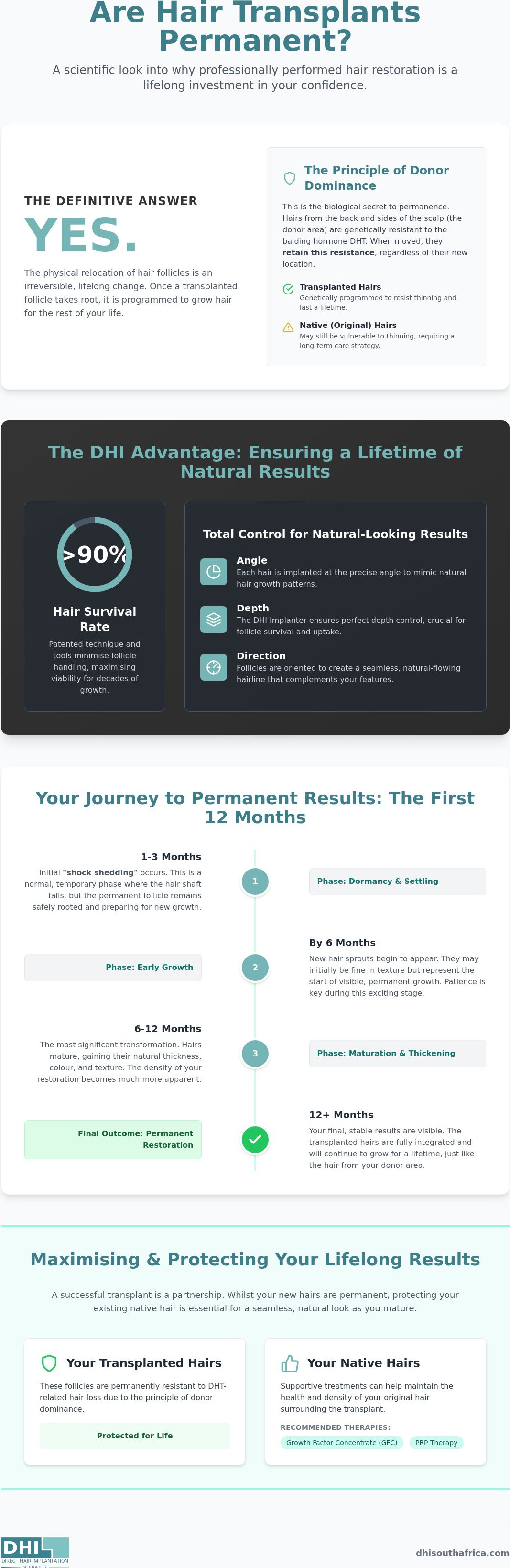
The reassuring reality is that a professionally performed procedure is designed to be a lifetime investment. This permanence is rooted in a scientific principle called donor dominance. This means that hairs taken from the back and sides of your head retain their genetic resistance to the hormones that cause balding, even when moved to a new area. In this article, we'll explore the biological science that keeps these hairs growing for decades and provide you with a clear roadmap to protect your investment. You'll discover how we achieve survival rates above 90% and the specific steps you can take to maintain the health of your surrounding hair.
Table of Contents
The Definitive Answer: Are Hair Transplants Permanent?
When patients ask are hair transplants permanent, they are usually seeking reassurance that their investment in their self-image is secure. From a clinical perspective, the answer is a resounding yes. The procedure involves the irreversible relocation of hair follicles from a donor area to a thinning site. Once a follicle is successfully moved and takes root in its new position, it will continue to grow hair for the rest of your life. It's a physiological change that doesn't reverse itself, making it a definitive solution for those tired of temporary fixes like powders or hairpieces.
However, we must distinguish between your newly placed hairs and your existing native hair. While the relocated follicles are genetically resistant to the hormones that cause balding, your original hair in the surrounding areas may still be subject to progressive thinning. This is why a comprehensive hair transplant strategy often includes a plan to protect your native hair. Modern hair transplantation techniques have evolved to ensure that these relocated follicles integrate naturally, but the full aesthetic result requires patience as the scalp heals and the follicles settle into their new rhythm.
The timeline for these results is not overnight. It typically takes between 6 to 12 months for the transplanted hairs to fully mature and stabilise. During this period, the follicles are undergoing a complex biological integration. You aren't just waiting for hair to grow; you're waiting for a new blood supply to form and for the hair texture to normalise. Understanding this maturation process is the key to managing expectations on your journey toward a permanent restoration.
Understanding the Life Cycle of a Transplanted Hair
After your procedure, your new hairs enter a specific cycle. You might experience shock shedding within the first few months. This is a normal part of the permanent journey where the hair shaft falls out, but the living follicle remains safely beneath the skin. The anagen phase is the active growth period where the follicle produces a new hair shaft. Once this phase begins, you'll see permanent growth that behaves just like the hair from your donor area.
Why the First 12 Months Are Critical for Your Results
The first year is a period of transformation. Relocated follicles spend the initial months establishing a robust blood supply and rooting into their new environment. By the 6-month milestone, you'll see new sprouts, though they may initially be fine in texture. Between 6 and 12 months, the hair matures, gaining thickness and a natural feel. By the one-year mark, the results have stabilised, providing a full and permanent restoration of your hairline.
The Biological Secret: Why Transplanted Hairs Resist Balding
To truly understand why the results of your procedure endure, we have to look beneath the scalp at the genetics of the hair itself. Many patients ask are hair transplants permanent because they assume the hair might eventually catch the balding trait of the area where it's planted. Science tells us the opposite. Your hair follicles are essentially programmed from birth with specific traits that they carry with them, regardless of where they are moved on your head. This genetic "memory" is the cornerstone of successful restoration.
The hairs on the back and sides of your scalp are biologically distinct from the hairs on the top or front. Whilst the hair on your crown may be sensitive to hormonal shifts, the hair in the "permanent zone" is built with a natural resilience. When we relocate these follicles, they don't just fill a gap; they bring their lifelong durability with them. This is why a well-planned procedure doesn't just provide a temporary cover-up but a fundamental change to the density of your hair that lasts for decades.
The primary reason for this longevity is how these follicles interact with Dihydrotestosterone (DHT). DHT is a hormone that, in genetically predisposed individuals, binds to receptors in the hair follicle and causes it to shrink. This process, known as miniaturisation, eventually leads to the follicle producing no hair at all. However, the follicles from your donor area lack these specific DHT receptors. By moving these resistant hairs to thinning areas, we ensure that your new hairline stays robust even as you age.
The Principle of Donor Dominance Explained
In the world of hair restoration, we rely on a concept called "Donor Dominance." Think of your hair follicles as seeds. If you take a seed from a hardy, drought-resistant plant and move it to a different patch of soil, it doesn't suddenly lose its resilience. It continues to grow according to its original genetic instructions. This is why the hairs harvested from the back of your scalp continue to thrive. A successful outcome depends heavily on having a healthy, dense donor area to provide these high-quality "seeds."
How DHT Resistance Protects Your New Hairline
Because your new hairs are genetically shielded from DHT, they won't miniaturise like the native hairs they replaced. This creates a long-term stability that natural hairlines often lack. By choosing a technique that prioritises follicle health, you can achieve permanent, natural-looking results that stand the test of time. Taking the time to speak with a specialist about understanding your specific hair loss pattern is the first step in ensuring your donor area is utilised effectively for a lifetime of growth.
Beyond the Surgery: Factors That Influence Your Hair’s Longevity
While we have established that the follicles themselves are genetically programmed to stay, the ultimate longevity of your new look depends on several external factors. It's understandable to feel a sense of relief once the procedure is over, but the work doesn't stop at the clinic doors. You are looking for a result that ages gracefully with you. Achieving this requires a holistic view of your scalp health and an honest look at how your native hair will behave in the years to come. When patients ask are hair transplants permanent, they are often really asking if they will look natural forever.
Your lifestyle plays a supporting role in this journey. Chronic stress, significant nutritional deficiencies, and poor scalp hygiene can't "kill" a permanent follicle, but they can diminish the quality of the hair it produces. We often see that patients who prioritise a balanced diet and manage their stress levels enjoy thicker, more vibrant results. It's about creating the best possible soil for those permanent seeds to grow in. A healthy scalp environment ensures that your investment remains a source of confidence rather than a point of concern.
The Impact of Progressive Hair Loss in Untreated Areas
A hair transplant is a masterful way to restore density to a specific area, but it doesn't act as a shield for the rest of your scalp. If your male or female pattern baldness continues to progress, your native hair may recede further back. This creates a "halo effect," where a dense, permanent hairline is separated from the rest of your hair by a new thinning patch. This is why we emphasise the importance of a long-term restoration plan. By understanding the underlying hair loss causes, we can combine your transplant with medical treatments to stabilise your native hair and maintain a seamless, natural appearance for life.
Why Your Choice of Surgeon and Technique is Decisive
The technical execution of your procedure is perhaps the single most important factor in whether those hairs actually survive the move. If a follicle is handled roughly or improperly extracted, it can suffer from "transection." This is essentially follicle death caused by surgical error. Whilst the industry average for hair survival often hovers around 50% to 60%, our patented DHI technique ensures survival rates over 90%. This precision is only possible when certified doctors manage every step of the process. In an era where the ISHRS has warned against black-market clinics using untrained technicians, choosing a "safe pair of hands" is the only way to ensure the answer to are hair transplants permanent remains a positive one for your specific case.
Maximising Your Results: Post-Procedure Care and Maintenance
Once your procedure is complete, your focus should shift to protecting your new investment. Whilst we've established that the answer to are hair transplants permanent is a definitive yes, the density and health of those hairs rely on the environment you provide. Think of the first few weeks as a critical integration phase where your body and the new follicles become a single, flourishing unit. It's about more than just survival; it's about giving your hair the best possible start in its new home.
Following a strict aftercare protocol for the first 14 days is non-negotiable for ensuring the best possible outcome. This involves gentle cleaning and avoiding physical strain to allow the hairs to root firmly into the scalp. Supporting this process with specialised hair loss products can help maintain an optimal scalp pH and provide the nutrients your skin needs to heal without irritation. These small, daily habits are what bridge the gap between a successful surgery and a lifetime of confidence.
The Critical Role of GFC and PRP Therapy
To accelerate this healing, we often integrate advanced biological supports like Growth Factor Concentrate (GFC). GFC is a highly concentrated treatment derived from your own blood, specifically engineered to deliver a potent dose of growth factors directly to the follicles. This isn't a "miracle" cure; it's a scientifically grounded method to reduce post-surgical inflammation and trigger faster tissue repair. By using your body's own healing mechanisms, we can significantly improve the speed and quality of your recovery.
Similarly, Platelet-Rich Plasma (PRP) therapy improves local blood circulation, ensuring that your newly implanted hairs receive the oxygen they need for successful uptake. We recommend periodic maintenance sessions to keep your native hair thick and healthy. This proactive approach ensures that your results aren't undermined by the thinning of surrounding, non-transplanted hair. It's a comprehensive way to maintain the density of your entire scalp, not just the areas we've restored.
Long-term Scalp Health and Medical Management
Maintaining your results for decades requires more than just a successful surgery; it requires ongoing monitoring. We use digital trichoscopy, which is a high-tech scalp analysis that allows us to see changes in hair density and follicle health long before they become visible to the naked eye. This diagnostic tool gives us the data needed to adjust your care plan as you age. It's an essential part of our "Total Care System," providing you with a scientific look at your progress over time.
Consider nutraceuticals and medical-grade topical solutions as the "insurance policy" for your transplant. These treatments help stabilise the scalp environment and can prevent the "halo effect" mentioned earlier by keeping your native hair strong. By spotting early signs of further thinning through regular check-ups, you can take action to protect your aesthetic result. This ensures your hairline remains as seamless and natural as the day it first matured.
The DHI Advantage: Ensuring a Lifetime of Natural Results
We've explored the biological reasons why hair transplants are permanent, but the long-term success of your restoration also hinges on the technique used during the procedure. It's one thing for a follicle to be genetically resistant to balding; it's another for it to survive the delicate process of relocation. At DHI South Africa, we don't leave this to chance. Our approach is built on a foundation of precision that ensures the hairs we move today will continue to thrive for decades to come.
The aesthetic longevity of your result depends on how naturally the new hairs integrate with your existing features. A permanent hairline is only a success if it looks as good at age sixty as it does at thirty. By using specialised tools and protocols, we create a look that isn't just lasting, but also seamlessly blends with your natural growth patterns. You can see the evidence of this meticulous approach in our gallery of hair transplant results, which showcases the transformative power of high-survival restoration.
Patented Technology and High Survival Rates
The patented DHI technique is designed to maximise the life of every hair. Unlike traditional methods where follicles might spend hours outside the body, our single-step implantation process minimises this "out-of-body" time. This is a critical factor because the longer a follicle is away from its blood supply, the lower its chance of survival. Consider the clinical difference between a 60% and a 90% survival rate; for a placement of 4,000 hairs, that's the difference between keeping 3,600 hairs or losing nearly half of them before they even take root.
Our DHI specialists undergo the world’s most rigorous certification to master the use of the DHI Implanter. This tool gives the doctor absolute control over the angle, depth, and direction of every hair. Because we don't need to create pre-made holes or slits in the scalp, the procedure is entirely scar-free. This future-proofs your look, allowing you to wear your hair at any length without worrying about visible marks or an unnatural, "pluggy" appearance.
Your Journey to Permanent Confidence
Reclaiming your hair is a significant decision, and we treat it with the gravity it deserves. Every journey starts with a personalised consultation to assess your unique hair loss pattern and donor density. We don't believe in one-size-fits-all solutions; we develop a "Total Care" plan that follows you from your initial diagnosis through to your 18-month follow-up. This ensures that your results are stabilising exactly as expected and that your native hair remains healthy.
Choosing to restore your hair is about more than just aesthetics; it's about the restoration of your self-assurance. When you know that the solution you've chosen is backed by world-class science and a survival rate that leads the industry, the anxiety of progressive balding begins to fade. Reclaiming your confidence is a permanent, life-changing decision that starts with a single, expert conversation. We're here to guide you through every step of that transformation.
Securing Your Future with Permanent Hair Restoration
The journey to restoring your hair is about more than just a single day in a clinic; it's about securing a result that grows with you for decades. We've explored how the principle of donor dominance ensures that relocated follicles remain resistant to thinning for life. However, maintaining a seamless, natural look requires a proactive strategy to protect your native hair and a technique that guarantees the highest possible survival rate.
Whilst you may still wonder are hair transplants permanent, the biological answer is a clear yes, provided the follicles are handled with expert care. With over 50 years of global medical expertise, we ensure that every procedure is performed exclusively by certified doctors. By achieving hair survival rates exceeding 90%, we provide the precision and artistry needed for a truly life-changing transformation.
You don't have to navigate the anxieties of hair loss alone. Reclaiming your confidence is a powerful decision, and we're ready to help you design a restoration plan that stands the test of time.
Frequently Asked Questions
Can a hair transplant fail after several years?
A successful hair transplant doesn't typically fail after several years because the relocated follicles are genetically resistant to balding. Once these hairs establish a blood supply and survive the initial 12-month maturation period, they are yours for life. If you notice a loss of density later on, it's almost always due to the thinning of your original native hair rather than the transplanted follicles themselves.
Will I need a second hair transplant later in life?
You might require a second procedure if your natural hair loss continues to progress in untreated areas. Whilst the first transplant is permanent, it can't stop your original hair from receding further as you age. We often create a long-term plan that includes medical management to stabilise your native hair, which reduces the likelihood of needing future sessions to fill new gaps.
Is the hair from a transplant resistant to all types of hair loss?
Transplanted hair is specifically resistant to androgenetic alopecia, which is the most common cause of male and female pattern baldness. However, these follicles are still subject to the same health conditions as the rest of your body. Extreme stress, certain medical conditions, or severe nutritional deficiencies can still affect hair health, even if the follicles lack the genetic receptors for DHT-related thinning.
How much does a permanent hair transplant cost in South Africa?
The investment required for your procedure depends on the specific number of hairs needed to achieve your desired density and the complexity of your hair loss pattern. Because every scalp is unique, we provide a detailed cost breakdown only after a thorough clinical assessment. This ensures you're paying for a bespoke medical solution that addresses your individual needs rather than a generic package.
What happens to the donor area after the hairs are removed?
Once hairs are removed from the donor area, they don't grow back in that specific spot, but the surrounding hair remains unaffected. Our DHI technique uses a strategic extraction pattern to ensure the donor site maintains a natural, full appearance. Because we use high-precision tools, the tiny extraction points heal quickly and become virtually invisible, even if you choose to wear your hair quite short.
Can I still go bald in other areas after a transplant?
Yes, it's possible to lose more hair in areas that weren't treated during your initial procedure. This is why we emphasise that whilst the answer to are hair transplants permanent is yes for the moved follicles, your native hair still follows its own genetic path. Regular follow-ups and a proactive maintenance plan are the best ways to prevent new thinning patches from appearing behind your new hairline.
Does the transplanted hair turn grey like my natural hair?
Yes, your transplanted hair will eventually turn grey or white at the same rate as the hair in your donor area. These follicles retain all their original characteristics, including their colour, texture, and growth speed. If the hair at the back of your head begins to grey as you age, the hairs relocated to the front will follow suit, ensuring a natural and age-appropriate look.
How soon after the procedure can I see the permanent results?
You'll typically see the final results between 12 and 18 months after your procedure. While you'll notice new growth as early as the four-month mark, the hairs need time to thicken and normalise their texture. Patience is key during this first year as the follicles settle into their new environment and establish the lifelong growth cycle that explains why are hair transplants permanent.


Comments