%20(1).jpg)
%20(1).jpg)
Lupus and Hair Loss in Women: Causes and Solutions
- Dhesan Moodley

- 2 hours ago
- 12 min read
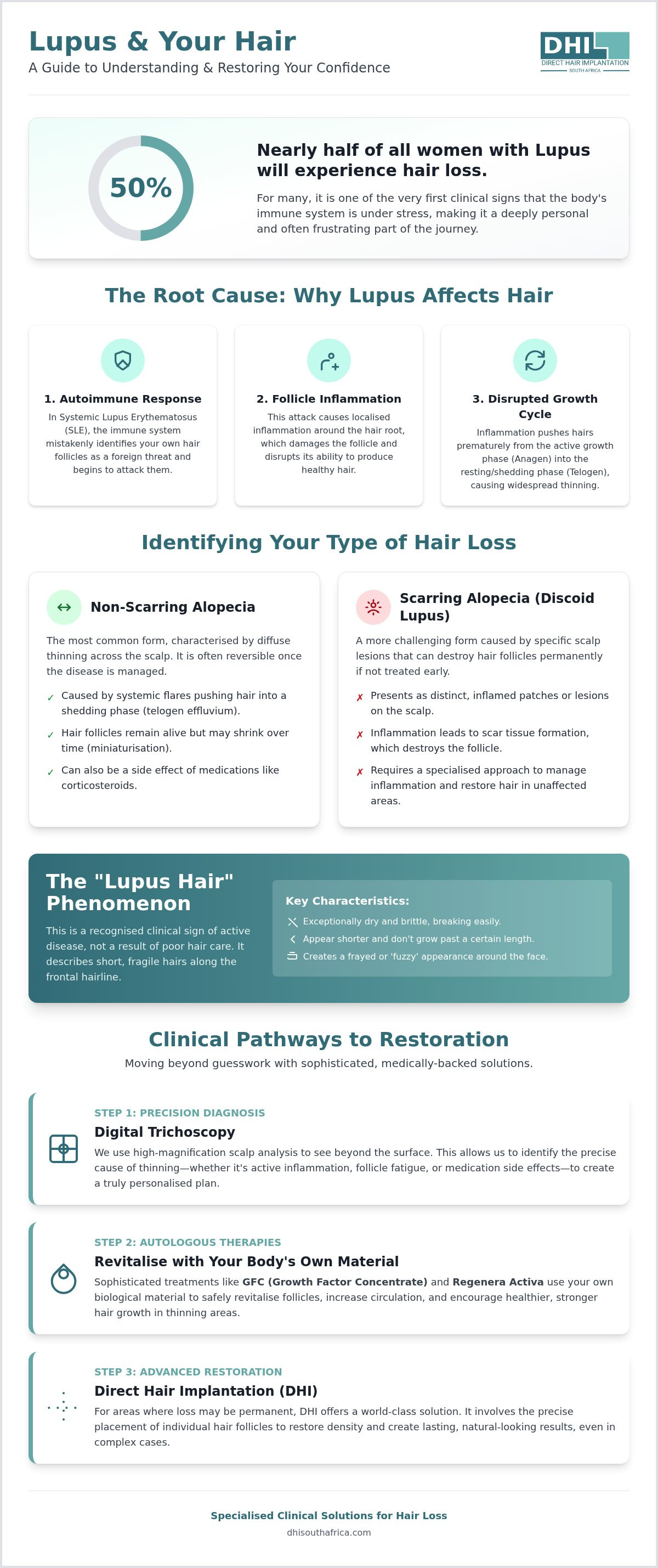
Did you know that nearly 50% of women living with lupus will experience some form of alopecia, often as one of the very first clinical signs of the condition? When you're managing the complexities of hair loss and SLE in women, the mirror can become a source of daily frustration rather than a reflection of who you truly are. It's incredibly draining to navigate the confusion between disease-driven thinning and the side effects of necessary medications. You've likely tried the generic over-the-counter "miracle" cures, only to find they don't touch the root of an autoimmune-related issue. We understand that this isn't just about vanity; it's about restoring the self-assurance that lupus has tried to take away.
In this guide, we'll help you find clarity by explaining the specific relationship between Systemic Lupus Erythematosus and your hair follicles. You'll learn how to identify your specific type of loss, whether it's non-scarring thinning or permanent discoid lesions. Most importantly, we'll outline sophisticated, medically-backed pathways, such as GFC Treatment and Direct Hair Implantation, that use your own biological material to safely restore density. By the end of this article, you'll have a clear roadmap toward specialised clinical solutions that respect your health and your desire for lasting, natural results.
Table of Contents
Understanding the Connection Between SLE and Hair Loss in Women
Approximately 45% to 50% of women diagnosed with Systemic Lupus Erythematosus will experience some degree of alopecia during their journey. For many patients, thinning hair isn't just a symptom that arrives late in the disease progression. It's often one of the very first clinical indicators that the body's immune system is under significant stress. Navigating hair loss and SLE in women carries a profound emotional weight. It's a visible reminder of an invisible illness, often leading to a loss of self-confidence just when you need your inner strength the most.
We see many patients who feel confused by the nature of their shedding. It's vital to distinguish between hair loss and SLE in women that is a direct result of the disease and a non-specific reaction to systemic physical stress. When your body is fighting a flare, it often redirects energy away from non-essential functions like hair growth to protect vital organs. This can result in diffuse thinning that feels sudden and overwhelming. Understanding these biological mechanisms is the first step toward reclaiming control over your appearance and your identity.
The Primary Query: Why Does SLE Cause Hair Loss?
The immune system's primary role is to protect you, but in SLE, it mistakenly identifies your hair follicles as foreign threats. This leads to localised inflammation that disrupts the hair's natural lifecycle. Most of your hair should be in the anagen phase, which is the active growth stage where hairs stay for several years. SLE can prematurely push these follicles into a resting state, causing them to fall out before they've reached their full potential. In addition to the disease itself, certain necessary treatments like immunosuppressives can also impact your hair density as a secondary side effect.
The "Lupus Hair" Phenomenon
A very specific clinical feature often observed is the "lupus hair" phenomenon. This typically presents as short, fragile hairs that appear predominantly along the frontal hairline. These hairs become exceptionally dry and break easily because the systemic nature of the condition affects the hair's structural integrity. You might notice these hairs never seem to grow past a certain length, creating a frayed or fuzzy appearance around the face. It's a recognised clinical sign of active disease. Acknowledging this can help you move past the frustration of thinking it's just a result of poor hair care; your hair's behaviour is a direct reflection of your internal health.
Why Lupus Triggers Hair Thinning: Inflammation and Medication
Understanding the triggers of hair loss and SLE in women requires looking at two distinct factors: the inflammatory nature of the disease and the pharmacological impact of the treatments used to manage it. During an active flare, your body's immune system focuses its energy on internal inflammation, often triggering a condition called telogen effluvium. This is essentially a temporary shedding phase caused by systemic shock, where a large number of hairs enter the resting phase simultaneously. Whilst this type of loss is often reversible, it can be deeply distressing when it occurs alongside other lupus symptoms.
To accurately determine the cause of your thinning, we utilise digital trichoscopy. This high-magnification scalp analysis allows us to see beyond the surface and identify whether the loss is due to active inflammation, follicle fatigue, or medication side effects. It's the most reliable way to create a personalised restoration plan that respects your medical history. By identifying the specific mechanism of loss, we can move away from guesswork and toward clinical precision.
Inflammation and Follicle Health
Discoid lupus erythematosus (DLE) often presents a more significant challenge by causing specific scalp lesions that can lead to permanent scarring if left untreated. Even in non-scarring cases, chronic inflammation leads to follicle miniaturisation. This is a process where the hair follicles shrink over time, producing hairs that are progressively thinner, shorter, and more brittle. We focus on revitalising these follicles by increasing localised circulation through specialised autologous therapies that encourage a healthier growth environment during periods of remission.
Medication Side Effects: A Necessary Trade-off?
Whilst medications like methotrexate or leflunomide are vital for controlling your SLE, they can unfortunately contribute to thinning as a secondary effect. It's a difficult trade-off that many women face. You should never stop or adjust your dosage without consulting your rheumatologist, as maintaining disease control is the absolute priority for your long-term health. We instead look at supportive clinical treatments that can help curb these side effects whilst you remain on your prescribed medication. This dual-track approach ensures your hair density is supported without compromising your systemic stability.
Scarring vs Non-Scarring Alopecia: Identifying Your Type of Loss
Not all hair loss and SLE in women follows the same biological path. It's vital to understand whether your follicles are simply "resting" or if they've been physically replaced by scar tissue. Most women with lupus experience non-scarring alopecia, which typically presents as a diffuse thinning across the entire scalp. This occurs because the systemic stress of the disease interrupts the growth cycle, but the follicle itself remains viable and capable of producing hair again once the internal environment is balanced.
In contrast, scarring alopecia is often the result of Discoid Lupus Erythematosus (DLE). In these specific cases, the immune system's attack is so focused that it destroys the follicle entirely. Once the follicle is gone, the body replaces it with smooth scar tissue, making natural regrowth impossible. Understanding the nuances of hair loss and SLE in women is the only way to avoid the frustration of ineffective treatments. A DHI specialist can use high-magnification tools to determine the exact status of your follicles, ensuring your restoration plan is based on clinical reality rather than guesswork.
Non-Scarring Loss: The Potential for Regrowth
If your hair loss is non-scarring, there's a strong potential for recovery once your systemic flare subsides and your health is stabilised. While this type of loss is often reversible, the regrowth process can be agonisingly slow. We focus on using autologous growth factors to "wake up" dormant follicles, providing them with the concentrated biological triggers they need to re-enter the active growth phase. For women seeking non-surgical options to boost their density during remission, our female hair loss treatment protocols offer a safe, evidence-based approach to restoration.
Scarring Alopecia: When Loss is Permanent
When discoid lesions lead to permanent scarring, it can feel like a loss of identity. Because the follicles no longer exist in these areas, topical treatments or supplements won't produce results. However, Direct Hair Implantation stands as the gold standard for restoring hairs into stable scar tissue. This technique allows for the meticulous placement of hairs at the correct angle and depth to ensure a natural look that blends seamlessly with your existing hair. We must emphasise that safety comes first; the disease should be in stable remission for at least 6 to 12 months before any surgical intervention is planned. This waiting period ensures that your scalp is healthy enough to support the newly implanted hairs for the long term.
Practical Strategies for Managing Scalp Health
While clinical interventions are essential for long-term restoration, your daily hair care routine plays a pivotal role in preserving your current density. Managing hair loss and SLE in women requires a shift toward extreme gentleness to protect the structural integrity of your hair. Every time you wash, brush, or style your hair, you have an opportunity to either support or strain your follicles. We recommend using pH-balanced, medical-grade products that cleanse without stripping the scalp of its natural protective oils.
It's equally important to reconsider your styling habits to avoid adding mechanical stress to an already sensitive system. High-tension hairstyles, such as tight ponytails or braids, can lead to traction alopecia; this is a form of loss caused by constant pulling on the follicle. When combined with the systemic thinning of SLE, this additional pressure can cause hairs to fall out prematurely. Opt for loose, soft styles that allow your scalp to breathe and recover during and between flares.
Sun Protection and the Scalp
Photosensitivity is a hallmark of systemic lupus, and your scalp is often the most overlooked area when it comes to UV protection. Exposure to the sun doesn't just damage the hair shaft; it can trigger systemic inflammation that leads to a flare. This inflammation directly impacts the health of your follicles, potentially worsening the cycle of shedding. Protecting your scalp is the vital foundation for any future restoration work we might undertake together.
You can protect your scalp whilst remaining stylish by incorporating silk scarves or wide-brimmed hats into your outdoor attire. Silk is particularly beneficial because it reduces friction against fragile hairs, preventing the breakage often associated with rougher fabrics like cotton. If you have areas of significant thinning where the scalp is visible, these physical barriers are your first line of defence against UV-induced flares. Consistency in sun protection is one of the most effective ways to maintain a stable environment for hair growth.
Nurturing Fragile Hairs
Washing and detangling should be treated as a therapeutic process rather than a chore. Use your fingertips to gently massage the scalp, avoiding any aggressive scrubbing that could dislodge hairs in the resting phase. When detangling, always start from the ends and work your way up to the roots using a wide-tooth comb. Avoiding heat styling tools like flat irons and high-heat blow dryers is crucial, as the "lupus hair" texture is naturally more prone to thermal damage and snapping.
Internal support is just as important as external care for maintaining follicle health. We encourage a diet rich in anti-inflammatory nutrients, such as omega-3 fatty acids and antioxidants, to support the hair cycle from within. Whilst supplements can be helpful, obtaining these nutrients from whole foods ensures better absorption and supports your overall systemic health. By combining these practical daily strategies with professional clinical guidance, you create the best possible conditions for your hair to thrive.
Clinical Restoration: Reclaiming Density with DHI and Autologous Therapies
Reaching a stage of medical stability is a significant milestone when managing hair loss and SLE in women. Once your rheumatologist confirms that your condition is in remission, you can shift your focus from merely preserving what you have to actively reclaiming your natural density. We specialise in sophisticated, autologous treatments that use your own biological material to stimulate growth. These pathways are particularly well-suited for lupus patients because they eliminate the risk of rejection or adverse reactions to synthetic donor materials.
Every clinical procedure we offer is performed by certified medical experts who follow a safety-first protocol involving 18 mandatory checks. This level of precision is essential when working with sensitive health profiles. By combining medical science with an artistic approach to restoration, we can help you move past the visible impact of SLE and return to a version of yourself that feels authentic and confident.
GFC and PRP: Boosting Follicle Vitality
GFC Treatment (Growth Factor Concentrate) and PRP represent the next generation of non-surgical follicle revitalisation. The process begins with drawing a small amount of your own blood, which is then processed to concentrate the essential growth factors that trigger tissue repair. When these factors are reintroduced to the scalp, they improve localised circulation and provide a concentrated "boost" to follicles that have been weakened by systemic inflammation. Because these treatments are autologous, they're inherently safe and compatible with your body's unique chemistry.
In addition to GFC, we utilise Regenera Activa to stimulate follicle regeneration in thinning areas. This technique uses your own progenitor cells—the "building blocks" of tissue—to jumpstart the hair cycle in follicles that have entered a dormant state. It's a highly effective way to increase density without the need for surgery, making it a favourite choice for women in the early stages of recovery from a lupus flare.
Direct Hair Implantation for Permanent Results
For women who have experienced permanent hair loss due to discoid lesions or long-term thinning, Direct Hair Implantation (DHI) offers a permanent and seamless solution. Our patented single-step implantation system gives our medical experts total control over the angle, direction, and depth of every hair placed. This precision ensures that the new hairs blend perfectly with your existing ones, creating a result that is virtually indistinguishable from your natural growth.
DHI is the preferred choice for women because it offers several distinct advantages over traditional methods. There are no stitches and no scars, and we can often perform unshaven procedures that allow you to return to your daily life without any obvious signs of a procedure. With a survival rate exceeding 90%, this technique ensures that every placement of hairs contributes to a fuller, healthier appearance. If you're ready to take the next step, we invite you for a professional consultation to assess your suitability for restoration.
Reclaiming Your Identity and Confidence
Navigating hair loss and SLE in women requires a unique blend of medical patience and clinical precision. You now understand that whether your thinning is a temporary reaction to systemic stress or the result of permanent discoid scarring, there's a clear, evidence-based path forward. By prioritising scalp health and utilising autologous treatments during periods of remission, you can effectively revitalise your follicles and restore your natural density.
At DHI South Africa, we've been global leaders in hair restoration since 1970. Our procedures are performed exclusively by certified medical doctors, ensuring the highest standards of safety and care. With survival rates for the placement of hairs exceeding 90%, we provide the clinical certainty you need to feel like yourself again. You don't have to manage this journey alone; we're here to provide the expert guidance your health deserves.
Taking the first step toward restoration is a powerful way to reclaim your self-assurance. We look forward to helping you achieve results that are as enduring as they are natural.
Frequently Asked Questions
Is hair loss from lupus permanent?
Hair loss from lupus is only permanent if it is the scarring variety, which is often associated with discoid lesions. In these specific cases, the immune system destroys the follicle and replaces it with scar tissue. However, roughly half of those with SLE experience non-scarring thinning. This type is generally reversible once the systemic inflammation is brought under control. Identifying your specific type of loss is the first step toward effective restoration.
Can I have a hair transplant if I have SLE?
You can certainly have a hair transplant, but your condition must be in stable remission for at least six to twelve months first. Safety is our absolute priority, so we work closely with your rheumatologist to ensure a procedure won't trigger a flare. The DHI technique is particularly suitable because it is minimally invasive and precise. This specialised approach ensures the placement of hairs is safe for your sensitive scalp environment.
Do lupus medications like prednisone cause hair thinning?
Yes, medications such as prednisone, methotrexate, and leflunomide are known to cause hair thinning as a secondary side effect. Whilst these drugs are essential for controlling systemic inflammation, they can disrupt the hair's natural growth cycle. It's vital that you don't stop your medication without professional advice. We often recommend supportive autologous therapies to help maintain follicle vitality whilst you continue your necessary medical treatment for hair loss and SLE in women.
How can I tell if my hair loss is scarring or non-scarring?
Scarring alopecia often appears as well-defined, smooth patches where the skin looks shiny and lacks any visible follicle openings. You might also notice redness or thick scales if discoid lesions are currently active. Non-scarring loss is typically more diffuse, appearing as general thinning across the whole scalp rather than distinct, smooth patches. A clinical diagnosis using digital trichoscopy is the only way to be certain about the health of your follicles.
Are there any safe hair products for women with lupus?
You should prioritise medical-grade, pH-balanced hair care products that are free from harsh sulphates and synthetic fragrances. Because your scalp may be more sensitive due to photosensitivity, gentle formulations are essential to avoid unnecessary irritation. We recommend the DHI Hair Loss Products range, as these are specifically designed to support follicle health without causing systemic stress. Always remember to shield your scalp from UV rays, as sun exposure can trigger a flare.
How long does it take for hair to grow back after a lupus flare?
Regrowth typically begins three to six months after the systemic inflammation from a flare has subsided. Hair grows in cycles, so your follicles need time to transition from the resting phase back into the active anagen phase. It's a slow process that requires patience and consistent health management. You can often speed up this recovery by using autologous treatments like GFC, which provide the biological triggers necessary to jumpstart the growth cycle.
What is the best treatment for thinning hair caused by SLE?
The most effective strategy for managing hair loss and SLE in women involves stabilising the underlying autoimmune response before seeking clinical restoration. For non-scarring loss, GFC Treatment or Regenera Activa are excellent non-surgical options that revitalise dormant follicles. If the loss is permanent due to scarring, Direct Hair Implantation offers the most natural and safe results. Every plan must be personalised to your specific medical history and the current state of your disease.
Can GFC therapy help with lupus-related hair loss?
GFC Treatment is highly effective for lupus patients because it uses your own biological growth factors to revitalise thinning areas. By concentrating the healing components of your blood, we can improve scalp circulation and strengthen weakened follicles. Since it is an autologous treatment, there is no risk of rejection or allergic reaction. It's a safe, minimally invasive way to boost hair density once your rheumatologist confirms that your condition is stable.


Comments