%20(1).jpg)
%20(1).jpg)
How Long Does a Hair Transplant Last? Longevity and Results in 2026
- Dhesan Moodley

- 1 day ago
- 12 min read
The most significant risk of hair restoration isn't the procedure itself, but the lingering fear that your new hair might simply disappear again in a few years. It's the fundamental question every patient asks: how long does a hair transplant last? We understand the anxiety that comes with this decision. You're investing your hope and your limited supply of donor hairs into a solution you expect to be permanent, and the thought of future thinning behind the transplant can feel incredibly daunting.
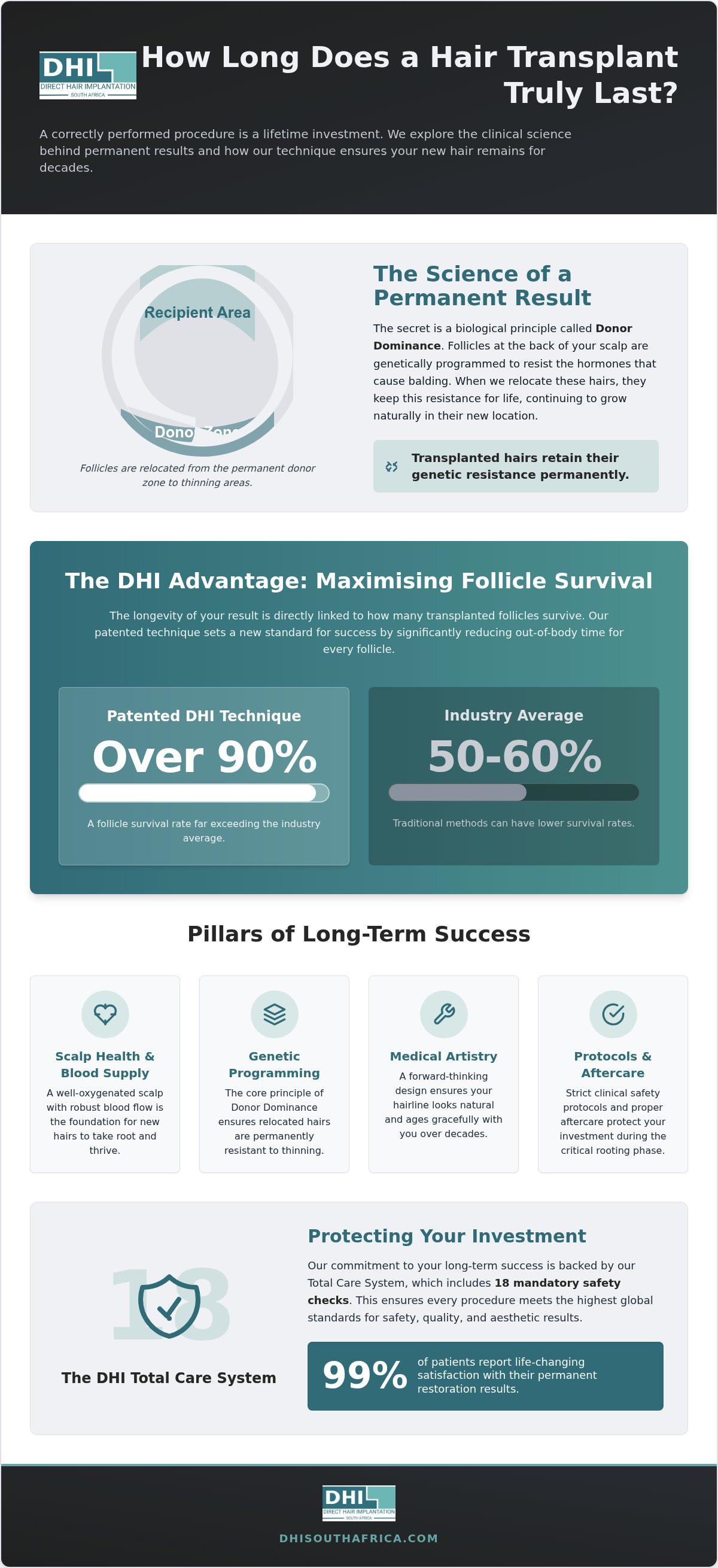
The reality is that a correctly performed procedure is a lifetime investment. This is because the follicles harvested from the back of your scalp are genetically resistant to the hormones that cause balding, a principle known as donor dominance. In this guide, we'll explore the clinical science behind this permanence and why our patented DHI technique ensures your results remain for decades. You'll learn how we achieve a follicle survival rate of over 90%, far exceeding the industry average of 50-60%. We will also look at how hair restoration in 2026 focuses on natural density that ages gracefully, providing you with the clinical proof you need to move forward with absolute confidence.
Table of Contents
What Determines How Long a Hair Transplant Lasts?
A hair transplant is designed to be a permanent, one-and-done solution to the emotional burden of thinning. When you ask how long does a hair transplant last, the answer is rooted in biology: it lasts for a lifetime. We understand that you don't just want a temporary fix; you want the security of knowing your investment won't vanish in a few years. A successful outcome relies on two pillars: the survival of the transplanted hairs and the aesthetic foresight of the doctor performing the procedure.
The Science of Donor Dominance
The secret to permanence lies in a biological principle called donor dominance. The follicles located at the back and sides of your scalp are genetically programmed to be resistant to Dihydrotestosterone (DHT), the hormone responsible for pattern baldness. When these follicles are moved to a new location, they retain this genetic resistance. This hair transplantation overview explains how relocated hairs continue to behave exactly as they did in their original site.
These hairs enter their natural anagen phase, which is the active growth stage of the hair cycle, and continue to produce new hair for decades. Once these hairs take root in their new position, they grow, shed, and regrow just like your original hair did before the thinning began.
Longevity vs. Natural Ageing
Whilst the transplanted hairs are permanent, it's vital to distinguish them from your native, non-transplanted hair. Natural thinning can continue in the areas surrounding the transplant as you age. This is why the artistry of the procedure is so critical. A certified doctor doesn't just fill a gap; they design a hairline that accounts for how your face will change over the next twenty years. You can see examples of this long-term artistry on our results page.
By using a strategic placement of hairs, we ensure that the density remains natural and the transition between transplanted and native hair stays seamless. This forward-thinking approach prevents the "island" effect, where a patch of transplanted hair remains whilst the hair behind it recedes. Ultimately, how long does a hair transplant last is as much about the doctor's skill as it is about genetics.
The Biological Factors Influencing Follicle Survival
While the technique determines the placement, the biology of your scalp determines the survival. The longevity of your results depends on how well the relocated hairs integrate into their new environment. This rooting process is a complex physiological event where the follicle must re-establish a connection to the blood supply to receive essential nutrients. When patients ask how long does a hair transplant last, they are often looking for reassurance that their biology will support the change. The answer is that whilst the hairs are genetically permanent, their vitality is influenced by the health of the "soil" they are planted in.
Nutrition, stress levels, and hydration all play a role in maintaining a robust scalp environment. We frequently use GFC Treatment to revitalise follicles before and after the procedure. This medical-grade treatment provides a concentrated boost of growth factors directly to the scalp, which encourages faster healing and ensures the hairs remain in the active growth phase for as long as possible. It's a proactive way to protect your investment from the inside out.
Scalp Health and Blood Supply
The scalp micro-environment is the foundation of your new growth. A healthy, well-oxygenated scalp ensures that the thousands of hairs we place can thrive and mature. To support this foundation, many patients opt for a PRP hair loss treatment. This procedure uses your own platelets to stimulate the scalp, improving blood circulation and follicle health naturally.
Circulation is paramount for long-term success. This is why we advise patients to avoid smoking during the recovery period. Nicotine constricts blood vessels, which can starve the newly implanted hairs of the oxygen they need during the critical first few days of rooting. If you want to ensure your scalp is in peak condition, you might consider a digital scalp analysis to assess your current blood flow and skin health.
Understanding the Post-Procedure Growth Cycle
It's natural to feel a surge of anxiety when you notice your new hairs falling out shortly after the procedure. This is known as 'shock loss' and is a perfectly normal, temporary phase in a permanent journey. It isn't a sign of failure; rather, it indicates that the follicles are entering a resting phase before they begin their permanent growth journey. Understanding this cycle helps manage the question of how long does a hair transplant last, as the true results take time to mature.
The timeline for your transformation is methodical:
Weeks 2-4: The initial hairs shed as the follicles settle into their new home.
Month 4: Permanent regrowth begins to emerge from the scalp surface.
Months 12-18: This is when you'll see the full density and final aesthetic result.
By the 18-month mark, the transplanted hairs have fully integrated into the natural rhythm of your scalp. They will continue to cycle through growth and rest phases just like the rest of your hair, providing a seamless and permanent restoration of your appearance.
Why the DHI Implantation Technique Ensures Superior Longevity
The method used to place each follicle is the most significant factor in determining how long does a hair transplant last. In traditional procedures, follicles often endure significant trauma during the "slit and place" phase. Our patented technique eliminates these risks by using a specialised tool that ensures every hair is handled with extreme care. By prioritising the health of the follicle from the moment of extraction to the point of implantation, we secure the permanent growth you expect. This isn't just about the immediate result; it's about ensuring the hair survives for decades to come.
The DHI Implanter: Protecting the Follicle
The DHI Implanter is the cornerstone of our approach to longevity. Unlike traditional methods that require a doctor to create incisions or "slits" in the scalp before inserting the hair, our tool allows for direct placement. This means there's no need for pre-made incisions, which significantly reduces scalp trauma and bleeding. Protecting the delicate follicle bulb is our priority. By minimising the handling of these thousands of hairs, we ensure they remain viable and ready to take root. Faster healing isn't just about your comfort; it leads to a much higher long-term "take" rate because the scalp remains a healthy, undisturbed environment for the new growth.
Survival Rates: DHI vs. Traditional FUE
When researching how long does a hair transplant last, you'll often encounter varying success rates. The industry standard for follicle survival often sits between 50% and 60%, a figure that can lead to disappointing density over time. In contrast, DHI South Africa achieves a survival rate of over 90%. This superior result is achieved by reducing the "out-of-body time," which is the period a follicle spends outside its natural environment. The shorter this window, the higher the chance of permanent survival.
The direct hair implantation protocol is considered the gold standard because it allows for total control over the angle, depth, and direction of every hair. This precision doesn't just guarantee a natural look; it ensures the follicle is placed at the optimal depth for blood supply access. We only use certified doctors to perform our procedures. This ensures that a medical expert manages the lifespan of every follicle. This level of expertise transforms a simple procedure into a lifetime investment in your self-assurance.
Protecting Your Investment: Clinical Protocols and Aftercare
Choosing a premium clinic is only half the journey. To ensure your results endure, we employ the DHI Total Care System, a comprehensive protocol designed to guarantee consistent, permanent outcomes. This system includes 18 mandatory clinic safety checks that every doctor must complete, covering everything from follicle hydration levels to strict sterilisation standards. These checks aren't just bureaucracy; they're vital for preventing procedure failure and ensuring that every hair is placed in an environment where it can thrive. When patients ask how long does a hair transplant last, we explain that the longevity is a partnership between our clinical precision and your commitment to the recovery process. This structured approach is why we can confidently offer results that last a lifetime.
The First 14 Days: A Critical Window
The first fortnight is the most critical window for follicle stability. During this time, the newly implanted hairs are still establishing their connection to the blood supply. You'll need to adopt gentle washing techniques, using a light touch to avoid dislodging the follicles. Strenuous activity should be avoided as increased blood pressure can affect the healing scalp. Whilst the DHI technique is often called a "lunch-hour" procedure because of its efficiency and minimal downtime, this doesn't mean you can skip these vital care steps. Protecting your scalp from direct South African sunlight and environmental pollutants is essential for a seamless recovery and the long-term "take" of the hairs.
Long-Term Maintenance and Monitoring
Our relationship with you doesn't end when the procedure is over. We use structured photographic documentation to track your success for up to 18 months, ensuring that the density of the thousands of hairs we've placed meets our world-class standards. This monitoring allows us to see the full maturation of the hair texture and growth pattern. Whilst the transplanted hair is permanent, your native hair remains susceptible to the natural ageing process and DHT. Using specialised hair loss products can help maintain the health of your existing hair, preventing future thinning in non-treated areas. Regular follow-ups allow our experts to identify any changes in your scalp health and address them before they affect your overall aesthetic. It is the final piece of the puzzle when answering how long does a hair transplant last; it lasts because we never stop monitoring your progress.
Reclaiming Confidence with the DHI Lifetime Growth Result
The ultimate objective of any restoration journey is to stop worrying about your hair and start living your life again. When you consider how long does a hair transplant last, you're really asking if you can finally close the chapter on hair loss for good. At DHI South Africa, we provide a lifetime growth guarantee for every follicle moved via our patented protocol. This commitment is backed by an IMRB-accredited 99% customer satisfaction rate, reflecting the consistent, high-quality outcomes we achieve for our patients. By choosing a global medical leader, you aren't just getting a procedure; you're securing a permanent transformation that ages as gracefully as you do.
As we move through 2026, the standard for hair restoration has shifted from merely "filling gaps" to providing a comprehensive, medical-grade solution that stands the test of time. We believe in total transparency, which is why our certified doctors provide a detailed Total Medical Hair Restoration report during your initial stages. This document outlines exactly what you can expect, ensuring your investment is grounded in clinical reality rather than marketing hype. It's this level of precision that allows our patients to move forward with absolute peace of mind.
The Psychological Impact of Permanent Restoration
The emotional weight of thinning hair can be exhausting, often leading to a constant cycle of mirror-checking and social anxiety. Moving toward a permanent hairline allows you to reclaim that lost mental energy and redirect it toward your career, family, and passions. We encourage you to view our natural hair transplant results to see how life-changing these long-term successes truly are. A "one-and-done" procedure is the most efficient way to restore your self-assurance, saving you years of trying temporary fixes that fail to deliver. It's about more than just aesthetics; it's about the freedom that comes with knowing your hair is here to stay.
Your Personalised Longevity Forecast
Every scalp is unique, which is why we don't believe in a one-size-fits-all approach. Before you commit to any treatment, we provide a data-driven prediction of your individual results. By using digital scalp analysis, a process that examines your hair density and follicle health at a microscopic level, we can forecast the longevity of your restoration with clinical precision. This diagnostic approach helps answer how long does a hair transplant last based on your specific donor hair capacity and skin health. Transparency is the foundation of our patient-centric care. We ensure you have a clear understanding of the expected survival rate and future hair health before we begin. DHI South Africa is your partner in lifetime hair restoration, providing the expert guidance you need for a future of full, natural hair.
Secure Your Future with Permanent Hair Restoration
The journey to restoring your confidence is a significant decision, but the science of donor dominance ensures that it's a permanent one. When you understand how long does a hair transplant last, you can appreciate that relocated hairs are genetically programmed to grow for a lifetime. Our patented DHI technique supports this biology by achieving follicle survival rates exceeding 90%, providing a level of density and permanence that traditional methods often struggle to match.
With over 50 years of global medical leadership and an IMRB-accredited 99% patient satisfaction rating, we've refined every step of the process. From the initial implantation to the structured aftercare protocols, our focus remains on delivering a natural result that ages seamlessly with you. You don't have to settle for temporary fixes or live with the anxiety of future thinning. Instead, you can invest in a solution built on clinical excellence and empathetic care.
Take the first step toward a permanent transformation and rediscover the self-assurance you deserve.
Frequently Asked Questions
Is a hair transplant permanent for the rest of my life?
A hair transplant is designed to be permanent because the hairs are extracted from the "safe zone" at the back of the scalp. These follicles are genetically resistant to the hormone DHT, which causes pattern baldness. Even when moved to the crown or hairline, they retain this genetic programming. This is why when you ask how long does a hair transplant last, the answer is for the rest of your life.
Can a hair transplant fail after several years?
It is highly unlikely for a successful transplant to fail years later if performed correctly. True failure usually happens in the first few weeks if the hairs don't take root. However, patients sometimes mistake the thinning of their original, non-transplanted hair for a failed procedure. Our 18 mandatory safety checks and >90% survival rate ensure that the hairs we place are there to stay, provided you follow the clinical aftercare protocols.
Why does DHI have a higher survival rate than FUE?
DHI achieves a survival rate of over 90% whilst traditional FUE often averages 50-60%. This is because our patented DHI Implanter reduces the time follicles spend outside the body and eliminates the need for pre-made incisions. By minimising handling and trauma to the delicate follicle bulb, we ensure a much higher "take" rate. Additionally, DHI procedures are performed exclusively by certified doctors rather than technicians, ensuring medical-grade precision for every hair.
How many hairs are needed for a successful, long-lasting result?
The number of hairs required depends entirely on your individual level of thinning and your donor capacity. A typical restoration might involve the placement of 2,000 to 5,000 hairs to achieve natural-looking density. During a digital scalp analysis, we assess the quality of your donor area to determine exactly how many hairs are needed for a result that looks full and ages gracefully over the coming decades without depleting your donor supply.
Does smoking or diet affect how long a hair transplant lasts?
Yes, lifestyle choices significantly influence how long does a hair transplant last in terms of its initial success. Smoking is particularly harmful as it constricts blood vessels and reduces the oxygen reaching the newly implanted hairs during the critical first 14 days. A balanced diet rich in iron, zinc, and protein also supports the anagen phase of the hair cycle. We recommend prioritising scalp health and nutrition to ensure your follicles have the best possible environment to thrive.
What happens to a hair transplant as I get older?
Your transplanted hair will age exactly like the hair in the donor area from which it was taken. This means it will naturally thin slightly in diameter and eventually turn grey or white as you get older. However, because these follicles are genetically resistant to pattern baldness, they will not fall out. A well-designed hairline by a certified doctor ensures that the result continues to look natural and sophisticated as your facial features change over time.
Is it possible to need a second hair transplant later?
Some patients may require a second procedure, but this is usually to address the continued loss of their native, non-transplanted hair. Whilst the hairs we move are permanent, the rest of your hair may still be susceptible to thinning. We focus on long-term planning and medical treatments like GFC or PRP to protect your existing hair, which often reduces or eliminates the need for future touch-ups to maintain your desired density and seamless look.
How much does a permanent hair transplant cost in South Africa?
The cost of a hair transplant in South Africa varies based on the complexity of the case and the number of hairs required. Factors such as the expertise of the certified doctor and the use of patented single-use instruments also influence the final investment. Because every scalp is unique, we provide a personalised Total Medical Hair Restoration report that outlines the specific requirements for your case. This ensures total transparency regarding the scope of your permanent restoration.


Comments