

Female Hair Loss: How It Can Affect Identity and Emotional Wellbeing

The emotional impact of female hair loss can extend beyond appearance, affecting identity, confidence and social life. It may bring anxiety, sadness, shame or isolation, and make familiar situations feel harder. These reactions are real and deserve attention, particularly when they begin to affect your everyday wellbeing.
Hair is often closely tied to how you recognise and express yourself, so changes can feel deeply personal. If you worry about other people’s reactions or find yourself withdrawing from plans, you’re not being superficial or overreacting.
This article explores how hair loss may affect self-image and relationships, and describes emotional experiences associated with anxiety and depression. It also considers ways to seek support and understand your options, helping you take the next step with greater clarity and care.
Table of Contents
Hair loss, identity, and self-confidence
The emotional impact of female hair loss can reach beyond appearance, affecting how you recognise and express yourself. A change in your hair may feel especially personal when it disrupts a familiar way of presenting yourself.
Hair and self-identity
Hair and self-identity are linked when your appearance carries personal, cultural or family meaning. For example, changing a hairstyle that has long felt connected to your heritage may bring mixed feelings, even when the change is your choice. That connection matters: your response is about more than other people’s opinions. It can involve the roles, memories and values you associate with how you look.
Hair can also be part of a daily ritual. If choosing a style has helped you feel prepared for work or social occasions, a change may unsettle that routine. Try identifying what feels different: the look itself, the time spent styling, or the sense of control it gave you. Naming the specific concern can make it easier to decide what might help.
Self-esteem and identity
Self-esteem concerns how you value yourself, while identity concerns how you understand and express who you are. Hair changes can affect both, but they don’t define your worth or erase other parts of your identity. For instance, if you notice yourself turning down a new activity because you feel self-conscious, consider whether that reflects what you want or a worry about being seen.
Confidence can also vary by setting. You may feel comfortable with close friends but more exposed in a formal photograph or a new social group. Rather than judging yourself for that difference, notice the setting and the thoughts behind it. This can help you separate your own preferences from pressure to meet someone else’s idea of femininity.
It may help to keep a short record of moments when hair concerns influence your choices. Note the situation, what you felt and what you wanted to do instead. For example, you might write that you avoided a family celebration because you felt unsure about your appearance. Reviewing these notes can reveal which situations matter most and help you explain your experience to someone supportive.
Your identity has many parts, including relationships, interests, values and personal goals. Make space for a choice that reflects something beyond appearance, such as returning to a hobby or wearing clothes you enjoy. This doesn’t dismiss the importance of your hair. It can help prevent a change in appearance from becoming the only lens through which you see yourself.
Hair loss-related anxiety and social withdrawal
Hair loss can create anxiety about being noticed, questioned or judged. You might avoid photographs, gatherings or appointments where you expect people to comment. These effects can narrow everyday life: declining a family event to avoid styling your hair may bring short-term relief, but leave you feeling more isolated afterwards.
Anxiety and depression can overlap, but they are not the same experience. Anxiety may involve persistent worry, tension, difficulty concentrating or avoiding situations that trigger concern. Depression can involve ongoing low mood, loss of interest, changes in sleep or appetite, and reduced energy. These features alone don’t establish a diagnosis, but they can signal that emotional support may matter.
Alopecia areata, an autoimmune form of hair loss, has a particular association with emotional distress. Adults with alopecia areata are reported to be about 33% likely to have anxiety, and 30 to 38% more likely to be diagnosed with depression. These figures describe groups, not an individual’s future. They also underline why patients deserve to have emotional effects taken seriously alongside visible changes.
Social anxiety may develop when you anticipate scrutiny. For example, you might repeatedly check your hair before leaving home, choose seats away from bright light, or cancel plans if you cannot cover a thinning area. Such habits can feel protective. If they increasingly dictate where you go or whom you see, consider telling someone you trust and describing the specific situations you avoid.
Support can be psychological as well as practical. Cognitive behavioural therapy can help people examine distressing thoughts and change avoidance patterns. Counselling and support groups offer space to discuss feelings with a professional or people who understand hair loss. Antidepressant medication may be considered for anxiety or depression; noticeable effects can take several weeks. Don’t stop prescribed antidepressants without speaking to your doctor, as some medicines need to be tapered gradually.
Look for patterns, not just difficult days. Write down how often worry disrupts plans, sleep or concentration, and share those examples with a health professional. If low mood or anxiety persists, feels overwhelming or affects daily functioning, ask about counselling or other appropriate support. Hair loss deserves attention, but distress deserves care in its own right.
If uncertainty about the hair changes is adding to your worry, information about hair loss can help you prepare questions for a medical discussion.
Emotional responses to hair loss
The emotional experience can vary with the cause and pattern of hair loss: sudden patchy loss may feel unpredictable, while gradual thinning can lead to ongoing self-consciousness. At an appointment, explain when the change began, what you’ve noticed physically and how it affects your daily life.
Common emotional responses
Common responses include shock, sadness, frustration, embarrassment and a sense of lost control. For example, finding a new patch before work may bring immediate worry about whether others will notice. These feelings can arise alongside physical changes, rather than only after hair loss becomes extensive. Naming your response can help you explain what has changed and what support you need.
The cause and visible pattern can shape a woman’s experience. Patchy hair loss, as in alopecia areata, may feel unpredictable because affected areas stand out; diffuse thinning can be harder to pinpoint and may prompt repeated checking. Hair loss linked to pregnancy-related hormonal changes, a nutritional deficiency, thyroid conditions, stress or medication can raise different concerns. A clear explanation of the likely cause can help reduce uncertainty, though it doesn’t dismiss the emotional response.
There isn’t one expected reaction. One woman may grieve a familiar hairstyle, while another may feel angry about having to explain a visible change. Someone with alopecia areata may find the sudden appearance of a patch particularly unsettling. These examples show why emotional responses deserve individual attention, rather than assumptions about how a woman should feel.
Discussing emotional effects with a doctor
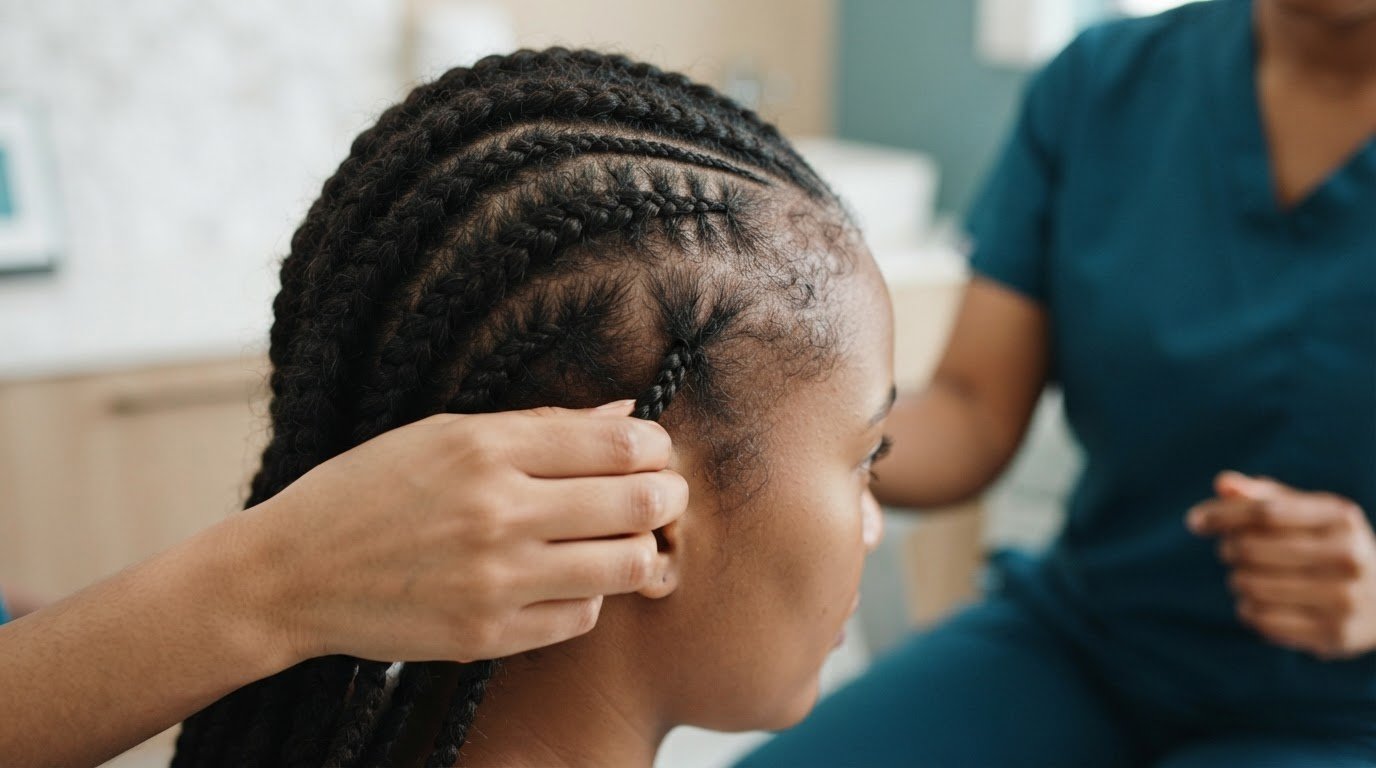
When talking to a doctor, describe both the physical changes and their effects on your wellbeing. A consultation can address what is happening to your hair and how the experience is affecting you. You might say, “I’ve noticed thinning, and I’m avoiding social plans because I feel anxious.” Specific examples make the emotional impact easier to discuss.
Before the appointment, note when you first noticed hair loss, where it appears and any recent health or medication changes. Then describe effects such as poor sleep, persistent worry or difficulty concentrating. Ask what assessments may help explain the cause and what support is available if distress continues. A doctor can examine your scalp, discuss how you feel, answer questions and arrange tests or a referral when needed.
Some women worry that raising emotional concerns will make an appointment seem less medical. It won’t. Hair loss has physical causes, and its psychological effects can matter at the same time. If describing your feelings aloud feels difficult, bring written notes or ask someone you trust to help explain them. Mention any trauma associated with the onset, such as a distressing event or treatment, if it feels relevant to your care.
As you move through this experience, record changes in your mood alongside changes in your hair. For example, note whether distress rises before work meetings, photographs or family gatherings. These details can help you and your doctor identify specific pressures and discuss appropriate support, without treating every emotional response as a diagnosis.
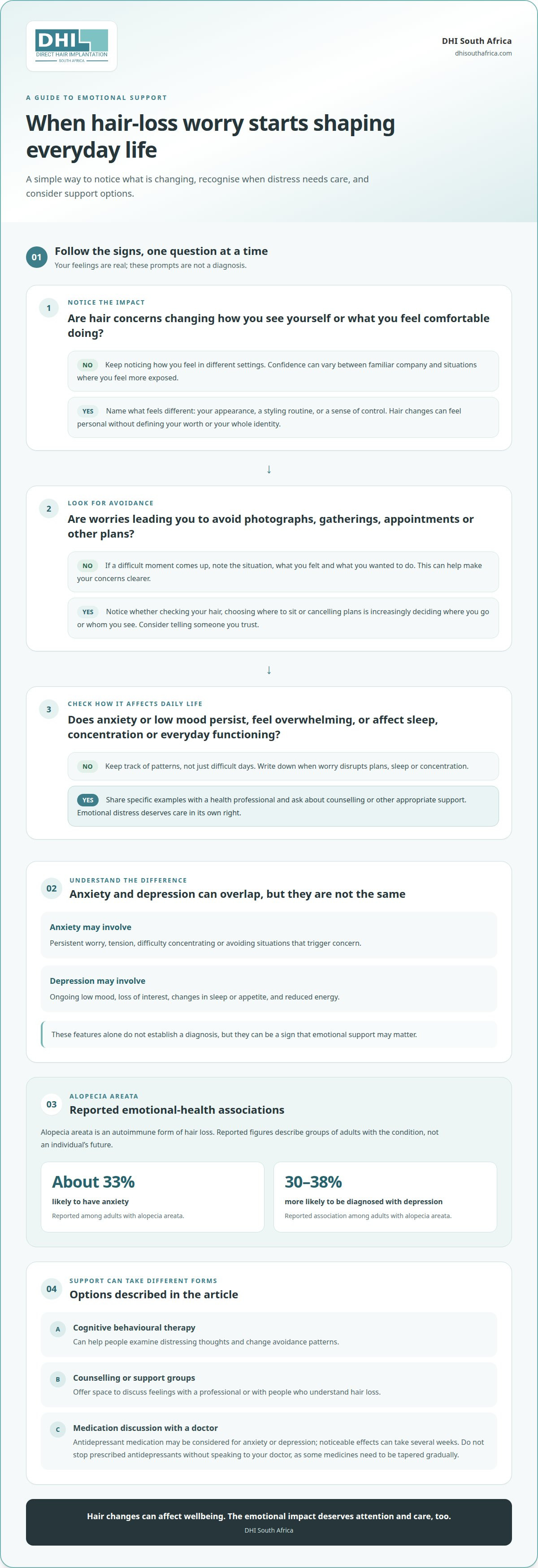
Emotional distress associated with hair loss
Distress related to hair loss is more than disappointment about appearance. It can affect sleep, relationships, work or the confidence to leave home. For example, someone may spend time concealing a thinning area before a meeting, then struggle to focus during it. When hair changes affect quality of life, family, friends and your personal physician should take the distress seriously.
Coping doesn’t mean pretending you’re unaffected. Allowing yourself to feel sadness, anger or uncertainty can help you understand what the change means to you. Try naming the feeling and its trigger, such as seeing a new patch or avoiding a photograph. Reading those notes back may make it easier to explain your experience to someone you trust.
Talking openly can ease the burden of keeping distress private. You might tell a friend, “I’m finding this harder than I expected, and I need you to listen.” A family member could offer practical support, such as accompanying you to an appointment. Connecting with people who have similar experiences may also help you feel understood, without requiring you to compare your hair or recovery.
Choose coping activities that support your wellbeing rather than punish your body. Gentle scalp care, regular meals, light exercise, yoga or meditation can form part of a manageable routine. For instance, a short walk after a difficult appointment may help you settle before returning to daily tasks. These actions won’t resolve every cause of hair loss, but they can add structure during an unsettling period.
Pay attention to how long distress lasts and how it affects everyday activities. Depression may involve three or more symptoms every day for two weeks or longer. Examples include persistent low mood, loss of interest, changes in sleep or appetite, and reduced energy. These features don’t confirm a diagnosis; they are reasons to discuss what you’re experiencing with a health professional.
Consider speaking with a therapist or counsellor if your feelings become overwhelming, disrupt daily life or don’t improve within a few weeks. Describe specific changes, such as withdrawing from friends or losing interest in activities you usually enjoy. Ask about counselling or support groups if you’re unsure where to begin. The key is to treat emotional distress as part of your wellbeing, not something you must manage alone.
How common is distress or reduced quality of life among women experiencing hair loss?
Emotional distress is a meaningful part of some women’s experience, but it doesn’t affect everyone in the same way. Interviews using a validated questionnaire have included hundreds of women with hair loss. This approach recognises that changes can affect daily life, not just the amount of visible thinning.
One woman may feel shock when she first sees loose strands or a bare patch. Another may feel sad as a familiar hairstyle becomes harder to achieve. Someone else may worry about how colleagues or relatives will react. These responses can arise at different points, so the moment hair loss first appears doesn’t predict how someone will feel later.
Quality of life is often easier to understand through specific everyday changes. Consider whether you spend longer styling or concealing your hair, avoid photographs, or feel distracted during a meeting. For example, cancelling lunch because you’re concerned about comments signals an effect on your social life. Such examples explain the impact more clearly than simply saying, “I feel bad.”
The same physical change can carry different meanings for different women. A visible patch may feel difficult to conceal, while gradual thinning may bring repeated uncertainty about appearance. Cultural expectations, personal style and the importance of hair in self-expression can shape these feelings. This variation is why another person’s reaction isn’t a reliable measure of how distressing your own experience should feel.
Notice patterns across different settings. You might record whether hair concerns affect work, family time, relationships or activities you usually enjoy. A note such as “I declined two invitations after worrying about my hair” gives someone you trust or a health professional a clearer picture. It can also help distinguish a passing difficult moment from a change that is limiting your routines.
When hair loss affects quality of life, that impact deserves to be taken seriously by family, friends and your personal physician. Explain what has changed and give a practical example, such as avoiding a social event or struggling to concentrate. Ask to discuss both the hair loss and its effect on your wellbeing. Clear examples can make the conversation more useful.
There’s no single threshold that makes distress valid. If a concern is changing how you work, connect with others or feel about yourself, it matters. Keep track of the changes affecting you, then share them with someone you trust or your doctor. Your experience deserves attention on its own terms.
DHI South Africa: Hair Systems & Hairpieces
DHI South Africa offers Hair Systems & Hairpieces as a practical option when hair loss affects confidence or daily self-expression. They can offer a way to manage the appearance of thinning without choosing a surgical procedure. A conversation can help you explore whether this approach fits your preferences and circumstances.
For those considering medical hair restoration, options include Direct Hair Implantation (DHI), GFC Treatment and Regenera Activa. Each takes a different approach, so discussing your hair-loss pattern, priorities and emotional concerns can help clarify what to explore. You don’t need to have made a decision before seeking information.
If you’d like to discuss your hair restoration options, contact DHI South Africa.
Choose a next step that feels right for you
The emotional impact of female hair loss can make decisions feel closely tied to self-image. You don’t have to settle every question at once. Choose one manageable next step, such as writing down what you’d like to understand, sharing your concerns with someone you trust or arranging a conversation about your hair restoration options.
Let your priorities guide that conversation. You may want to discuss ways to feel more comfortable day to day, understand possible approaches or consider support for emotional distress. Your needs can change as you learn more, and taking time to make an informed choice is a valid part of moving forward.
If you’re ready to explore your options, you can contact DHI South Africa to discuss what matters to you.
There’s no single right pace. Start with the step that feels most achievable, and give yourself room to move forward with care.
Frequently Asked Questions
What are the clinical features of anxiety or depression due to hair loss?
Anxiety may involve persistent worry, restlessness, difficulty concentrating, disrupted sleep or repeated checking of your hair. Depression can include lasting low mood, reduced interest in usual activities, fatigue or feelings of hopelessness. These experiences can occur alongside hair loss, but symptoms alone don’t establish a diagnosis or prove the cause. If they interfere with daily life, describe specific changes to a health professional and ask what support may be appropriate.
What are the psychological effects of hair loss?
Hair loss may affect body image, your sense of control and the attention you give your appearance. You might repeatedly inspect your hair in different lighting or feel unsettled by photographs. Some women also blame themselves or feel pressure to conceal changes. Noticing these patterns can help you identify what is causing distress and explain it clearly to someone you trust, rather than dismissing it as mere vanity.
What else should I know about hair loss?
Hair loss has several possible causes, including health conditions, medication, nutritional deficiencies and styling practices that strain hair or scalp. The right response depends on what is contributing to the change, so record when it began and any relevant health or routine changes. Don’t stop prescribed medication on your own. A doctor can assess your scalp, discuss possible causes and consider whether tests or further support are needed.
Why does hair loss feel personal?
Hair can be part of how you express your culture, femininity, personal style or family identity. A change may therefore feel like more than an appearance concern. For example, if a familiar hairstyle has been part of your daily routine for years, losing the ability to wear it as you prefer can feel like losing a meaningful choice. Recognising what hair represents to you can make your concerns easier to communicate.
How does hair loss affect women’s emotional wellbeing and self-esteem?
Hair loss can make some women more self-conscious and less comfortable with choices they previously made without hesitation. You may change how you dress, style your hair or appear in photographs. These adjustments can affect self-esteem if your confidence starts depending on concealing every change. Consider which choices reflect your preferences and which are driven by fear of judgement; that distinction can help you decide what support might be useful.
What mental health effects are associated with female hair loss, including anxiety and depression?
Female hair loss can be associated with anxiety, low mood, social avoidance and reduced enjoyment of everyday activities. The effects differ between people, and they don’t automatically mean you have a mental health condition. Pay attention to changes that persist or disrupt routines, such as losing interest in hobbies or struggling to manage ordinary responsibilities. A health professional or counsellor can help assess those concerns and discuss suitable support.
How does hair loss affect relationships, social life and work for women?
Worry about comments or questions can make social plans, workplace meetings or close relationships feel more difficult. You might avoid a group photograph or hesitate to speak during a meeting. For practical support, tell someone what would help, such as listening without offering unsolicited advice. At work or among friends, setting a simple boundary around comments about your appearance can make interactions feel more manageable.


Comments