%20(1).jpg)
%20(1).jpg)
Hair Transplant Aftercare: A Clinical Guide to Protecting Your Investment
- Dhesan Moodley

- 3 hours ago
- 13 min read
The success of your restoration doesn't end when you leave the clinic; in many ways, it's only just beginning. Whilst the technical precision of a DHI procedure is world-class, the final density depends heavily on how you manage your hair transplant aftercare during those first critical weeks. It's natural to feel a bit protective over your investment, especially when you're navigating the delicate phase of scabbing and the expected shedding period. We know the fear of accidentally losing a few hairs is real, but with the right clinical protocols, you can ensure a hair survival rate of over 90 per cent.
You deserve a recovery process that's as seamless and stress-free as the procedure itself. In this guide, we'll cut through the noise of conflicting online advice to provide a professional, step-by-step roadmap for your healing journey. You'll learn how to protect your scalp, manage your social appearance, and use treatments like GFC to revitalise your follicles during the growth phase. By following these evidence-based steps, you'll move past the temporary discomfort and straight toward the natural, lifelong results you've been waiting for.
Table of Contents
The First 48 Hours: Securing Your New Hairs
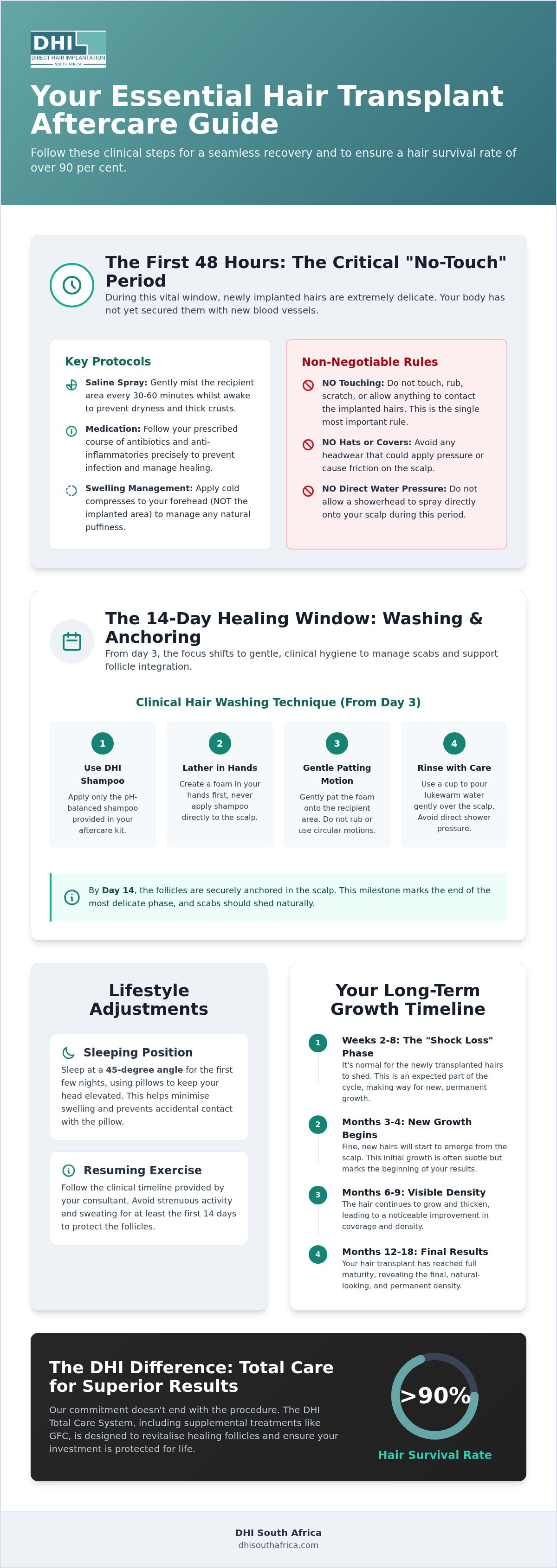
The first 48 hours after your DHI procedure represent the most delicate phase of your journey. During this window, your newly implanted hairs are essentially resting in their new locations, held in place by surface tension rather than physical anchors. Your body hasn't yet begun the complex process of vascularisation, where new blood vessels connect to the follicles to secure them permanently. This biological vulnerability makes your initial hair transplant aftercare routine the deciding factor in your final density.
The "no-touch" rule is non-negotiable during these two days. Any physical contact, even a light brush of a finger or a tight hat, can displace the hairs before they've had a chance to settle. Effective hair transplant aftercare is about protecting these follicles whilst they're at their most vulnerable, ensuring a hair survival rate that exceeds 90 per cent. Think of this time as an investment in the "safe pair of hands" our specialists have provided; your role is to keep that work undisturbed whilst the anchoring begins.
Immediate Post-Procedure Protocols
Hydration is the cornerstone of early recovery. We provide a specialised saline spray that you'll need to apply every 30 to 60 minutes whilst you're awake. This mist keeps the recipient area moist, preventing the formation of thick, heavy crusts that could potentially tug on the follicles. If the scalp becomes too dry, the resulting scabs can become quite rigid, which is exactly what we want to avoid during these first two days. It's a simple but vital habit that keeps the skin supple and the follicles safe.
Alongside hydration, your clinical team will prescribe a specific course of antibiotics and anti-inflammatories. These aren't just suggestions; they're essential tools to prevent infection and manage the scalp's natural response to the procedure. Following this medication schedule exactly as prescribed ensures your scalp remains a healthy, receptive environment for growth. It's a proactive step that provides an extra layer of security for your new hairs whilst your immune system focuses on healing.
Managing Initial Swelling and Comfort
You might notice some puffiness around your forehead or eyes. Minor swelling is a natural inflammatory response whilst the scalp begins to heal; it's your body's way of rushing resources to the treated area. To manage this comfortably, you can apply cold compresses to your forehead or the bridge of your nose. However, you must never let the compress touch the implanted hairs themselves, as this would violate the no-touch rule and risk displacement.
Supporting your body from the inside is just as important. Focus on high-quality nutrition and drink plenty of water to assist with cellular repair. If you notice any unusual behaviour, such as excessive bleeding or pain that doesn't respond to your medication, contact your consultant immediately. Most patients find this phase surprisingly manageable, provided they respect the scalp's need for absolute stillness and consistent hydration. This period is short, but its impact on your lifelong results is immense.
The 14-Day Healing Window: Washing and Crusting
Once you pass the 48-hour mark, the focus of your hair transplant aftercare shifts from absolute stillness to gentle, clinical hygiene. By the third day, your follicles have begun the initial stages of integration, though they aren't fully anchored yet. This period is a critical bridge; your Direct Hair Implantation results depend on keeping the scalp clean whilst respecting the delicate state of the new hairs. By day 14, the follicles are typically "anchored," meaning they're securely housed within the dermis and far less likely to be displaced by external contact.
We understand that the appearance of scabs can cause some anxiety, especially when you're eager to see your final results. It's important to remember that these crusts are a sign that your body is healing efficiently. Consistent hair transplant aftercare during this fortnight ensures the skin remains healthy and the follicles stay protected. By following a structured washing routine, you'll help these scabs shed naturally without risking the safety of your investment.
The Clinical Hair Washing Technique
Starting on day three, you'll transition to a daily cleaning routine that removes debris without disturbing the placement of your hairs. Use the pH-balanced shampoo provided in your DHI kit, as standard commercial products can be too harsh for a healing scalp. Create a lather in your hands first, then gently apply it using a "patting" motion rather than any rubbing or circular movements. This method cleanses the area through contact rather than friction, which is vital for follicle survival.
The mechanics of the rinse are just as important as the touch. Set your shower to a lukewarm temperature, as hot water can increase inflammation and irritate the sensitive skin. Ensure the water pressure is low; a heavy stream can apply unnecessary force to the follicles. If your showerhead is too powerful, use a clean cup to pour water gently over the treated areas instead. This meticulous approach ensures your scalp stays clean whilst the hairs remain undisturbed.
Navigating the Scabbing Process
Small scabs or crusts naturally form around each of the implanted hairs as the tiny entry points close. It's vital that you never pick or scratch at these scabs, no matter how tempting it may feel during the itching phase. Picking a scab can prematurely pull out the underlying hair before it has fully established its blood supply, leading to permanent loss of density. We want every hair to reach its full potential, and that requires patience during this phase.
These scabs should naturally begin to soften and shed between days 7 and 10 of your recovery. If you've been consistent with your washing routine, they'll often wash away effortlessly during your daily patting. If scabbing persists or looks particularly heavy beyond the two-week mark, it's worth reaching out to our team for a professional review. You can always contact our specialists if you're unsure about the pace of your healing or the health of your scalp.
Lifestyle Adjustments: Sleeping, Exercise, and Social Habits
Success in hair restoration requires more than just a flawless procedure; it demands a temporary but disciplined shift in your daily habits. Your lifestyle choices during the first month act as a protective shield for your new hairs. Proper hair transplant aftercare involves managing blood pressure, minimising physical strain, and protecting your scalp from environmental stressors that could compromise follicle health. By adjusting your routine, you ensure that the delicate biological work happening beneath the surface remains undisturbed.
Optimising Your Sleep Environment
The way you rest significantly impacts early-stage healing. We recommend sleeping at a 45-degree angle for the first 7 nights to help fluid drain away from the scalp and reduce post-operative swelling. A travel pillow is an excellent tool for this, as it keeps your head centred and prevents you from rolling onto the treated areas during the night. To maintain a sterile environment, place a clean, fresh towel over your pillowcase each evening.
If you're a restless sleeper, this elevated position also serves as a safeguard against accidental scratching. It's common to feel a slight itch as the skin heals, but your sleeping posture helps you avoid unconscious contact. By prioritising this refined sleep setup, you're giving your body the best possible conditions for cellular repair whilst your new hairs begin to take root. It's a simple adjustment that provides immense peace of mind during those first critical nights.
Activity and Environmental Constraints
Physical exertion must be reintroduced with caution. We advise a strict 14-day ban on strenuous exercise, heavy lifting, and any activity that induces heavy perspiration. High blood pressure and sweat can both irritate the recipient sites and potentially displace the follicles before they're fully anchored. Light walking is perfectly acceptable after the first few days, but anything that gets your heart racing should wait until your two-week check-up.
Environmental factors also play a major role in your recovery. Swimming in chlorinated pools or salt water must be avoided for at least 30 days, as these can dry out the scalp and increase the risk of infection. Perhaps most importantly, you must be vigilant about the intense South African sun. UV rays are particularly harsh on healing tissue and can lead to permanent skin discolouration if the scalp is exposed too early. Whilst you should avoid hats for the first few days, you can safely wear a loose-fitting, clean cap when outdoors after day ten. For long-term health, consider exploring our range of hair regeneration treatments to further support your results.
Finally, consider your internal health. Smoking and alcohol consumption should be avoided for at least a week post-op. Alcohol thins the blood, which can increase the risk of minor bleeding, whilst smoking restricts blood flow to the scalp, potentially starving the new hairs of the oxygen they need to thrive. Respecting these boundaries ensures your body remains a high-performance environment for growth.
The Long-Term Growth Timeline: What to Expect
After the initial healing, you enter a period that requires a different kind of discipline: patience. Whilst the physical wounds close quickly, the biological timeline of hair growth follows its own steady rhythm. Understanding this progression is a vital part of your hair transplant aftercare, as it helps you manage expectations during the quieter months of recovery. You can check our results page to see how these different stages look for our previous patients and gain confidence in the road ahead.
The Shedding Phase (Weeks 2–8)
Don't be alarmed if you notice your newly implanted hairs beginning to fall out around the two-week mark. This phenomenon, often referred to as "shock loss," is a completely normal and expected part of the process. It occurs because the hair follicles enter a temporary resting phase after the "trauma" of relocation. Whilst the hair shaft sheds, the living follicle remains healthy and dormant beneath the skin, preparing for its next cycle.
This period is often called the "ugly duckling" phase, and it can be the most emotionally challenging part of your journey. It's difficult to see the area look much like it did before the procedure, but it's a necessary biological reset. Your body is simply clearing the way for stronger, permanent growth. Maintaining a steady routine and trusting the process is key during these weeks. The follicles are safe; they're just resting before they begin the anagen phase, which is the active period of the hair growth cycle.
The Maturation Phase (Months 4–12)
The first signs of new growth typically appear between months three and four. These initial hairs might look fine and light, similar to "peach fuzz," but they'll gradually thicken and darken as they mature. By the six-month mark, most patients see approximately 40 to 60 per cent of their final result. This is when the transformation becomes truly visible to others, and your new hairline begins to frame your face naturally.
The journey continues well into the first year. Between months 6 and 12, the hair shafts increase in diameter, and the overall density of the treated area improves significantly. This is the stage where the hairs enter a consistent anagen phase. Whilst some see their full result at the one-year mark, it's common for final density and texture to settle in between 12 and 18 months post-procedure. This slow maturation ensures that the final look is seamless and indistinguishable from your original hair.
The DHI Difference: Enhancing Results with Total Care
Choosing a DHI procedure means you're benefiting from a technique designed to minimise trauma and maximise density. Unlike traditional methods like FUE or FUT, which often involve more invasive scalpels or stitches, our patented DHI Implanter allows for precise control over the depth, direction, and angle of every hair. This level of meticulous detail results in a significantly faster recovery period. Because the procedure is minimally invasive, your hair transplant aftercare shifts its focus from healing surgical wounds to proactively nourishing your new hairs for the best possible survival rate.
Our commitment to your results doesn't end when the procedure is finished. Through the DHI Total Care System, we provide a structured monitoring programme that ensures your scalp is responding perfectly at every milestone. This 360-degree approach combines world-class medical standards with personalised attention, giving you a "safe pair of hands" to guide you through the entire first year of growth. It's this combination of clinical rigour and empathetic support that sets our results apart.
Growth Factor Concentrate (GFC) and PRP
To further revitalise your healing follicles, we often integrate autologous therapies like GFC and PRP into your recovery plan. GFC, or Growth Factor Concentrate, involves using a high concentration of your own growth factors derived from your blood to stimulate the hair roots directly. Similarly, PRP (Platelet-Rich Plasma) therapy helps boost local blood circulation, ensuring that your new hairs receive the oxygen and nutrients they need to thrive during the anagen phase. You can explore our advanced hair loss solutions to understand how these treatments support long-term density.
Timing is everything when it comes to these supplemental treatments. We typically schedule GFC sessions at specific intervals post-procedure to coincide with the follicles' most receptive healing windows. By using your body's own natural resources, we can significantly enhance the speed and quality of your results. These therapies aren't just add-ons; they're essential tools that help maintain our hair survival rate of over 90 per cent.
Clinical Monitoring and Support
Precision monitoring is a hallmark of the DHI experience. We utilise a standardised 9-angle photographic documentation series to track your progress with scientific accuracy. This allows your certified DHI specialist to compare your growth against our global benchmarks and adjust your hair transplant aftercare protocol if necessary. It's a level of scrutiny that ensures nothing is left to chance.
You'll have consistent access to your specialist for follow-up consultations, ensuring that any questions or concerns are addressed immediately. Whether you're navigating the shedding phase or looking for advice on scalp health, our team is with you every step of the way. This ongoing relationship is what guarantees seamless, natural-looking results that last a lifetime. We don't just restore your hair; we provide a clinical roadmap for your long-term confidence.
Securing Your Lifelong Results
Your journey to a restored hairline is a partnership between clinical precision and patient discipline. Mastering the first 48 hours and the subsequent 14-day washing window is essential to protect every hair. With our ISO-certified protocols and over 50 years of global expertise, you aren't just getting a procedure; you're gaining a lifelong roadmap to confidence. We provide the "safe pair of hands," whilst your commitment to the recovery protocol ensures those results reach their full potential.
Meticulous hair transplant aftercare is the final, vital step in securing a hair survival rate that exceeds 90 per cent. By respecting the biological timeline of your follicles and utilising advanced therapies like GFC to revitalise healing tissue, you're ensuring that your results remain dense and seamless. The "ugly duckling" phase is a temporary milestone on the path to a permanent transformation. Trust the science, follow the clinical roadmap, and look forward to the natural, lifelong results you deserve.
We're here to guide you through every milestone of your restoration journey. Take the first step toward a more confident future and let our world-class team help you protect your investment.
Frequently Asked Questions
When can I wash my hair normally after a hair transplant?
You can begin a gentle cleaning routine on day three using the "patting" method described in our clinical hair transplant aftercare protocols. During this phase, you must avoid rubbing or circular motions to prevent follicle displacement. You'll typically return to normal washing habits after day 14, once the hairs have fully anchored into the scalp. Always use the pH-balanced shampoo provided in your DHI kit to ensure the skin remains healthy and irritation-free.
Is it normal for the implanted hairs to fall out after two weeks?
It's completely normal and expected for the newly implanted hair shafts to shed between weeks two and eight. This biological reset, known as "shock loss," occurs as the follicles enter a temporary resting phase post-procedure. Whilst the hair falls out, the follicle remains safely beneath the skin. New, permanent growth will begin to emerge around month three or four as the hairs enter the active anagen phase of their cycle.
How long should I wait before exercising or going to the gym?
You should wait at least 14 days before resuming strenuous exercise or heavy lifting. High blood pressure and excessive perspiration can irritate the recipient sites and potentially compromise your hair survival rate. Whilst light walking is encouraged after the first 48 hours to aid circulation, more intensive workouts should be avoided until your two-week clinical review. Swimming in chlorinated or salt water is restricted for a full 30 days to prevent infection.
Can I wear a hat or a cap after my hair restoration procedure?
You must avoid wearing any headwear for the first few days to prevent physical contact with the vulnerable follicles. By day 10, it's generally safe to wear a loose-fitting, clean cap if you need to protect your scalp from the sun or feel more comfortable in social settings. Ensure the hat doesn't rub against the implanted hairs. Once the 14-day anchoring milestone is reached, you can return to wearing your usual headwear without restriction.
Does smoking or drinking alcohol affect the survival of my new hairs?
Yes, both substances can negatively impact your recovery and final density. Alcohol thins the blood, which increases the risk of minor bleeding and swelling during the first week. Smoking is particularly damaging as it restricts blood flow and oxygen delivery to the scalp, potentially starving the new follicles during the critical anchoring phase. We advise avoiding both for at least seven days to ensure your hair transplant aftercare provides the best possible environment for growth.
How should I sleep to avoid damaging the implanted area?
You should sleep with your head elevated at a 45-degree angle for the first seven nights. This positioning reduces post-operative swelling and prevents you from accidentally rolling onto the treated area. Using a travel pillow is an effective way to keep your head centred and secure. To maintain a sterile environment, place a fresh, clean towel over your pillowcase every night and avoid any direct contact between the recipient site and your bedding.
When will I see the final results of my hair transplant?
You'll notice the first signs of fine new growth between three and four months post-procedure. By the six-month mark, you can expect to see approximately 40 to 60 per cent of the final result as the hair shafts begin to thicken. Because hair follows a slow maturation process, the full cosmetic benefit and final density are typically achieved between 12 and 18 months. Patience is vital as your restoration reaches its peak natural appearance.
What should I do if I notice redness or small bumps on my scalp?
Minor redness is a natural part of the inflammatory response and usually fades within the first two weeks. If you notice small, pimple-like bumps around month three, these are often just new hairs trying to break through the skin. However, if any redness is accompanied by pain, heat, or persistent swelling, you should contact your DHI specialist immediately. We provide structured monitoring to ensure any minor post-operative issues are managed with professional clinical care.


Comments