%20(1).jpg)
%20(1).jpg)
Affordable Hair Loss Solutions South Africa: A 2026 Treatment Guide

The lowest upfront price isn’t always the most affordable choice. When you’re comparing affordable hair loss solutions south africa, the right option depends on what’s causing your hair loss, what you hope to achieve and what ongoing care may involve. It’s understandable to want a clear price before committing, especially when the options range from products and cosmetic coverage to clinical treatments and surgical restoration.
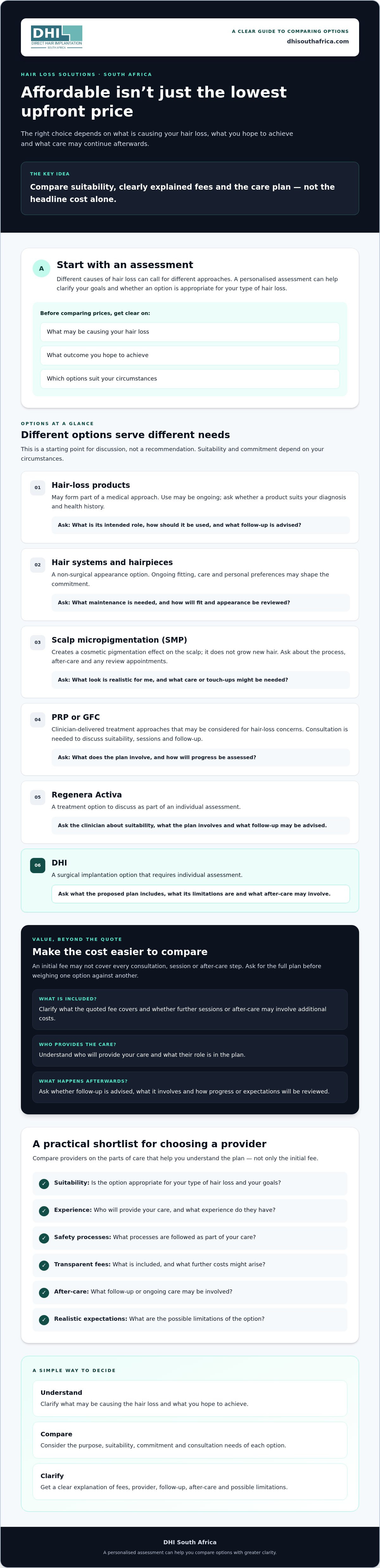
A sensible first step is finding out whether your hair loss needs assessment before you choose a treatment. Different causes can call for different approaches, and a personalised assessment can help you avoid spending on an option that doesn’t suit your needs. Depending on your circumstances, options to discuss may include hair-loss products, PRP, GFC or Regenera Activa, DHI, scalp micropigmentation, or hair systems and hairpieces. None is automatically right for everyone.
This guide will help you compare options by suitability, clinical oversight, follow-up and long-term value, rather than headline cost alone. You’ll also find practical questions to ask about who provides your care, what a quoted plan includes, possible limitations and ongoing expenses, so you can approach a consultation with greater clarity.
Table of Contents
Affordable hair loss solutions South Africa: what good value means
Affordable hair loss solutions south africa are options that suit the cause of your hair loss and your goals, with clear fees and a care plan you understand. The lowest initial fee alone can’t tell you whether a treatment is suitable or offers good value over time. Before comparing costs, find out what the plan includes, whether follow-up is advised and what further sessions or after-care may involve.
Hair-loss care can begin with assessment and diagnosis, then may involve products or medical treatment, a restoration procedure, or cosmetic coverage such as a hair system or scalp micropigmentation. These options serve different needs, and no single approach is right for everyone. To learn more about treatment categories available through DHI South Africa, explore its hair transplant in South Africa page.
For a South African perspective on affordable hair-growth products, you can also watch this video. A tutorial isn’t a substitute for professional assessment, particularly if you’re unsure what’s causing your hair loss.
What counts as an affordable hair loss solution?
Value means more than a quoted fee. Check what’s included, who provides the care, whether follow-up is part of the plan and what expectations are realistic. An initial fee may not cover every consultation, treatment session or after-care step, so ask for a clear explanation of additional costs before deciding. A transparent plan makes it easier to compare options on equal terms.
Why identifying the type of hair loss comes first
Thinning can have different causes, and the right next step depends on an individual assessment. Androgenetic alopecia, for example, is a pattern-related form of hair loss influenced by genetic and hormonal factors; other causes may need a different response. A clinician can assess your history and scalp before discussing suitable options. For a broad overview of hair loss and its different forms, see Wikipedia, then explore the clinic’s hair loss treatment options.
Compare hair loss solutions by treatment type and level of commitment
Different options address different needs. Products and clinical therapies may be considered as part of a treatment plan, whilst cosmetic coverage can change the appearance of thinning without treating its cause. DHI is a surgical implantation option that requires individual assessment. The comparison below is a starting point, not a recommendation: suitability and expected commitment depend on your circumstances.
These approaches aren’t interchangeable, and none guarantees a particular result. For example, pattern hair loss is a clinical topic with its own assessment and treatment considerations. A clinician should explain how evidence applies to your diagnosis rather than assuming one approach fits all.
Non-surgical approaches: products, therapies and cosmetic coverage
Products, PRP, GFC and Regenera Activa are distinct approaches, not equivalent treatments. Ask what each is intended to address and how the provider will assess progress. SMP changes the scalp’s appearance through pigmentation, whereas a hair system or hairpiece offers coverage without surgery. Comfort, styling preferences and ongoing care all matter when comparing these options.
When a surgical hair restoration consultation may be relevant
DHI may be discussed if a specialist assessment finds it appropriate. Donor hair availability, the pattern of hair loss and your goals inform planning. Ask how the intended placement and realistic expectations will be explained. To compare options offered by DHI South Africa, review its hair restoration treatments and use a consultation to explore whether an option suits your needs.
Is the cheapest hair loss treatment the best value?
Not necessarily. A low initial fee doesn’t establish that a treatment suits your type of hair loss, nor does it show what the full care plan may involve. Compare the proposed approach, clinician involvement, disclosed inclusions and follow-up arrangements before deciding. A higher fee doesn’t guarantee a better outcome either; value comes from a clear, appropriate plan and realistic expectations.
For example, a quoted treatment may cover an initial appointment but not later sessions or after-care. Another plan may include follow-up, but still may not be right for your needs. Ask providers to explain what is included, what could incur an additional fee and how they will review your progress. This makes it easier to compare affordable hair loss solutions south africa on more than the first figure you’re given.
Which questions reveal the full scope of a treatment plan?
Use this checklist during consultations. Ask for clear answers in writing so you can compare plans without relying on memory.
What does the proposed treatment include, and are further sessions something we may discuss?
Who will assess me, and who will perform each part of the treatment?
What follow-up is available, and how will progress or concerns be reviewed?
Which fees, exclusions or after-care needs should I factor into the full plan?
What should I expect during recovery or ongoing use, and what limitations might apply?
Clear answers help reveal differences in care and commitment without assuming that one provider or treatment category is automatically the best choice.
How to assess evidence and expectations
Ask how the provider has assessed your suitability and what outcomes are realistic for your individual circumstances. For a procedure-specific overview of factors that can affect a quote, read this DHI hair transplant cost guide. Use it as background, then request a personalised explanation rather than assuming a general guide predicts your costs or results.
Testimonials and before-and-after photographs can offer context, but they don’t guarantee that you’ll have the same experience or outcome. Ask whether the examples are comparable to your situation and how your own progress will be assessed. A considered decision is based on assessment, a transparent plan and a conversation about uncertainties, not a promise.
If you’re ready to discuss your questions with DHI South Africa, contact the team to explore an assessment and possible next steps.
How to shortlist hair loss solutions safely in South Africa
A careful shortlist helps you compare care, not just treatment names or quoted fees. Use these steps to keep your goals, clinical suitability and practical needs in view. The right choice depends on an individual assessment, and you should feel comfortable asking for clear answers before proceeding.
1. Clarify your goals. Decide what matters most to you, such as understanding the cause of thinning, addressing a hair-loss concern or changing its appearance. Note any preferences about treatment commitment and ongoing care.
2. Seek an assessment. Ask how the provider will evaluate your hair loss and determine whether the proposed approach is suitable. A plan should respond to your individual needs, not assume that the same treatment fits everyone.
3. Compare written plans. Review who assesses you and provides the treatment, what the quoted fee includes, and whether further sessions or after-care may involve additional costs. Ask for details in writing.
4. Review follow-up and practicalities. Find out how progress will be monitored and who to contact with questions after treatment. Travel distance and the practicality of attending follow-up appointments can also affect whether a plan works for you.
What to prepare before a hair-loss consultation
Make a note of when the thinning began, what changes you’ve noticed and any treatments or products you’ve already tried. Bring questions about assessment, suitability, the expected course of care and follow-up. You can also ask whether photographs or other documentation form part of the consultation and how that information will be used to track your case.
How to compare clinics and written proposals
Look for a proposal that explains why an option has been suggested for you, who will provide each part of your care and how progress will be reviewed. Ask about the practitioner’s relevant experience, whether single-use instruments are used where appropriate, and what safety processes apply. Treat these as questions to verify, not assumptions based on promotional language.
Consultation checklist: questions to ask
How will you assess my hair loss and decide whether this option is suitable?
Who will assess me and perform the treatment, and what relevant experience do they have?
What does the quoted fee include, and what may be excluded?
What follow-up, after-care and progress monitoring are planned?
Which safety processes apply, including the use of single-use instruments where relevant?
Claims to verify: Check that any stated credentials, safety procedures, treatment inclusions and follow-up arrangements are clearly explained and apply to the plan being offered. Before-and-after images on a hair restoration results page can help you understand examples of outcomes, but they don’t predict or guarantee your own result.
Use the same questions to assess affordable hair loss solutions south africa, then compare the answers calmly. A clear plan should leave you understanding the proposed care, its limitations and what happens next.
Discuss your hair-loss options
How DHI South Africa can help you explore a suitable next step
Choosing between hair-loss options can feel difficult, especially when treatments serve different purposes. DHI South Africa offers hair-loss diagnosis and a range of options, including Direct Hair Implantation (DHI), GFC, Regenera Activa, PRP, scalp micropigmentation (SMP), hair systems and hairpieces, and hair-loss products. A consultation can help clarify which, if any, may be appropriate for your individual needs.
If you’re researching affordable hair loss solutions south africa, a useful next step is to compare a personalised plan rather than assume one treatment suits everyone. You can review the clinic’s hair transplant services in South Africa for national service information, then bring questions about assessment, costs, care and follow-up to a discussion.
What a personalised treatment discussion should clarify
A meaningful discussion should take account of your goals, the pattern of hair loss, relevant medical history and expectations. DHI, GFC, Regenera Activa and PRP are treatment approaches to discuss with a clinician; SMP is a cosmetic pigmentation option, not a hair-growth treatment. Ask why a particular option is being considered for you, what its limitations are and what alternatives might be relevant.
Before making a decision, request a clear explanation of the proposed plan. Check what the quoted fee includes, whether further sessions or after-care may be involved, and how progress or concerns will be reviewed. If any part is unclear, ask for it to be explained in writing. You should have enough information to weigh the plan against your needs and practical circumstances.
Take the next step without committing prematurely
An initial conversation is a chance to understand your options, not an obligation to proceed. You can ask whether an assessment or digital scalp analysis is available and what it involves; confirm current availability directly rather than assuming it is offered. Take time to compare written information and consider the recommendation, particularly if you want to discuss it with someone you trust.
Choosing carefully means understanding the rationale, likely commitment and follow-up before you decide. There’s no need to rush. Explore the available information, then decide whether you’d like to continue the conversation.
Choose your next step with confidence
Finding affordable hair loss solutions south africa starts with understanding your needs, then comparing suitable options by their full plan, clinical oversight and follow-up, not just the first quoted fee. A specialist assessment can help clarify whether a medical, cosmetic or surgical approach may be appropriate for you.
DHI South Africa offers DHI alongside non-surgical and cosmetic hair-loss options. The clinic’s information describes single-use instruments and structured post-procedure monitoring. Ask the team to confirm which safety processes and follow-up arrangements currently apply to the specific care you’re considering, and request clear details of inclusions and any additional costs.
Take time to review the information and decide at your own pace. A thoughtful conversation can help you understand your options without committing before you’re ready.
With clear answers and a plan suited to your circumstances, you can take the next step feeling informed.
Frequently Asked Questions
How much do affordable hair loss solutions cost in South Africa?
There’s no single price for affordable hair loss solutions in South Africa because costs depend on the option, your assessment and the care plan. A product, cosmetic coverage option, course of clinical treatments and surgical procedure involve different fees and commitments. Ask for a current, itemised quote in South African Rand (R), including consultations, any additional sessions and after-care, so you can compare the full plan rather than just its starting fee.
What is the most affordable treatment for hair loss?
No one treatment is the most affordable choice for everyone. A product may have a lower initial cost than a procedure, but ongoing use or additional care can affect its overall cost. Cosmetic options address appearance differently from medical treatments, and they aren’t interchangeable. First clarify what’s causing your hair loss and what you want to achieve, then compare suitable options by their full fees, commitment and follow-up needs.
Can hair loss be treated without surgery?
Yes. Non-surgical options include hair-loss products and clinician-delivered treatments such as PRP, GFC and Regenera Activa. Hair systems and hairpieces can provide cosmetic coverage, whilst scalp micropigmentation creates a pigmentation effect rather than growing hair. These options have different purposes, suitability considerations and care requirements. A professional assessment can help you understand which approaches, if any, may be appropriate and what expectations are realistic for your situation.
Is DHI suitable for everyone experiencing hair loss?
No. DHI is a surgical hair implantation option, and suitability needs to be assessed individually by a specialist. Factors such as the pattern of hair loss, available donor hair, health history and your goals may inform the discussion. An assessment should clarify whether DHI is appropriate, what the proposed plan involves and what limitations to consider. Don’t assume that a transplant is suitable simply because you’re experiencing thinning.
How can I compare hair loss clinics in South Africa?
Compare how each clinic assesses your needs, who will provide care, what the written plan includes and how follow-up is arranged. Ask about practitioner experience, relevant safety processes and whether single-use instruments are used where appropriate. Check that fees and exclusions are clearly explained, and consider whether attending follow-up is practical for you. A clear, personalised explanation is more useful than a broad claim or an attractive starting price.
Are hair loss products enough to stop thinning?
Not necessarily. Products may form part of a plan for some people, but they can’t be assumed to address every cause of hair loss or stop thinning in every case. The right approach depends on what’s behind the change and how it’s assessed. Before starting or relying on a product, ask a qualified clinician whether it suits your circumstances, how it should be used and how you’ll review whether the plan is appropriate.
What should I ask before choosing a hair loss treatment?
Ask how your hair loss will be assessed, why the option is being recommended and what results are realistic for you. Clarify who will provide care, what the fee covers, whether further sessions may be discussed and what follow-up or after-care involves. Ask about relevant safety processes and any limitations. Request written details, then take time to compare the plan with other suitable options before deciding.


Comments