

Can You Dye Your Hair After a Transplant? When It’s Safe

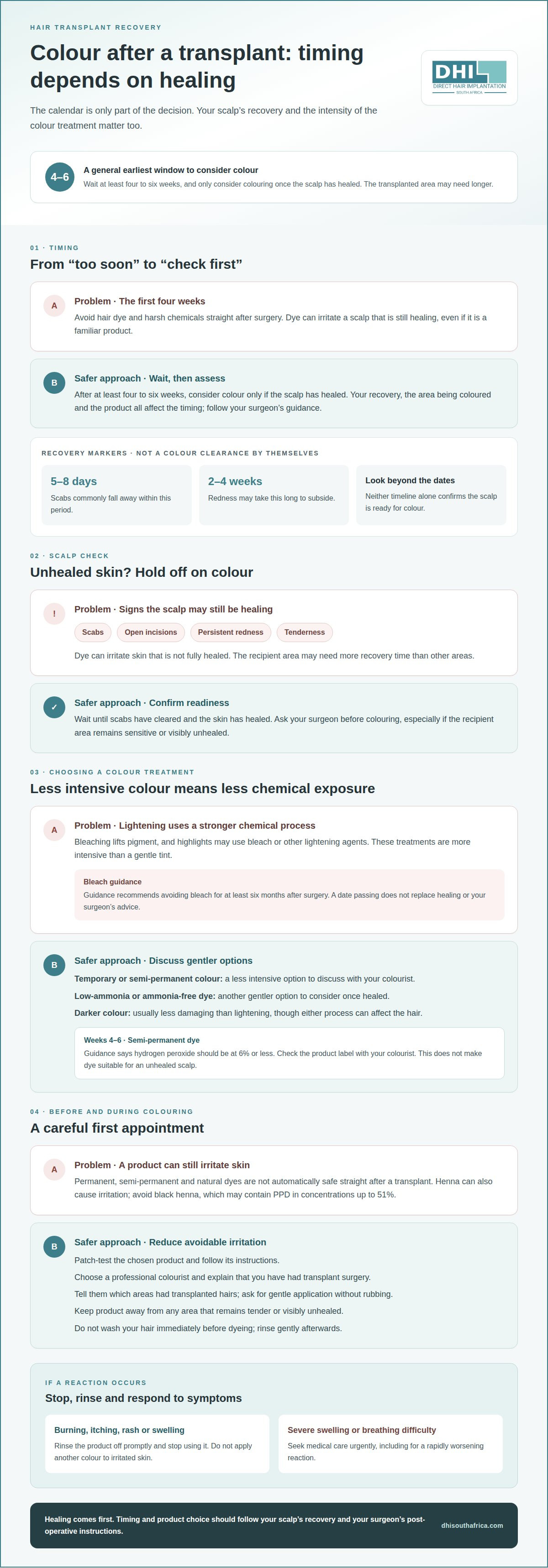
The safest answer to “can you dye your hair after a transplant?” is: not straight away. Avoid hair dye and harsh chemicals during the first 0-4 weeks after surgery; colouring is generally considered only after at least four to six weeks, once the scalp has healed. The transplanted area may need longer, so timing depends on how it has recovered and the type of colour you want.
It’s understandable to want to cover greys or feel more like yourself while you recover. But even a familiar dye can irritate a healing scalp, and bleaching or highlights involve stronger chemical processes than a gentle tint. Waiting until scabs have cleared and your surgeon confirms the skin is ready helps you make a more informed decision.
This guide explains how recovery affects timing, which dyes call for extra caution, and why a patch test and an experienced colourist matter. You’ll also learn when to speak with your surgeon before booking your first post-transplant colour appointment.
Table of Contents
When Is It Safe to Dye Your Hair After a Transplant?
Wait until your scalp has healed before colouring your hair. This is usually at least four to six weeks after surgery, but timing depends on the treated area, your recovery and the dye you plan to use.
Permanent, semi-permanent and natural hair dyes aren’t automatically safe straight after a transplant. Avoid dye during the first four weeks. After that, a gentler colour may be suitable once your scalp has healed. Permanent colour can be more irritating, so consider a temporary or semi-permanent option first.
Before colouring your hair, do a patch test and follow the product instructions. This applies to home hair dye as well as salon colour: a small test can reveal irritation or an allergic reaction before more product touches your scalp. For your first appointment, choose a professional colourist and explain that you’ve had transplant surgery.
Signs of scalp healing
A scalp that’s ready for colour has no scabs, open incisions, persistent redness or tenderness in the recipient area. These signs matter because dye can irritate skin that’s still healing. Scabs commonly fall away within 5-8 days, while redness may take 2-4 weeks to subside; neither timeline alone confirms that your scalp is ready for colour.
Safer dye application
For safer application, test the chosen dye first and keep it away from any area that remains tender or visibly unhealed. Tell your colourist which areas received transplanted hairs, and ask them to apply the product gently without rubbing your scalp. Don’t wash your hair immediately before dyeing, as natural oils may help protect the scalp. Follow the dye instructions and rinse gently.
Henna and natural dyes are often considered gentler alternatives, but they can still cause irritation. Patch-test henna and wait 48 hours before applying it after a transplant. Avoid black henna: it may contain PPD (paraphenylenediamine) in concentrations up to 51%. Your surgeon’s post-operative instructions should guide whether these products are appropriate for you.
If dyeing causes burning, itching, a rash or swelling, rinse the product off promptly and stop using it. Seek medical care urgently for severe swelling, breathing difficulty or a rapidly worsening reaction. Don’t apply another colour to irritated skin. For guidance on hair transplant surgery, recovery instructions can help you understand which areas need extra care.
Choosing gentler dyes and avoiding bleaching
Once your scalp has healed, the type of colour matters as much as the timing. Low-ammonia or ammonia-free dyes, along with temporary or semi-permanent colours, are gentler options to discuss with your colourist. They can refresh your shade without the stronger chemical process involved in lightening hair.
During weeks 4-6 after a transplant, semi-permanent dye should contain hydrogen peroxide at 6% or less. Check the product label with your colourist before application. A lower peroxide concentration does not make dye suitable for an unhealed scalp, so healing remains the first consideration.
Colouring darker is usually less damaging than lightening, although either process can affect the hair. Bleaching lifts pigment through stronger chemical action, while highlights may expose selected sections to bleach or other lightening agents. This makes them more intensive than applying a gentle tint.
Bleaching and highlighting can involve more intensive chemical treatments, so consider postponing them until your scalp has healed. Guidance also recommends avoiding bleach for at least six months after surgery. These timelines reflect the added chemical exposure, not a reason to apply bleach as soon as a particular date passes.
Consider highlights or bleaching only after your scalp has healed and your surgeon has advised that chemical colouring is appropriate. Discuss the planned technique and peroxide strength with an experienced colourist. Highlights may still involve bleach, even when the product is applied to selected strands.
For a subtle colour change: ask about temporary or semi-permanent dye.
For a darker shade: discuss dyeing without lightening agents.
For highlights or a lighter colour: postpone bleaching and discuss timing with your surgeon.
Tell your colourist about your transplant before the appointment, including which areas underwent extraction and implantation. This helps them avoid unnecessary rubbing and tailor product placement around sensitive areas. If dyeing causes irritation, stop the application and rinse the product away.
Choosing a less intensive colour can reduce chemical exposure, but it cannot replace recovery time or individual post-operative advice. For broader information about hair restoration treatments, consider how different options fit your needs whilst your scalp recovers.
Recommended waiting period before colouring
There’s no single date that answers whether you can dye your hair after a transplant. Wait at least four to six weeks after surgery, then consider how well your scalp has healed, which area you want coloured and what product you plan to use.
These timelines aren’t interchangeable. Applying a mild colour to a healed donor area differs from using permanent dye or bleach on newly transplanted hair. The recipient area may need longer to recover, so the safest timing depends on both the skin’s condition and the planned chemical process.
Colouring transplanted or thinning hair
Colouring transplanted or thinning hair means applying dye to strands growing from treated or surrounding areas. The distinction matters because the recipient area may need longer to heal than the donor area. Guidance recommends waiting at least 6-8 weeks before colouring the recipient area, while some patients wait three to six months before dyeing.
Wait until your scalp has healed before using permanent dyes, highlights or bleaching products after a transplant. Transplanted hairs retain characteristics from the donor area and can turn grey over time. If you’re colouring thinning hair, choose a shade close to your natural colour. Strong contrast with the scalp can make sparse areas more noticeable.
Salon colouring
Professional salon colouring means having a colourist apply and manage the dye. Before your first appointment, explain when your surgery took place and identify the recipient and donor areas. This gives the colourist useful context to discuss product choice and application before colouring your hair.
Ask whether the planned service uses permanent colour, highlights, bleach or peroxide. Both the process and the treated area matter. A patch test can help identify a reaction, but it can’t show whether your scalp has healed enough for full application.
Before a transplant, tell your surgeon about any planned colouring. Some guidance suggests dyeing at least a few days before the procedure, while other advice recommends avoiding dye for a month beforehand. Follow the instructions for your procedure, as the donor and recipient areas need to be assessed during planning.
Whether you can dye your hair after a transplant depends on how your scalp is recovering, not simply on the calendar. Treat four to six weeks as a starting point, allow the recipient area longer if needed, and distinguish gentle colour from permanent dye or chemical lightening. If your scalp remains sore, red or visibly unhealed, postpone the appointment and follow your post-operative instructions.
Effects of hair dye on transplanted follicles
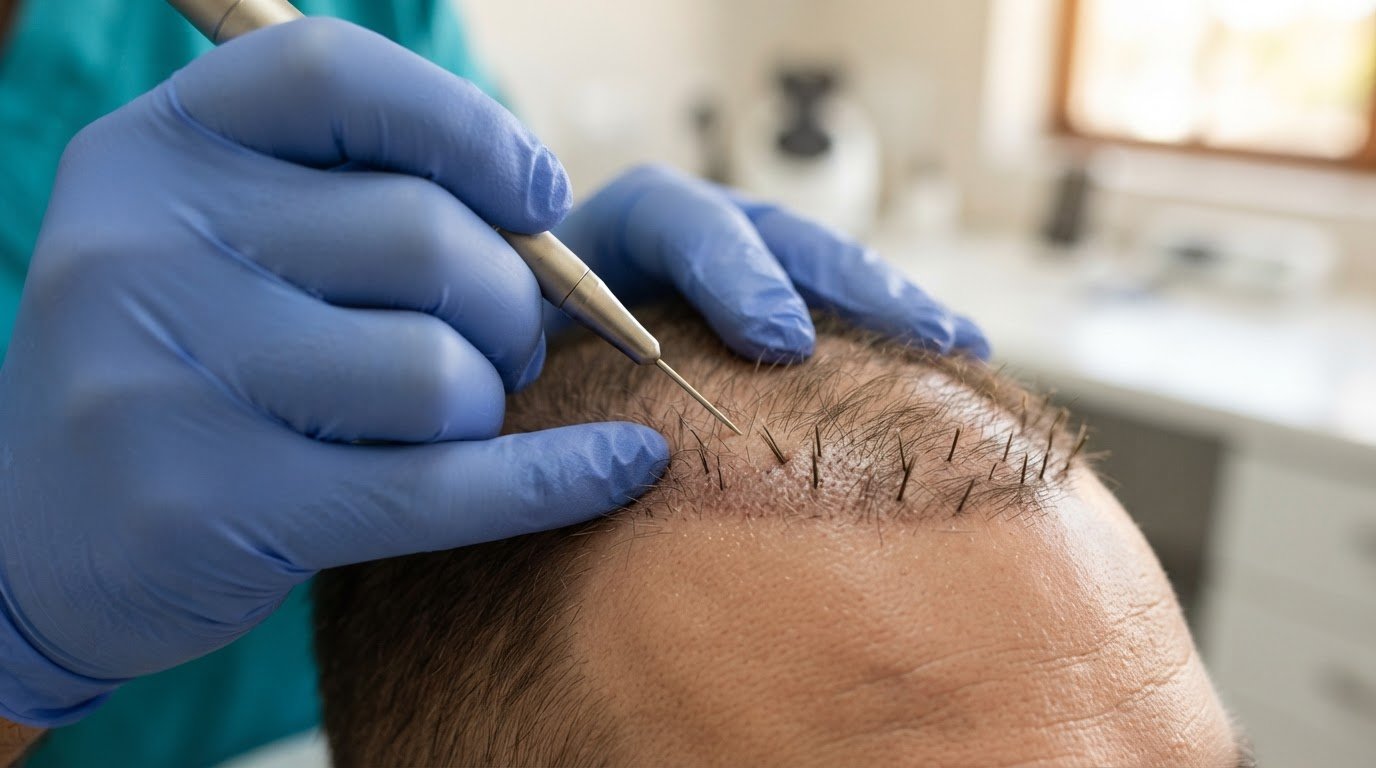
Hair dye colours the visible hair shaft, the part above the skin, rather than reaching the follicle beneath it. Dyeing a healed scalp should therefore not directly affect new hair growth. The main concern is applying chemicals to skin that is still healing, where irritation could disrupt recovery.
A transplanted follicular unit contains one or more hairs moved into the recipient area. During early healing, the skin around each placement is recovering, so rubbing, scratching or using harsh products can cause unnecessary irritation. Hair dye doesn’t loosen a healed follicle, but that doesn’t make colouring safe before your scalp has recovered.
The donor area needs care, too. Whether follicles were taken from the back or sides, those extraction sites are part of the healing process. Dye applied there too soon may irritate the skin, just as it may in the recipient area. Wait until the donor skin is closed and comfortable, and follow the recovery instructions you were given.
Timing matters because the grafts’ blood-flow connections take approximately two months to form after a transplant. This does not mean dye automatically damages follicles during this period. The concern is chemical exposure and handling while the scalp heals. Permanent colour, peroxide and bleach can be more demanding than a temporary tint, so consider the product and treated area together.
For example, applying colour only to longer hair shafts differs from massaging dye into the scalp. Keep the product away from tender or visibly healing skin, and don’t pull at scabs or rub the recipient area. A patch test can identify a reaction to the dye, but it cannot show whether your scalp has healed enough for full application.
When planning a colour appointment, tell the colourist which area received transplanted follicles and which served as the donor site. Ask for gentle application that avoids vigorous contact with your scalp. If redness, soreness or scabs remain, postpone dyeing and follow your post-operative care instructions. Hair growth and scalp recovery are related, but visible new hairs alone don’t prove that the skin is ready for chemicals.
What do hair transplant surgeons recommend about dyeing transplanted hair?
Surgeons generally advise avoiding hair dye during the first four weeks after surgery. This gives the scalp time to recover before chemical products or salon handling are introduced. The date alone isn’t enough: the skin should be healed, with no scabs or open incisions, before colour is applied.
Recommendations differ because recovery and procedures vary. One surgeon considers 21 days sufficient for wounds to heal, while other guidance places colouring around three to four weeks or one month after transplantation. These shorter timelines aren’t a reason to rush. The more cautious practical rule is to wait at least four weeks and follow the post-operative instructions for your procedure.
Surgeons also distinguish between the donor and recipient areas. Mild products may be considered on the donor area after four weeks, while the recipient area may need longer. A healed donor site doesn’t mean newly transplanted skin is ready for the same treatment. Tell your colourist which areas were treated.
Before your first colour appointment, surgeons’ practical advice commonly centres on these checks:
Wait until the scalp is healed and scabs have cleared.
Use a patch test before full application, including for home dye.
Choose a professional colourist for the first post-transplant appointment.
Discuss permanent colour, peroxide, highlights or bleach separately.
The product matters, too. A gentle semi-permanent colour differs from permanent dye or bleaching agents. Even after the initial recovery period, don’t treat the calendar as automatic clearance for every chemical service. Your scalp’s condition and the planned application both matter.
If you smoke or have diabetes or an autoimmune disorder, recovery may take longer. People with diabetes or autoimmune disorders may need more than 10 weeks before dyeing. Mention relevant health conditions when discussing recovery, and don’t colour over persistent redness, soreness or broken skin. These signs indicate that the scalp needs more healing time.
If burning, itching or a rash develops after colouring, stop and rinse the product away. Seek medical attention for severe swelling or breathing difficulty. Keeping your surgeon’s instructions and the colourist’s product details together helps you make an informed decision about timing and application.
DHI South Africa: Hair Systems & Hairpieces
DHI South Africa offers Hair Systems & Hairpieces as an option to discuss if you’re postponing colour or prefer not to dye your hair. A hairpiece can change your appearance without applying colour to your natural hair. It isn’t a substitute for transplant aftercare, though, and shouldn’t be considered automatically suitable for a scalp that’s still healing.
If your transplant is recent, make your surgeon’s recovery advice central to any decision about wearing a hair system. Your scalp may still be sensitive, and different products or ways of wearing a system may involve contact with it. Discuss your recovery stage and intended use before deciding whether this option suits your situation.
Hair Systems & Hairpieces may also be relevant if you’re considering a different approach to hair loss rather than colouring. The choice depends on what you want to address: changing your hair’s appearance, exploring a restoration procedure or considering medical treatment. DHI South Africa also offers Direct Hair Implantation (DHI), GFC Treatment and Regenera Activa.
A conversation can help clarify your priorities before you choose an approach. You may want to avoid dye while your scalp heals, cover areas where hair is sparse or understand how a hairpiece fits into a longer-term restoration plan. Be specific about your recent procedure, any sensitivity and whether you’re considering colour as well.
If you’re waiting to colour: discuss whether a hairpiece is appropriate during your recovery.
If you’re weighing options: explain your appearance goals and ask which available offering best addresses them.
If your scalp is still healing: follow your surgeon’s aftercare advice before introducing anything that may contact it.
Hair Systems & Hairpieces are one possible next step, not a requirement after a transplant. The right choice depends on your priorities and recovery, not on any need to make an immediate change. A discussion can help you understand the options without rushing into colour or another approach.
Contact DHI South Africa to discuss your options.
Choose your next step with confidence
Knowing when you can dye your hair after a transplant gives you a clearer basis for planning your next change. Your preferred colour is only one part of the decision. Consider how you want your hair to look during recovery, what feels comfortable and whether colouring fits your longer-term goals.
There’s no need to rush towards a particular appearance. A considered conversation can help you weigh your priorities, understand the options and decide what feels right for you. If you’re not ready to colour, you can still explore another approach to your hair restoration journey.
Bring your questions about colour, recovery or treatment options to a discussion with the team. Clear advice can help you take the next step at a pace that feels right.
With a thoughtful plan and the right guidance, you can move forward feeling informed and comfortable with your choice.
Frequently Asked Questions
What about highlights or bleaching?
Highlights can lighten selected strands, but the technique and product determine whether bleach is involved. Before your appointment, describe the shade you want and ask the colourist to explain the planned process, including whether the product will touch your scalp. This helps you understand the proposed chemical service and discuss it alongside your recovery instructions, rather than choosing based on the word “highlights” alone.
What are the risks of colouring hair too soon?
Colouring before your scalp is ready can cause discomfort and may complicate care around the treated areas. For instance, dye residue can be difficult to rinse away if washing or handling is restricted during recovery. If an appointment conflicts with your aftercare routine, postpone it and ask your surgeon when normal colouring can resume. Keep the product name and application details available if you need advice after use.
Will the dye affect the growth of my new hair?
Dye changes the appearance of hair that’s already visible, not the rate at which it grows. As new length appears, your natural root colour may show beside the dyed section, creating a contrast that changes over time. A colourist can help you choose a shade that blends with your natural colour, making regrowth less distinct between appointments.
How long after a hair transplant can you dye your hair?
Many patients wait at least four to six weeks, but this is a starting point, not a universal appointment date. The recipient area may need longer than the donor area, and permanent colour or lightening may call for a more cautious plan. Tell the colourist when surgery took place, and use your surgeon’s recovery instructions to decide whether the planned service is appropriate.
Is it safe to dye hair before a hair transplant, and how long before surgery?
Colouring before surgery may be possible, but timing advice varies. Some guidance suggests dyeing at least a few days beforehand; other advice recommends avoiding dye for a month before surgery. Tell your surgeon which colour and product you plan to use, especially if you’re changing shade. This gives the team context when assessing your hair and scalp during procedure planning.
Can hair dye damage newly transplanted grafts or affect their growth?
Once your scalp has healed, colouring the hair shaft is not expected to damage the follicle beneath it. Transplanted hairs may take at least three months to start growing, so the recipient area’s early appearance doesn’t show how a later colour will look. Keep your treatment dates and colour history together to make it easier to discuss changes in appearance at follow-up appointments.
Comments