

Frontal Hairline Restoration for Natural-Looking Results

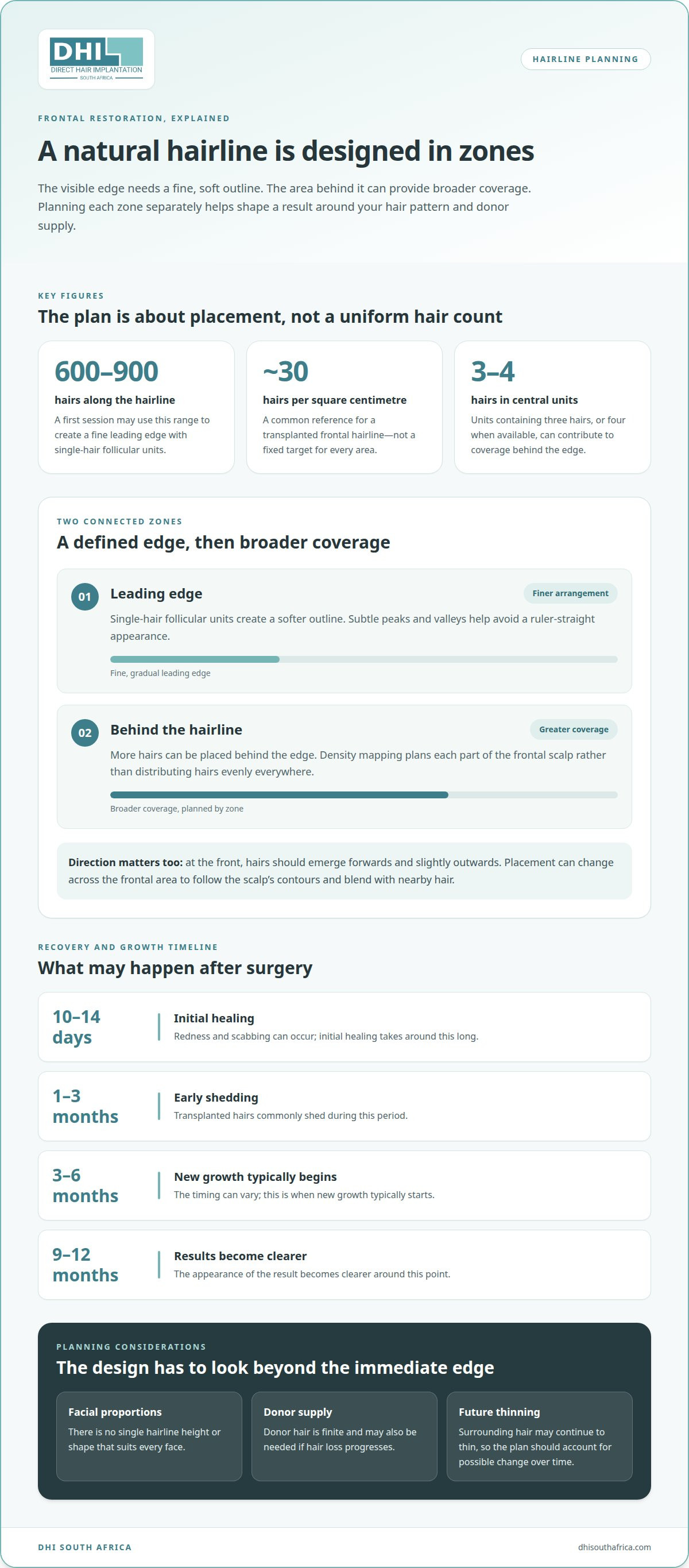
A natural-looking frontal hairline restoration isn’t simply a matter of adding as much hair as possible. It depends on designing a soft, slightly irregular hairline that suits your facial proportions, using mostly single-hair follicular units at the leading edge, and planning for the possibility of future hair loss.
It’s understandable to want a result that looks like your own hair, not a line that seems too low, too straight or too dense. The design matters: it should suit your face and take your hair-loss pattern into account.
This article explains how hairline shape, facial proportions and frontal coverage work together to influence a natural-looking result. It also explores how placement at the front differs from the area behind the hairline, and why future thinning matters when planning restoration.
You’ll get a clearer picture of what thoughtful hairline design involves and what to consider when discussing restoration.
Table of Contents
Can Frontal Hair Restoration Look Completely Natural?
It can look natural when the hairline shape, placement and density suit your face and account for future hair loss. Unlike a general hair transplant, restoration at the front needs a soft leading edge, while the area behind it can provide broader coverage.
Frontal hairline restoration rebuilds the hairline using follicles from a donor area, usually at the back or sides of the scalp. A suitable candidate has enough donor hair to support the planned coverage, with hair-loss progression and expectations considered before surgery. Non-surgical scalp micropigmentation can create the appearance of follicles, but it doesn’t grow hair.
Hair Counts and Donor Supply
The number of hairs planned depends on the size of the area and the coverage sought. This matters because the donor area has a finite supply, which may also be needed if hair loss progresses. Planning should balance the visible hairline with the donor hair available for future needs, rather than focusing only on the immediate result.
Density is one way to describe the plan: a transplanted frontal hairline is commonly built at around 30 hairs per square centimetre. The number and distribution of hairs vary with the area being restored. A smaller zone with a defined edge has different needs from broader thinning across the frontal scalp.
Hairline Placement and Transplant Techniques
Single-hair follicular units create a softer edge, while units containing more hairs can add coverage behind it. FUE removes individual follicles from the donor area; FUT removes a strip of scalp from which follicles are separated. These are different surgical approaches, and the method affects how follicles are harvested. The front commonly uses a gradual change in density and direction to blend with surrounding hair.
Surgery, Recovery and Hair Growth
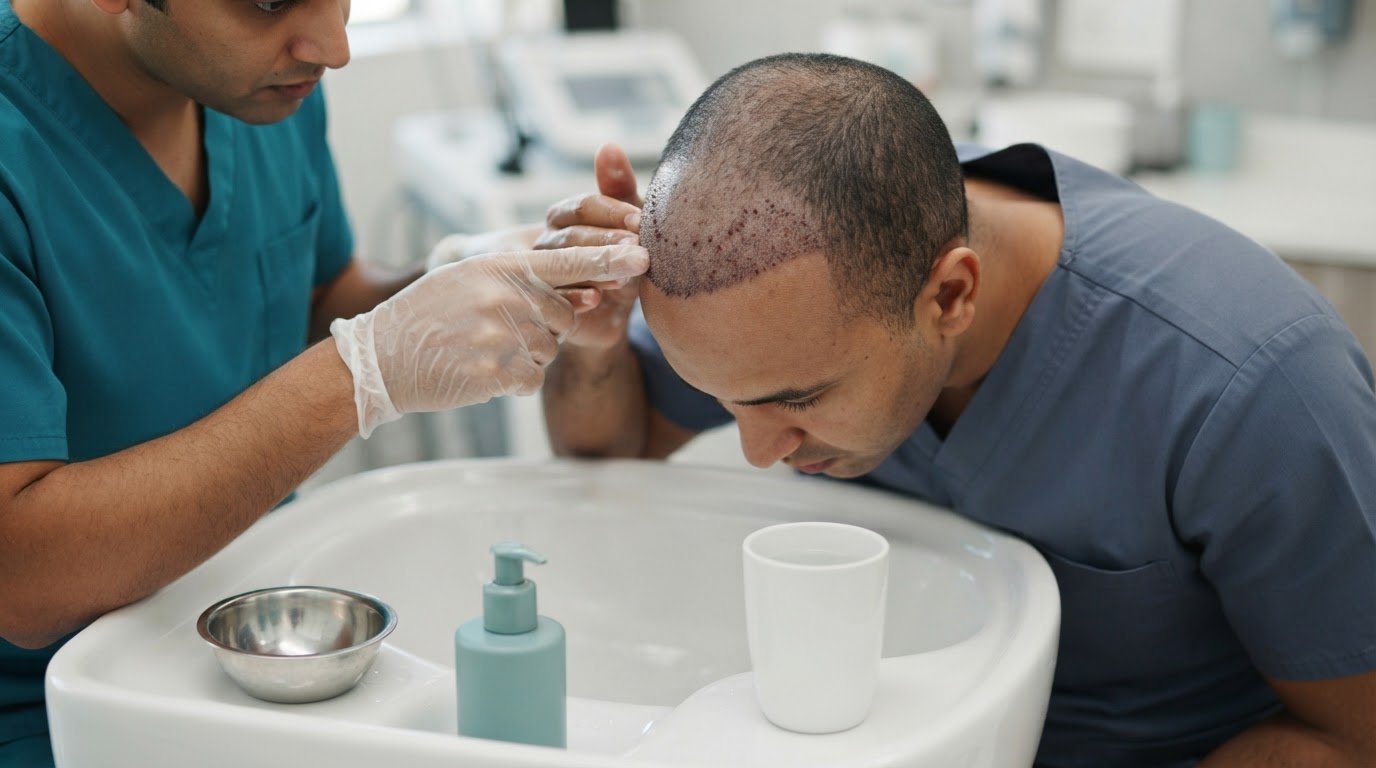
The process generally involves planning the hairline, harvesting donor follicles, preparing them and placing them into recipient sites. Immediately after surgery, redness, scabs and visible grafts are normal; initial healing takes 10 to 14 days. Transplanted hairs commonly shed during the first 1-3 months, then new growth typically begins 3-6 months after surgery. Results become clearer around 9-12 months after surgery.
Age matters because transplanted hair can remain while surrounding hair continues to thin. A low hairline designed without considering progression may look increasingly isolated; an age-appropriate design can allow for change over time. Planning should consider facial proportions, donor supply and possible future hair loss, not just immediate coverage.
As with any surgery, side effects are possible. Redness, scabbing and early shedding can occur during recovery. The lasting appearance also depends on the hairline design and how surrounding hair changes.
Hairline restoration versus frontal density restoration
Hairline restoration defines the visible edge; frontal density restoration adds coverage behind it. The distinction affects how many hairs are placed across the forehead and how their distribution changes across the frontal scalp.
First-Session Hair Numbers
A first session may place 600-900 hairs along the hairline. Because these are single-hair follicular units, this creates a fine leading edge rather than uniform coverage across the whole forehead. The number matters because the front needs a clear outline, while thinning behind it may call for a different distribution. Planning those areas separately can help avoid a dense, abrupt boundary.
A transplanted frontal hairline is commonly planned at around 30 hairs per square centimetre. This is a reference for the edge, not a fixed target for every part of the frontal scalp. Behind the hairline, the plan can place more hairs to create coverage. The transition between these zones influences how the result appears when hair is brushed forwards or away from the forehead.
Density, Angle and Direction
Density describes how closely hairs sit together; angle and direction describe how they emerge from the scalp. At the front, hairs should emerge angled forwards and slightly outwards. This direction helps frame the forehead and connects the restored edge with nearby growth, rather than creating an upright or brush-like appearance.
For example, hairs placed at one uniform angle can look orderly but unlike natural growth. A planned change in direction across the frontal area helps the hair follow the scalp’s contours. Placement should also relate to existing hair so the transition looks integrated.
Hair Planning and Density Mapping
Density mapping divides the frontal scalp into zones and plans hair placement for each. The leading edge needs a finer arrangement, while the area behind it can carry greater density. In the central portion, follicular units containing three hairs, or four when available, can contribute to coverage.
This map helps distinguish a defined hairline from broader frontal restoration. If recession affects the temples as well as the centre, both areas need consideration. The plan is not to place an equal number of hairs everywhere, but to match coverage and direction to each zone. Hair transplant planning considers these factors when shaping a surgical plan.
Natural hairline design and facial proportions
A natural-looking hairline is designed around facial proportions, existing hair patterns and possible future change. Measurements can guide placement, but no single line or height suits every face.
Designing a Natural-Looking Hairline
A natural hairline has subtle peaks and valleys rather than a straight, even edge. This irregular outline avoids the artificial look a ruler-straight line can create. Rounded temple points also help the frontal edge connect with hair at the sides.
The transition zone is the first 0.5-1.5 centimetres of the hairline. Placing one-hair follicular units an average of 1-2 millimetres apart can create a soft leading edge. This gradual arrangement gives the front a different visual texture from the denser area behind it.
Facial Proportions in Hairline Design
Facial proportions help guide hairline height and shape. A central hairline position is commonly set around 8 to 9 centimetres above the brow, while another reference places the frontal hairline 7-11 centimetres above the glabella, the point between the eyebrows.
These measurements are guides, not interchangeable targets. A design also considers the distance between the eyebrows and chin, forehead shape and existing temple recession. For example, lowering the central point without accounting for a high forehead or receding temples can create an unbalanced outline.
Hair Placement and Temple Angles
Hair placement translates the drawn outline into a pattern that follows the scalp’s natural growth. The frontal edge should not blunt the temporal recession, the natural inward curve at the temples. Defined but rounded temple points help the hairline transition towards the sides without a sharp corner.
The hairline’s front-to-side course should approximately parallel Frankfort’s Horizontal Line, a facial reference running from the lower eye socket towards the ear opening. Considering this angle alongside facial proportions helps the design look coherent from the front and profile.
During planning, you and the doctor can assess the proposed outline together, considering facial proportions, donor supply and possible future hair loss. A hairline that looks suitable from the front may feel too low or too straight from the side. Reviewing the design from more than one angle can reveal these differences before treatment.
Age-appropriate design matters too. A very low hairline may not suit the face as it changes over time, particularly if surrounding hair continues thinning. A measured, softly irregular outline can frame the forehead while allowing for future change. The goal is balance, not simply a lower hairline.
Causes and progression of a receding hairline
Hairline recession can change the forehead’s visible shape over time. Understanding its pattern matters because a restoration plan should account for continuing hair loss, not just today’s appearance.
Common Causes of Recession
Hairline recession often reflects progressive hair loss, with hormonal influences affecting follicles along the frontal scalp. These follicles may produce finer hairs over time before stopping. As a result, the front can look thinner before the change becomes a clearly visible gap. The difference matters when assessing which areas have lost hair and which still contain weakened, thinning strands.
Temple recession is often one of the first visible signs of pattern hair loss. For example, the corners may move back while the centre remains fuller. This uneven change can alter the hairline’s shape before thinning becomes obvious across the frontal area. It’s one reason a restored edge should relate to surrounding hair rather than be considered in isolation.
Recession Patterns and Progression
Hair-loss patterns describe how recession develops across the temples and central hairline. James Hamilton first described a pattern of receding hairlines in 1951; O’Tar Norwood refined the classification in 1975. These milestones reflect the effort to describe visible patterns consistently. A receding hairline may progress unevenly, so one person’s temple change does not predict another person’s future appearance.
Progression matters because transplanted hair can remain while surrounding hair continues to thin. Imagine a low, sharply defined hairline in front of hair that later recedes further. The contrast may make the restored area look isolated. Considering possible change in the plan can help the overall design remain coherent as the pattern develops.
Several design choices can make a result look unnatural. A hairline placed too low may look artificial and become less age-appropriate over time. A straight, sharply defined edge can look unlike a naturally irregular pattern. New hairs placed without regard to existing growth direction can also make the transition visible instead of blending with nearby hair.
Donor supply adds another consideration. If the plan concentrates too much coverage at the front, fewer follicles may remain available for areas affected by later recession. For example, temple loss behind a restored edge can change the balance between transplanted hair and thinning hair. Planning should consider the current pattern, donor area and potential progression together.
These factors show why the immediate outline is not the only measure of success. A design should remain visually compatible with changing hair over time. Consider recession patterns and future thinning alongside your desired frontal appearance before deciding on the plan.
Natural-looking frontal hairline results
A convincing result depends on more than filling a visible gap. Hairline shape, growth direction, density and future thinning all influence the appearance. For example, a dense, straight edge can look distinct from surrounding hair. A softer outline and carefully planned placement can help the restored area sit more naturally within the face.
Placement should follow the way frontal hair emerges. Hairs at the front angle forwards and slightly outwards, while density changes gradually behind the leading edge. Around 30 hairs per square centimetre is a recommended density for a transplanted frontal hairline. That figure is a planning reference, not a guarantee of a particular aesthetic result: hair characteristics and the area treated also shape the overall appearance.
Future change matters too. Transplanted hair can remain as surrounding hair continues thinning, so a design should make sense beyond the immediate post-procedure appearance. Consider a low hairline when the temples may recede further: the contrast could become more noticeable over time. An age-appropriate design that accounts for possible progression can help maintain visual balance.
Patience is part of judging the outcome. Transplanted hairs commonly shed during the first 1-3 months after surgery, and new growth typically begins 3-6 months after surgery. Results become clearer around 9-12 months after surgery. Assessing the hairline before that growth develops may not reflect its eventual appearance, so photographs taken at different stages can help show how it changes.
Before-and-after photographs are more useful when taken from the same angle and in similar lighting. A front-facing image under bright light may make thinning look different from a side view in softer light. Comparing like with like helps you assess hairline shape, coverage and temple balance, rather than mistaking photographic differences for changes in the result.
For ongoing hair loss, treatment options depend on the concern being addressed. PRP Hair Loss Treatment and GFC Treatment are among the options available, but they are not surgery to restore a hairline. Assess design, placement and possible progression together rather than judging naturalness by density alone.
DHI South Africa
DHI South Africa can help you understand whether a surgical hairline plan fits your goals and hair-loss pattern. Its Direct Hair Implantation (DHI) service is relevant when you’re considering restoration with transplanted hair. Planning can take account of the desired hairline, facial proportions, existing thinning and donor supply, rather than treating the forehead as an isolated area.
A useful next step is to discuss what you want your hairline to achieve. You may want to soften temple recession, restore a receded central edge or improve frontal coverage. These goals involve different areas and placement plans. An assessment can help clarify your concerns, donor supply and how future hair loss could affect the design.
Direct Hair Implantation is the surgical option among the clinic’s offerings that is most directly relevant to rebuilding a hairline with transplanted hair. It may be worth discussing if you’re considering a change to the hairline’s shape or coverage. The decision should account for the aesthetic design and how the transplanted area relates to your existing hair.
Not every concern calls for surgery. If your main concern is thinning rather than a receded outline, GFC Treatment, Regenera Activa or PRP Hair Loss Treatment may be relevant options to discuss. These are distinct from surgical restoration; the appropriate option depends on your hair-loss pattern and the outcome you’re seeking.
DHI South Africa also offers Hair Regeneration Medical Treatment and products. These may be relevant when your concern includes ongoing hair loss or thinning, rather than only the position of the hairline. Understanding the difference between restoring an edge and addressing other hair-loss concerns can help you consider the options clearly.
A useful discussion can bring together your preferred hairline shape, facial proportions, donor supply and concerns about progression. Explain whether your priority is the central hairline, the temples or broader frontal coverage. These details help frame the decision around your goals, rather than a standard design or a single measure of density.
Choosing what to do is personal, especially when the result will frame your face. You can take the next step by discussing your hairline and treatment options with the clinic, without assuming that one approach suits every concern.
Take the next step with a clear vision
Before deciding on frontal hairline restoration, consider what you want your hairline to look like, not only what you want it to cover. A subtle change that respects your natural features may suit you better than a dramatic redesign. Your priorities can guide a thoughtful discussion about the approach and outcome you have in mind.
It can help to describe what matters to you, such as a softer frame, a more defined edge or a design that feels appropriate as your appearance changes. You don’t need to arrive with a perfect answer. The aim is to make a considered decision that reflects your preferences and comfort with treatment.
A considered next step can bring greater clarity. Take the time you need, then discuss your goals with DHI South Africa when you’re ready.
Frequently Asked Questions
How many grafts will I need?
A hairline transplant commonly uses 1,000 to 2,500 grafts, but the number depends on the area being restored and the coverage planned. A graft is a follicular unit, not a single hair, so the total hair count can differ. For example, units containing one hair may be used at the leading edge, while units with more hairs can add coverage behind it. Donor supply also shapes the plan.
Is the procedure painful?
The procedure may involve discomfort, so ask your doctor what to expect and how it will be managed. The local anaesthetic numbs the treatment area during the procedure. Discuss what to expect with the doctor beforehand and raise any concerns. Understanding how the procedure is performed can help you prepare and decide whether surgical restoration feels right for you.
What age should you have a hairline transplant?
There isn’t one suitable age for everyone; the pattern and progression of hair loss matter. A younger person with ongoing recession may need further transplant sessions if loss continues into their 40s. Planning should account for how the hairline may look as you age, alongside facial proportions and donor supply. The aim is an age-appropriate design, rather than setting the hairline as low as possible.
What causes a receding or uneven frontal hairline?
Pattern hair loss is a common cause of frontal recession. Hormonal influences can make frontal follicles produce finer hairs, and recession may begin unevenly, with the temples moving back while the centre remains fuller. This can make the hairline appear asymmetrical. Other patterns include thinning across the frontal area. The visible shape depends on which follicles are affected and how hair loss progresses.
How is a natural-looking hairline designed for hairline restoration?
A natural-looking design considers your facial proportions, existing hair pattern, temple shape and possible future loss. Rather than drawing a ruler-straight edge, the plan can include subtle peaks and valleys that reflect natural variation. The leading edge typically uses single-hair follicular units, with placement following the direction of nearby hair. Reviewing the outline from the front and side helps assess how it frames your face.
How long does recovery take, and when do transplanted hairs start growing?
Initial healing after a hairline transplant takes 10 to 14 days, and redness and scabbing usually subside within two weeks. Transplanted hairs commonly shed during the first 1-3 months after surgery. New growth typically begins 3-6 months after surgery, with results becoming clearer around 9-12 months after surgery. These stages mean the early appearance isn’t the final view of the restored hairline.
How long do frontal hair transplant results last, and might further treatment be needed?
Hair transplanted from the back of the scalp to the front stays permanently, while surrounding hair may continue to thin or be lost. This can change how the overall hairline looks over time. Further treatment may be considered if hair loss progresses or new areas become affected. Planning for that possibility helps preserve a balanced appearance, rather than focusing only on the coverage visible immediately after treatment.
Which clinics and qualified hair transplant surgeons offer frontal hairline restoration in South Africa?
DHI South Africa offers Direct Hair Implantation and other hair-loss treatments. The right option depends on your hair and restoration goals.
Comments