

Which Shampoo Suits Transplanted Hair? How to Choose Gently

A gentle, sulphate-free shampoo is usually a better choice after a hair transplant than a strongly cleansing formula. For the best shampoo for transplanted hair, look for a mild option with a pH close to the scalp’s natural level, around 5.5, and avoid harsh ingredients that may dry or irritate sensitive skin.
It’s understandable to be cautious: your scalp needs gentle care as it heals, and the right washing routine matters as much as the shampoo itself. The label can offer useful clues, but follow your clinic’s aftercare instructions for when to start washing and which product to use first.
This guide explains what to look for in a gentle shampoo, which ingredients may soothe or moisturise the scalp, what to avoid and when you can resume washing after a transplant. You’ll also learn how to wash carefully and avoid unnecessary rubbing or irritation.
Table of Contents
What Shampoo Is Best After a Hair Transplant?
South African hair transplant clinics generally recommend a mild, pH-balanced shampoo, used according to the clinic’s aftercare protocol. During the first 7-10 days, baby shampoo is often recommended; after day 10, an aloe-based or medical-grade shampoo may be suitable. Your scalp’s healing stage matters more than choosing a product labelled for hair growth.
For the best shampoo for transplanted hair, look for a gentle formula with a pH close to 5.5. This is around the scalp’s natural pH. Sulphate-free formulas can cleanse without stripping as much of the scalp’s natural oil. However, even a mild shampoo should wait until washing is permitted in your aftercare instructions.
Read the ingredient list rather than relying on claims such as “natural” or “sensitive”. Botanical extracts can still irritate some scalps, while a simple, fragrance-free formula may be easier to tolerate. Avoid introducing several new products during healing, so it’s easier to identify what may be causing redness or discomfort.
Sulphates: avoid sodium lauryl sulphate (SLS) and sodium laureth sulphate (SLES), which can be harsh on a sensitive scalp.
Fragrance: choose fragrance-free shampoo; post-transplant guidance advises avoiding fragrance for the first six months.
Alcohol-based ingredients: these may dry the scalp and aggravate irritation.
Parabens, silicones and harsh preservatives: avoid these where possible during post-transplant care.
These ingredients won’t cause inflammation or hair loss in everyone. The concern is avoidable irritation while the recipient area heals. Scratching or rubbing an irritated scalp can interfere with careful aftercare, so stop using a product if it causes burning, persistent itching or increased redness.
Keep washing simple: use the recommended cleanser, apply it gently and rinse without strong water pressure. Don’t scrub the recipient area or pick at scabs. Shampoo can’t guarantee hair growth, and claims about caffeine or biotin don’t replace careful washing. The best choice is a mild product that follows your clinic’s instructions and suits your scalp.
Why Is Post-Transplant Care Crucial?
The first days after a procedure call for extra care. Newly implanted follicles sit in a healing scalp, so rough washing or scratching can irritate the recipient area. An unsuitable shampoo may cause dryness, itching or inflammation, making aftercare less comfortable. Shampoo doesn’t determine hair growth, but gentle cleansing helps prevent unnecessary irritation.
An unsuitable shampoo can cause dryness, redness or irritation, particularly if it contains harsh or fragranced ingredients. Discomfort may tempt you to scratch, which can disrupt careful scalp care. If a product causes burning or persistent irritation, stop using it and follow your clinic’s instructions.
Timing matters as much as the formula. Avoid scalp contact during the first 48 hours after surgery. Patients are commonly cleared for a gentle rinse on day three or four, but the clinic’s specific washing protocol takes priority. During the first week to ten days, use the cleanser and method provided for your procedure.
Use a light touch: apply cleanser gently, without rubbing or scrubbing transplanted areas.
Keep the water gentle: lukewarm water and low pressure help avoid unnecessary disturbance.
Protect the healing skin: don’t pick scabs or scratch an itchy area.
Dry carefully: pat the scalp with a soft towel instead of rubbing.
A medical-grade shampoo may suit a later stage of recovery, but the label alone doesn’t mean it’s right for every scalp. Formulations differ, and an ingredient that feels comfortable for one person may irritate another. Follow your aftercare plan before changing products. Don’t add a medicated shampoo just because it contains an ingredient associated with scalp care.
Protein and biotin are often promoted for hair growth, but a shampoo containing either doesn’t replace post-procedure care. During healing, prioritise a suitable cleanser and gentle handling over promises on a label. Hair commonly sheds during weeks two to four, so shedding alone doesn’t show that a shampoo has harmed follicles. For a closer look at hair transplant care, consider the treatment information alongside your clinic’s washing protocol.
Ingredients Claimed to Soothe and Moisturise the Scalp
Aloe-based shampoo is one option suggested after day 10, once your aftercare protocol allows a product change. Aloe is commonly included in soothing formulations, but no ingredient suits every healing scalp. Your surgeon’s instructions should guide what you use, especially if you have previously reacted to skincare or hair products.
Look for a short, clear ingredient list rather than a long collection of botanical extracts. A fragrance-free formula can reduce exposure to fragrances that may irritate sensitive skin. Choose a gentle cleanser with a pH suited to the scalp, and avoid introducing several new products at once. That makes it easier to notice whether a particular ingredient causes discomfort.
Aloe-based formulations: may suit a routine after day 10, if your clinic’s instructions permit them.
Fragrance-free products: limit unnecessary fragrance exposure during scalp healing.
Gentle conditioners: a fragrance-free conditioner may help keep hair hydrated and manageable. Ask your surgeon before applying it near the recipient area.
Moisturising the hair shaft and caring for the scalp aren’t the same thing. Conditioner can soften the hair lengths, but don’t rub it into healing skin unless your aftercare plan allows it. When choosing shampoo after hair transplantation, focus on gentle washing and careful rinsing, rather than expecting a product to change follicle growth.
You can use biotin-containing shampoo after a transplant, but that doesn’t mean it will stimulate new hair growth. Caffeine shampoo requires similar caution: doctors generally don’t advise using it during the first two weeks. After that, you may use it if you’ve used it before and had good results. Evidence that caffeine shampoo supports transplanted hair growth is insufficient.
Check the label for ingredients your scalp may need to avoid, including sulphates, artificial fragrances and alcohol-based products. A shampoo can contain several soothing-sounding extracts and still include a cleanser that feels too harsh. Don’t let terms such as “repair” or “sensitive” replace a close look at the ingredient list.
Introduce one permitted product at a time, then watch for persistent itching, burning or redness. Stop using a product that appears to cause irritation and follow your clinic’s aftercare advice. The aim is a comfortable, uncomplicated routine, not a shelf full of specialist formulas. If your scalp is particularly sensitive, a surgeon can recommend a formula suited to your healing needs.
When to Resume Shampooing After a Transplant
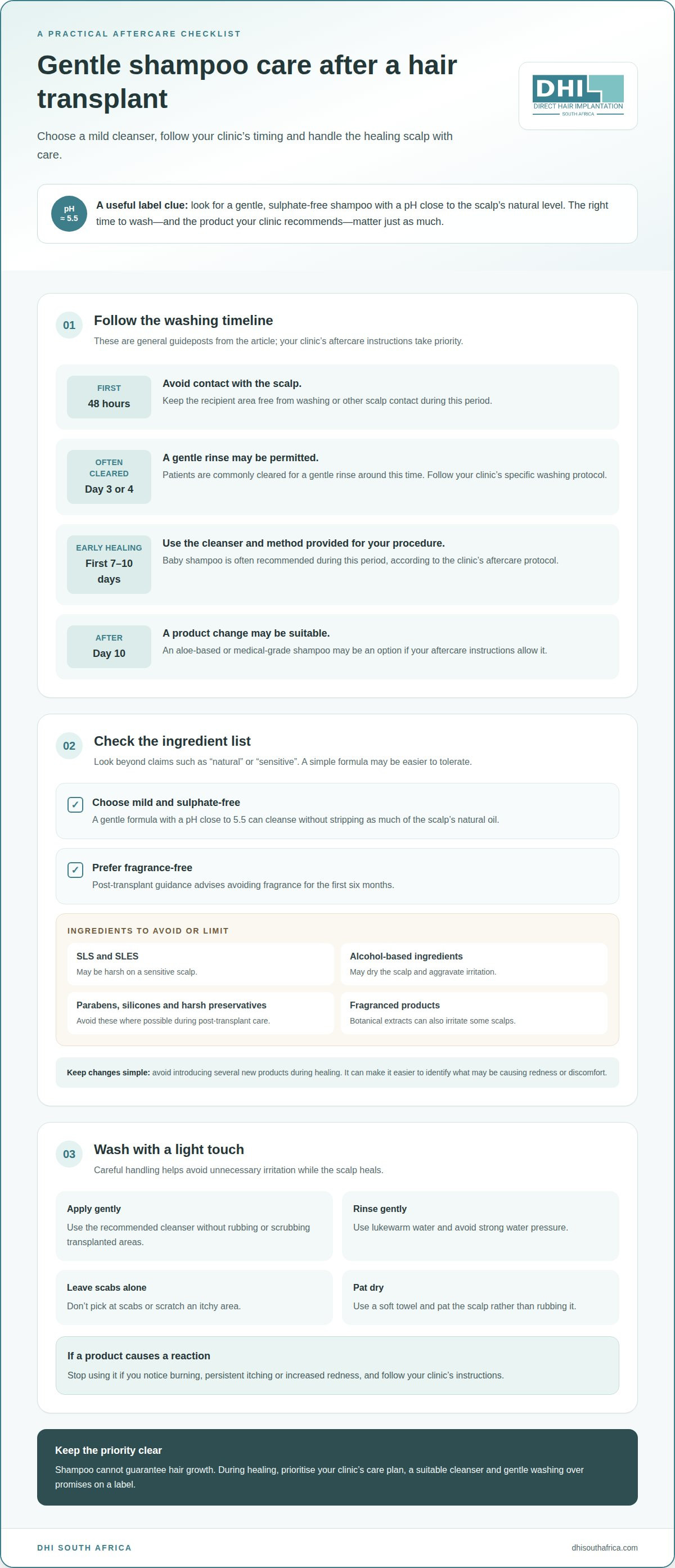
Keep using a gentle shampoo until the donor and recipient areas have healed and your aftercare plan allows you to return to your usual product. The right time depends on healing, not simply on when you want to resume your pre-transplant routine. If scabs, clotting or visible irritation remain, it may be too soon to use your usual shampoo.
Once your clinic’s instructions allow a change, return to your usual shampoo gradually. Use a familiar, mild formula rather than introducing a new shampoo, conditioner, styling products and scalp treatments all at once. This makes reactions easier to spot and your routine easier to manage. A gentle shampoo may remain suitable beyond early recovery if your scalp tolerates it.
Medicated shampoos need a separate decision. Ketoconazole products are available in 1% or 2% strengths, but they aren’t a routine substitute for a gentle cleanser during healing. Discuss their use with your surgeon, particularly if you have a history of scalp sensitivity or have been given other aftercare products. The reason for using a medicated formula should guide its place in your routine.
After your scalp has healed, ketoconazole may be used for longer-term hair care. The guidance for this routine is to use it twice weekly, leaving the shampoo on for three minutes before rinsing. These instructions apply to that specific medicated shampoo, not every cleanser. Follow the product directions and your surgeon’s protocol rather than changing contact time or frequency yourself.
If you have dandruff, wait until at least a month and a half after the transplant before restarting an anti-dandruff shampoo. If flaking appears earlier, don’t scrape your scalp or use a medicated product without guidance. Persistent irritation, redness or discomfort needs attention, not a stronger shampoo. Choose a product that suits your recovery stage and doesn’t disrupt your care plan.
Choosing Gentle, Sulphate-Free Shampoo
Judge whether a shampoo suits your needs by its label, not words such as “repair” or “growth”. These claims describe how a product is marketed; they don’t prove it can stimulate transplanted follicles. A cleanser’s main role is to remove oil and residue from your hair and scalp.
If your scalp is easily unsettled, look for a shampoo designed for regular use. A complex formula containing many extracts can make it harder to identify what affects your comfort. Keeping your routine straightforward also makes changes easier to assess. The label should clearly describe the product’s intended use and directions.
Separate cleansing from treatment: shampoo cleans hair and scalp; it isn’t automatically a medical hair-growth treatment.
Be cautious with promises: terms such as “follicle activating” or “density boosting” don’t prove that a shampoo supports regrowth.
Choose a manageable routine: a product you can use consistently is more practical than rotating between several specialist formulas.
Notice your response: changes in comfort or scalp condition can help you decide whether a product suits you.
A “sulphate-free” claim can help narrow your options, but it shouldn’t be your only deciding factor. Consider whether the product suits your scalp type and whether its directions fit your routine. If a shampoo leaves your hair feeling coated or your scalp uncomfortable, it may not suit you, whatever its marketing claims.
Keep expectations realistic. Shampoo cannot replace assessment of ongoing hair loss, and a cosmetic claim doesn’t make a product a treatment. If your concern is continued thinning rather than cleansing, consider the difference between everyday hair care and a dedicated hair restoration treatment. That distinction can help you choose a product for comfort without expecting it to address a separate medical concern.
The key is to choose a straightforward cleanser for scalp comfort, see how it suits you and avoid treating marketing language as proof of hair growth. A simple, consistent routine is often easier to assess than a collection of products with overlapping claims.
DHI South Africa: Hair Systems & Hairpieces
DHI South Africa offers Hair Systems & Hairpieces, Direct Hair Implantation (DHI), GFC Treatment and Regenera Activa. These options address different hair restoration needs; shampoo is only one part of caring for your scalp and hair. Your next step depends on whether you’re looking for a non-surgical hair option, considering transplantation or exploring medical treatments for hair loss.
Hair Systems & Hairpieces may suit you if you want a hair replacement option rather than a transplant. They’re distinct from shampoo and scalp treatments, so post-transplant washing advice won’t answer every question about choosing or caring for a hair system. Discuss your priorities and routine to understand whether this option meets your needs.
Direct Hair Implantation is the surgical hair restoration option in this group. If you’re considering it, shampoo choice is part of the wider procedure and recovery conversation. Follow the clinic’s aftercare instructions on when to wash and which products to use. A product suited to your everyday routine may not be appropriate during early healing, so follow the transplant protocol provided.
GFC Treatment and Regenera Activa are additional medical hair restoration options. They may be relevant to a discussion about hair loss treatment, rather than substitutes for post-procedure shampoo or washing instructions. A clinician can explain how each option fits your concerns and treatment plan. A shampoo marketed for growth doesn’t replace an assessment or a discussion about medical treatment.
Frame your decision around the result you want, not just a product label. For example, someone exploring a hairpiece has different questions from someone considering DHI. If you’re focused on ongoing hair loss, you may wish to discuss GFC Treatment or Regenera Activa. In each case, describe your hair and scalp concerns, including sensitivity or irritation when washing, so the conversation can focus on relevant options.
Whichever option you explore, keep scalp care practical: use products appropriate for your recovery stage and follow the instructions provided after treatment. Shampoo supports cleansing, but it doesn’t determine which restoration approach is right for you. Understanding the difference can help you choose a next step without expecting one product to meet every need.
Take the Next Step Towards a Personalised Hair Plan
Your hair-care routine can be one part of a broader plan to restore confidence. Choosing the best shampoo for transplanted hair can help you care for your scalp, but it can’t answer every question about ongoing thinning or restoration. Consider what you’d like help with next, whether that’s understanding treatment options or finding an approach that fits your hair goals.
DHI South Africa offers Direct Hair Implantation (DHI), GFC Treatment and Regenera Activa. Each is a different hair restoration option. If you’re weighing these against ongoing hair care, a conversation can clarify which treatment relates to your concerns and what to consider before deciding. There’s no need to rush: understanding your options is a useful step in itself.
With clear guidance and a routine suited to your needs, you can move forward with greater confidence and care.
Frequently Asked Questions
What shampoo is best to use after a hair transplant?
Choose a cleanser based on your recovery stage, scalp sensitivity and the instructions provided for your procedure. Avoid switching between several shampoos at once, as it makes it harder to tell which one suits you. If you’re comparing a daily cleanser with a medicated formula, remember they serve different purposes. Don’t use a treatment shampoo just because it promises thicker-looking hair.
When can you start washing your hair after a hair transplant?
When to start washing depends on the instructions for your procedure, so follow the schedule given by your surgical team. Some clinics supervise an initial wash as part of early follow-up. Before washing at home, make sure you understand how to apply and rinse the cleanser and what to do if water or product causes discomfort. Written instructions can help you repeat the method consistently.
How often should you wash transplanted hair during recovery?
Follow the washing frequency in your aftercare plan, as routines can vary by recovery stage. Washing frequency can vary during recovery, so follow your clinic’s aftercare instructions. Keep a simple record of wash days and scalp reactions, especially if your routine changes. This can help you describe a pattern clearly at follow-up, rather than relying on memory when discussing irritation or dryness.
Which shampoo ingredients should you avoid after a hair transplant?
Rather than judging a product by one ingredient, consider how your scalp responds to the whole formula. Keep the packaging or take a clear photograph of the ingredient list if a new product causes a reaction. This gives your care team useful detail when discussing the issue. Avoid testing several new hair products together, as it makes the cause harder to identify.
Are baby shampoo or saline cleansers recommended after a hair transplant?
Baby shampoo may be suitable if it’s part of your clinic’s recommended routine. Saline is a rinsing solution, not a shampoo, so the two products have different roles. Don’t substitute one for the other or combine them unless your instructions say to. If your care plan includes saline, follow its stated use and keep your cleanser routine separate.
How should you wash your scalp without dislodging grafts?
Use the washing method demonstrated or described by your clinic, and keep your fingernails away from the recipient area. Don’t try to loosen crusts while washing; they should come away naturally. If you’re unsure where to place your hands, ask for the steps to be shown again during follow-up. A clear demonstration can make washing at home easier and calmer.

Comments