%20(1).jpg)
%20(1).jpg)
Certified Hair Transplant Doctors: A Patient’s Essential Credentials Checklist for 2026

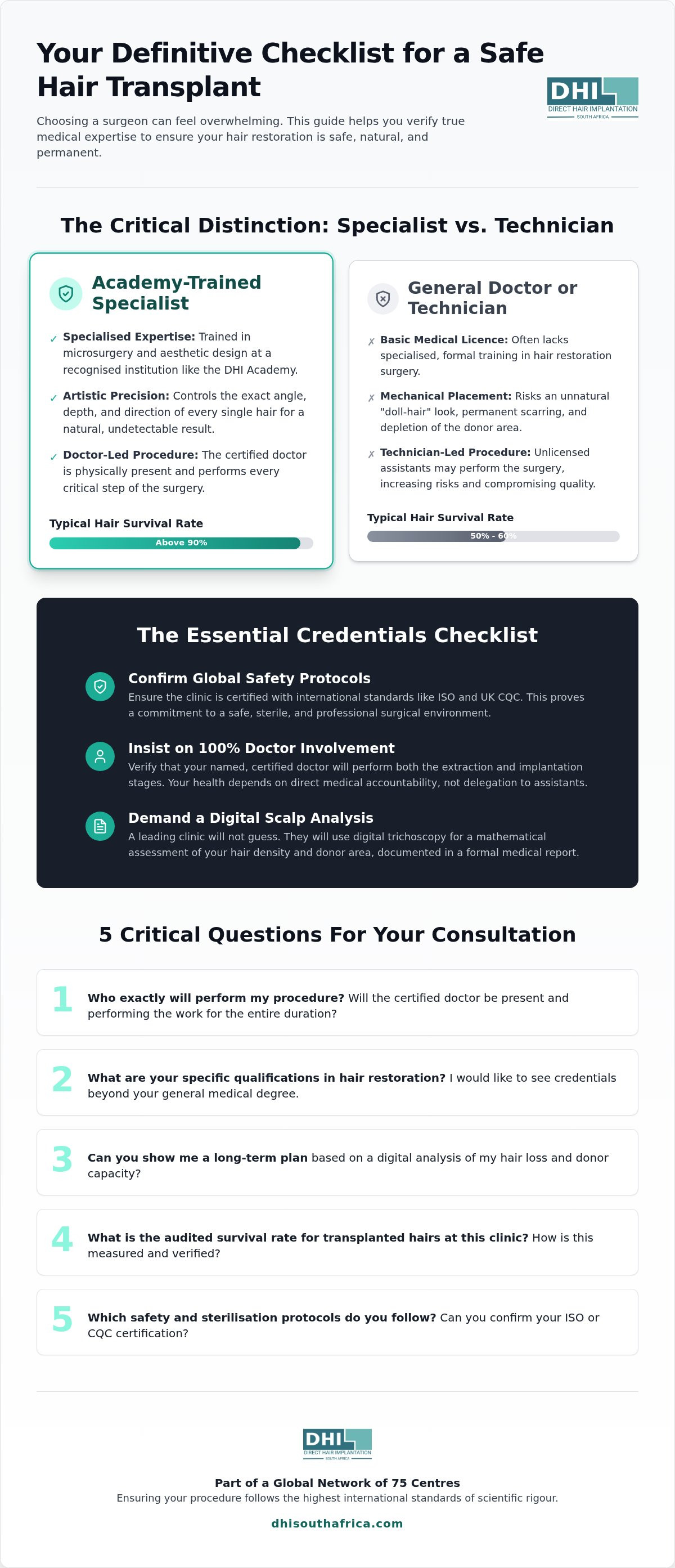
Did you know that in many regions, any licensed physician can legally perform a hair transplant without a single day of specialised surgical training in hair restoration? It is a startling reality that often leads to the unnatural results and permanent scarring many patients fear. When searching for certified hair transplant doctors, you aren't just looking for a medical degree; you're seeking a blend of scientific precision and aesthetic artistry. We realise the anxiety that comes with choosing a surgeon, especially when you're faced with a confusing array of surgical acronyms and conflicting technical advice.
You deserve to feel absolute confidence in your clinical choice. This article provides a definitive checklist for 2026, showing you exactly how to verify medical expertise and clinical standards to ensure your hair restoration is safe, natural, and permanent. We'll explore the vital credentials that separate global leaders from general technicians, including why DHI Academy's rigorous protocols are considered the industry benchmark. By the end of this guide, you'll have a clear framework to vet clinics and the peace of mind that comes from knowing your transformation is in a safe pair of hands.
Table of Contents
Why Choosing Certified Hair Transplant Doctors is Non-Negotiable
In the medical field, a licence to practise medicine is merely the baseline. In 2026, the distinction between a general practitioner and certified hair transplant doctors has never been more critical. While many doctors can legally perform surgery, hair restoration is a highly specialised discipline that combines microsurgical precision with aesthetic design. Choosing a non-specialist or falling into the "black market" of low-cost clinics often results in a "doll-hair" appearance, donor area depletion, or permanent scarring. Beyond the physical damage, the emotional toll of a failed procedure can be devastating, replacing the hope of restoration with the anxiety of concealment.
The Difference Between a Surgeon and a Specialist
A successful hair transplant is an intricate art form. It requires a deep understanding of facial geometry and the natural growth patterns of hair. Placing 4,000 individual follicles isn't just a mechanical task; it's about controlling the exact angle, depth, and direction of every single graft. Without this level of detail, the result looks forced and artificial. Various hair transplantation techniques exist, but their success depends entirely on the hand that wields the tools. Global benchmarks set by organisations like the ISHRS and ABHRS ensure that a specialist has the proven experience to handle the complex nuances of hairline design, ensuring the result is indistinguishable from your original hair.
The Dangers of Non-Certified Technicians
A worrying trend has emerged globally, including in South Africa: the rise of technician-led clinics. In these establishments, a doctor might be present for the initial greeting, but the actual extraction and implantation are handed over to unlicensed assistants. This is why patients must insist on being treated by certified hair transplant doctors who are physically present and active throughout the surgery. Medical accountability is the cornerstone of patient safety. Only a doctor possesses the clinical training to manage surgical complications or to ensure the delicate follicles remain viable. When technicians lead the way, graft survival rates often plummet to 50 or 60 percent. In contrast, procedures performed by certified specialists, such as those trained at the DHI Academy, aim for survival rates above 90 percent. Your scalp isn't a training ground; ensuring a qualified doctor performs every step of the procedure is the only way to guarantee a safe, professional outcome.
The Essential Credentials Checklist for Hair Restoration
Verifying the legitimacy of a clinic requires looking beyond the aesthetic of the reception area. In 2026, the gold standard for safety is defined by international benchmarks such as ISO and the UK Care Quality Commission (CQC). These certifications aren't merely badges of honour; they represent a commitment to rigorous, audited frameworks that govern every patient interaction. When you seek certified hair transplant doctors in South Africa, you're looking for a facility that treats hair restoration as a high-stakes surgical procedure rather than a simple cosmetic fix. This level of institutional rigour ensures that your health is protected by the same global standards applied in the world's leading medical centres.
Academic and Professional Certifications
A doctor's credentials must be specific to the field of hair restoration. It's not enough to be a general surgeon; one must possess specialised training from a recognised body like the DHI Academy. This ensures the specialist has mastered the delicate nuances of graft handling and implantation. This level of expertise mirrors the rigorous standards for board-certified plastic surgeons, where specific, documented experience in a chosen field is the only way to guarantee patient safety. Always verify that your doctor is an active member of global hair restoration societies and has a proven track record with the specific technique they propose to use on your scalp.
Facility and Safety Standards
A world-class clinical environment is defined by its commitment to precision and hygiene. This begins with a comprehensive diagnostic phase using digital trichoscopy. This technology allows for a mathematical assessment of your donor area, which is then documented in a Total Medical Hair Restoration report. Without this data, any surgical plan is merely guesswork. Your safety is further ensured through 18 mandatory clinical checks that must be performed before and during every procedure. These checks are part of a broader set of Standard Operating Procedures (SOPs) often spanning multiple volumes of medical protocols. These SOPs cover everything from the sterile handling of follicles to the use of single-use, titanium-coated punches for extraction.
High-precision instruments are vital for minimising trauma to the scalp and ensuring a seamless result. Titanium-coated tools are preferred because they maintain a sharper edge, allowing for cleaner incisions and faster healing times. By ensuring your clinic adheres to these meticulous standards, you're choosing a path that prioritises long-term health and natural-looking density. If you're ready to start your journey with a team that values scientific transparency, you can book a professional consultation to discuss your restoration goals.
Beyond the Certificate: Assessing Clinical Artistry and Technique
While a medical certificate confirms that a practitioner has met specific educational standards, the final aesthetic result of your restoration depends entirely on the technical methodology employed. Generic Follicular Unit Extraction (FUE) often relies on a two-step process where the doctor creates recipient incisions, or "slits," before placing the grafts. This traditional approach can lead to less control over the final direction of the hair and may cause unnecessary trauma to the scalp. In contrast, certified hair transplant doctors who utilise the patented Direct Hair Implantation (DHI) technique perform implantation as a seamless, high-precision sequence. This method prioritises the science of hair survival, consistently achieving graft survival rates above 90 percent. True artistry in medicine is found in the ability to design a hairline that not only looks dense today but ages gracefully alongside your facial structure.
Full Control of Angle, Depth, and Direction
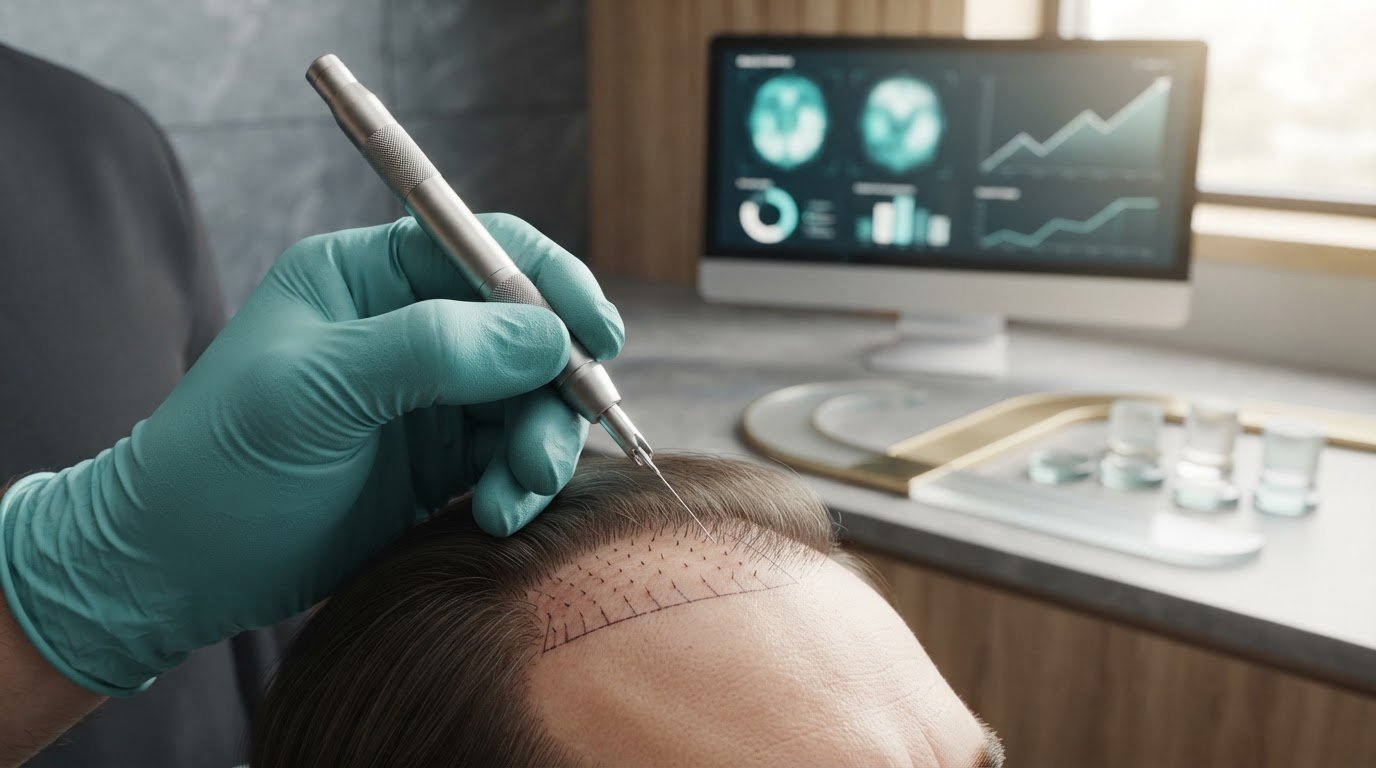
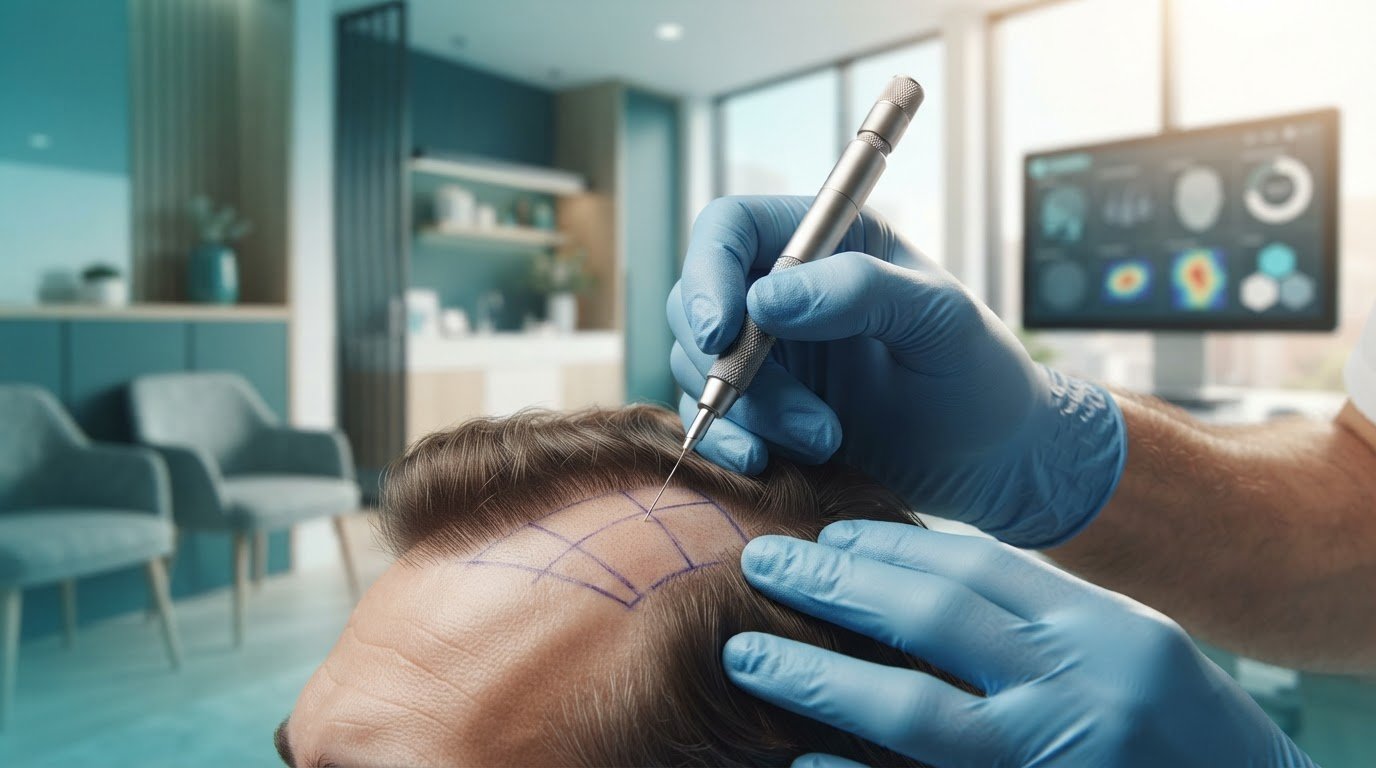
The DHI Implanter tool is the primary instrument for achieving this level of surgical precision. It allows the doctor to have total control over the angle, depth, and direction of every single follicle. By meticulously mimicking the original growth pattern of your hair, the specialist ensures that the new growth is indistinguishable from the surrounding strands. Because this is a single-step implantation process, the time the follicle spends outside the body is significantly reduced. This minimal handling is a vital factor in maintaining the health and vitality of the graft, ensuring it thrives once implanted into the scalp. This scientific rigour is what separates a world-class restoration from a generic procedure.
The "Lunch-Hour" Transplant: Minimising Downtime
Modern hair restoration has evolved to respect the busy lives and privacy of patients. Advanced techniques now allow for procedures that involve no stitches and leave no visible linear scars. This "lunch-hour" philosophy is made possible through the use of high-precision instruments and autologous micro-grafting, which supports the body's natural healing response and accelerates recovery. For those requiring total discretion, certified hair transplant doctors can often offer "unshaven" options. This allows you to return to your professional and social life almost immediately, with the restoration occurring subtly and without the tell-tale signs of traditional surgery. This commitment to patient comfort and privacy is a hallmark of a premium, specialised medical institution.
The Consultation: 5 Questions to Ask Your Surgeon
The initial consultation is far more than a simple chat about your hairline; it's a formal interview where you assess the competence of your prospective medical team. A truly professional environment welcomes scrutiny. When you speak with certified hair transplant doctors, their responses should be grounded in data, ethics, and long-term scalp health. This is your opportunity to look past the marketing brochures and verify the clinical reality of the facility. If a doctor seems evasive or relies on vague promises of "guaranteed results," it is a significant red flag that warrants caution.
Questioning the Procedure and Protocol
Your first line of enquiry must focus on the "who" and the "how" of the surgery. Ask directly: "Who exactly will be performing the implantation of the hairs?" In many high-volume clinics, a doctor may only be present for the design phase, leaving the critical surgical work to unlicensed technicians. You should also ask: "What is your documented hair survival rate for this specific technique?" Leading specialists using the DHI method achieve survival rates above 90 percent. Any clinic reporting a survival rate in the 50 to 60 percent range is essentially wasting your limited donor hair. A low survival rate is unacceptable because donor hair is a finite resource; once a follicle is poorly handled and fails to grow, it is lost forever.
Questioning Long-Term Care
A successful restoration isn't a single-day event; it's an 18-month journey of growth and monitoring. You need to know exactly what the aftercare looks like. Ask your surgeon: "What does my 18-month post-procedure monitoring plan look like?" A reputable clinic will schedule regular check-ups to track the progress of the newly implanted follicles. Additionally, enquire: "How do you ensure my donor area remains healthy for the future?" A specialist's goal is to provide density without over-harvesting, ensuring that the back of your head doesn't look thin or "moth-eaten" after the procedure. For a deeper look at what to expect from a world-class facility, you can read our guide on Hair Restoration Safety Protocols.
Finally, always ask to see a Total Medical Hair Restoration report during your visit. This medical-grade document should provide a mathematical breakdown of your hair loss and a scientific plan for restoration. When reviewing "before and after" photos, do so with a critical eye. Look for consistent lighting, identical angles, and high-resolution images that show the hairline in detail. If you're ready to experience a consultation that prioritises transparency and scientific rigour, you can book your hair restoration assessment with our certified team today.
DHI South Africa: Global Standards in Hair Restoration
DHI South Africa stands as a beacon of clinical excellence within a global network of 75 centres spanning 45 countries. This integration ensures that every patient in South Africa receives the same high-standard care found in the world's leading medical hubs. Our certified hair transplant doctors are trained exclusively at the DHI Academy, the only institution globally dedicated entirely to the science and art of hair restoration. This specialised education ensures that every procedure follows the "Total Care System," a comprehensive framework designed to provide absolute transparency and scientific rigour. By choosing a team that adheres to these international benchmarks, you're opting for a "safe pair of hands" that prioritises your long-term aesthetic success and physical well-being.
A Heritage of Innovation Since 1970
The DHI Global Medical Group has a storied history of over 50 years, during which it has pioneered many of the advancements now considered standard in the industry. This legacy of innovation has earned the brand numerous celebrity endorsements and a global customer satisfaction rate of 99 percent. When you choose our clinic, you're benefiting from decades of research and a refined methodology that focuses on natural-looking density and follicle longevity. To understand the technical foundation of our success, you can explore the details of Direct Hair Implantation and how it has revolutionised the patient experience.
Your Journey Starts with a Professional Diagnosis
Every successful restoration begins with an honest, data-driven assessment. We believe that surgery should only be performed when it is the most appropriate solution for the patient's specific type of hair loss. This is why a personalised suitability assessment is a non-negotiable first step in our process. During this phase, we use advanced digital trichoscopy to perform a detailed scalp analysis, which allows us to create a Total Medical Hair Restoration report tailored to your unique needs. This level of diagnostic precision ensures that we only proceed when we are confident of achieving a result that meets our exacting standards.
We invite you to experience the "DHI difference" and discover why we are considered the gold standard in the region. Our team is ready to guide you through a transparent, professional consultation that focuses on restoring your confidence through science and artistry. You can book a consultation today to receive a comprehensive digital scalp analysis and start your journey toward a permanent, natural-looking restoration.
Securing Your Aesthetic Future Through Clinical Excellence
Choosing the right medical partner for your hair restoration is a decision that impacts your appearance and self-confidence for decades. We've explored how certified hair transplant doctors bridge the gap between basic medical practice and true microsurgical artistry. By prioritising specialists with certified training from the DHI Global Academy, you ensure that your procedure is governed by audited safety protocols and patented techniques. This methodical approach is why we maintain a 99% customer satisfaction rate and achieve graft survival rates exceeding 90%. Your journey to a natural, permanent hairline doesn't have to be filled with uncertainty. With the right checklist and a commitment to scientific transparency, you can move forward with absolute peace of mind. We're here to guide you through every step of this life-changing transformation with the calm, measured composure of medical experts.
Book your professional scalp analysis with a certified DHI specialist today to begin your restoration with a global leader you can trust.
Frequently Asked Questions
How do I verify if a hair transplant doctor is actually certified?
You can verify a specialist's credentials by requesting proof of their specific training from recognised institutions like the DHI Academy. It is also helpful to check their active membership status with global organisations such as the ISHRS. A truly professional clinic will display these certificates openly and provide a clear history of the doctor's surgical experience. Don't hesitate to ask for a formal Total Medical Hair Restoration report to see their diagnostic approach.
Is a hair transplant performed by a technician safe?
Procedures led by technicians rather than certified hair transplant doctors carry significant risks. While technicians may assist, a qualified doctor must personally perform the extraction and implantation phases to ensure medical accountability. This prevents common errors like donor area depletion or poor graft placement. Surgical hair restoration is a medical procedure that requires a doctor's expertise to manage potential complications and guarantee the highest standards of hygiene.
What are the most important certifications for hair transplant doctors in South Africa?
In South Africa, basic HPCSA registration is the legal minimum, but it doesn't guarantee hair restoration expertise. You should look for doctors with specialised academy training and clinics that adhere to ISO and UK Care Quality Commission (CQC) standards. These international certifications ensure the facility follows rigorous medical protocols. Choosing a doctor within a global network of 75 centres provides an additional layer of institutional safety and scientific rigour.
Can I see the results of previous patients before booking?
Yes, viewing a comprehensive portfolio of previous results is a vital part of the vetting process. Reputable specialists provide high-resolution images that show the hairline from various angles and in different lighting conditions. This transparency allows you to assess the doctor's aesthetic style and their ability to create natural-looking density. Always ensure the photos you're shown are the work of the specific doctor who will be performing your procedure.
What happens if a hair transplant is performed by an uncertified doctor?
Choosing an uncertified practitioner often leads to "botched" results that are difficult and expensive to repair. You might experience low graft survival rates, often dropping to 50 or 60 percent, compared to the 90 percent achieved by experts. Physical complications include permanent "moth-eaten" scarring in the donor area and unnatural hair growth angles. These errors don't just look artificial; they can cause lasting emotional distress and waste your finite supply of donor follicles.
Does a higher price always mean the doctor is better certified?
Price is often a reflection of the clinical standards and the technology employed, but it isn't the only indicator of quality. Premium clinics investing in certified hair transplant doctors and single-use titanium instruments naturally have higher operational costs. However, you should always verify the specific credentials and protocols behind the price tag. A higher fee should ideally represent a commitment to superior graft survival rates and a safer, more predictable surgical outcome.
How long does a consultation with a certified hair transplant doctor take?
A professional diagnostic consultation typically lasts between 45 and 60 minutes. This time is necessary for the doctor to perform a digital trichoscopy and discuss your medical history in detail. Unlike sales-focused meetings, this session focuses on mathematical scalp analysis and creates a personalised restoration plan. You should leave the consultation with a Total Medical Hair Restoration report and a clear understanding of your suitability for the procedure.
Are DHI doctors trained differently than traditional FUE surgeons?
DHI doctors receive specialised training at the world's only hair transplant academy, focusing on a hair-by-hair implantation method. Unlike traditional FUE surgeons who may use generic tools to create slits in the scalp, DHI specialists use a patented implanter pen. This tool allows for total control over the angle, depth, and direction of every follicle. This exclusive training ensures a more natural result and a significantly higher graft survival rate than traditional methods.

Comments