

Confidence boost after hair transplant and lasting benefits

The confidence boost after a hair transplant can last for years, although it may not feel immediate. Some people experience a brief emotional dip during recovery, while visible regrowth takes several months to emerge.
It’s understandable to hope that fuller-looking hair will help you feel more at ease at work, in relationships and in everyday life. For some patients, improved self-esteem and changes in how they approach life become more apparent as results develop, particularly within three to six months.
This article explores how hair restoration may influence confidence and wellbeing, why early doubts can arise, and what to expect as hair regrows. It also considers realistic expectations and personal motivation, so you can weigh the potential benefits with a balanced view.
Table of Contents
How does self-confidence after a transplant influence career or performance at work?
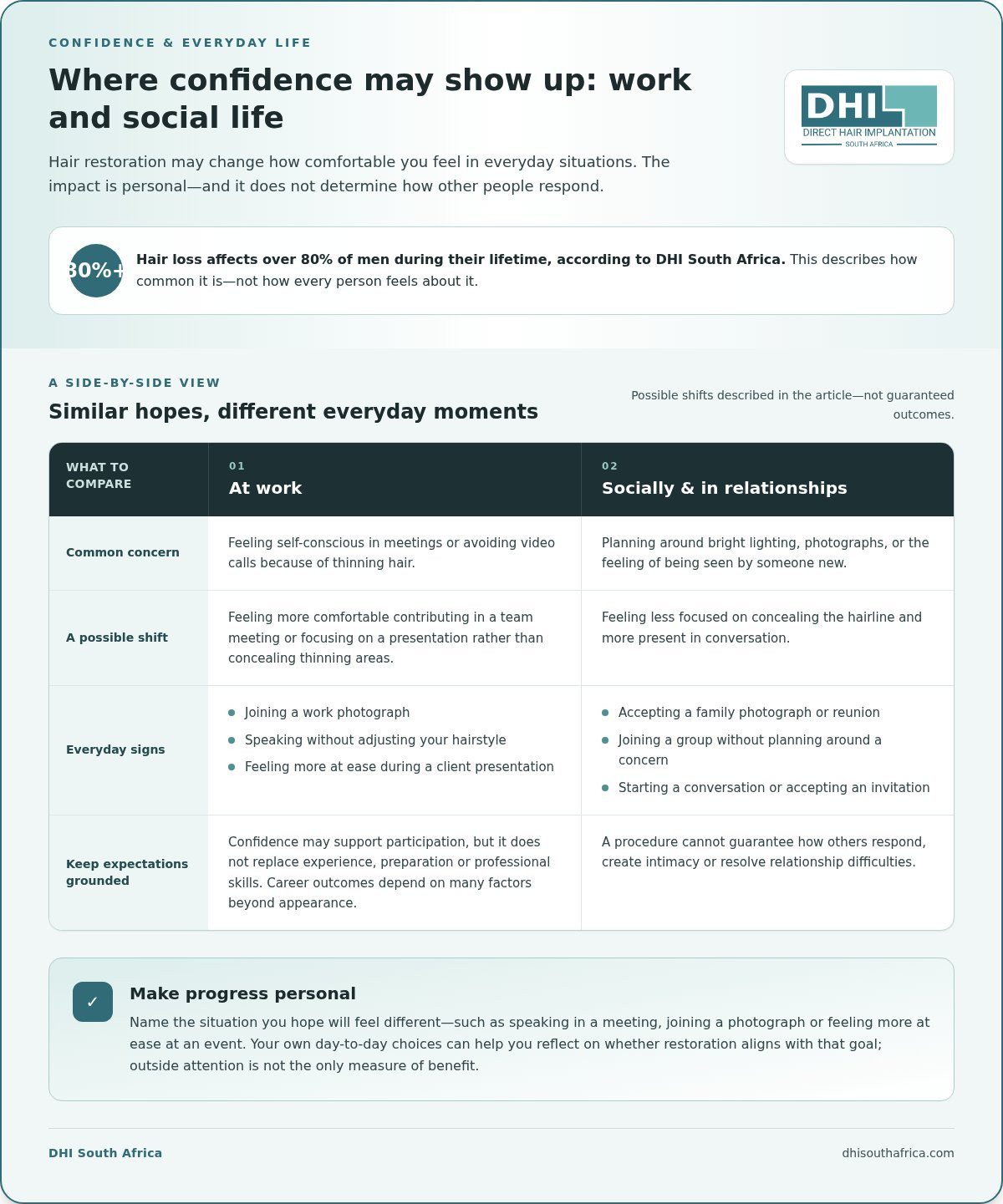
Hair loss can affect how you present yourself at work, from avoiding video calls to feeling self-conscious during meetings. Hair loss affects over 80 percent of men during their lifetime, according to DHI South Africa. That figure describes how common the experience is, not how every person feels about it.
A change in appearance can influence self-esteem and everyday behaviour. Someone who once avoided speaking in a team meeting may feel more comfortable contributing when less preoccupied with thinning hair. That confidence may support participation, but it does not replace experience, preparation or professional skills.
The value of restoration is personal. One person may want a fuller-looking hairline for client presentations; another may simply want to feel more like themselves in workplace photographs. A positive change in self-image can make professional interactions feel easier, while colleagues’ responses and career outcomes depend on many factors beyond appearance.
Ask for the surgeon’s full name, medical qualifications and registration details, then verify those credentials through the relevant South African professional register. Establish who assesses you, plans the procedure and performs each stage before making a decision. The hair transplant information for South Africa can help you understand the procedure in its local context.
Satisfaction and confidence depend on your motivation, realistic expectations, the planned hairline and how the result fits your features. They also depend on understanding recovery and what coverage may be feasible for your pattern of hair loss. Write down what you hope to change, such as feeling more comfortable in meetings, and separate that goal from outcomes you cannot control.
If hair loss stems from an underlying medical condition, a transplant can improve confidence only after the cause has been assessed and the treatment plan takes it into account. Transplantation changes the appearance of selected areas; it does not treat the underlying condition. Identifying the cause matters because ongoing or unstable hair loss can affect planning and expectations.
Self-image encompasses more than age or a hairline. Some people associate fuller-looking hair with a more youthful appearance; others want their reflection to feel more familiar. These are distinct goals. Discussing the specific change you hope to see helps connect treatment planning to your priorities, rather than to a generic idea of confidence.
At work, practical changes may be subtle: joining a photograph, speaking without adjusting your hairstyle, or focusing on a presentation instead of concealing thinning areas. These examples show how self-esteem can affect daily choices. A transplant may contribute to a confidence boost after hair restoration, but professional self-assurance also draws on your skills, relationships and sense of personal agency.
Social interactions and relationships after hair restoration
Hair thinning can shape how you enter a room, pose for a photograph or meet someone new. After restoration, some people feel less focused on concealing their hairline and more present in conversation. That shift can make social situations feel easier, although it won’t determine how others respond or guarantee a particular relationship outcome.
Imagine a friend’s dinner where you usually choose a seat away from bright lighting. Feeling more comfortable with your appearance may help you join the group without planning around that concern. For someone else, the meaningful change might be accepting a family photograph or attending a reunion without avoiding the camera.
In romantic relationships, confidence can influence how openly you communicate and how comfortable you feel being seen. Someone beginning to date may spend less time worrying about their hair and more time getting to know another person. Existing partners may notice a change in mood or self-expression, but a procedure cannot create intimacy or resolve relationship difficulties on its own.
Define what social confidence means to you before treatment. Is it taking part in a group photograph, going on a first date, or speaking without adjusting your hairstyle? Naming a specific situation gives you a personal measure of progress. It also separates your goals from pressure to meet someone else’s idea of an ideal appearance.
Conversations about treatment are personal. You decide whether to tell friends, a partner or colleagues, and how much detail to share. “I’m addressing hair loss” may be enough if you prefer privacy. If you value openness, you might explain that the procedure is a medical choice and visible changes take time.
Social and professional settings often overlap. A wedding, networking event or work function may bring photographs and introductions together. Feeling at ease with your appearance could influence how freely you participate, but a successful result means different things to different people. It might mean a natural-looking hairline, feeling recognised as yourself, or simply thinking less about your hair during the event.
Give relationships room to adjust to your feelings, rather than expecting others to validate every change. Notice practical signs: accepting an invitation, starting a conversation, or appearing in a photo you would previously have avoided. These examples can help you assess whether restoration aligns with your aims, without making outside attention the only measure of benefit.
If you’re considering what visible changes might mean for your own goals, explore hair restoration results as one reference point for reflection.
Emotional wellbeing and quality of life
Hair restoration can affect how you feel about yourself, but emotional adjustment may take longer than the procedure itself. Recovery, changes in appearance and personal expectations all shape how patients experience the process.
Emotional adjustment during recovery
Emotional adjustment means adapting to recovery and waiting for visible regrowth. Some patients experience a brief emotional dip before new hair starts growing, making early progress feel uncertain. If this happens, note what is affecting your mood and discuss practical concerns at a follow-up appointment. Naming a specific worry, such as feeling unsettled by your current appearance, can make it easier to address.
A consultation is a chance to discuss the emotional side of treatment as well as the physical plan. Before your appointment, write down what you hope will change and what concerns you most. You might want to feel more comfortable in photographs, for example, or worry that recovery will affect your routine. Sharing these details keeps the conversation focused on your priorities.
Support can come from someone you trust, such as a partner or friend who understands your reasons for treatment. You could ask them to check in during recovery or accompany you to an appointment. Their role is to listen, not judge each stage by how quickly your appearance changes. If distress feels difficult to manage, raise it with a health professional.
Long-term emotional benefits
Long-term emotional benefits are changes in self-esteem or daily life that may become clearer as visible results emerge. Some patients report that deeper psychological effects and lifestyle adjustments become more apparent within three to six months. Progress is not only about what you see in the mirror; it may also show in routines you previously avoided.
You might become more willing to join a social activity, take photographs with family or spend less time styling your hair before leaving home. These changes are individual, so notice which everyday moments feel different rather than measuring your wellbeing against someone else’s experience. Positive effects on confidence and self-image tend to persist for years, though they do not define every part of life.
Clear motivation can help you assess whether treatment meets your personal aims. Consider writing a short note before treatment, then revisiting it as results develop. Record how you feel about a specific activity, such as attending a family gathering. This creates a meaningful comparison without expecting every day to feel better.
Quality of life includes emotional wellbeing, relationships and lifestyle, not appearance alone. If concerns about your hair are just one part of wider distress, make space to discuss those feelings separately. A thoughtful consultation can help you understand the process and set expectations that support your wellbeing during recovery and beyond.
Hair regrowth timelines and temporary postoperative doubt
Hair restoration takes time to become visible, so your early appearance may not reflect the eventual aesthetic result. Understanding the broad timeline can help explain why temporary doubt may arise.
Hair growth and result timelines
Hair growth timelines describe the months between a procedure and visible regrowth. Visible results may take several months to appear, and full results are visible after about 9-12 months. Full hair density can take up to one year, so an early assessment may not reflect the eventual outcome.
This matters if you expect an immediate change in thinning or baldness. A photograph taken shortly after treatment, for example, may show little difference, even though the transplanted follicles have not reached their visible growth stage. Use the timeline discussed during your consultation to set expectations and avoid judging the result too soon.
Regrowth is gradual rather than immediate. Take photographs in similar lighting and from consistent angles, then compare them over time. This can make subtle changes easier to notice than relying on memory or checking the mirror every day.
Psychological recovery and temporary doubt
Psychological recovery is the emotional adjustment that accompanies physical healing and waiting for regrowth. Some patients experience a brief emotional dip during recovery, particularly before new hair starts growing. This can make progress feel uncertain, so it is important to distinguish an early recovery phase from the later aesthetic result.
Record a concern when it arises, such as feeling disappointed by your current appearance, and revisit it at a planned follow-up. This gives you a practical way to track wellbeing without treating one difficult day as a final judgement. Avoid comparing your progress with another person’s photographs, as their treatment and hair characteristics may differ.
Recovery challenges and side effects
Recovery involves following post-procedure care while your scalp heals and your appearance changes. As with any surgery, risks can include complications affecting healing or the aesthetic result; these depend on the procedure and individual health factors. Ask for these risks to be explained during your medical consultation.
Plan for the practical demands of recovery before treatment. Clarify the care routine, possible changes in appearance, and when to raise a concern with the treating team. Keep written guidance accessible rather than relying on memory after the procedure. This can reduce uncertainty and help you distinguish expected recovery changes from issues needing attention.
Hair restoration can influence confidence, but the mental effects do not follow a precise timetable. Focus on the agreed recovery plan and gradual changes, rather than expecting to regain confidence on a particular day. A realistic view of the months ahead can make the waiting period easier to understand.
Professional confidence and first impressions
In a job interview, presentation or client meeting, feeling comfortable with your appearance can influence how you carry yourself. Hair restoration may support that feeling by addressing thinning that has become a personal concern. It cannot determine a first impression or professional outcome, which also reflects your communication, experience and preparation.
Imagine a manager who avoids video calls because overhead lighting makes their hairline feel more noticeable. Changes in hair coverage may help them focus on the discussion rather than adjusting the camera angle. For someone else, the meaningful shift could be attending an industry event without planning a hairstyle around photographs. A confidence boost after a hair transplant may show up in these everyday moments, rather than as a dramatic change in personality.
First impressions are shaped by several cues, including posture, expression and the way someone speaks. If concern about hair has occupied your attention, feeling less self-conscious may make it easier to engage. That psychological effect is personal: restoration can change an aspect of appearance, but it does not create expertise, confidence in every setting or a guaranteed career advantage.
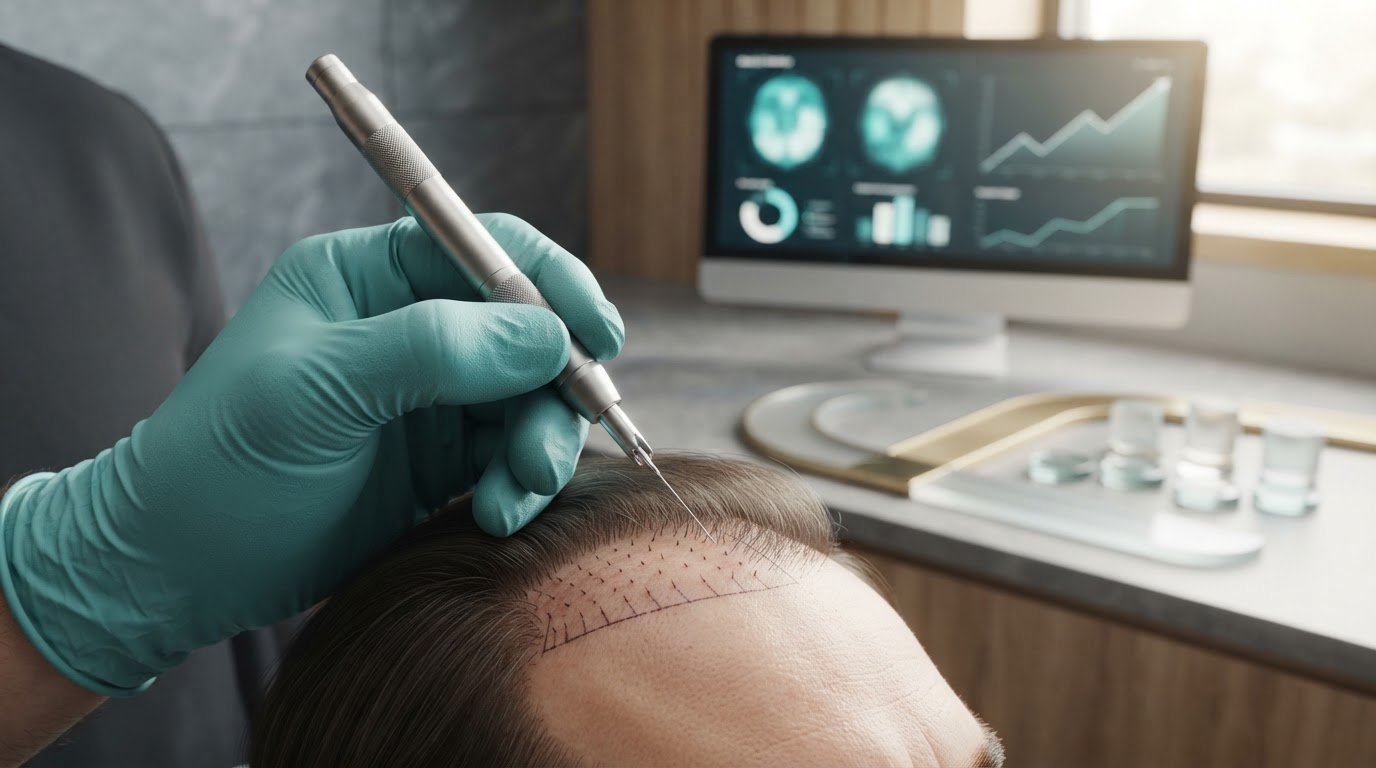
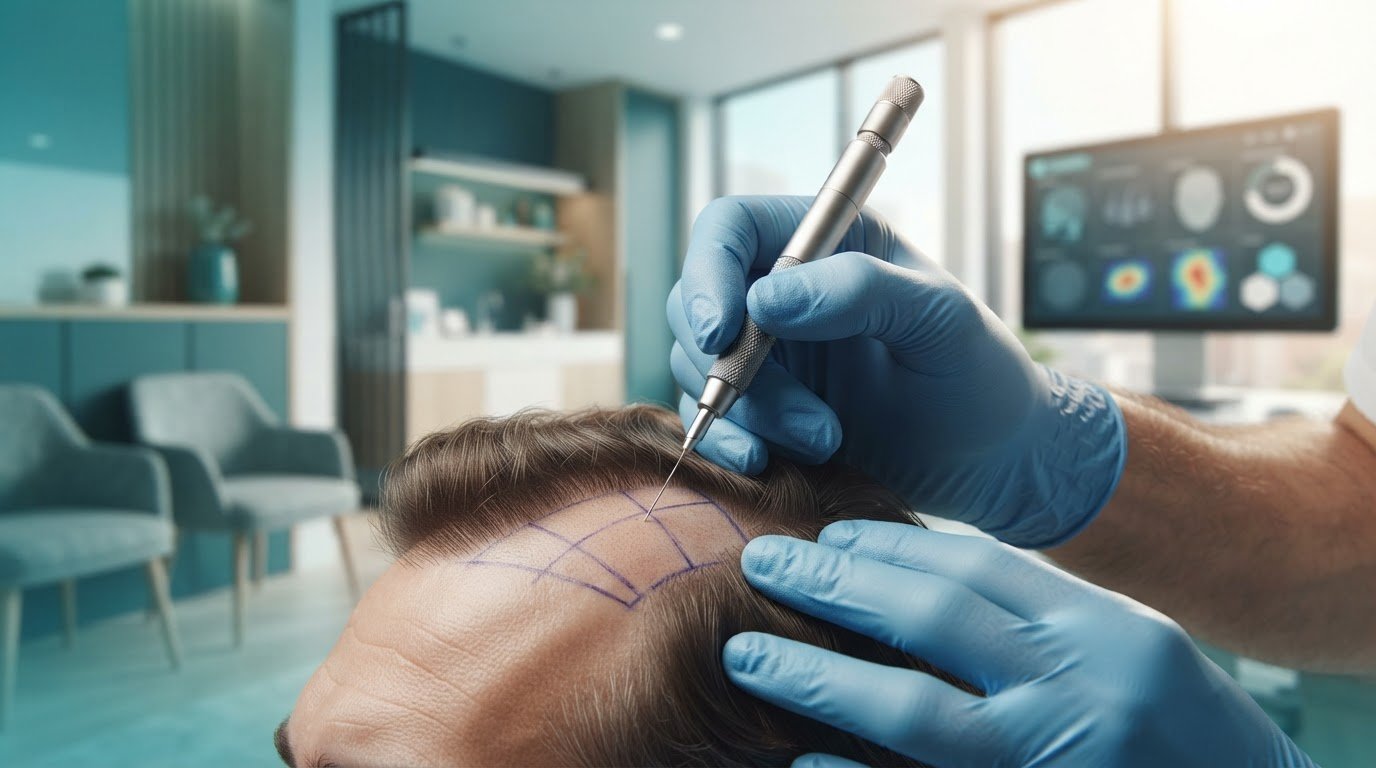
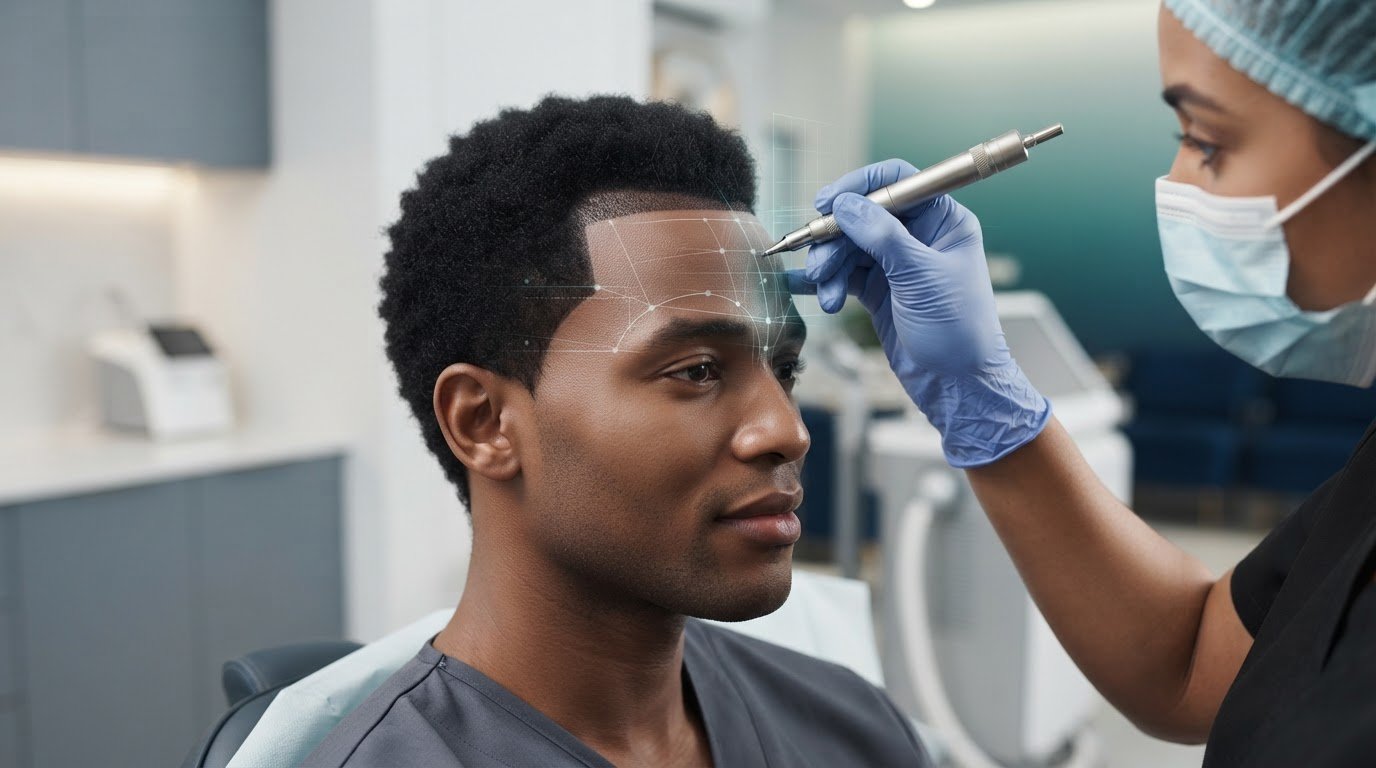
The aesthetic plan matters because a hairline frames the face and contributes to its overall balance. Hair transplant techniques relocate healthy follicles to areas of thinning or baldness, where transplanted follicles continue to grow hair naturally. A follicular unit is a natural grouping of hair follicles; considering its placement helps explain why planning focuses on how hair sits within the existing pattern.
For someone hoping to look younger, “younger” needs a personal definition. You might want a softer-looking hairline in photographs, or simply an appearance that feels more familiar. Bring a clear example to a consultation, such as a hairstyle you wore before thinning became noticeable. This gives the discussion a practical point of reference. The confidence benefits of hair restoration matter most when they reflect a goal that is meaningful to you.
Professional confidence can also develop through small, observable changes. You might volunteer to lead a meeting, speak directly to a client, or stop checking your reflection before entering the office. These examples help you consider whether a change in appearance connects with your own working life, rather than measuring success only through other people’s reactions.
Before choosing treatment, write down the professional situations that matter most to you and what you hope will feel different. Compare those goals with the expected process and gradual development of results. A thoughtful decision starts with your priorities, not pressure to look a certain way for colleagues or employers.
DHI South Africa: Direct Hair Implantation (DHI)
DHI South Africa offers Direct Hair Implantation (DHI) for people exploring hair restoration and its potential effect on confidence. A discussion can help you understand how this option relates to your hair loss, desired appearance and expectations for gradual regrowth.
Hair restoration is not the only consideration. GFC Treatment, Regenera Activa and PRP Hair Loss Treatment are also available options. The appropriate conversation starts with your concerns, the pattern of thinning and the changes you hope to see, rather than an assumption that one approach suits everyone.
Take a short list of questions to your consultation: what the approach involves, what recovery entails and how progress is assessed. Clear answers can help you make a considered decision that reflects both your aesthetic goals and personal wellbeing.
Choose a next step that reflects your goals
Your reasons for considering hair restoration are personal. Before taking the next step, decide what would make the process meaningful to you, whether that means feeling more at ease in photographs, spending less time thinking about your hair, or approaching everyday situations differently. A confidence boost after a hair transplant may be one hoped-for outcome, but your priorities should guide the decision.
Use a consultation with a specialist to explore your priorities and understand which approach may suit your hair and expectations. Bring your remaining questions, including how a proposed plan relates to your concerns and what to expect as you move forward. Taking time to make an informed decision is part of caring for your wellbeing, not a delay in making progress.
You deserve to make this choice at your own pace, with a clear sense of what matters to you. Whatever you decide, let your definition of confidence be your own.
Frequently Asked Questions
Are the psychological benefits long-lasting?
For some patients, positive effects on confidence and self-image tend to persist for years. The lasting value may show in everyday choices, such as feeling more comfortable in photographs or spending less time concealing thinning. Consider which changes matter to you personally, rather than treating other people’s reactions as proof of success. Hair restoration can influence self-perception, but it cannot define your overall wellbeing or relationships.
Is there a risk of disappointment or emotional let-down after the procedure?
Yes, some patients experience a short-lived emotional dip during recovery, particularly before regrowth becomes visible. The contrast between having had a procedure and not yet seeing an aesthetic change can feel frustrating. If disappointment arises, note what triggered it and bring that concern to a follow-up discussion. Persistent distress deserves attention in its own right, rather than being dismissed as impatience with the result.
New Hair, New Routines?
New hair may prompt changes to grooming, styling or how you prepare for social occasions, but you don’t need to overhaul your routine. Keep following the aftercare guidance for your procedure, and discuss styling questions with your care team. You might try a different parting once your hair has grown, rather than making several appearance changes at once.
How soon do people feel more confident after a hair transplant?
There is no single point when confidence changes; feelings may shift as visible regrowth develops. Some people notice psychological effects within three to six months, whilst full results are visible after about 9-12 months. A practical way to recognise change is to note specific situations that feel different, such as joining a group photograph or choosing a hairstyle without focusing on coverage.
What are typical confidence and self-esteem outcomes after hair transplant surgery?
Some patients report greater confidence and self-esteem after transplantation, including feeling more at ease with their appearance. The effect may show in a personal change, such as being more willing to appear in family photographs or attend a social event. These outcomes are individual, so define what improvement would mean in your own life. A procedure can address hair concerns, not every source of self-doubt.
How can patients manage expectations during the hair transplant recovery timeline?
Set expectations by writing down your main goal and discussing how the planned treatment relates to it before proceeding. Ask what changes may appear at different stages, how the care team will assess progress, and when to raise a concern. Avoid judging progress through daily mirror checks alone. Consistent photographs and notes about your experience can offer a clearer record over time.
Comments