

Hair Transplant to Lower Your Hairline: A 2026 Guide

What if lowering your hairline is less about moving it down and more about designing it to suit your face? A high forehead can be a natural feature, while recession or thinning may make the hairline appear higher. A hair transplant to lower hairline places follicles along a planned new front edge, but the design matters as much as the technique. The aim is a balanced hairline, not simply the lowest possible one.
If you’re weighing transplantation against surgical hairline advancement, or wondering whether a result could look unnatural or require shaving your head, those concerns are understandable. This guide explains how transplantation differs from scalp advancement, what a doctor considers when assessing suitability, and how hairline design takes your features and existing hair into account.
It also explains DHI, an unshaven, hassle-free approach with minimal downtime. At DHI South Africa, procedures are performed exclusively by trained, certified doctors under local anaesthesia and are practically painless. You’ll learn what to discuss during a consultation, including whether DHI may suit your goals. South Africa’s Trusted Name in Hair Transplants & Restoration.
Table of Contents
Can a hair transplant lower your hairline? Start with the reason it looks high
Yes. A hair transplant can lower a hairline by placing follicles in front of its current position to create a planned new edge. The aim isn’t to bring the hairline as far forward as possible. Its shape and placement need to be considered alongside your facial features and existing hair.
A high forehead can be a natural part of your appearance, or it may look higher because of recession or thinning. Appearance alone can’t establish the cause. That distinction matters because the concern you want addressed helps inform which treatment approach is relevant.
This video explores considerations around hairline lowering:
Is a high forehead always caused by hair loss?
No. Some people have a naturally high hairline that has remained consistent, while others notice a change as hair recedes or thins. Both can affect how someone feels about their appearance, but they are different concerns. A doctor can assess your hairline and hair characteristics rather than relying on a universal forehead measurement or diagnosing the cause from a photograph.
That assessment helps put your goals in context. You may want to soften the appearance of a naturally high hairline, address recession at the temples, or understand whether both factors contribute. The distinction can guide a discussion about suitability and design. It doesn’t mean one approach is automatically right for everyone.
What does lowering a hairline with transplantation mean?
Hairline lowering through transplantation means placing follicles in front of the existing hairline to create a new, planned position. Transplantation adds follicles where the new edge is designed; surgical hairline advancement moves the scalp forward. They change the hairline in different ways, so the concern being addressed is central to comparing them.
A hair transplant procedure involves relocating follicles, and the broad principles of hair transplantation include different techniques. For a lower hairline, planning should consider the shape you hope to achieve, your existing hair and the overall balance of your features. There isn’t one measurement that determines a suitable design.
At DHI South Africa, DHI procedures are performed exclusively by trained, certified doctors under local anaesthesia and are practically painless. DHI is an unshaven, hassle-free option with minimal downtime. A consultation gives you the opportunity to explain what concerns you and discuss whether a hair transplant to lower hairline suits your individual circumstances.
How DHI hair transplantation creates a lower hairline
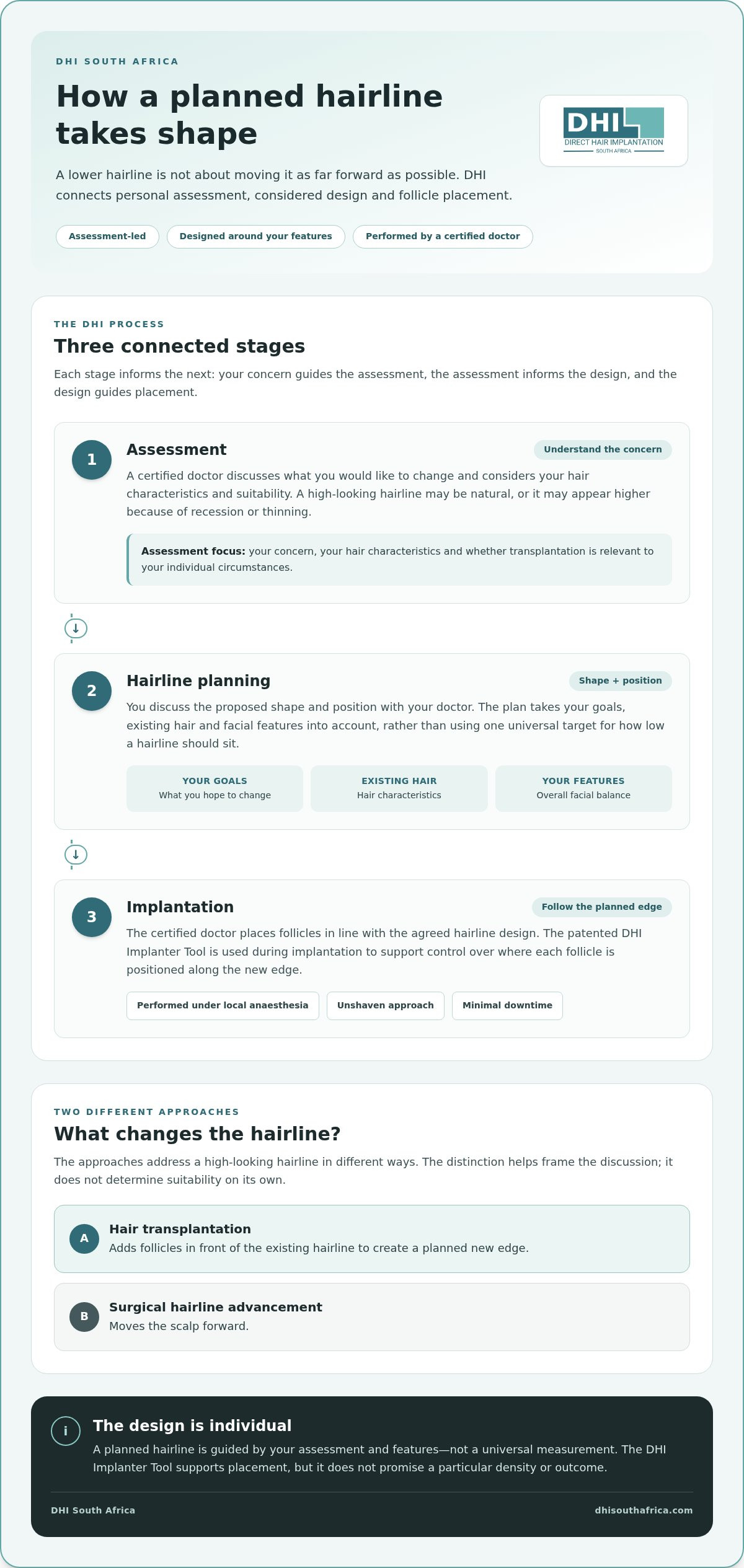
DHI brings assessment, hairline design and implantation together. For a hair transplant to lower hairline, the doctor considers your goals and hair characteristics, then plans a proposed shape and position. The design guides where follicles are placed rather than setting a universal target for how low a hairline should sit.
The process can be understood in three stages:
Assessment: A certified doctor discusses your concern and considers your hair characteristics and suitability.
Hairline planning: You discuss the proposed shape and position, including what you hope to change.
Implantation: The certified doctor places follicles in line with the planned hairline.
These stages connect your goals to a considered design. The assessment informs the discussion, planning turns it into a proposed hairline, and implantation follows the plan. Before treatment proceeds, your doctor can explain how the design relates to your individual features.
How does the DHI Implanter Tool support precise placement?
The patented DHI Implanter Tool is used during implantation to place follicles according to the planned hairline. It supports the doctor’s control over where each follicle is positioned along the new edge. This helps carry out the design with care, but it doesn’t promise a particular density or outcome. Those remain individual considerations.
The International Society of Hair Restoration Surgery offers broader information about hair-restoration practice and professional guidance. For your own treatment discussion, focus on how the proposed design reflects your aims and the doctor’s assessment.
What should patients expect during the procedure?
DHI procedures are performed under local anaesthesia and are practically painless. During implantation, the certified doctor places follicles in line with the planned hairline. Before deciding, use your consultation to clarify how the design will be carried out and raise any questions about the procedure. Understanding what the doctor proposes, and why, can help you feel more prepared.
Describe the features you want the hairline to retain as well as what you’d like to change. This gives the doctor a clearer basis for discussing the plan and explaining how it reflects your goals.
If you’re considering DHI, you can explore hair transplantation and arrange a consultation to discuss your goals and suitability with a certified doctor.
Hair transplant or surgical hairline advancement: which approach fits the concern?
These approaches address a high-looking hairline in different ways. Transplantation adds follicles to a planned hairline, while surgical hairline advancement moves the scalp forward. The distinction can help you frame your concern, but it doesn’t determine suitability on its own.
This comparison outlines what each approach changes. They are not interchangeable, and neither is right for everyone.
How does transplantation differ from scalp advancement?
Transplantation places follicles at a designed hairline; scalp advancement changes the position of the scalp itself. These are separate treatment concepts, not different names for the same procedure. DHI South Africa’s hairline-lowering option is DHI transplantation, not scalp advancement. Understanding this difference can help you describe the change you’re considering and follow the discussion about treatment.
Why does the right choice depend on individual assessment?
Your goals and the nature of your concern shape the conversation. You may be focused on the hairline’s overall position, its shape, or changes you’ve noticed over time. These details are more useful than trying to match yourself to a fixed measurement or deciding your suitability from appearance alone.
In a consultation, a certified doctor can discuss whether DHI aligns with what you hope to address and explain the proposed plan in your individual context. Describe which part of the hairline concerns you most and what kind of appearance you’d find natural. This keeps the comparison practical: the focus stays on your priorities and the type of change each approach involves, rather than a universal recommendation.
The aim is to understand the options clearly before making a decision. A discussion centred on your goals can help clarify which questions to explore next, without assuming that either approach is suitable for everyone.
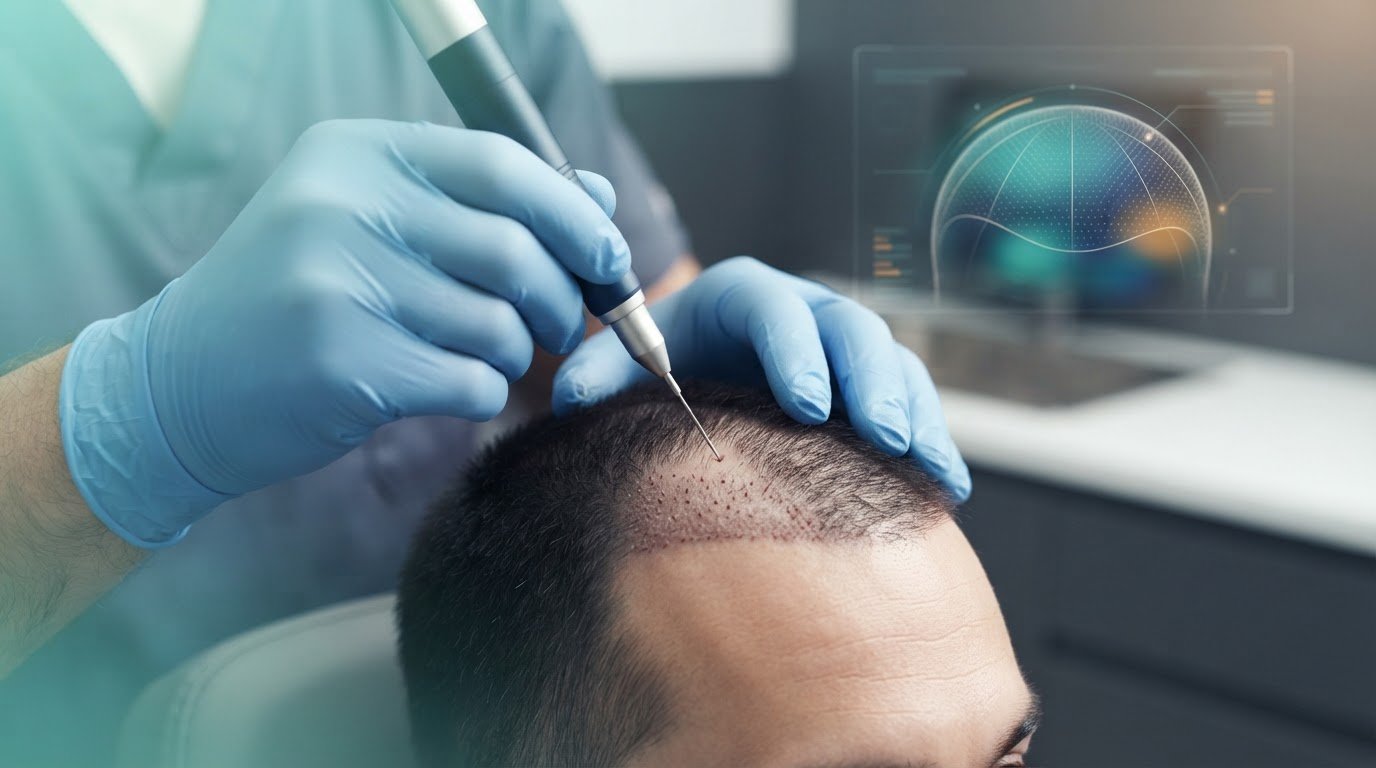
Discussing a hair transplant to lower your hairline
A useful consultation begins with your priorities, not a target measurement. If you’re considering a hair transplant to lower your hairline, describe what feels out of balance and whether you’ve noticed changes over time. Your hairline may be naturally high, affected by hair loss, or shaped by both. Sharing what you’ve observed helps the doctor understand the concern you want to address.
Which questions help clarify your hairline goals?
Think about the shape you’d like and what would still feel natural to you. Rather than requesting a fixed amount of lowering, describe the overall appearance you hope to achieve. Note which areas draw your attention, such as the temples or the centre of the hairline. You can also bring questions or reference images to make your preferences easier to explain.
Which part of your hairline concerns you most?
Has it always looked this way, or have you noticed a change?
What kind of hairline shape would feel right for you?
What questions do you have about the proposed design or your suitability?
There’s no need to arrive with a diagnosis or a precise measurement. If you’re unsure whether your concern relates to natural proportions, recession or thinning, say so. The consultation can explore that distinction. Raise practical questions about the process as well, so they can be discussed as part of your decision.
How is personal suitability assessed?
A DHI specialist consultation provides a personalised suitability assessment. A certified doctor can discuss your goals, consider your individual circumstances and explain the proposed plan and its relevant limitations. Ask how the design relates to the features you’ve described, what the approach is intended to address and what expectations are realistic for you.
Be open about whether your hairline seems naturally high, has changed, or involves both factors. You don’t need to work out the cause yourself. An assessment helps frame the conversation, but it can’t guarantee a particular hairline position or result. Understanding what the plan can and can’t address is part of making an informed decision.
Looking at hair transplant results can help you identify design details to discuss, such as the general shape of a hairline. Patient examples offer context, not a forecast of your own outcome. Use them to explain your preferences, then ask how those ideas relate to your individual assessment.
Take time to consider the proposed plan and raise any questions that remain. The aim is to leave the consultation with a clearer understanding of your goals, suitability and next steps, without feeling rushed into a decision.
Arrange a DHI consultation to discuss your hairline goals.
Explore DHI for hairline lowering with certified-doctor care
Choosing a hair transplant to lower your hairline is a personal decision. A consultation gives you space to explain what you’d like to change, understand how DHI works and discuss whether the approach fits your individual goals. You don’t need to arrive with a fixed measurement or a fully formed treatment plan. Start with what concerns you and what would feel natural.
What medical standards and credentials support DHI care?
DHI South Africa has 55 years in business (since 1970) and has treated 500,000+ patients worldwide. Procedures are performed exclusively by trained, certified doctors. DHI is performed under local anaesthesia and is practically painless.
The organisation’s stated credentials and systems include UK Care Quality Commission (CQC) Registration, ISO 9001:2015 Certification, TÜV Austria, ACHS and Total Care System™. These details provide context as you learn about the care pathway. Your own treatment plan should be discussed with the doctor who assesses you.
DHI is unshaven and hassle-free, with minimal downtime. If shaving, comfort or time away from your usual routine has been on your mind, raise those concerns during the consultation. The doctor can explain how the approach relates to your assessment and proposed plan without treating general information as a promise about your individual experience.
What is the next step if you are considering DHI?
A personalised consultation is the next step if you’d like to explore whether DHI aligns with your hairline goals. Describe the shape you have in mind, explain whether you think your hairline is naturally high or has changed through hair loss, and ask how the doctor assesses suitability. Be candid about the result you hope for and any concerns about the procedure. This helps create a focused discussion about the plan and its limitations.
DHI South Africa’s approach is grounded in individual assessment and doctor-led care. The consultation is a chance to understand how the proposed hairline design relates to your features, what the procedure involves and what expectations are realistic for you. No specific hairline position or outcome can be guaranteed, and the doctor can explain the considerations that matter in your case.
South Africa’s Trusted Name in Hair Transplants & Restoration.
Take the next step towards a hairline plan that feels right for you
Deciding whether to pursue a hair transplant to lower hairline starts with a clear conversation about the change you want, not pressure to choose a particular treatment. Describe what feels out of balance, ask how the proposed design would be tailored to your features, and discuss any questions that remain. A considered plan should leave you with a clearer understanding of your options and personal suitability.
You don’t need to have every answer before you begin. Bringing your questions and being open about your expectations can make the discussion more useful. The decision remains yours, with guidance from a certified doctor.
Take it one step at a time. A thoughtful conversation is a positive place to start.
Frequently Asked Questions
Can a hair transplant lower a naturally high hairline?
Yes, a hair transplant to lower hairline can be considered for someone with a naturally high hairline, but suitability depends on an individual medical assessment. The doctor will discuss the change you’re hoping for and how a proposed design may relate to your features. A naturally high hairline isn’t automatically a sign of hair loss, so explain whether it has changed over time or has always looked this way.
Is hairline lowering with DHI suitable for women as well as men?
DHI hair restoration is considered by both women and men, but that doesn’t mean every person is suitable for hairline lowering. The question is whether the approach fits your particular concern and goals. During a personalised consultation, explain what you’d like to change and any hairline changes you’ve noticed. A certified doctor can discuss your individual suitability rather than relying on gender alone to determine whether treatment is appropriate.
Does a DHI hair transplant to lower the hairline require a full shave?
No. DHI is an unshaven approach and doesn’t require a full head shave. This may help if maintaining your usual appearance during the treatment process is a priority. DHI is hassle-free, with minimal downtime, though your individual plan and experience should be discussed with the doctor. Explain any practical concerns about your hair or daily routine during your consultation.
Is DHI hairline lowering performed under local anaesthesia?
Yes. DHI procedures are performed under local anaesthesia and are practically painless. The procedure is carried out exclusively by trained, certified doctors. If you have questions about local anaesthesia or concerns about comfort, bring them up before proceeding. The doctor can explain the planned procedure in relation to your assessment.
How does hairline lowering with transplantation differ from scalp advancement?
Transplantation adds follicles at a planned hairline, whereas scalp advancement moves the scalp forward. They are distinct approaches, so the useful comparison is what each changes in relation to your concern. DHI South Africa’s hairline-lowering option is DHI transplantation. A consultation can clarify the difference and whether adding follicles through DHI aligns with your goals, rather than assuming the approaches are interchangeable or equally suitable for everyone.
Can a doctor assess whether I am suitable for hairline lowering?
Yes. A DHI specialist consultation provides a personalised suitability assessment, with a certified doctor discussing your goals and the proposed plan. Be open about whether your hairline has always been high, has changed, or seems to involve both factors. The doctor can explain relevant limitations and realistic expectations for your circumstances. An assessment can guide the conversation, but it can’t guarantee a particular hairline position or outcome.
What should I prepare before discussing a lower hairline with a doctor?
Prepare a clear description of what you hope to change and what would feel natural to you. Note whether your hairline has changed over time and which areas concern you most. Write down questions about the design, the procedure and your personal suitability so you don’t have to remember them all during the consultation. Avoid making a fixed measurement your only goal; focus on the appearance you’d like to discuss.


Comments