%20(1).jpg)
%20(1).jpg)
Hair Transplant on Credit: A Clear Guide for 2026

Could a monthly repayment make hair restoration feel manageable while making the full cost harder to see? If you’re weighing up whether you can get a hair transplant on credit, a personal or medical loan may be one way to spread the expense, depending on the lender’s terms and your eligibility. The key is to understand the total amount repayable, not just the instalment.
It’s understandable to want clarity before taking on a financial commitment. Interest, fees and repayment periods can make offers difficult to compare, and a payment option doesn’t determine whether treatment is right for you. Clinical suitability should come first.
This guide explains general credit routes people may consider in South Africa and the repayment details to review before applying. It also outlines why an individual assessment matters: a consultation with a certified medical expert can help you understand your hair restoration options before you decide how to fund them. Considering the clinical picture and financial commitment separately can help you take a measured next step.
Table of Contents
Can you get a hair transplant on credit in South Africa?
Yes, credit may be an option for a hair transplant in South Africa, depending on the lender, the credit product and your individual eligibility. Approval isn’t automatic. A lender’s decision is separate from whether a proposed treatment is appropriate for your circumstances.
It also helps to distinguish South African options from overseas examples. A clinic or video showing a particular finance arrangement in another country doesn’t establish that the same product or terms apply here. The video below offers one person’s account of financing a procedure, rather than guidance on South African credit.
For context, watch this personal account of a hair transplant finance experience:
What does paying for treatment on credit mean?
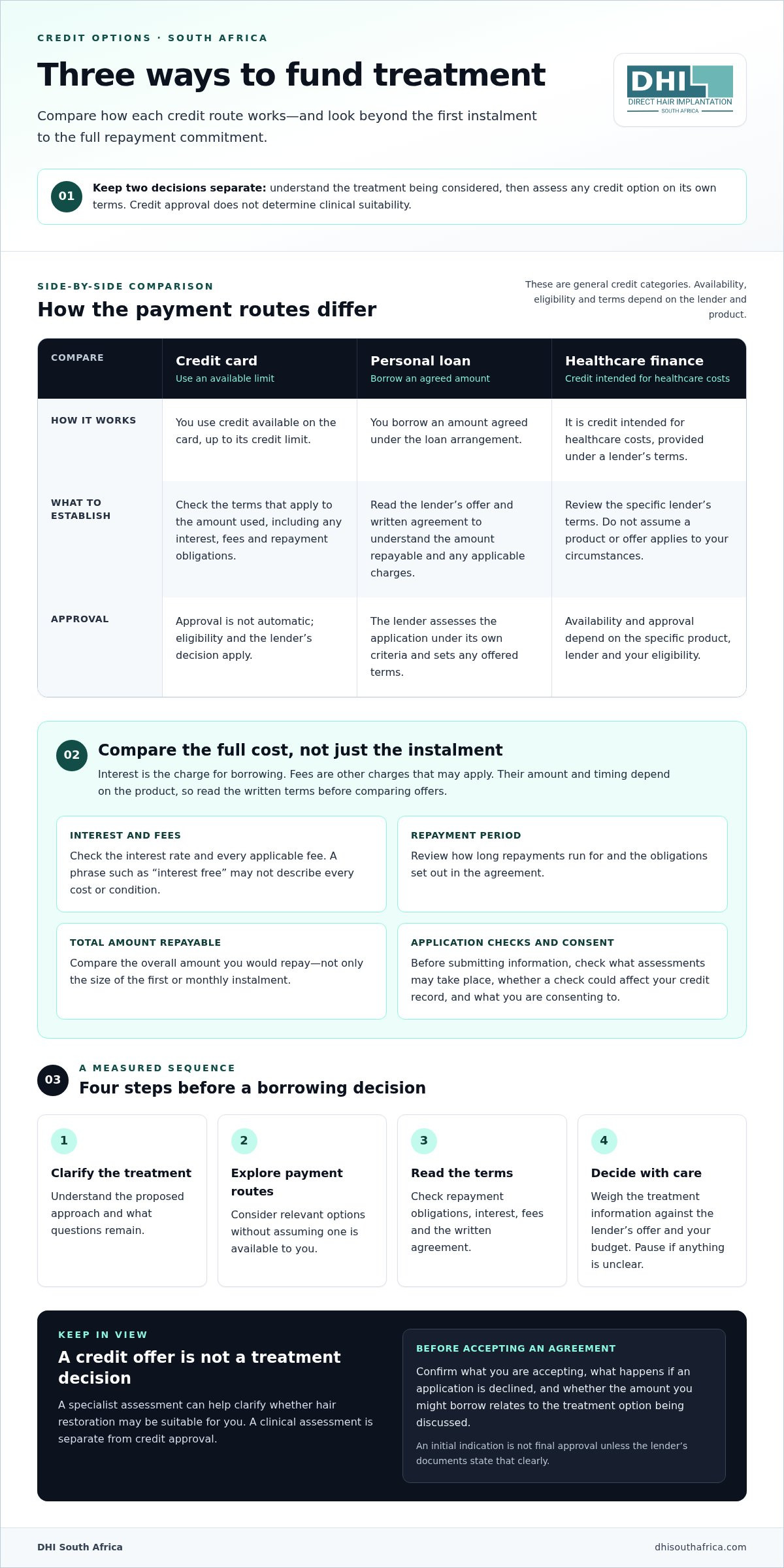
Credit means borrowing to pay now and repaying under agreed terms. Common routes include a credit card, a personal loan or healthcare finance. With a card, you use an available credit limit; with a personal loan, you borrow an agreed amount; healthcare finance is credit intended for healthcare costs and is provided under a lender’s terms.
Interest is the charge for borrowing, while fees are other charges that may apply under a particular agreement. Their amount and timing depend on the product, so don’t assume that a promotional phrase such as “interest free” describes every cost or condition. Read the written terms and compare the total amount you’d repay.
To understand the procedure itself, this overview of hair transplantation explains the general concept and techniques. The treatment approach for an individual should still be discussed with a specialist.
Is credit automatically offered by a hair restoration clinic?
No. A lender’s credit product is separate from a clinical consultation or treatment discussion. Don’t assume that a payment option advertised by an overseas clinic, or shown in a video, applies to treatment in South Africa. Read the terms of the specific credit product you are considering.
You can learn about hair transplant treatment to better understand the clinical approach. Keep the decisions distinct: first understand the treatment being considered, then assess any credit option on its own terms.
How does credit for a hair transplant usually work?
The process involves two separate decisions: what treatment may be appropriate, and whether a credit agreement fits your circumstances. If you’re asking, “can you get a hair transplant on credit?”, the answer depends on the payment route and the lender’s assessment. Application steps, eligibility criteria and checks vary, so submitting an application doesn’t mean it will be approved or completed within a particular timeframe.
A useful way to keep the process clear is to take it one step at a time:
Clarify the treatment being considered. Understand the proposed approach and what questions remain before making a financial commitment.
Explore payment routes. Consider which general payment options may be relevant to you, without assuming a particular one is available.
Read the terms. Review the lender’s application information and written agreement, including repayment obligations and any applicable interest or fees.
Make a considered decision. Weigh the treatment information against the lender’s offer and your own budget. You can pause if either is unclear.
What should happen before applying for credit?
First, establish what treatment is being considered and whether it may suit your needs. Hair loss and treatment options are individual, so understand the proposed plan before borrowing for a procedure. This can help you avoid applying for an amount or treatment that doesn’t reflect the option ultimately discussed. The DHI hair transplant information can help you learn about the treatment approach.
For broader context, the International Society of Hair Restoration Surgery (ISHRS) shares information on hair restoration. General educational material can help you prepare questions, but it can’t determine what is appropriate for you personally. Keep the treatment decision distinct from the funding decision.
What happens during a credit application?
If you choose to apply, the lender assesses your application under its own criteria. Before providing information, read how the process works, what checks may take place, whether a check could affect your credit record, and what you’re consenting to. The lender makes its own decision and sets any offered terms; a clinical assessment is not a credit approval.
Read the application carefully. Check what information you’re submitting, whether you’re consenting to an assessment or accepting an agreement, and what the lender says will happen if the application is declined. Don’t treat an initial indication as final approval unless the lender’s documents state that clearly.
Once you have the treatment information and the lender’s written terms, consider them separately. Check that the amount you might borrow relates to the option being discussed, and take time to understand the repayment commitment before accepting. No application outcome or timeline is guaranteed. You can pause while you consider the details.
How should you compare hair transplant credit options?
Once you have a clear picture of the treatment being considered, compare payment options by their full financial terms, not by how manageable the first instalment appears. Credit cards, personal loans and healthcare finance are broad categories, not standardised offers. Interest, fees, repayment periods and eligibility can differ between products and individual agreements.
Use the table as a guide to what to compare. It doesn’t imply that a particular product has specific terms.
Which repayment details deserve close attention?
Read the lender’s written terms before agreeing. Check the interest rate, any fees, the repayment schedule and the total amount repayable. Look for the agreement’s explanation of what happens if a payment is late, including any charges or other consequences. These details are specific to each agreement, so don’t rely on another product’s terms or a verbal summary.
Keep a copy of the offer and agreement, and make sure you can explain the key obligations in your own words. If a clause or charge is unclear, pause until you understand it. Clear terms matter as much as a repayment figure that appears affordable at first glance.
Can you compare offers using monthly payments alone?
No. A lower monthly instalment may reflect a longer repayment period rather than a lower overall cost. Compare how long you’ll be repaying, the amount due at each stage and the total commitment stated in the offer. A monthly figure on its own can’t tell you what you’ll pay over the full term.
Review each offer on the same basis. Note its interest, fees, payment schedule, repayment duration and total amount repayable, then consider those figures alongside your regular budget. If an offer provides less detail, you may not yet have enough information to make a fair comparison. Don’t choose purely because its first payment looks smaller.
Compare total repayment, not only the monthly instalment. That simple rule helps keep the long-term commitment visible while you weigh up the options. If you’re still clarifying the treatment itself, a personalised hair transplant assessment can help you understand the clinical plan separately from any borrowing decision.
How can you decide whether credit is affordable?
A repayment that looks manageable on paper can feel different alongside rent or bond payments, groceries, transport, school costs and other commitments. Before deciding, review your income and regular spending as a whole. This isn’t about finding a reason to borrow; it’s about understanding whether a new commitment could fit without putting everyday needs or your financial resilience at risk.
Set out your essential expenses, existing debt repayments and other regular obligations. Then consider what would remain if your income changed or an unexpected expense arose. Avoid treating emergency savings as a source of repayments. If the plan depends on skipping essentials, reducing your financial buffer or relying on income you haven’t received, pause before making a commitment.
What questions should you ask yourself first?
Check the agreement against your real circumstances, not an ideal month. Could you keep up with repayments if household costs rose or your income changed? Have you included all fees and considered the full repayment period? Would waiting allow you to build a buffer or make the decision with less pressure? If you can’t answer confidently, give yourself time to review the figures.
Be alert to pressure, whether it comes from a deadline, a persuasive offer or your own wish to move quickly. Unclear terms are a reason to pause, not to sign first and work them out later. A monthly amount alone doesn’t show whether the commitment will remain manageable over time. Nor should a decision depend on expected future income unless you’ve considered what happens if it doesn’t arrive as planned.
What if a lender declines an application?
A declined application is a credit decision, not a medical assessment. It doesn’t establish whether hair restoration is clinically suitable for you. Avoid responding by applying repeatedly without understanding how each application or credit check may affect your circumstances. Review the lender’s explanation and information about checks before deciding what to do next.
Most of all, don’t let disappointment push you towards borrowing on terms you haven’t had time to understand. A higher-cost option or a rushed agreement may add pressure rather than resolve it. Pausing is a considered choice. You can revisit your budget, wait until your position changes, or consider treatment separately from funding.
Affordability is personal, and this guide can’t make a financial recommendation for you. If repayments would compete with essential spending, leave no room for unexpected costs, or rely on uncertain income, take that seriously. You don’t need to decide immediately. A calm review of your budget and the written terms can help you see whether proceeding feels sustainable, or whether waiting is more comfortable for now.
Clinical suitability remains a separate question from affordability. A personalised consultation with a specialist can help you understand your hair restoration options without treating a lender’s decision as a medical verdict.
Explore your hair restoration options after considering both the clinical recommendation and the financial commitment.
What is the next step before deciding on hair restoration?
Before choosing how to pay, take a step back and consider whether hair restoration is the right path for you. Financing can affect how a procedure is paid for, but it doesn’t determine whether that procedure is suitable. Give yourself space to understand the treatment options first, then consider any financial commitment in light of your circumstances.
Hair loss can feel personal, and it’s natural to want a clear way forward. You don’t have to settle every question at once. Take time to think through what matters to you, what you’d like to ask, and whether you feel ready to consider treatment.
Why should clinical suitability come before financing?
Hair restoration options depend on your individual hair-loss pattern and assessment. A specialist can discuss whether a transplant may be appropriate and which approach could align with your needs. Credit approval doesn’t make someone suitable for treatment, just as a credit decision can’t determine what treatment may be right for them.
Start with the clinical question, not the repayment offer.
What can a consultation help you understand?
A consultation gives you an opportunity to discuss your concerns, ask questions and explore relevant treatment options. It can help clarify whether a particular approach is appropriate and what the next steps might involve, so you can make decisions with a more personal understanding of the options.
You can explore the DHI hair transplant approach as part of learning about treatment. For financial planning, consider costs and repayment terms as separate matters, based on the written terms of the credit product you are considering.
If you’re weighing whether you can get a hair transplant on credit, keep the choices distinct: understand the treatment option, then decide whether any repayment commitment makes sense for you. There’s no need to rush. Taking time to reflect can help you reach a decision that feels considered rather than pressured.
Explore DHI South Africa’s hair restoration information at your own pace.
Take your next step with clarity
The question of whether you can get a hair transplant on credit is only one part of a personal decision. Let your clinical assessment guide whether restoration is appropriate, then take the time you need to consider how any financial commitment fits your circumstances. You don’t have to resolve every detail at once, and choosing to pause is a valid next step.
DHI South Africa specialises in Direct Hair Implantation, with consultations with certified medical experts to support an individual suitability assessment. A conversation focused on your needs can help you understand your options, without pressure to make a decision before you’re ready.
Start with the questions that matter to you. A considered next step can make the path ahead feel clearer and more manageable.
Frequently Asked Questions
Does applying for hair transplant finance affect your credit score?
It may, depending on the lender, product and type of credit check used. Before you apply, read the lender’s privacy, application and consent information to understand what checks may take place. If the effect on your credit record isn’t clear, review the relevant credit bureau information before proceeding. Avoid submitting several applications at once without first understanding how each provider assesses applications.
Can you use a credit card to pay for a hair transplant?
A credit card could be an option if the clinic accepts it and you have enough available credit, but acceptance and card terms differ. Check whether the purchase would be treated like other card spending under your agreement, and what interest or charges may apply if you don’t repay the balance as planned. Consider the total card balance, not just the amount you can pay immediately.
Do you need to be approved for credit before a hair transplant consultation?
No. A consultation and a credit application are separate: you can discuss your hair-loss concerns and learn whether treatment may be suitable without that discussion being a lender’s approval. A consultation also doesn’t guarantee that a lender will offer credit. If you’re still exploring, use the appointment to understand the clinical recommendation first, then decide whether you want to investigate funding.
What should you do if you are declined for hair transplant credit?
Pause before applying elsewhere or accepting borrowing with less favourable terms. Read the lender’s decision information, review your budget and understand what further applications could mean for your credit record. A decline concerns that application, not your medical suitability. If hair restoration remains a question for you, discuss it separately with a qualified specialist, without feeling that you need to find new credit straight away.
Can you get interest-free credit for a hair transplant?
Some clinics or lenders in some markets may advertise interest-free arrangements, but that doesn’t establish the terms available in South Africa or for a particular treatment. Read the full written offer rather than relying on its headline. Check whether fees apply, how long the arrangement lasts, what the total repayment is, and what the terms say about missed payments. Assess an offer on its actual conditions.


Comments