%20(1).jpg)
%20(1).jpg)
Can a Botched Hair Transplant Be Fixed? A 2026 Guide

Could the result you’re worried about still be changing, rather than permanently wrong? An unnatural hairline, visible scarring or uneven density can be distressing, and it’s understandable to feel cautious about doing anything more. If you’re asking, “can a botched hair transplant be fixed?”, the honest answer is that some concerns may be addressed, but there’s no single fix for every situation.
Timing matters, too. A transplant can take 12 to 18 months to show its final result, so judging it too soon may cause unnecessary worry. If the appearance remains unsatisfactory, the cause, the condition of your scalp and the amount of healthy donor hair left all influence what may be possible. Further treatment isn’t always suitable, and a poorly planned repair could make things worse.
This guide explains common reasons for disappointing results, what a certified doctor needs to assess, and why the first step is a careful medical evaluation rather than a rushed decision. You’ll gain a clearer picture of possible next steps, without assuming that every transplant can or should be corrected.
Table of Contents
Can a botched hair transplant be fixed? Start by identifying what feels wrong
Can a botched hair transplant be fixed? Improvement may be possible, but the options depend on what is causing the concern and whether further treatment is suitable for you. An appearance you dislike is a reason to seek an assessment, not, by itself, proof that the transplant has failed.
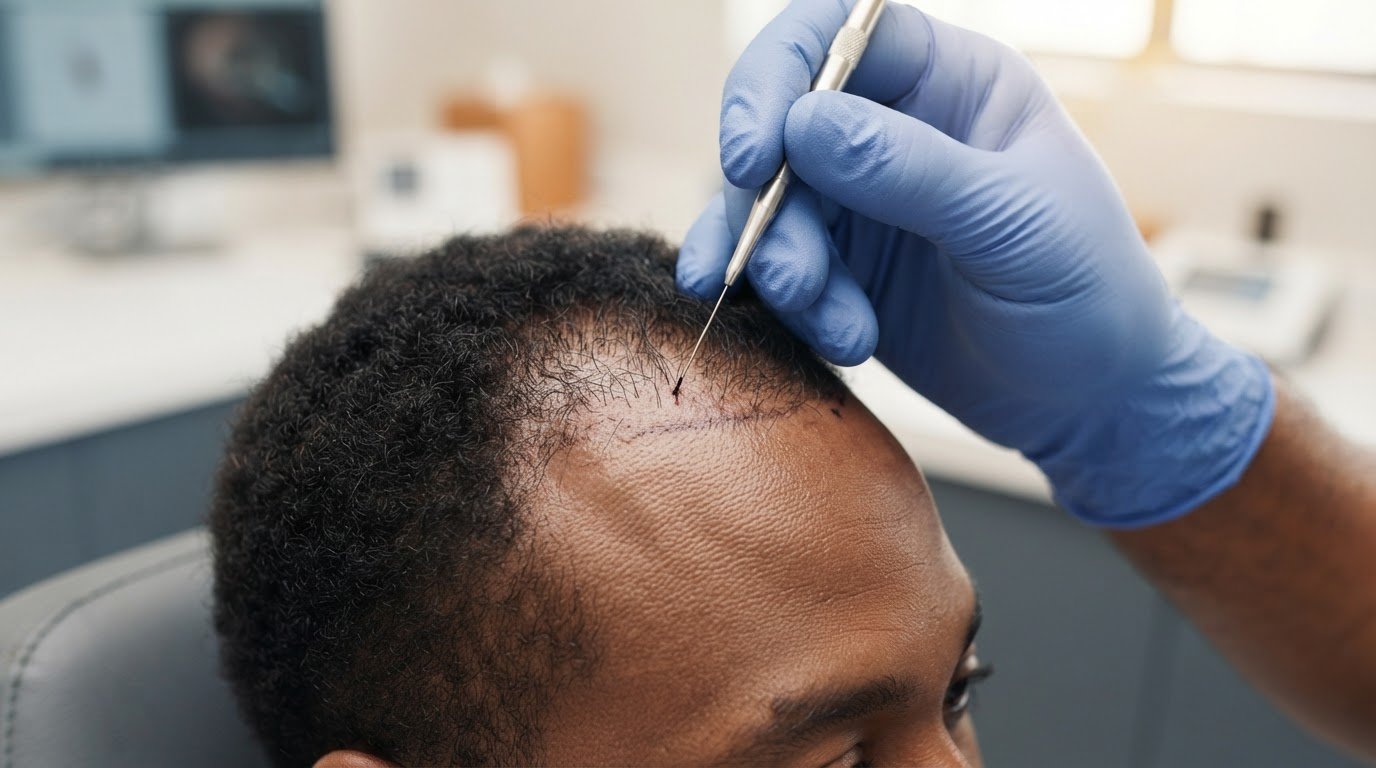
Start by describing what you notice as clearly as you can. Is the hairline too straight or low for your features? Does the hair seem to grow in an irregular direction? Are there areas of visible scarring, uneven density or a contrast between transplanted hair and thinning hair nearby? These observations help a doctor understand your concern without jumping to a diagnosis from appearance alone.
For general background on procedures and potential complications, Hair transplantation offers an overview of the subject. The details of your own result still need individual clinical assessment.
This video discusses a case described as a botched transplant. Use it as general context, rather than a way to diagnose your own result.
What can make a hair transplant look unsuccessful?
A hairline that appears unusually straight, a pluggy-looking outline, hairs pointing in an unexpected direction or noticeable gaps can all be concerns to raise. Visible scarring may also affect how you feel about the result. These features describe what you see; they don’t establish why it happened or which response, if any, is appropriate.
Low-looking density can have more than one explanation. It may relate to the original placement, the contrast between transplanted and surrounding hair, or changes in hair outside the treated area. A doctor can consider these factors together. If you’re reviewing information about a hair transplant in South Africa, remember that an online description or photograph can’t replace an examination of your scalp and hair pattern.
A cosmetic concern is different from a possible medical complication. If you have symptoms that are new, worsening or causing significant discomfort, seek prompt clinical advice rather than waiting for a cosmetic review.
Does an unsatisfactory result always mean the transplant failed?
No. Appearance alone can’t show what happened to individual follicles or confirm that they failed to grow. Ongoing hair loss can also change the surrounding hair, making the overall result look different even if the transplanted area itself hasn’t changed in the same way.
Try not to diagnose yourself from photographs. Pictures can help you record changes over time, but lighting, angle and hair length can affect how density and the hairline appear. A certified doctor can assess the scalp, consider your hair-loss pattern and discuss what the visible concerns may mean. That measured first step can bring clarity without assuming a complete correction is possible.
Why can a previous hair transplant need review?
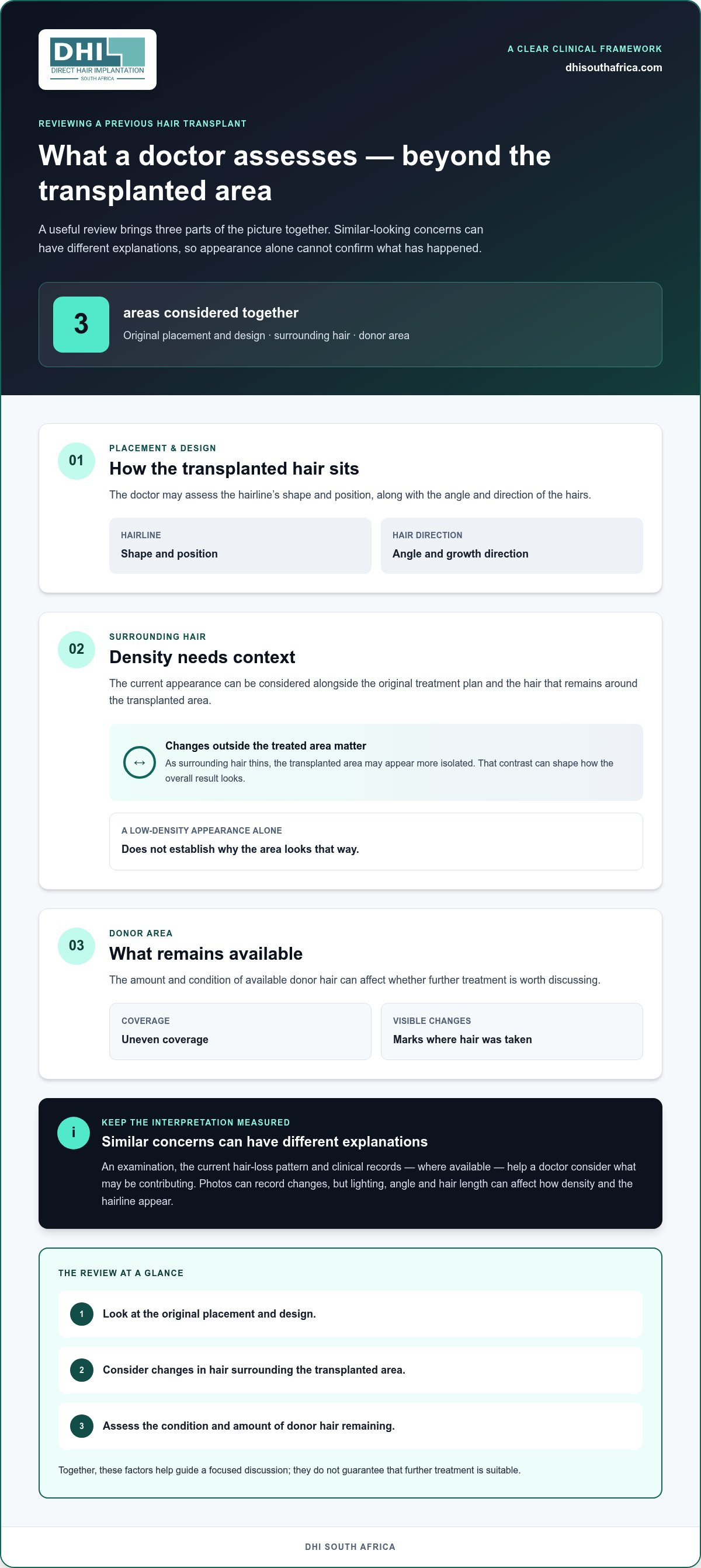
A review looks at more than the transplanted area in isolation. A doctor considers how the hair was placed, the condition of your scalp, the current pattern of hair loss and the donor area together. This wider view helps distinguish a concern with the original design from changes that have developed since the procedure.
That distinction matters because similar-looking concerns can have different explanations. A hairline that now seems too defined, for example, might relate to its shape or placement, or to changes in the hair behind it. Without an examination and, where available, clinical records, it isn’t possible to fairly assign blame or determine what happened during the original procedure.
Could the concern come from design, density or scarring?
A doctor may assess the hairline’s shape and position, as well as the angle and direction of the hairs. Density also needs context: the current appearance can be compared with the original treatment plan and the hair that remains around the transplanted area. A low-density appearance alone doesn’t establish why the area looks that way.
Changes in the donor area are relevant, too. If you notice uneven coverage or visible marks where hair was taken, describe what you see and where. The Hair Transplant Repair Options guidance from the International Society of Hair Restoration Surgery also discusses why repair planning depends on the specific concern and available donor hair.
Can continued hair loss change an earlier transplant?
Yes, hair outside the transplanted area may continue to change over time. As the surrounding hair thins, the contrast can make the transplanted area appear more isolated, even if the original concern was not the only factor shaping today’s appearance. This is why a current assessment considers your hair-loss pattern now, rather than relying only on how things looked soon after surgery.
A doctor may also assess the donor area, since the amount and condition of available hair can affect whether further treatment is worth discussing. This isn’t a prediction of future loss or a promise that transplanted hair will remain unchanged. It’s a way to understand the factors that may shape a realistic plan.
A useful review can organise the concerns into three areas: the original placement and design, changes in surrounding hair, and the condition of the donor area. That framework helps guide a focused conversation about what may be contributing to your result and whether any next step is appropriate. If you’d like to explore an individual assessment, DHI South Africa’s hair transplant information explains how to take the next step.
Which hair transplant repair options may be considered?
If you’re wondering whether a botched hair transplant can be fixed, there isn’t one repair procedure that suits everyone, and no option can guarantee a particular cosmetic result. The discussion depends on the concern, your scalp and hair-loss pattern, the available donor hair and what you hope to change. A certified doctor needs to assess you before any option can be considered suitable.
It may help to think of the conversation in two broad categories: monitoring the result or assessing whether further treatment could be appropriate. These are different paths, not steps that everyone must follow in order. Sometimes the most useful outcome of an assessment is understanding why no additional procedure is recommended at that time.
When might a further transplant be discussed?
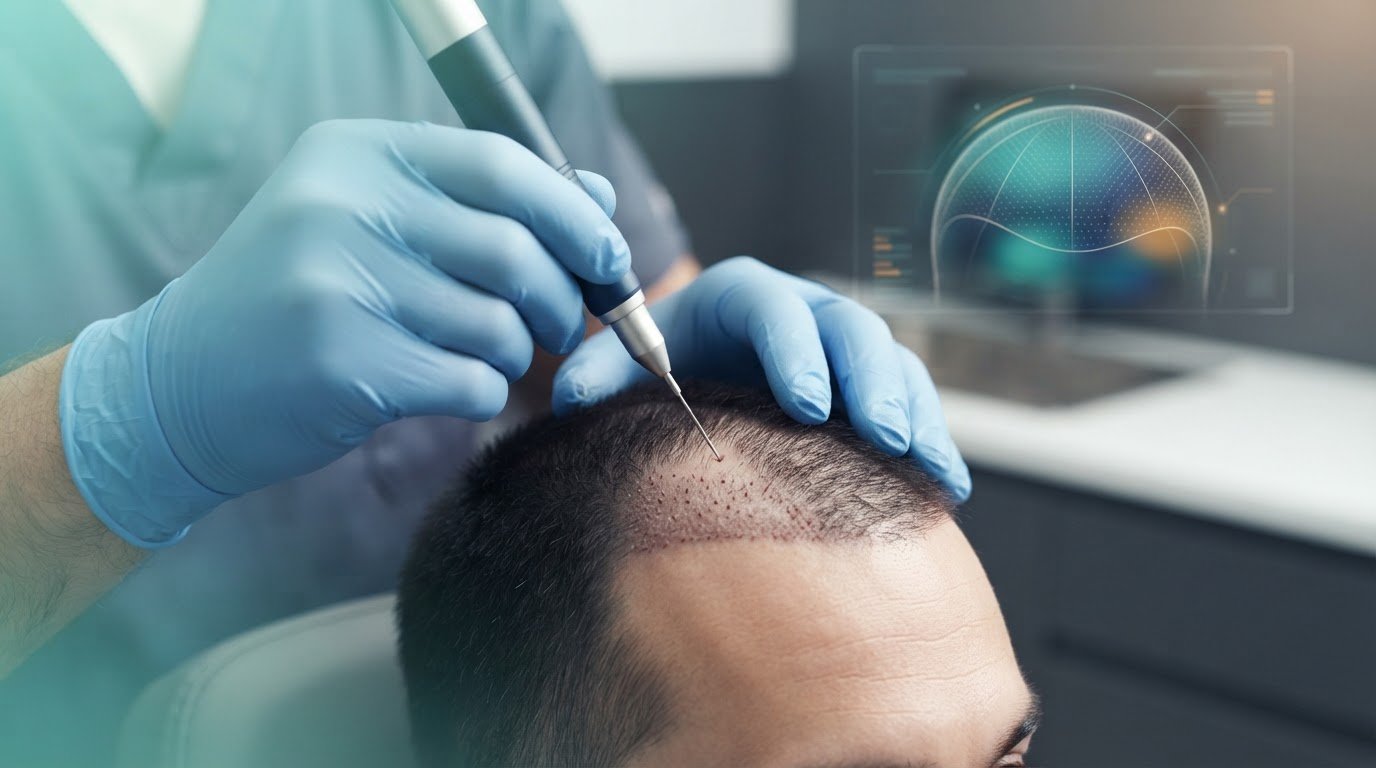
Further DHI treatment may be discussed only if an individual medical assessment suggests it could be appropriate. The doctor considers the scalp, existing hair distribution and donor-area capacity, because donor hair is limited and its condition can affect planning. The aim is to weigh the area you want to address against the resources available, rather than focus on a promised density or a specific number of hairs.
Your goals matter, too. You might want a softer-looking hairline, less visible contrast or improved coverage in a particular area. A doctor can discuss whether those aims are realistic in light of your individual assessment. Even if another procedure is considered, the final appearance can’t be guaranteed, and a plan needs to account for the possibility that your hair pattern may continue to change.
When might monitoring be part of the discussion?
Not every concern calls for another procedure. If the appearance is still changing, clinical monitoring may help the doctor understand whether the concern is stable or evolving. Follow-up observations can provide useful context when deciding whether to keep watching or consider another treatment discussion.
A measured decision starts with matching the option to the reason for concern. Ask what a proposed treatment is intended to address, what its limitations are and how it fits your current hair pattern. You can explore hair restoration treatment options as part of learning about the approaches available, then discuss your circumstances with a certified doctor before deciding what, if anything, to do next.
How should you prepare for an assessment after a disappointing transplant?
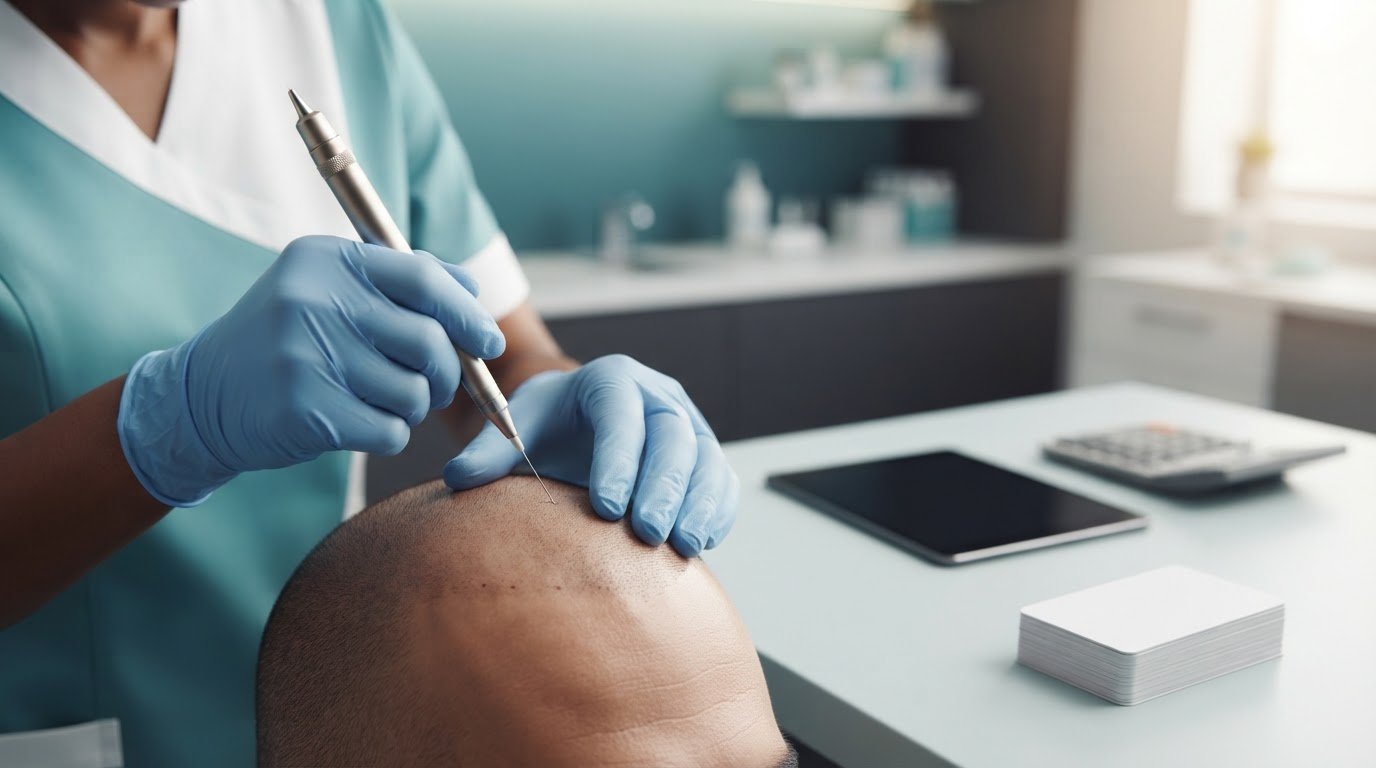
It can feel difficult to explain what is troubling you, especially if the appearance has changed gradually. A little preparation can make an assessment more focused: it gives the doctor a clearer picture of the procedure, the changes you’ve noticed and what you hope to understand. It won’t determine whether further treatment is suitable, but it can help you make better use of the discussion.
Gather what you have, even if your records are incomplete. The original treatment plan, procedure date and follow-up information may help provide context. Then note what you’ve observed and what you’d like to ask. You don’t need to arrive with a diagnosis or decide in advance that you want another procedure.
What information can make the consultation more useful?
Use this simple sequence to organise the details before your appointment:
Collect records: Bring the original plan, any treatment notes available to you, the procedure date and relevant follow-up information.
Make a timeline: Note when you first noticed the concern and whether it has stayed similar or changed over time.
Document what you see: If you have photographs from different stages, bring them. Consistent images taken in clear, similar lighting can help illustrate changes, but they can’t show what happened to individual follicles or diagnose a problem.
Describe your goals: Write down the specific features you’d like to discuss and what you hope might look or feel different.
For example, “the front looks different from how I expected” is a useful starting point, but you can make it more specific: is your concern the shape of the hairline, uneven coverage, visible marks or a change in the surrounding hair? Concrete observations help keep the conversation centred on your experience.
What should a personalised assessment clarify?
Ask the certified doctor to explain what they observe and which factors may be contributing. You can also ask how the donor area and your current hair-loss pattern affect the options under discussion. The aim is to understand your circumstances, not to reach a conclusion from a photograph or a general article.
If an approach is proposed, make sure you understand what it is intended to address, its limitations and what follow-up would involve. Ask how the plan relates to your goals, and whether monitoring or another option might also be considered. Clear answers should help you weigh the next step without feeling rushed.
Online information can help you prepare, but it can’t establish whether another procedure is right for you. If you’re asking, “can a botched hair transplant be fixed?”, an individual clinical assessment is the practical way to discuss what may be contributing to your concern and what, if anything, could be appropriate.
Bring your treatment history, photographs and questions to help the doctor understand what you’d like assessed.
How DHI South Africa can help you consider the next step
A disappointing result can leave you unsure whether to wait, seek another opinion or explore treatment. A consultation with DHI South Africa offers an opportunity to discuss your concerns and receive an individual assessment. It is not a promise that every previous transplant can be corrected, or that another procedure will be the right answer.
A certified doctor considers the previous result alongside your current hair pattern and the goals that matter to you. You can explain what feels different from your expectations, whether that is the hairline, coverage or another aspect of your appearance. The purpose is to understand your situation and discuss a considered next step, which may or may not involve further treatment.
What to expect when discussing your hair-restoration goals
Bring any records and photographs you have, and be clear about what you hope to address. The doctor can then consider your concerns in context, rather than treating one feature as the whole story. If further treatment is discussed, the proposed plan should reflect your individual assessment and its limitations. There is no assumption that a previous result can always be changed.
For some people, the most useful outcome is clarity about what may be contributing to the appearance and what options are realistic. For others, it may be a discussion about whether an additional treatment assessment is appropriate. Either way, the decision should be guided by your circumstances, not pressure to proceed.
How DHI's documented approach may inform the conversation
DHI is a patented implantation technique that uses a patented DHI Implanter Tool. DHI procedures are performed exclusively by trained, certified doctors under local anaesthesia and are described as practically painless. DHI is unshaven and hassle-free: it doesn’t require full shaving and is associated with minimal downtime. These are features of DHI, not a guarantee that the technique is suitable for correcting a previous transplant.
Learn more about the DHI hair-transplant approach and consider how it relates to your questions. An assessment is needed to discuss whether the technique fits your scalp, remaining donor hair and goals.
DHI South Africa is South Africa’s Trusted Name in Hair Transplants & Restoration. An individual assessment can help you discuss your concerns without assuming a particular treatment or outcome.
Take a considered step towards clarity
It’s understandable to want a clear answer about whether your result can change. The question “can a botched hair transplant be fixed” can’t be answered responsibly from a photograph or general advice alone. An individual medical assessment can help you understand what may be contributing to your concern and whether any next step is appropriate. There’s no obligation to assume that further treatment is the answer.
DHI South Africa reports 500,000+ patients treated worldwide, has 55 years in business since 1970, and reports a 99%+ customer-satisfaction rating, as reported by IMRB. DHI’s global network includes 77 clinics worldwide across 46 countries. These figures offer context about the organisation, while your assessment remains specific to your needs and goals.
You can begin by exploring the options and deciding whether you’re ready to discuss your situation. A measured conversation can be a useful step towards feeling informed and more confident about what comes next.
Frequently Asked Questions
How long should I wait before deciding that a hair transplant result is unsatisfactory?
Allow 12 to 18 months for the final result to develop. Before the 12-month mark, changes may still be part of the normal shedding and regrowth cycle, so judging the outcome can be premature. If you’re concerned about how the area is changing, you can seek medical advice rather than waiting in uncertainty. Keep dated photographs to help you describe changes over time.
Can transplanted hair thin or fall out after a hair transplant?
Hair can shed during the post-transplant growth cycle, and this doesn’t by itself establish that the transplant has failed. Hair outside the transplanted area may also continue to thin, changing the overall appearance. If you notice a change, note when it began and whether it affects the transplanted area, surrounding hair or both. A doctor can assess the pattern rather than infer the cause from shedding alone.
Can a hair transplant repair be considered years after the original procedure?
Yes, a review can be considered years later; the time elapsed alone doesn’t determine suitability. A doctor will assess your current scalp and hair pattern, the original result and the condition of the donor area. Your goals also matter. Bring any available treatment records and dated photographs to help explain how the result has changed. An assessment can clarify whether further treatment is appropriate, without promising that repair is possible.
Does an unnatural-looking hairline always need another procedure?
No. An unnatural-looking hairline doesn’t automatically mean another procedure is needed. The concern may be assessed alongside your overall hair pattern and personal goals, and the doctor can discuss whether monitoring could be considered. Avoid trying to diagnose the cause from a single photograph. A clinical assessment helps establish what may be contributing and whether any intervention is suitable.
Can a doctor assess a previous hair transplant using photographs?
Photographs can help a doctor understand what you’ve noticed, especially if they show the area over time in clear, consistent lighting. They’re useful supporting information, not a diagnosis: image quality, angle and hair length can affect how the result appears, and photographs can’t establish individual suitability for another procedure. Bring images alongside your treatment history, and expect the assessment to consider your current scalp and hair pattern too.
Is DHI performed under local anaesthesia?
Yes. DHI procedures are performed under local anaesthesia and are described as practically painless. They are performed exclusively by trained, certified doctors. If you’re discussing DHI as a possible option, ask the doctor how the technique relates to your individual assessment and goals. The use of local anaesthesia describes the procedure, but it doesn’t establish whether DHI is suitable for addressing a concern from an earlier transplant.
Does DHI require full head shaving?
No. DHI is unshaven and hassle-free, and full head shaving isn’t required. That feature may be relevant if keeping your hair unshaven matters to you, but it doesn’t determine whether DHI is appropriate for a particular case. Suitability depends on an individual medical assessment, including your current hair pattern and goals. Discuss your preferences with the doctor alongside the concern you’d like evaluated.
Comments