%20(1).jpg)
%20(1).jpg)
Dealing with Hair Loss in Your 20s: Causes, Next Steps and Treatment

Hair loss in your 20s is a reason to investigate, not a diagnosis or a prediction. If you’re dealing with hair loss in your 20s, you may notice more hair in the shower, gradual thinning or a changing hairline. It can feel unsettling, especially when you’re unsure whether others will notice. It’s understandable to want a clear answer rather than another conflicting claim from online advice.
Hair changes at this age can have different explanations. Hereditary hair loss is one possibility, but stress, illness, nutrition, hormonal changes or certain medicines may also be relevant. Some causes are temporary; others can progress. The pattern alone can’t confirm what’s happening, so avoid self-diagnosing or rushing into treatment.
This guide explains possible causes, signs that warrant a clinical assessment and practical steps to take next. You’ll also learn what a clinician may consider and how different options, from non-surgical approaches to hair restoration, might be discussed if appropriate. The aim is a clearer picture and a considered plan, not pressure to choose a treatment.
Table of Contents
Dealing with hair loss in your 20s: what the changes may mean
Hair loss in your 20s can have several possible explanations. Increased shedding, gradual thinning and a changing hairline describe different kinds of change, but none identifies the cause on its own. Your health, recent life changes, family history and how the change has developed over time all provide useful context for a clinician.
Noticing a change can feel personal, particularly if you’re unsure whether it will pass or continue. It’s understandable to feel concerned, but your appearance doesn’t define your health or self-worth. Noticing hair changes is an observation; a diagnosis is a clinician’s assessment of their cause.
This video shares one person’s experience of noticing hair loss at a young age:
Shedding or gradual thinning: what is the difference?
Shedding means more hairs seem to come away, for example when washing or brushing. Gradual thinning is a slow change in overall fullness, while a receding or altered hairline changes the outline at the front or temples. These descriptions can help you explain what you’ve noticed, but they can’t establish a cause.
Note when you first noticed a change and where it appears. Lighting, a different hairstyle, wet hair or a recent haircut can affect how dense your hair looks. Memory can be unreliable too, so avoid drawing conclusions from a single mirror check or photograph.
Why hair loss can feel especially worrying in your 20s
You may be weighing up whether the change is temporary, ongoing or worth having checked. Online images and advice can add to that uncertainty because styling, lighting and individual hair patterns vary. Try not to use someone else’s photos as a measure of what is happening to you.
Some gradual changes follow a pattern; pattern hair loss is one term used to describe this. A clinician can assess whether it may be relevant in your case. For an overview of hair loss solutions, explore the available information without assuming a particular treatment is right for you.
Possible causes of hair loss in your 20s, and how clinicians assess them
Similar-looking hair changes can have different causes, so the pattern you notice is a starting point, not a diagnosis. A clinician will consider how the change began and developed, alongside your health and personal history, before discussing what it may mean.
Common patterns a clinician may consider
One possibility is androgenetic alopecia, a pattern of hair loss with a genetic component. It can affect people of different ages, but a changing hairline or reduced density alone can’t confirm that this is the cause.
Another possibility is telogen effluvium, a temporary shift in the hair-growth cycle that can lead to increased shedding. Health changes, certain medicines, nutrition and significant life events may be relevant when assessing shedding, but none can be identified as the cause from one sign alone. Don’t start or stop medication, or make major dietary changes, based only on online advice.
Two people can notice similar hair changes for entirely different reasons; the timeline and clinical assessment help distinguish between them.
What to expect from a hair-loss assessment
An assessment usually starts with a conversation. You may be asked when the changes began, whether they are gradual or more sudden, which areas are affected, and whether close relatives have experienced a similar pattern. The clinician may also ask about your health, recent life changes, nutrition and medicines, including supplements.
A scalp examination can help the clinician understand the pattern and check for visible changes. Depending on your history and findings, they may consider whether further tests or another clinical opinion are appropriate. The aim is to explore possible explanations before matching you to a treatment.
If you’re dealing with hair loss in your 20s, bring a brief timeline and any photographs taken under consistent conditions. These can help you describe what you’ve observed. An individual assessment can also clarify whether medical hair restoration options are worth discussing. Read more about medical hair restoration treatments in South Africa, keeping in mind that suitability depends on your circumstances and specialist assessment.
Does hair loss in your 20s always mean permanent baldness?
No. Your age or the amount of hair you notice shedding can’t predict a single outcome. Some shedding patterns may be temporary, while other types of hair loss can continue or change over time. The duration and distribution of the change, your health history and a clinical examination all help shape an individual assessment.
That uncertainty can be stressful, especially if you’re worried an appointment will lead straight to surgery. A good assessment should come before treatment decisions. Hair implantation isn’t automatically the right first step for a young adult. You can ask questions, consider the information and decide what feels appropriate without being rushed.
Can temporary shedding improve?
It can, depending on the cause. For example, telogen effluvium involves a shift in the hair-growth cycle and can lead to increased shedding; a clinician can consider whether this pattern fits your history. Improvement shouldn’t be assumed, however, and the cause may need attention. If shedding persists, begins suddenly or concerns you, speak with a healthcare professional rather than relying on a treatment claim online.
When might hair loss need prompt medical attention?
Arrange a professional assessment if you notice sudden or marked changes, distinct patches of hair loss, or scalp symptoms such as pain, irritation, redness or scaling. These signs don’t point to one diagnosis by themselves, but they’re useful to describe to a clinician. Seek medical advice promptly if symptoms are severe or rapidly worsening; this article can’t assess your individual health or replace clinical care.
For an appointment, note when the change began, whether it is spreading and any other symptoms. Photographs taken under similar conditions may help show how the pattern has changed. A clinician can explain what the examination suggests and whether further investigation is needed. For broader medical evaluations and blood tests, consulting a doctor at a private general practice like GP Plus can help rule out underlying systemic or nutritional factors.
When dealing with hair loss in your 20s, the aim is to understand what may be happening before choosing a response. Discuss the likely course as well as possible next steps. If a treatment is proposed, ask what it is intended to address, what uncertainties remain and whether monitoring or another approach may be considered first.
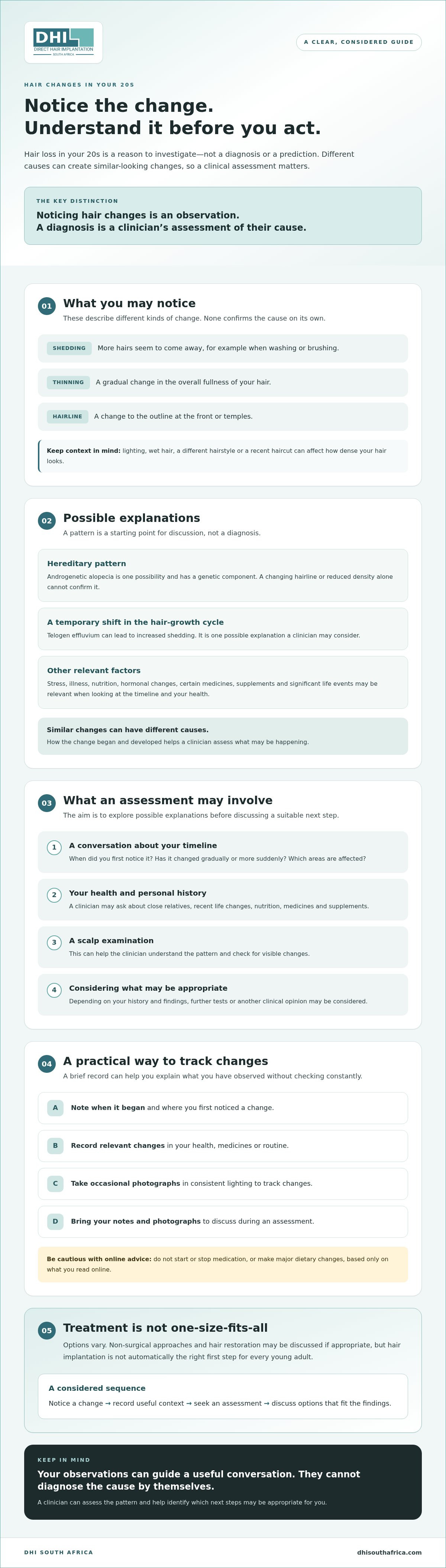
What to do next if you notice hair loss in your 20s
A clear, measured plan can help you move from worry to useful information. If you’re dealing with hair loss in your 20s, take these steps at a pace that feels manageable. You don’t need to work out the cause before speaking with a clinician.
Observe the change. Note when you first noticed it and whether it seems like increased shedding, gradual thinning or a distinct patch. Record relevant health changes, new medicines or supplements, and significant changes in your routine.
Record a simple baseline. If photographs feel helpful, take them occasionally in similar lighting, from the same angles and with similar styling. They can offer context over time, but daily comparisons aren’t necessary.
Arrange an assessment. A clinician can consider your history and examine your scalp. A hair loss assessment can help you discuss what you’ve noticed and what further investigation, if any, may be appropriate.
Review options before deciding. Ask how each option relates to the suspected cause and what it can reasonably address. You can review hair-loss treatments as background, then discuss suitability with a specialist rather than treating online information as a personal recommendation.
How to track hair changes without increasing anxiety
Keep notes brief and factual. A short entry such as “noticed more shedding after washing” or “thinning seems more visible at the temples” is more useful than repeatedly checking your hair. Lighting, styling and wet or dry hair can affect how density appears, so compare photographs only under similar conditions. If tracking increases distress, pause and raise your concerns at an appointment.
Questions to take to a hair-loss consultation
Writing down a few questions beforehand can help you feel prepared. Consider asking:
Which possible causes are you considering, and what findings support them?
Would further examination or testing be appropriate in my case?
What could each proposed option address, and what are its limitations?
What risks, aftercare and follow-up should I understand?
Are there alternatives, including monitoring the change before making a treatment decision?
You’re entitled to understand the reasoning behind a recommendation and to take time to consider it. An assessment should help clarify your choices, not pressure you into one.
Hair-loss treatment options in your 20s: when to discuss DHI
Treatment choices depend on what may be causing the hair changes, their pattern, your goals and a specialist’s assessment. An option discussed for one type of hair loss may not be appropriate for another. Establishing the likely cause first helps keep the conversation focused on relevant options rather than promises or pressure.
The right option follows assessment, not age alone. In your 20s, Direct Hair Implantation (DHI) may be worth discussing if a specialist considers it appropriate, but implantation isn’t automatically the first or right step. The pattern and likely progression of hair loss, as well as your individual circumstances, need consideration before a decision is made.
How clinical options differ
DHI is an implantation procedure, while GFC Treatment, Regenera Activa and PRP Hair Loss Treatment are other clinical options offered by DHI South Africa. They aren’t interchangeable, and their suitability depends on individual assessment. A specialist can explain what each option is intended to address, its limitations and whether it fits the cause and pattern identified.
If implantation is being considered, ask how the proposed plan relates to your hair pattern and goals. Read more about Direct Hair Implantation, then use an assessment to discuss whether it may be relevant in your case. Reading about a procedure can help you prepare, but it doesn’t replace personalised clinical advice.
A considered next step with DHI South Africa
Bring your questions and a brief account of when the changes began, how they have developed and what you hope to address. Ask the specialist to explain the reasoning behind any recommendation, what alternatives may be available, and what risks, aftercare and follow-up to consider. You don’t have to make a decision during the discussion.
DHI South Africa offers medical hair-restoration options including DHI, GFC Treatment, Regenera Activa and PRP Hair Loss Treatment. Ask during an assessment which options may be relevant to your circumstances and what care or follow-up would involve.
If you’re dealing with hair loss in your 20s, an individual assessment can help you understand the options without assuming a particular treatment is right for you.
Take your next step with clarity
Dealing with hair loss in your 20s doesn’t mean you have to assume the cause or decide on treatment straight away. Shedding and gradual thinning can have different explanations, and a clinician can consider your history, the pattern and relevant health changes before discussing options.
Track changes in a calm, practical way and take your questions to an assessment. DHI South Africa offers several medical hair-restoration options, but suitability is assessed individually. A specialist can explain which options may be relevant and what to consider before making a decision.
A considered conversation can help you understand what may be happening and which choices are appropriate for your circumstances. You deserve clear information and time to decide what feels right for you.
Start with understanding, not pressure. One thoughtful next step can bring greater clarity.
Frequently Asked Questions
Can hair loss in your 20s grow back?
Hair may grow back in some cases, but regrowth depends on the underlying cause. Some shedding patterns can improve, whilst other forms of hair loss may persist or progress and need assessment. Age or the amount of hair you notice falling out can’t predict the outcome. If the change continues or concerns you, speak with a clinician, who can examine the pattern and recommend appropriate next steps.
Is hair loss in your 20s always genetic?
No. Genetics is one possible factor, but it isn’t the only explanation for hair changes. A clinician may consider your health history, when the change began, its pattern and findings from a scalp examination. Age or a family history of hair loss alone can’t confirm the cause. If changes persist or cause concern, a personalised clinical assessment can help explore the possibilities without relying on guesswork.
What causes hair loss in your 20s?
Possible causes include pattern hair loss and temporary shedding, amongst other explanations that need clinical context. Health changes, medication, nutrition and significant life events may also be relevant. This list can’t identify the cause in an individual, and similar changes can have different explanations. Note when you first noticed the change and mention relevant health or medication changes to a healthcare professional for a more informed assessment.
When should I see a doctor about hair loss in my 20s?
Arrange an assessment if hair changes persist, appear suddenly, form distinct patches or otherwise concern you, especially if you also notice scalp symptoms. A clinician can review your history and examine your scalp to decide whether further investigation is appropriate. Not every change is an emergency, but seek appropriate local medical care promptly if symptoms feel severe or rapidly worsen. This guidance can’t replace an individual medical assessment.
Can stress cause hair loss in your 20s?
Stress may be relevant to some patterns of increased shedding, but stress alone can’t confirm why your hair is changing. Other health factors or causes may need consideration too. If you’re concerned, tell a clinician when the shedding began and mention any related changes in your health or routine. They can assess the pattern and discuss suitable next steps. Don’t assume that reducing stress will resolve the hair loss.
Is a hair transplant suitable for someone in their 20s?
Age alone can’t determine whether a hair transplant is suitable. Before discussing Direct Hair Implantation, a specialist needs to assess the cause and pattern of hair loss, the donor area, your goals and whether further change is likely. Implantation isn’t automatically the first step for a young adult. An individual assessment can help you understand the considerations and alternatives before deciding whether to proceed.
What happens at a hair-loss consultation?
A consultation usually includes a discussion of when the changes began, their pattern, your health history and your goals, followed by an appropriate scalp assessment. Depending on the findings, the clinician may discuss further investigation or different options. Recommendations should be personalised, not assumed in advance. Prepare by noting relevant changes and writing down questions about possible causes, treatment options, risks, aftercare and follow-up.
To discuss your concerns and possible next steps, arrange an individual hair-loss assessment with DHI South Africa.


Comments