%20(1).jpg)
%20(1).jpg)
Regaining Confidence After Hair Restoration: A Practical Guide

What if regaining confidence after hair restoration isn’t about feeling transformed straight away, but learning to feel more at ease as progress unfolds? If you’re self-conscious about changes during recovery or unsure how to interpret what you see, it’s understandable to want reassurance. There’s no requirement to feel confident immediately after a procedure, and your experience may not match someone else’s timeline.
This guide offers practical ways to approach that uncertainty: how to separate clinical observations from feelings about your appearance, keep expectations in perspective and prepare useful questions for your clinician. It also explains how follow-up can help you discuss what you’re noticing. The aim isn’t to promise a particular result or feeling, but to help you make sense of your own experience without judging it against someone else’s.
Table of Contents
Why regaining confidence after hair restoration can take time
Regaining confidence after hair restoration can take time because your appearance, expectations and feelings may all shift during the process. You might feel hopeful one day and self-conscious the next. Those mixed emotions are understandable. On their own, they don’t show that something has gone wrong or predict your eventual result. Each person’s experience is different.
Confidence during restoration is the changing sense of comfort you have with your appearance and yourself while clinical progress continues. A procedure may address concerns about hair, but it can’t guarantee broader self-esteem or changes in relationships, work or wellbeing. Those parts of life are personal and don’t have to follow a treatment timetable.
For another perspective, watch this patient story:
What confidence can mean during the restoration journey
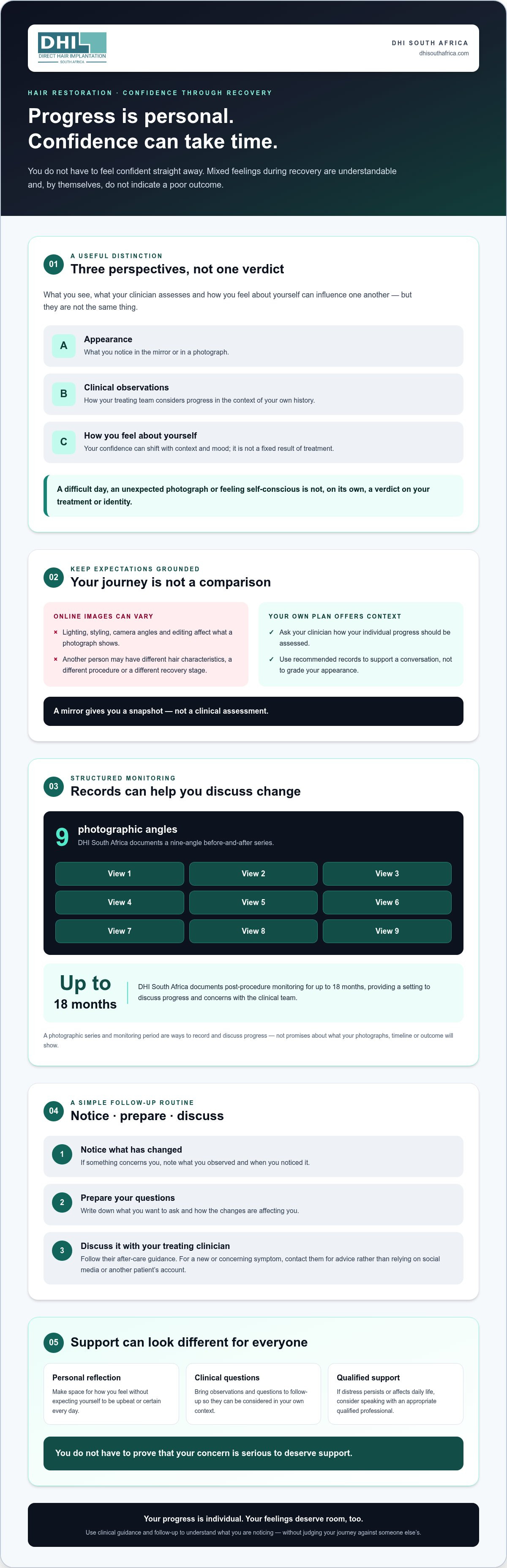
It can help to separate three things: what you notice about your appearance, what a clinician observes when assessing progress, and how you feel about yourself overall. These can influence one another, but they aren’t identical. You may feel uneasy about your appearance even when a clinical assessment is reassuring, or feel more comfortable before your appearance matches what you hoped for.
Your body image, or how you perceive and feel about your appearance, is personal. Confidence can change with context and mood; it isn’t a fixed result of treatment. You don’t need to feel grateful, upbeat or certain on a particular day.
Why expectations and comparisons can affect how you feel
Polished or edited images can create an unrealistic reference point. Lighting, styling, camera angles and editing affect what a photograph shows. It also can’t tell you whether another person has the same hair characteristics, procedure or stage of recovery. Comparing different journeys may make it harder to assess your own fairly.
Return to your individual plan and ask your clinician how your progress should be assessed. If distress about your appearance persists or starts to affect daily life, consider speaking with an appropriate qualified professional. You deserve support without having to prove that your concern is serious.
How to understand progress without letting appearance define it
A mirror gives you a snapshot, not a clinical assessment. How you feel about your appearance may change from day to day, while your treating team considers clinical progress in context. Keeping those perspectives separate can help you avoid treating a difficult morning or an unexpected change in a photograph as a verdict on your treatment or identity.
Individual follow-up is more useful than online comparisons. Your clinician can consider your own history and assess changes in context; online images may show different people, procedures, lighting and stages of recovery.
Use personal records as context, not a beauty score
If your clinical team recommends photographs, follow its guidance on timing, lighting, angles and preparation. Use the images to support a discussion about change, not to grade your appearance or repeatedly check for differences. If a photograph seems to show something that concerns you, bring it to your treating clinician rather than trying to interpret it alone.
DHI South Africa documents photographic records using a nine-angle before-and-after series. This is one structured way to record views over time, not a promise about what your photographs or outcome will show.
Make sense of follow-up and changing expectations
DHI South Africa documents post-procedure monitoring for up to 18 months, giving patients a setting to discuss progress and concerns with the clinical team. This doesn’t mean everyone will experience the same changes, follow an identical timeline or reach the same appearance. Your clinician’s assessment and instructions should guide how you interpret your individual progress.
Follow the after-care guidance provided by your treating clinician. If you notice a new or concerning symptom, contact them for advice instead of relying on social media or another patient’s account. Before a follow-up, note what has changed, when you noticed it and what you want to ask. This can help you explain both what you observe and how it’s affecting you.
DHI South Africa’s hair restoration results show examples of other patients’ journeys, but can’t predict your personal outcome. Use them as context, not a benchmark. To learn more about follow-up and assessment, explore DHI South Africa’s hair restoration information.
Which confidence-building approaches may suit your situation?
There’s no single route to regaining confidence after hair restoration. The right support depends on what’s weighing on you: uncertainty about clinical progress, discomfort with your appearance, or distress that affects everyday life. These concerns can overlap, and you can choose more than one approach. Treatment suitability and emotional support needs are individual, so there’s no need to force yourself into a method that doesn’t feel helpful.
Use this comparison as a starting point, not a ranking:
Personal reflection: Note what you’re feeling and what tends to prompt appearance checks. This may suit you if you want a private, low-pressure way to understand your reactions. You can reflect on your own or discuss your observations with someone you trust.
A conversation with your treating clinician: Ask about progress, after-care instructions or a specific change that concerns you. This is useful when you need advice about recovery or an individual clinical assessment. Speak with your treating clinician or care team.
Wider professional support: If distress persists or affects daily life, you may want to speak with a suitably qualified mental-health professional. They can help you explore your concerns without assuming what you should feel. You can decide whether this kind of support feels right for you.
When a clinical conversation may help
If you’re unsure how to interpret a change or need clarity about care instructions, write down your questions and raise them with your treating clinician. A specialist can assess your individual situation and discuss whether a hair-restoration option may be suitable. To understand the clinical options DHI South Africa lists, explore its hair-restoration treatments. Online information can help you prepare questions, but it can’t replace personal advice.
When confidence concerns may need wider support
You don’t need to wait until you feel overwhelmed to ask for support. If worries about your appearance are persistent, upsetting or interfering with activities that matter to you, a suitably qualified mental-health professional may offer a separate space to talk. This isn’t a diagnosis, and seeking support doesn’t mean your concerns are unreasonable. Hair restoration is not psychological care, and your choices remain your own.
Practical steps for rebuilding confidence after hair restoration
A manageable routine can help you make space for your feelings without turning recovery into a daily test of your appearance. Choose only the steps that feel useful. You don’t have to follow a strict programme or feel confident on a schedule.
Create a progress routine that feels manageable
Choose a check-in rhythm. Set aside a comfortable time to reflect instead of repeatedly checking your appearance throughout the day. If you’re taking photographs, follow your clinic’s guidance on whether and how to do so.
Keep a short record. Note observations, questions and changes you want to raise at follow-up. For example, record when you noticed something and what you’d like your clinician to clarify. Don’t use these notes to diagnose yourself.
Set a personal goal. Choose something connected to daily life, such as feeling more at ease during a social activity or spending less time checking mirrors. Let your priorities guide you, not another person’s photographs or milestones.
Make room for activities that matter. Plan time for work, relationships, hobbies or rest. These parts of life can give your attention somewhere meaningful to go without requiring you to ignore how you feel.
Talk openly about concerns and support
Before an appointment, note the questions you want answered about progress, after-care or expectations. Be specific: “Is this change something I should monitor?” or “What should I do if I notice this again?” Your treating medical team is the right point of contact for clinical concerns. Follow its instructions and raise new or worrying symptoms with them rather than relying on online comparisons.
If the conversation feels difficult, you could ask someone you trust to help you prepare or accompany you, if that feels comfortable. Decide what you want to share and what support would be useful. Other patients’ accounts may help you feel less alone, but they can’t establish what your individual clinical progress should look like. DHI South Africa’s patient reviews are personal perspectives, not evidence of a guaranteed result.
Confidence-building steps should support your wellbeing, not replace clinical advice. If an exercise increases your worry, adapt it or leave it aside. Your treating team can advise on medical questions, while other qualified professionals may be appropriate for ongoing emotional distress.
How specialist follow-up can support your next steps
Confidence is personal, but clinical progress needs individual assessment. A specialist can help you understand what is being observed and discuss concerns in the context of your treatment, rather than asking you to rely on comparisons or assumptions. Follow-up provides an opportunity to revisit questions as your expectations and experience change. It can’t guarantee a particular appearance or emotional result.
DHI South Africa documents post-procedure monitoring for up to 18 months, alongside photographic records using a nine-angle before-and-after series. These records can support conversations about observed changes, but they don’t promise a specific outcome or show that everyone follows the same timeline. For background on the procedure itself, read more about how Direct Hair Implantation works.
What to ask at a personalised consultation
A consultation is a chance to explain what matters to you and ask how your individual situation will be assessed. You might ask:
How will you assess my concerns and whether I’m suitable for a treatment?
What follow-up is documented, and how should I raise questions between appointments?
How will we review my expectations and clinical progress without assuming a particular result?
A personalised suitability assessment with a DHI specialist can help clarify available options and what to expect from the discussion. You can also ask which concerns need clinical advice and which may benefit from support outside the treatment team. Clear answers can help you make a considered decision, even if you’re not ready to choose a next step.
Choose a next step at your own pace
Gathering information doesn’t commit you to a procedure. Take time to review clinical information, write down questions and decide what would help you feel informed. If you’re already in recovery, continue to follow your treating clinician’s instructions and contact the clinical team about new or concerning symptoms.
Regaining confidence after hair restoration doesn’t mean reaching a particular feeling by a set date. A useful next step may simply be a conversation about your circumstances, questions and suitability. You can explore a personalised assessment without deciding in advance whether treatment is right for you.
Take your next step with confidence
Regaining confidence after hair restoration is personal, and it may develop at a different pace from clinical progress. Give yourself room for mixed feelings, and avoid treating photographs or other people’s experiences as a measure of your own journey. When you have questions about changes or after-care, your treating clinician can help assess them in context.
DHI South Africa documents follow-up monitoring for up to 18 months and photographic records using a nine-angle before-and-after series. These can support discussions about your progress, but they don’t guarantee a particular appearance or emotional outcome. A personalised assessment can help clarify your suitability, expectations and possible next steps without requiring an immediate decision.
There’s no need to rush. A thoughtful question or conversation can be a meaningful step towards feeling more informed and at ease.
Frequently Asked Questions
Is it normal to feel self-conscious after hair restoration?
Yes, you may feel self-conscious, and your feelings can vary during recovery. That experience alone doesn’t establish whether your clinical progress is on track. Follow the care instructions provided by your clinician and bring specific concerns to a follow-up discussion. Note what you’ve observed and when it began. Your treating team can assess clinical questions in the context of your individual situation, without expecting you to feel confident by a particular date.
How long does it take to regain confidence after hair restoration?
There’s no universal emotional timeline for regaining confidence after hair restoration. Confidence may change independently of clinical progress, and your expectations, circumstances and feelings are personal. Rather than setting a date by which you should feel differently, discuss treatment progress with your clinical team. If distress persists or becomes difficult to manage, consider seeking support from a suitably qualified mental-health professional. Neither clinical progress nor emotional wellbeing follows the same course for everyone.
Can hair restoration guarantee that I will feel more confident?
No procedure can guarantee a particular feeling, change in self-esteem or wider life outcome. Hair restoration addresses clinical concerns about hair, while confidence is personal and may be influenced by other parts of life. Before deciding, ask a specialist to discuss your suitability, realistic expectations and available options. You can also raise questions about support for emotional concerns. A considered consultation can help you understand the treatment without promising how you’ll feel afterwards.
What should I do if I am worried about my hair restoration results?
Contact your treating clinician with specific observations or symptoms, and continue to follow the after-care guidance you were given. It may help to note what you noticed and any questions you want answered. Use photographs or other personal records only as your clinic recommends. Online comparisons can’t assess your individual case, so avoid drawing conclusions from them. Your clinical team can advise on your concerns, but no result should be assumed or promised.
Should I compare my hair restoration progress with other people's photographs?
Photographs can offer context, but they can’t predict your individual progress. People may differ in hair characteristics, procedures, recovery stages, lighting and camera angles. Prioritise your treating clinician’s assessment and personal records taken in line with the clinic’s guidance. If you look at other patients’ examples, treat them as illustrations rather than promises or a standard you should meet. Your clinical team is better placed to discuss your progress in context.
When should I seek emotional support after hair restoration?
Consider seeking support if appearance-related distress feels persistent, overwhelming or difficult to manage in daily life. A suitably qualified mental-health professional can discuss emotional wellbeing, while your treating clinician is the appropriate person for medical questions about recovery. You don’t need to diagnose yourself or treat asking for support as evidence that something has failed. It’s a personal choice, and you can decide what kind of conversation or support would feel helpful.
Can a follow-up appointment help me feel more confident about progress?
A follow-up can give you an opportunity to discuss observations, care instructions and individual questions with your clinical team. It may help clarify clinical concerns, but it can’t guarantee confidence or a particular outcome. DHI South Africa documents post-procedure monitoring for up to 18 months. Follow-up arrangements can vary, so contact the clinic directly to confirm its current process and ask what information may be useful to bring to an appointment.


Comments