%20(1).jpg)
%20(1).jpg)
Early Signs of Balding in Your 20s: A Clinical Guide to Identification and Action
- Dhesan Moodley

- Jul 18
- 12 min read
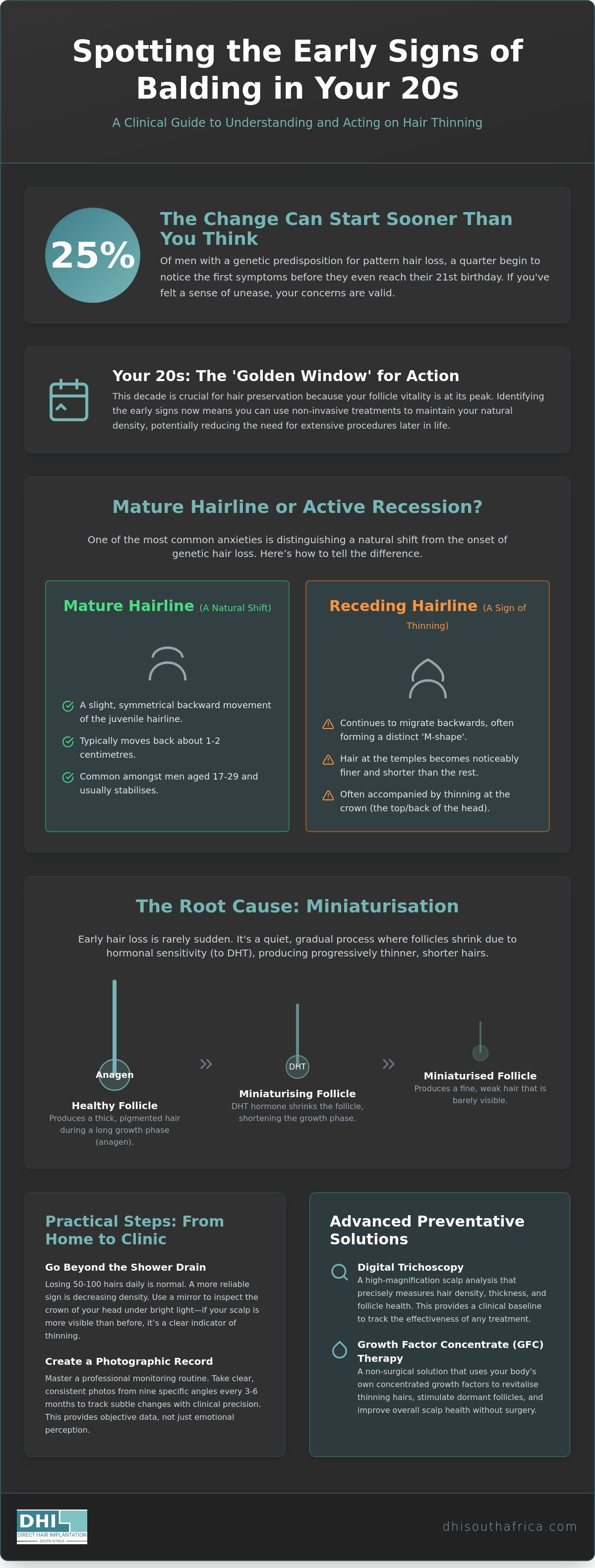
Did you know that roughly 25 per cent of men with a genetic predisposition for hair loss notice the first symptoms before they even reach their 21st birthday? Identifying the early signs of balding in 20s can feel like a frantic race against time, especially when you're trying to distinguish between a natural mature hairline and the onset of androgenetic alopecia, which is the medical term for genetic pattern thinning. It's perfectly normal to feel a surge of anxiety when you spot a few extra hairs in the shower drain or notice your forehead seems slightly broader in the morning light.
You've likely spent late nights scrolling through conflicting forums or considering "miracle" cures, only to feel more overwhelmed than when you started. We understand that your hair is a vital part of your self-assurance; seeing it change so early can be deeply unsettling. This guide replaces that confusion with clinical clarity. You'll learn how to spot the subtle shifts in your hair density and discover the scientifically validated, non-invasive steps you can take to preserve your natural hair. We'll walk you through the root causes and introduce you to a professional starting point for prevention, such as digital trichoscopy, which is a high-magnification scalp analysis used to track hair health with precision.
Table of Contents
Noticing Early Signs of Balding in Your 20s: Validating the Change
Discovering that your hair is starting to thin when you're still in your 20s can feel like a premature confrontation with time. Whilst many people assume that hair loss is a concern reserved for your 40s or 50s, the clinical reality is quite different. Approximately 25 per cent of men who have a genetic predisposition for Pattern hair loss begin to notice the first symptoms before they even reach the age of 21. If you've started to feel a sense of unease whilst looking in the mirror, it's important to know that your concerns are valid and, more importantly, that you aren't alone in this experience.
The early signs of balding in 20s rarely involve waking up to find large clumps of hair on your pillow. Instead, the process is usually a quiet, gradual shift known as miniaturisation. This is a biological behaviour where the hair follicles slowly shrink due to hormonal sensitivities. As the follicles contract, the hairs they produce become thinner, shorter, and less pigmented. You might notice that your hair feels less "dense" when you run your fingers through it, or perhaps your scalp is more visible than it used to be under bright office lights. Because this change is so incremental, it's easily missed until a significant amount of volume has already been lost.
The Psychological Impact of Early Hair Loss
We often speak with patients who describe a sudden dip in self-confidence or a growing anxiety about their professional image. When you're building a career and a social life, your hair often feels like a core part of your identity. It's natural to feel frustrated, but the key is to transition from a mindset of "why is this happening" to a proactive, clinical approach. Modern hair restoration isn't about "hiding" a problem anymore; it's about using sophisticated, medical-grade strategies to protect what you have. Moving early allows you to take control of the narrative rather than simply reacting to it.
Why Your 20s are the 'Golden Window' for Action
Your 20s are widely considered the "golden window" for hair preservation because your follicle vitality is at its peak. During this decade, your hairs spend a longer duration in the anagen phase, which is the active growth stage of the hair cycle. When you identify the early signs of balding in 20s, you're catching the follicles whilst they are still functional and capable of being revitalised. Intervening now often means you can maintain your natural density using non-invasive treatments, which may significantly reduce the need for more extensive restorative procedures later in life. Preservation is always more effective, and more affordable, than total reconstruction.
Receding Hairline at 20 vs. a Mature Hairline: How to Tell
One of the most frequent sources of anxiety for young men is distinguishing between a "mature hairline" and an active recession. A mature hairline is a natural, developmental shift where the rounded juvenile hairline moves back slightly, usually resting about a centimetre or two above the highest forehead crease. This shift is common amongst men between the ages of 17 and 29 and does not necessarily indicate future baldness. It's a standard part of physical maturation that often stabilises once the new line is established.
In contrast, the early signs of balding in 20s involve a hairline that continues to migrate backwards, often forming a distinct "M-shape" as the temples retreat more aggressively than the centre. If you notice that your hairline is becoming asymmetrical or that the hair at the temples is significantly finer than the rest, you may be experiencing the onset of Androgenetic alopecia. This genetic condition causes the hair follicles to react to specific hormones, leading to a predictable pattern of loss that requires a different approach than a simple maturing line.
Many people fixate on the "Pillow and Shower" test, worrying whenever they see hairs in the drain or on their bedsheets. Whilst losing 50 to 100 hairs a day is biologically normal, a consistent, visible increase in shedding can be a warning signal. However, shedding alone is often less definitive than checking the crown or vertex. If you use a mirror to inspect the top of your head and notice the skin is becoming more visible under light, it's a clear indicator that your hair density is dropping. If these changes concern you, booking a diagnostic consultation can help clarify whether your hair is merely maturing or requires clinical intervention.
The Miniaturisation Process Explained
Miniaturisation is the technical term for the follicle's gradual decline. Instead of producing a robust, thick hair, the follicle shrinks until it only produces "vellus" hair, which looks like translucent peach fuzz. You will often notice these hairs look lighter in colour and are much thinner in diameter before they eventually stop growing altogether. To check this yourself, compare a few hairs from your temples with those from your "donor area" at the back of your head, which is usually genetically resistant to thinning and maintains its original thickness.
Female Pattern Thinning: The Widening Part
For women, the early signs of balding in 20s usually present as diffuse thinning rather than a receding line. You might notice a widening midline part that resembles a "Christmas tree" shape, where the thinning is most prominent at the front of the scalp. This change in density can make styling more difficult and may cause the scalp to become more visible when the hair is tied back. If you are concerned about a loss of volume, exploring a specialised female hair loss treatment can help stabilise the condition and protect your existing hair density.
The Root Causes: Genetics, Lifestyle, and DHT
Understanding why your hair is changing is the first step toward effective preservation. Whilst many young men blame their choice of headwear or a specific styling product, the primary catalyst for the early signs of balding in 20s is almost always biological. Dihydrotestosterone, commonly known as DHT, is the main driver behind pattern thinning. It's a byproduct of testosterone that binds to receptors in your scalp follicles. You don't necessarily inherit "baldness" from a specific relative; rather, you inherit a genetic sensitivity to DHT that causes follicles to miniaturise over time.
According to a clinical review of Androgenetic Alopecia, this sensitivity determines how quickly the hair cycle shortens. In South Africa, our high-stress urban environments and intense UV exposure can exacerbate these underlying genetic factors. Stress doesn't "cause" genetic balding, but it can certainly accelerate the visible thinning process. It's a common misconception that wearing hats or using gel causes permanent loss. These habits might cause surface breakage, but they don't impact the follicle's internal health or the genetic programming of your scalp.
Stress and Telogen Effluvium
It's vital to distinguish between permanent genetic thinning and Telogen Effluvium, which is temporary shedding. A major life event, such as extreme work pressure or a physical illness, can "shock" a large percentage of your hairs into the resting phase simultaneously. You'll typically notice this shedding about three months after the stressful event. Whilst this hair usually grows back once the trigger is removed, chronic stress can mask the early signs of balding in 20s, making it harder to identify the underlying genetic pattern. If the shedding doesn't stabilise within six months, it's time to seek a medical evaluation.
Nutritional Deficiencies and Hair Health
Your hair quality is often a reflection of your internal health. Deficiencies in Iron, Vitamin D, or Biotin can lead to brittle strands and reduced volume, mimicking the appearance of pattern loss. This is why our "Total Medical Hair Restoration report" includes a thorough screening of your nutritional markers to ensure we aren't missing a simple lifestyle fix. To support your scalp health from the outside in, we often recommend medical-grade DHI hair loss products that are specifically formulated to nourish the follicle environment and maintain hair diameter without the use of harsh chemicals.
Practical Steps: From Home Observation to Clinical Diagnosis
Taking control of your hair health begins with moving from anxious mirror-checking to objective data collection. If you suspect you are seeing the early signs of balding in 20s, the most effective home tool at your disposal is a consistent photographic record. We recommend taking clear, high-resolution photos from nine specific angles every month. These should include the front hairline, both temples, the crown, and the back of the head. By using the same lighting and angles each time, you remove the subjectivity of "bad hair days" and create a visual timeline that a specialist can use to identify genuine thinning patterns.
Whilst monitoring your own scalp, take a moment to review your family history without assuming it’s an absolute roadmap for your future. Genetics are complex, and you can inherit follicle sensitivity from either side of your family tree. Just because a parent or sibling hasn't experienced hair loss doesn't mean you are immune, just as having a bald relative doesn't guarantee you will follow the same path. This history is simply one piece of the puzzle that helps us understand your biological predisposition during a professional consultation.
The final and most crucial step is moving beyond home observation to a medical-grade assessment. Relying on your own eyes can be misleading because you often can't see the back of your head or the subtle changes in hair diameter. A professional evaluation provides a clear confirmation of symptoms, allowing you to stop guessing and start acting based on facts. This transition from worry to a structured plan is often the moment our patients feel their confidence begin to return.
What is Digital Trichoscopy?
Digital trichoscopy is the gold standard for identifying the early signs of balding in 20s before they are visible to the naked eye. This high-magnification scalp analysis allows us to see exactly what is happening at the follicle level. We measure specific data points, such as hair density per square centimetre and the exact percentage of miniaturised hairs. By comparing these metrics against healthy "donor" areas, we can create a bespoke treatment plan that addresses your unique rate of thinning with scientific precision.
Avoiding the 'Miracle Cure' Trap
It’s incredibly tempting to click on social media adverts for "miracle" shampoos or unverified laser combs when you're feeling vulnerable. However, many of these products offer little more than a temporary cosmetic boost and fail to address the underlying hormonal causes of hair loss. We strongly advise against making quick online purchases without a proper diagnosis. Instead, seek advice from certified hair transplant doctors who can offer evidence-based solutions. A conversational consultation is far more valuable than any over-the-counter "cure" because it ensures you aren't wasting time on treatments that don't work for your specific condition.
Advanced Clinical Solutions for Your 20s
Identifying the early signs of balding in 20s provides you with a distinct advantage: the opportunity to use advanced medical therapies whilst your hair follicles are still highly responsive. Modern hair restoration has moved far beyond the "wait and see" approach of previous generations. Today, we focus on proactive preservation and high-precision restoration that fits seamlessly into the lifestyle of a busy young professional. Whether you're looking to stabilise thinning or restore a receding hairline, the goal is always a result that looks entirely natural and remains permanent.
For many in their 20s, the first choice isn't surgery but rather autologous therapies that work with the body's own biological resources. These treatments are designed to revitalise follicles that have begun the miniaturisation process, effectively "waking them up" and encouraging them to produce thicker, healthier hairs again. By intervening during this window, you can often maintain a full head of hair without anyone ever knowing you've had a clinical procedure. It's about subtle, sophisticated maintenance that protects your self-assurance for the decades to come.
GFC Therapy: The Non-Surgical Powerhouse
Growth Factor Concentrate (GFC) is a revolutionary, non-surgical treatment that has become a favourite amongst our younger patients. The process involves a specialised centrifugation technique where we take a small sample of your own blood and concentrate the essential growth factors into a potent, acellular liquid. This concentrate is then delivered directly to the scalp, where it triggers the regeneration of damaged follicles and improves overall scalp health. Most patients find this "lunch-hour" option ideal because there is no downtime, and a series of 3 to 4 sessions typically results in noticeably thicker hairs and reduced shedding.
The DHI Advantage: Precision and Permanence
When the early signs of balding in 20s have already led to a visible change in the hairline, Direct Hair Implantation (DHI) offers a permanent solution. Unlike older methods, our patented technique uses a single-step implantation process that gives the doctor total control over the angle, direction, and depth of every hair. We focus on the meticulous placement of 4,000 hairs, or whatever your specific density requires, to ensure the new growth blends perfectly with your existing hair. This precision is why we achieve a survival rate of over 90 per cent, which is significantly higher than industry averages.
Because we use hairs from the genetically resistant donor area at the back of your head, the results are designed to last a lifetime. These transplanted follicles maintain their resistance to DHT, ensuring that your restored hairline remains robust even as you age. If you're ready to move from observation to action, the first step is a professional assessment to determine the best path for your unique needs.
Secure Your Hair’s Future Today
Addressing the early signs of balding in 20s is the most effective way to ensure long-term hair density. By distinguishing between a natural mature hairline and active miniaturisation, you've already taken the first step toward preservation. Our clinics are led by certified medical specialists who prioritise your comfort and aesthetic goals, ensuring every treatment plan is grounded in clinical precision. You don't have to navigate this journey alone or rely on unverified miracle cures that offer little more than empty promises.
Whether you choose the non-surgical revitalisation of GFC therapy or the permanent restoration of our patented DHI technique, which boasts a hair survival rate of over 90 per cent, you are in safe hands. With an IMRB-accredited 99 per cent customer satisfaction rate, we focus on delivering seamless, natural results that restore more than just your hair. We combine world-class standards with a deeply personal approach to help you maintain your self-assurance during this vital decade.
Take control of your confidence today. We look forward to helping you preserve your natural look with the expert care and artistry you deserve.
Frequently Asked Questions
Is it normal to lose hair in your 20s?
Yes, it is clinically very common to notice hair changes during this decade. Approximately 25 per cent of men with a genetic predisposition for pattern thinning begin to see the first symptoms before they turn 21. Whilst it can feel isolating, this is often the biological onset of androgenetic alopecia, and identifying it early provides the best opportunity for successful preservation.
Can stress cause a receding hairline at 20?
Stress typically causes a temporary condition called Telogen Effluvium, which results in sudden, diffuse shedding across the entire scalp rather than a receding hairline. A receding line is almost always driven by a genetic sensitivity to DHT. However, chronic stress can certainly accelerate the visible progression of existing pattern loss, making a receding line appear more aggressive than it otherwise would.
How can I stop my hair from thinning in my 20s naturally?
While lifestyle changes support overall hair quality, "natural" remedies rarely stop the hormonal triggers of genetic thinning. You can support your scalp health by ensuring your diet is rich in Iron, Vitamin D, and Biotin. However, to truly address the early signs of balding in 20s, you usually require medical-grade interventions that specifically target follicle miniaturisation and hormonal sensitivity.
What is the difference between a mature hairline and balding?
A mature hairline is a natural developmental shift where the hairline moves back slightly—usually about a centimetre or two—and then stabilises. Balding is a progressive process that doesn't stop on its own. It often involves the hairline moving further back into an "M-shape" or visible thinning at the crown, where the hairs become noticeably finer and lighter in colour over time.
Are hair transplants safe for someone in their mid-20s?
Hair transplants are medically safe for individuals in their mid-20s, provided they are performed by certified specialists who plan for future hair loss. We use the patented DHI technique to ensure a high hair survival rate and a natural look. The key is to use a conservative approach that preserves your "donor" hairs for the future, as your natural, non-transplanted hair may continue to thin as you age.
Does wearing a hat cause early balding?
No, wearing a hat is not a cause of genetic balding. This is a common myth that often causes unnecessary worry for young men. Unless a hat is exceptionally tight and worn constantly enough to cause traction alopecia—which is hair loss from physical tension—it will not impact the internal health of your follicles or your genetic hair cycle.
What is GFC hair treatment and does it work for early balding?
GFC, or Growth Factor Concentrate, is a non-surgical therapy that uses a concentrated version of your own growth factors to revitalise thinning follicles. It is particularly effective for the early signs of balding in 20s because it strengthens hairs that are beginning to miniaturise. By delivering these factors directly to the scalp, we can often encourage follicles to return to a robust anagen phase, which is the active growth stage of the hair cycle.
How do I know if my hair loss is permanent or temporary?
Temporary hair loss usually happens suddenly and involves shedding from all over the head, often triggered by illness, medication, or extreme stress. Permanent loss is a slower, more predictable process that follows a specific pattern at the temples or the vertex. A digital trichoscopy—a high-magnification scalp analysis—is the most reliable way to confirm whether your follicles are permanently shrinking or simply experiencing a temporary resting phase.


Comments