

Getting a hair transplant for my wedding: when to plan surgery

Your wedding date should shape your hair transplant plan, not the other way round. If you’re getting a hair transplant for your wedding, aim to have surgery at least nine months beforehand, and ideally around 12 months, so the transplanted hair has time to grow and mature. Six months may bring visible improvement, but the result can still be developing on the day.
It makes sense to want to feel confident in your photos and enjoy your wedding day without worrying about your hair. The timing can be less straightforward than it seems: transplanted hairs often shed in the first few weeks, new growth tends to begin around three or four months after surgery, and fuller texture commonly develops between eight and twelve months.
This article explains how candidacy, hair-loss patterns and donor hair affect treatment planning, what to expect at different stages of recovery, and how to schedule surgery around your wedding. You’ll also learn why a shorter lead time may call for a different approach and what to discuss with a hair-restoration specialist.
Table of Contents
How Long Before My Wedding Should I Have My Hair Transplant?
Visible growth usually begins around four months after surgery, but a natural-looking result takes longer to mature. For a wedding, plan surgery around nine to twelve months beforehand. Six months may allow some improvement, but the hair can still look short or uneven.
Surgery and recovery timeline
A hair transplant is a surgical procedure that takes around four to eight hours, and its recovery continues well beyond the day itself. This matters when you’re arranging time off and fitting healing around wedding preparations.
Some people return to work two to five days after surgery, but early healing still needs care. Transplanted hairs commonly shed within two to three weeks. This is part of the recovery timeline, not the final appearance. Allow time for recovery before important events rather than judging the result in the first few weeks.
Hair growth develops gradually after that initial shedding. New hair usually starts to appear after 4 months, according to the NHS. The timing varies between people, so the first visible hairs may not yet create the coverage you want for photographs or styling.
Maturation of transplant results
Maturation is the gradual change from early regrowth to fuller, more settled hair. Visible growth and a natural-looking result are different stages: transplanted hair commonly develops fuller texture between eight and twelve months after surgery, while crown growth can continue maturing beyond a year.
For example, a wedding six months after surgery may coincide with early growth, when new hairs are still short or uneven. Planning nine to twelve months ahead gives growth more time to develop before the ceremony, although the appearance varies with the treatment area and individual growth pattern.
When getting a hair transplant for my wedding, work backwards from the date rather than focusing only on the procedure day. If your wedding is less than six months away, a transplant may not have matured by then. An assessment of the hair loss, donor area and wedding timeline helps shape a realistic plan. You can find details about hair transplant treatment in South Africa as you consider the timing.
Candidate suitability and donor hair
A wedding date may influence timing, but suitability depends on your hair-loss pattern and available donor hair. An assessment also considers age, hair density and the area you want to restore.
Donor hair limits and reserves
Donor reserves are the supply of hair available for transplantation, and the treatment plan depends on how much can be used safely. This matters because using too much donor hair in one procedure may leave fewer options for future treatment.
The amount that can be moved varies with donor density and the size of the treatment area. A large target area does not automatically mean there is enough donor hair to achieve the desired coverage. The plan needs to balance the amount moved with the donor area’s capacity.
Age and donor hair
Age and donor hair help determine whether surgery is well timed and how its result can be planned. Doctors ideally wait until a patient is over 25 years old, because hair loss may still be developing earlier.
Donor density and hair characteristics affect the coverage that can be achieved. A smaller donor reserve may call for a more conservative plan, rather than extensive redistribution to meet a short-term wedding goal.
Hair-loss stability also matters. People with rapidly progressing hair loss or more than 15% miniaturisation should have 6 to 12 months of medical treatment before a transplant. Miniaturisation means hairs are becoming finer, which can indicate continued change in the area being assessed.
An assessment compares the thinning area with the donor supply. A hairline plan may use available hair differently from a plan covering a larger area. If the treatment area is extensive, two or more sessions on different days may be needed, extending the plan beyond one procedure.
With FUE, follicular units are removed individually from the donor area. The number of hairs available for transplantation depends on donor density and the supply that can be used safely, not simply on the coverage someone hopes to achieve. A high extraction figure alone cannot show whether a plan suits an individual.
For wedding planning, age, hair-loss progression and donor supply need to be considered together. For example, someone whose hair loss is still changing may need a cautious plan, even with a fixed ceremony date. The aim is to plan coverage while preserving donor hair for future needs, rather than letting the wedding deadline dictate the extent of treatment.
Hair transplant permanence and expected results
Transplanted follicles are moved from a donor area to areas affected by hair loss. Their characteristics generally follow those of the donor area, but a transplant doesn’t stop untreated hair from thinning. This distinction matters: a fuller hairline can develop while surrounding native hair continues to change. Long-term planning considers both the transplanted hairs and ongoing hair loss.
Results develop over time rather than appearing immediately. The full result is generally seen 10 to 18 months after the procedure. Hair in the crown can take longer to mature than hair at the front, so the location being treated affects when the change looks complete. For a wedding, early growth and the final result are separate milestones.
Thinning hair can also raise concern about shock loss, which refers to shedding around the treated area after transplantation. It is relevant when existing hairs are already fine, because the appearance can change before later growth matures. A treatment plan needs to consider the condition of native hair, not only the area receiving transplanted follicles.
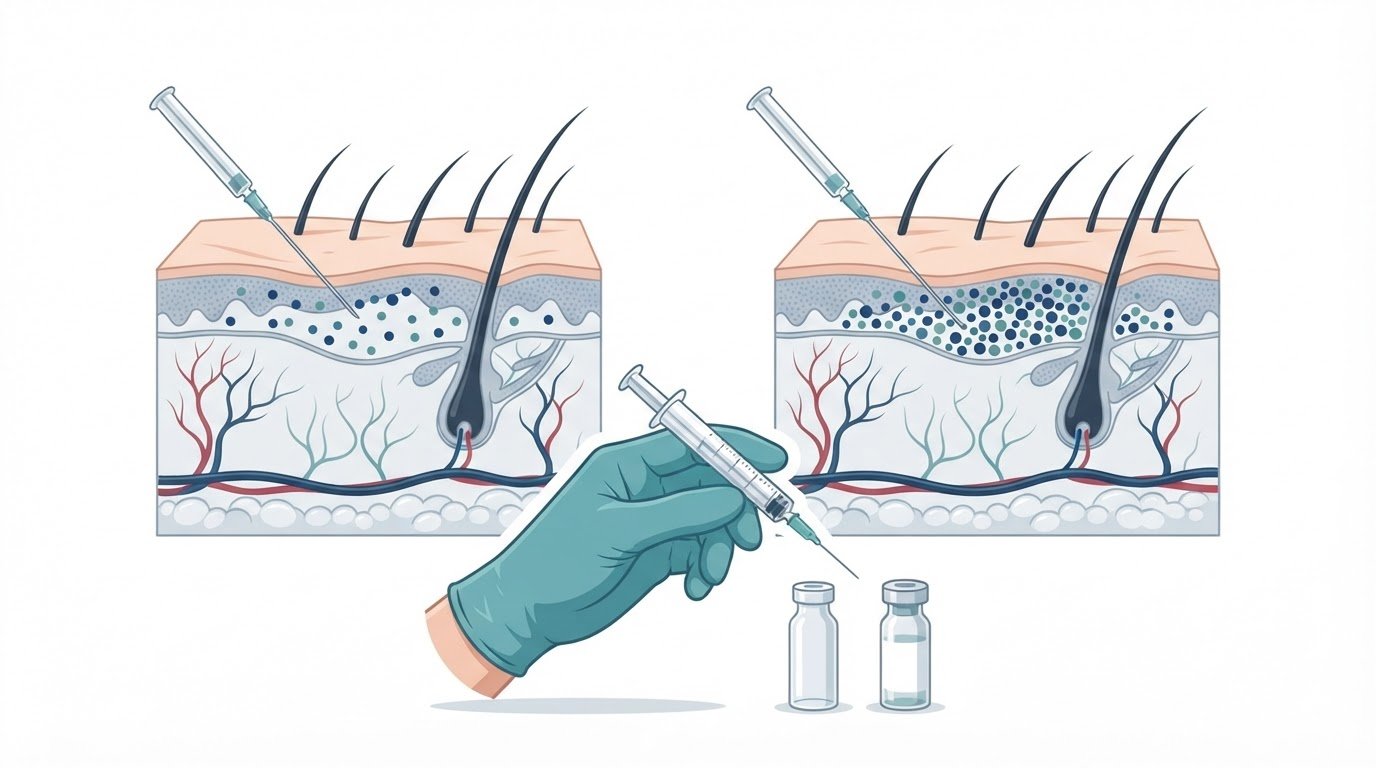
PRP may be considered as support for hair affected by thinning. It does not create new follicles, so it cannot replace a transplant where follicles are absent. PRP sessions are typically spaced about four weeks apart, which affects scheduling. Its role should be clear: PRP may support existing hair, while transplantation relocates follicles.
Potential side effects include shock loss in a thinning area and an ingrown hair as new growth emerges. An ingrown hair occurs when a growing strand curls back into the skin instead of emerging normally. Discuss these possibilities when planning treatment, particularly if there is little time between surgery and your wedding.
For example, someone treating the crown should allow for its slower maturation, while someone addressing a receding hairline should consider whether nearby native hairs are continuing to thin. PRP timing also needs to fit alongside a transplant plan, rather than being treated as a substitute. These factors shape the expected appearance over the months after surgery and help set a realistic view of permanence and progression.
Preparing for a wedding after hair transplant surgery
Wedding preparations should account for hair-loss stability before surgery and recovery afterwards. Make sure healing instructions and styling plans fit the ceremony date.
Hair loss stability before surgery
Stable hair loss means the pattern has settled enough for a considered transplant plan. This matters because ongoing thinning can change the relationship between transplanted and native hair.
People with rapidly progressing hair loss or more than 15% miniaturisation should have 6 to 12 months of medical treatment before surgery. Miniaturisation means hairs are becoming finer. Treatment first can help address active changes before deciding where transplanted hair should be placed.
Choosing a clinic and surgeon
Choosing a clinic and surgeon means looking for a clear, individualised plan, not simply a promise of a particular hairline. Surgery involves donor hair, the recipient area and long-term appearance, so all three should inform the decision.
A useful consultation should explain the proposed design, expected recovery and how ongoing hair loss affects planning. Ask how the doctor assesses your donor area and discusses risks, aftercare and follow-up. The plan should account for your wedding date as part of the medical decision.
Supporting healing after surgery
Support healing by following your post-operative instructions and protecting the treated area as it recovers. Before surgery, share relevant health information and discuss medicines with the treating doctor. Afterwards, follow their specific washing and activity advice.
For example, patients should be able to wash their hair gently by hand on day six after the operation. People may be advised to reduce exercise during the first month, and styling products should be avoided for the first 2 weeks. These steps help keep early recovery in view while wedding plans continue.
A wedding hairstyle is possible after a transplant, but timing and healing matter. Avoid styling products during the first 2 weeks, and don’t plan a haircut that interferes with the scalp’s recovery. Schedule the final wedding haircut two to three weeks before the date, leaving time to settle into the chosen style.
If your wedding is less than about ten months away, non-surgical support or a transplant after the honeymoon may fit the timeline better. PRP is one option to discuss, with sessions typically spaced about four weeks apart. Avoid starting a new procedure within roughly three months of the wedding, leaving preparation focused on recovery and styling.
Timing a hair transplant before a wedding
For the most time to see growth mature, plan surgery around 12 months before your wedding. Nine months is a practical minimum planning target, while six months can leave the result visibly developing. The date matters because early shedding and later growth are distinct stages, not a steady change from surgery onwards.
If you’re considering getting a hair transplant before your wedding, work backwards from the ceremony. Arrange a consultation 13 to 18 months beforehand, leaving room to assess hair loss, donor hair and the treatment area. If the plan needs two sessions, fitting both within a single year is rarely possible.
At one to three months after surgery, the wedding may fall during the shedding phase. From three to six months, early growth may be present but still lack density. At six to nine months, improvement can be visible, particularly around the hairline, though it may not yet be the mature result.
At nine to twelve months, there has been more time for growth and texture to develop. Hair transplanted into the crown can continue maturing beyond a year, so the treatment area affects the timeline. Doctors consider the location, desired coverage and available donor hair when planning around a fixed event.
With six to nine months until the wedding, a plan focused on the hairline may fit the visible-growth window better than broader coverage, but that is not the same as a fully mature result. With fewer than four months remaining, transplantation is generally not an appropriate way to achieve a wedding-day change.
A transplant within six weeks of the ceremony is particularly poorly timed: scabbing, redness and other visible signs of surgery may remain. A wedding one to three months after surgery can also overlap with shedding. These timelines leave little time for the scalp to settle before photographs and celebrations.
So, could surgery fit into a six-month wedding timeline? It may allow visible improvement, but the result can still be developing. The clearest takeaway is to aim for surgery around 12 months ahead, and begin planning 13 to 18 months beforehand. Nine months offers a shorter planning target. If the date is closer, separate the wedding-day appearance goal from the longer-term transplant plan, and discuss which approach fits your timing and treatment area.
DHI South Africa: Hair Systems & Hairpieces
DHI South Africa offers Hair Systems & Hairpieces as an option when a transplant’s growth timeline doesn’t match your wedding date. They provide an appearance-focused alternative without waiting for transplanted hair to mature. This may suit you if the ceremony is approaching or surgery isn’t the right choice for your current situation.
A hair system or hairpiece is different from transplantation. It doesn’t move follicles or restart their growth; it offers a cosmetic approach to the appearance of coverage. If you want to change your look for the wedding itself, a hairpiece may be worth discussing. If your goal is longer-term restoration, a transplant follows a different process and timeline.
Consider how each option fits the date and your longer-term plans. A transplant involves recovery, shedding and regrowth, while a hair system or hairpiece may suit someone whose wedding arrives before those stages can develop. The choice also depends on the areas you want to address and the result you have in mind. A realistic discussion should cover what each option can and cannot do, rather than treating them as interchangeable.
DHI South Africa offers Direct Hair Implantation (DHI), GFC Treatment and Regenera Activa. These are distinct options, not shortcuts to an immediate wedding-day result. Start by discussing your hair-loss concerns, ceremony date and whether you want a temporary, appearance-focused option or a longer-term treatment plan. That context keeps the decision centred on your needs.
If you’re considering a hair system or hairpiece, think about the occasions and hairstyles you want it to work for, including the wedding and related events. Share your preferred look and timing during a discussion so the option can be considered alongside your plans. If you’re also weighing transplantation, discuss how its longer growth timeline relates to your goals after the wedding.
For a considered discussion of Hair Systems & Hairpieces and how they may fit your wedding plans, contact DHI South Africa.
Frequently Asked Questions
What should I avoid in the last three months before the wedding?
Avoid starting a new hair procedure in roughly the final three months before your wedding. This leaves less time to manage healing or visible changes before the event. If you’ve already had surgery, follow your post-operative instructions and avoid introducing styling products during the first two weeks. Tell your stylist about the procedure so they can plan an approach that does not disturb your recovery.
Can it be done in six months?
Yes, surgery can be planned six months before a wedding, but the result may still be developing on the day. Visible improvement can occur during that period, yet the final appearance takes longer to mature. Early growth may be noticeable without providing the density you hoped for in wedding photographs. Base the decision on your treatment area and priorities, not an expectation of a completed result.
Shock loss and your wedding date: where will you be on the calendar?
Shock loss is temporary shedding that can affect existing hairs around a treated area. If your wedding falls within the first few months after surgery, changes in the treated region may be noticeable before new growth develops. Transplanted hairs commonly shed within two to three weeks, while new growth takes months to emerge. The timeline helps you anticipate these stages rather than mistake early shedding for the settled outcome.
What if my wedding is only two or three months away?
A transplant shortly before your wedding is unlikely to create fuller new growth by the ceremony. At two or three months, transplanted hairs may have shed and new growth may not yet be visible. Separate your immediate wedding-day appearance goal from longer-term restoration. Hair Systems & Hairpieces may be an appearance-focused option to discuss, while a transplant can be considered after the honeymoon.
Who is a good candidate before a wedding?
A suitable candidate has a donor area that can support the planned coverage and a hair-loss pattern that allows thoughtful planning. Doctors ideally wait until a patient is over 25, as hair loss may still be changing at younger ages. Rapidly progressing loss or more than 15% miniaturisation calls for 6 to 12 months of medical treatment before surgery. The wedding deadline should not override these suitability factors.
How long before a wedding should I get a hair transplant?
Aim for about 12 months before the wedding to allow the result more time to mature; nine months is a recommended minimum planning target. A consultation 13 to 18 months ahead leaves room to assess your hair loss, donor supply and treatment plan. If your plan needs two sessions, fitting both within a single year is rarely possible, so early planning is especially relevant.
How long does it take to recover and return to work after a hair transplant?
Recovery varies, but some people return to work two to five days after surgery, while others may need one to two weeks away. The procedure itself can take four to eight hours, and early aftercare continues once you leave the clinic. Plan time away around your own work and recovery needs. A desk-based role may be easier to resume than work involving strenuous activity.
How much does a hair transplant cost in South Africa?
There isn’t one fixed cost for a hair transplant in South Africa. The price depends on the case and is provided after a quote request. Factors include the complexity of the procedure, the extent of the area being treated, the number of hairs planned and whether the treatment requires more than one session. These details shape the plan, so a general figure would not reflect every person’s treatment.

Comments