

Hair Density Restoration Without Surgery: What Are the Options

Surgery isn’t the only way to address thinning hair. Hair density restoration without surgery can include treatments intended to support existing hair, as well as options that create the appearance of fuller hair without moving follicles.
It’s understandable to want a less invasive approach, particularly when weighing up what treatment involves and the results it may offer. Non-surgical options vary: some aim to support hair and scalp health, while scalp micropigmentation and hair systems can improve the appearance of density without stimulating new growth.
This article explains how these approaches work, what may affect their suitability and how they compare with hair transplant surgery. A transplant moves follicles from one area of the scalp to another; non-surgical treatments do not. Understanding this distinction can help you identify which options target growth, which change appearance and what to discuss during a professional assessment.
Table of Contents
What Is Non Surgical Hair Restoration?
Non-surgical restoration uses treatments that may support existing follicles or improve the appearance of thinning without transplant surgery. Hair density restoration without surgery can involve medical or regenerative approaches, but the right option depends on the cause and pattern of hair loss.
Choosing treatment by hair-loss pattern
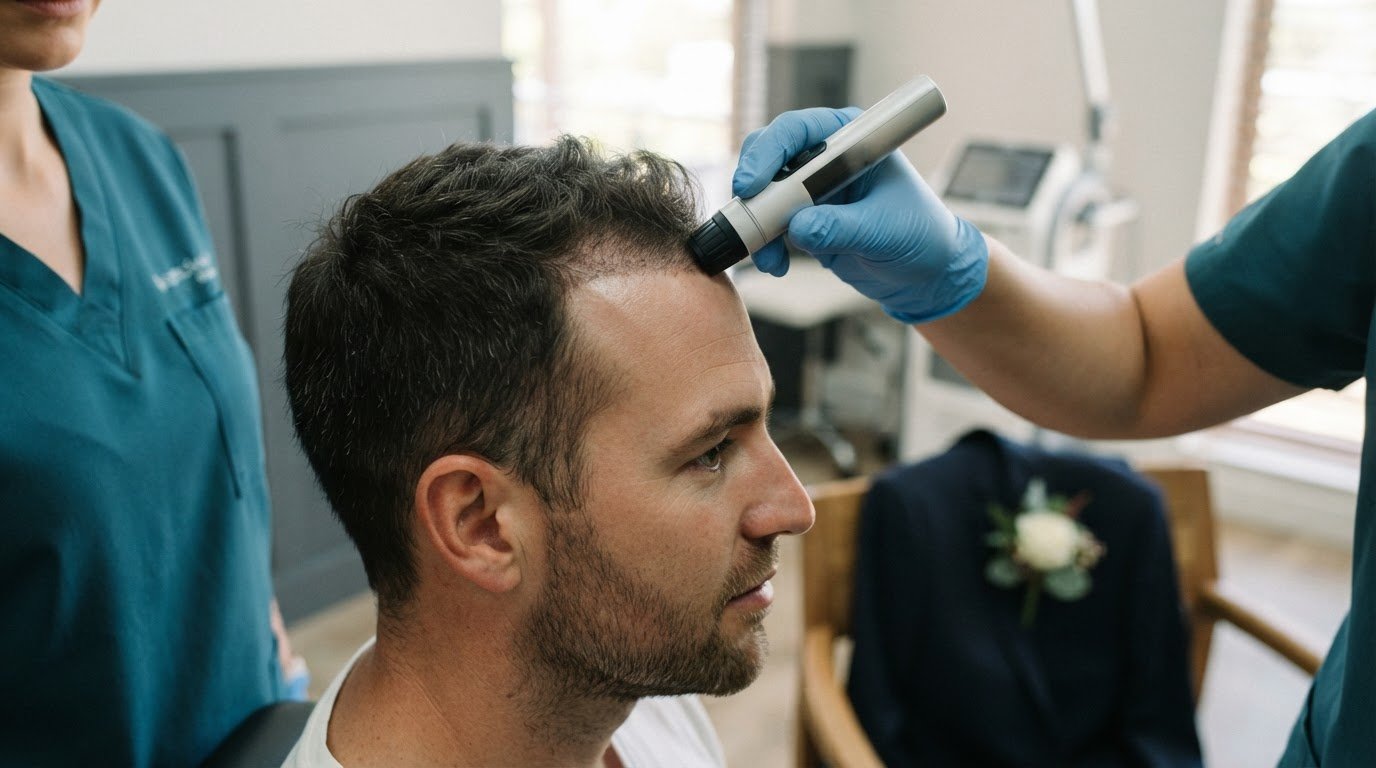
A specialist considers where thinning occurs, how quickly it progresses and whether follicles remain active. Diffuse thinning, a receding hairline and patchy loss can point towards different causes, so treatment choices differ too. Scalp examination and medical history help build the picture. Blood tests may identify some contributing health factors, whilst personalised genetic testing can provide information about inherited susceptibility to pattern hair loss.
The Norwood scale describes male-pattern hair loss across stages I-VII; the Ludwig scale describes female diffuse thinning across stages I-III. These patterns help frame whether non-surgical care may support remaining hair or surgery may better address areas with extensive loss. A specialist also considers available donor follicles and your preferred outcome when comparing options.
Combining regenerative treatments and minoxidil
Combining treatments means using approaches with different roles as part of a considered plan. Regenerative treatments such as PRP or Regenera Activa may be discussed alongside minoxidil, which can help stimulate hair growth and maintain density. Hair density restoration without surgery may therefore involve more than one method, selected around your hair-loss pattern, treatment history and health factors.
Personalised genetic information may inform a discussion, but it does not replace scalp assessment or medical history. If thinning progresses or non-surgical methods do not meet your coverage goals, surgery may also be considered. A specialist can explain how non-surgical care may support existing hair before or after a transplant, and how each approach fits the overall plan.
Treatment timelines and possible risks
Treatment timelines vary because hair grows gradually. Minoxidil typically takes three to six months to show results, while regenerative treatments may involve a course of sessions. The method and hair-loss pattern affect when progress is assessed. A specialist can set review points to compare changes with your starting pattern and treatment goals.
Possible side effects depend on the treatment. After scalp injections, mild redness, tenderness, swelling or pinpoint marks may occur on the first day. Your medical history, scalp condition and chosen method help determine which risks are relevant. Discussing these details beforehand helps you understand what to expect and how the approach compares with surgery.
How can a specialist stimulate hair growth?
A specialist may use light-based therapy, platelet-rich plasma (PRP) or other regenerative methods to support existing follicles. Low-level laser therapy and microneedling may also support regrowth in suitable cases.
Low-level laser therapy
Low-level laser therapy (LLLT) uses low-intensity light to stimulate hair follicles and promote growth. It may suit people with pattern hair loss seeking a non-surgical method. A specialist considers the thinning area, hairline and progression before recommending it. Improvement may take several months of consistent treatment, so planning includes regular use and review.
LLLT supports follicles rather than moving them into areas without hair. A specialist can assess whether this approach suits your thinning pattern or whether another therapy better fits the cause. Genetic sensitivity can contribute to pattern hair loss, but it is only one factor in treatment planning. Scalp condition and the amount of existing hair also guide the recommendation.
PRP and regenerative therapies
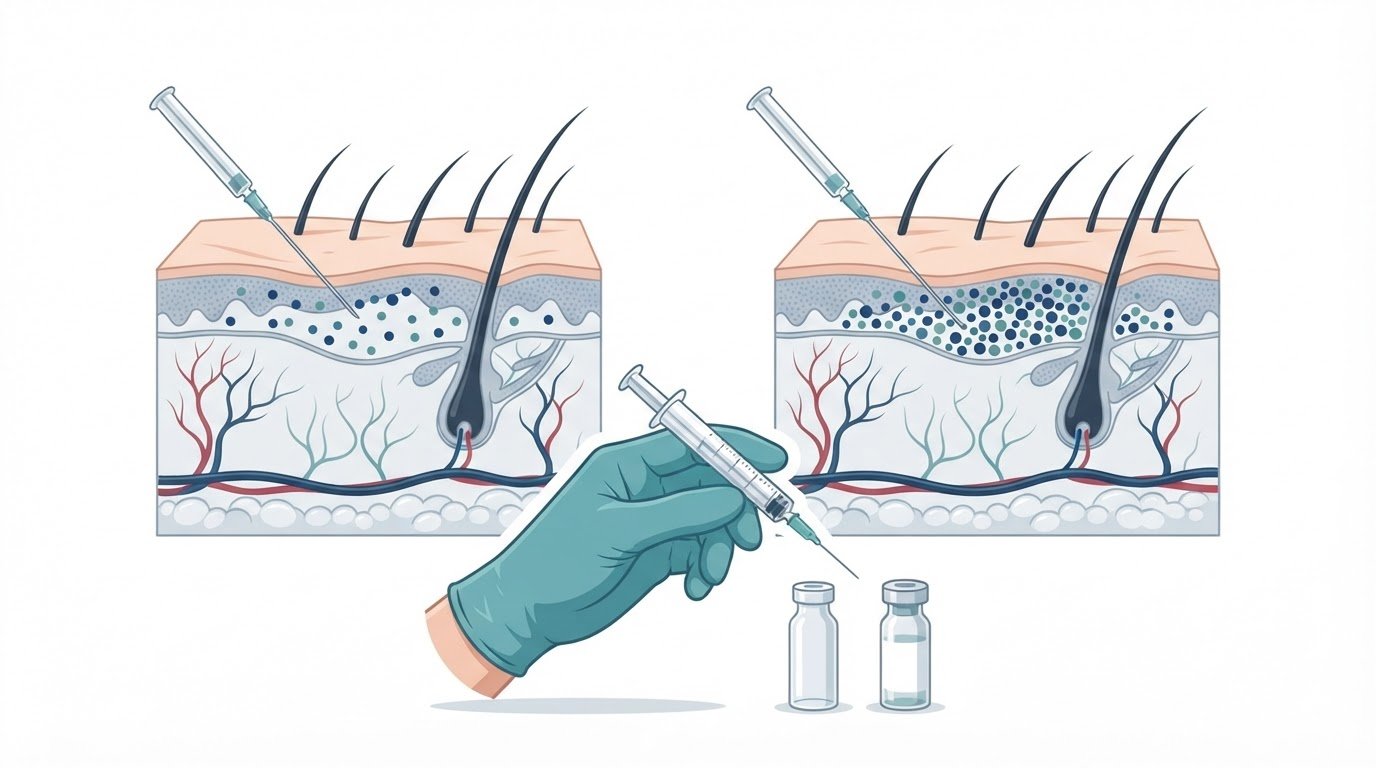
PRP therapy uses platelets from your own blood to support hair growth and scalp health. The treatment involves drawing blood, concentrating the platelets and injecting the PRP into thinning areas. It aims to deliver platelet-derived growth factors around existing follicles. A specialist maps the areas to treat and considers your hair-loss pattern before recommending PRP.
Other regenerative therapies use different approaches to support the scalp and follicles. Regenera Activa, for example, uses regenerative cells extracted from a patient’s own hair to stimulate the scalp. GFC treatment is another regenerative option. The choice depends on the pattern of loss, scalp assessment and whether follicles remain in the thinning area. These therapies support existing hair; they do not transplant follicles.
Microneedling and hair regrowth
Microneedling creates tiny punctures in the scalp and may help topical growth factors reach the treatment area more effectively. It can support hair regrowth, rather than serve as a standalone answer to every cause of thinning. A specialist considers scalp condition and the pattern of loss before including it in a treatment plan.
For example, a plan may combine microneedling with topical growth factors or another suitable therapy. The method, treatment area and timing should reflect the patient’s scalp and hair-loss pattern. A professional assessment helps distinguish treatments intended to support follicles from options that improve appearance without promoting new growth.
Non-surgical restoration compared with hair transplant surgery
Non-surgical treatments may support existing hair or change its appearance, while a transplant moves follicles into thinning areas. Hair fibres and scalp concealers provide temporary visual coverage; hair systems cover the scalp, while medical treatments aim to support growth.
For early hair loss, a specialist weighs the pattern, progression and remaining follicles before recommending an approach. Non-surgical care may support thinning areas, while surgery can address more extensive loss by redistributing available donor follicles. The approaches can also be combined: treatment may support existing hair alongside a transplant, with timing guided by the treatment plan.
Options for early hair loss
Early thinning may be addressed with medical treatments such as minoxidil, PRP or low-level laser therapy, depending on the cause and remaining follicles. These approaches aim to support existing hair; they don’t move follicles into areas without coverage. A specialist considers the hairline, scalp and progression to decide whether non-surgical care may suit your goals or whether a transplant merits consideration.
A hair transplant is different: follicles are taken from a denser area and placed in thinning regions. The available donor hair and extent of loss affect the density that surgery can deliver. Hair transplant surgery may be considered when non-surgical methods aren’t enough to address the desired coverage.
Costs of non-surgical restoration
Non-surgical restoration costs vary by treatment type, the area treated, the number of sessions and any maintenance required. A course of PRP, for example, involves a different treatment plan from ongoing minoxidil use or a cosmetic option such as scalp micropigmentation. These differences affect the overall cost, so compare the proposed treatment schedule and what it includes.
For treatment services, pricing depends on the case and is provided after a quote request. Factors include the selected method, treatment area and planned sessions. Cosmetic coverage and medical treatment serve different purposes, so the choice affects both the plan and its cost.
Cosmetic alternatives and medical treatments
Hair fibres and scalp concealers add visual coverage to thinning areas, but they don’t stimulate follicles or treat the cause of hair loss. Hair systems provide another cosmetic option by covering the scalp. These may suit someone seeking an aesthetic change without waiting for a medical treatment to affect hair growth.
Medical treatments, including minoxidil and PRP, aim to support existing hair rather than conceal thinning immediately. A system or concealer addresses appearance, while medical care focuses on follicles. A specialist can explain how these different aims fit your priorities, including whether combining cosmetic coverage with medical treatment makes sense.
Finasteride and dutasteride for pattern hair loss
Finasteride 1 mg is known to lower blood DHT by about 70%. Dutasteride 0.5 mg can reduce blood DHT by over 98%. These figures describe DHT reduction, not a guaranteed increase in hair density. The medicines work differently from minoxidil, which supports hair growth through another mechanism. A specialist considers the pattern of loss and treatment goals when discussing options.
Finasteride is a prescription medicine. In South Africa, discuss its use with a medical professional who can assess suitability and explain monitoring. Men considering medicines that act on androgen pathways should understand potential side effects and follow-up. The choice between finasteride and dutasteride depends on individual factors, not DHT figures alone.
Women of childbearing potential need careful discussion before using certain oral hair-loss medicines. Some are unsuitable during pregnancy or when planning a pregnancy. These considerations matter when choosing a treatment plan, even when thinning appears to follow a familiar pattern. A medical assessment helps distinguish pattern hair loss from other causes and informs whether medication is appropriate.
For example, someone with ongoing thinning may discuss finasteride, dutasteride or minoxidil as different medical approaches. A specialist weighs the area affected, progression, health history and potential risks before recommending a solution. Medication may help manage pattern hair loss, but it does not move follicles into areas with little or no remaining hair. This distinction helps set realistic expectations for possible outcomes.
These medicines are not suitable for everyone with thinning. They address hormonal factors in pattern hair loss, while other causes may call for different care. Discuss the dose, duration and monitoring plan with a medical professional. Understanding how each medicine affects DHT can help you make a more informed treatment decision.
How effective is minoxidil for increasing hair density?
Minoxidil is an over-the-counter treatment that can stimulate hair growth and help maintain density in men and women. Its effect develops gradually, rather than providing immediate coverage. Hair follicles need time to respond, so visible change is not expected straight after starting treatment. For someone noticing gradual thinning, minoxidil may be one option for supporting existing hair.
Results typically take three to six months to appear. This reflects the gradual nature of hair growth, not a fixed date by which everyone sees the same change. Assessment can compare thinning areas and overall density over time. For example, changes around the crown can be assessed separately from those at the hairline.
Minoxidil may help stimulate growth and maintain hair density, but it does not move follicles into an area with little or no hair. This matters when thinning has progressed substantially. A specialist considers the pattern, affected areas and treatment goal. The aim may be to support existing coverage rather than recreate a former hairline.
Minoxidil and finasteride work differently. Minoxidil supports hair growth, while finasteride reduces dihydrotestosterone (DHT), a hormone involved in pattern hair loss. These medicines may be considered separately or as part of an individual treatment plan. Your pattern, medical history and suitability for each medicine shape that decision, rather than the expected timeframe alone.
Assessing effectiveness means looking beyond a single patch of scalp. A specialist can compare areas such as the temples, mid-scalp and crown, then review whether density or visible coverage has changed. The same assessment helps distinguish ongoing thinning from a stable pattern. A consistent review method makes it easier to discuss whether minoxidil is meeting its intended goal.
For hair density restoration without surgery, minoxidil is a medical option, not a cosmetic cover. Fibres and scalp concealers can change appearance immediately, but minoxidil aims to support hair growth over months. A transplant takes a different approach by relocating follicles. Understanding these differences helps you decide whether your priority is supporting existing hair, concealing thinning or adding hair to an area.
DHI South Africa: Hair Systems & Hairpieces
DHI South Africa offers options for people considering fuller-looking hair, from cosmetic coverage and regenerative treatments to follicle implantation. The right option depends on whether your priority is immediate appearance, supporting existing hair or restoring coverage in areas affected by hair loss.
Hair Systems & Hairpieces may suit you if you want to change the appearance of thinning without a transplant. They provide coverage rather than stimulating follicles or treating the cause of hair loss. They may be relevant if you want a cosmetic solution or medical treatment alone does not achieve your preferred appearance. Discussing your goals helps identify the approach that fits your needs.
Direct Hair Implantation (DHI) is a surgical option, not a non-surgical treatment. It may be considered when thinning or hair loss has created areas where you want additional coverage. Transplant suitability depends on factors such as the pattern of loss and available donor hair. A medical assessment can clarify whether implantation is appropriate or another approach better matches your priorities.
GFC Treatment and Regenera Activa are regenerative options for people seeking to support existing hair. They differ from Hair Systems & Hairpieces, which change appearance, and DHI, which relocates follicles. A specialist considers your hair-loss pattern, scalp and treatment goals when discussing suitable options. These distinctions matter: a treatment intended to support follicles does not provide the same immediate coverage as a hairpiece.
Some people may also want to understand how their options fit together. For example, a medical plan may address existing hair, while a hair system provides cosmetic coverage. Surgical implantation may be considered for areas where non-surgical approaches are not preferred. The sequence and combination depend on your circumstances and the purpose of each treatment.
A useful next step is a professional assessment of your hair-loss pattern, scalp and desired outcome. This discussion can clarify the differences between cosmetic coverage, regenerative care and surgical restoration, without assuming one approach suits everyone. It also gives you space to consider the practical and aesthetic priorities that matter most.
If you’d like to discuss your options, contact DHI South Africa at a time that suits you.
Frequently Asked Questions
Can a lost hair grow back?
It depends on why the hair was lost and whether follicles in that area remain active. Temporary shedding and gradual pattern thinning can have different prospects, so the cause matters. A specialist can examine your scalp and review your medical history to distinguish ongoing shedding from established loss. For example, thinning across the crown may need a different assessment from a small, sudden patch.
How can a specialist help stop hair loss?
A specialist can assess your scalp, hair-loss pattern, progression and medical history to identify suitable next steps. Depending on the findings, the plan may include medication, regenerative treatment or monitoring changes over time. For example, follow-up photographs can help track whether thinning is continuing. Addressing the cause guides treatment choices, rather than selecting a therapy based only on where hair looks thinner.
Is it possible to get a hair transplant without surgery?
No. A hair transplant is a surgical procedure because it relocates follicles from one part of the scalp to another. Non-surgical approaches, such as PRP or hair systems, serve different purposes: they may support existing hair or change its appearance, but they don’t transplant follicles. If avoiding surgery is your priority, discuss these distinctions and your desired outcome during an assessment.
What can baldness therapy realistically achieve?
Baldness therapy may help slow thinning, support existing follicles or improve the appearance of coverage, depending on the method. Scalp micropigmentation creates a visual impression of density, while a hair system provides coverage. These outcomes differ from regrowing hair. Before choosing, consider what matters most, such as maintaining your current appearance or making thinning less noticeable in everyday settings.
What does a men’s baldness treatment plan include?
A men’s treatment plan should set a clear goal, record previous treatments and consider medicines or procedures suited to the person’s circumstances. Details such as current prescriptions, supplements, recent illness and when shedding began can inform the assessment. The plan should also explain how progress will be reviewed and what might prompt a change in approach, rather than focusing only on visible thinning.
What is Hair Density?
Hair density means the number of hair follicles within a given area of the scalp. It differs from how dense hair appears: hair colour, texture, scalp colour and skin tone can all affect visual coverage. For instance, two people with similar follicle density may perceive different levels of fullness. Specialists assess density alongside the affected area and available donor follicles when considering restoration approaches.
What non-surgical treatments can restore hair density?
Non-surgical options include medical treatments and cosmetic approaches. The useful distinction is your desired outcome: some approaches aim to support existing hair, while others change the appearance of coverage. They aren’t interchangeable, and a cosmetic result doesn’t mean follicles have regrown. Identifying whether your priority is a biological treatment effect or a change in appearance can focus the discussion on suitable options.
Can finasteride or dutasteride improve hair density, and who can use them?
Finasteride and dutasteride reduce DHT, a hormone involved in pattern hair loss, and may help manage thinning in suitable patients. Finasteride is a prescription medicine in South Africa; medication choices require individual medical discussion. Men should understand potential side effects and monitoring. Some oral hair-loss medicines are unsuitable during pregnancy or when planning pregnancy, so women of childbearing potential need careful assessment before treatment. If you’re considering hair restoration, explore a digital scalp analysis to discuss which next steps may suit you.
Comments