%20(1).jpg)
%20(1).jpg)
Hair System vs Hair Transplant in South Africa: Which is Right for You?
- Dhesan Moodley

- 2 hours ago
- 12 min read
What if the choice between a temporary fix and a lifelong solution wasn't just about the hair on your head, but about how you want to live your life every day? With 33.13% of men in South Africa affected by male-pattern baldness in 2025, you're certainly not alone in your search for a solution. When comparing a hair system vs hair transplant south africa residents often struggle to distinguish between a temporary aesthetic and a permanent medical solution. You aren't just looking for more volume; you're looking for the version of yourself that felt certain and unbothered by the mirror.
Choosing the right path depends on whether you value the immediate, high-density impact of a non-surgical system or the biological, self-sustaining restoration of a transplant. Whilst a hair system provides an instant transformation, a Direct Hair Implantation (DHI) procedure offers a permanent result using your own hairs that grow naturally for a lifetime. This comprehensive comparison examines the maintenance, long-term costs, and aesthetic outcomes of both methods. We'll explore everything from the artistry of a natural hairline to the 10-year value proposition, helping you decide which restoration journey aligns with your lifestyle and expectations.
Table of Contents
Evaluating Hair Restoration in South Africa: The Choice Between Immediate Results and Permanent Growth
Losing your hair often feels like losing a piece of your identity. It's a quiet, emotional burden that many South Africans carry, leading to a natural desire for a solution that works yesterday. When weighing up a hair system vs hair transplant south africa patients are essentially choosing between two very different philosophies. One offers an external prosthetic that provides instant gratification; the other is a medical procedure that redistributes your own biological assets for a lifetime of growth. Understanding these hair loss management options is the first step toward regaining your confidence and choosing a path that fits your daily reality.
What is a Modern Hair Replacement System?
Forget the rigid, unnatural "wigs" of the past. Today's hair systems are sophisticated, ultra-thin membranes designed to mimic the appearance of a natural scalp. These systems use breathable materials like lace or skin-like polymers, which are bonded to your scalp using medical-grade adhesives. The appeal is undeniable. You can walk into a clinic with thinning areas and walk out an hour later with a full, dense head of hair. It's a non-surgical path that bypasses the waiting time for biological growth, providing an immediate aesthetic transformation that doesn't require a surgical recovery period.
What is a Direct Hair Implantation (DHI) Transplant?
If you're looking for a solution that becomes a literal part of you, a transplant is the clinical gold standard. At DHI South Africa, we use a patented technique to move your own hairs from a donor area to where they're needed most. This is an autologous process, meaning we use your own biological material, so there's no risk of rejection. Unlike a system, which is an external addition, a hair transplant is a permanent redistribution of your existing hair. These hairs are genetically resistant to the hormones that cause balding, meaning they continue to grow naturally according to your body's own cycle once they've successfully taken root.
Every successful restoration starts with data, not guesswork. In the South African market, it's vital to begin with a clinical diagnosis to assess your scalp health and hair density. This ensures you don't invest in a path that doesn't suit your specific type of hair loss or donor availability. When deciding between a hair system vs hair transplant south africa clinics often emphasise different benefits, but the ultimate choice should always rest on your long-term goals and medical suitability. Whether you choose the immediate density of a system or the permanent artistry of DHI, the decision should be grounded in transparent medical science.
Understanding Hair Replacement Systems: The Premium Non-Surgical Path
For those who aren't ideal candidates for surgery or simply prefer to avoid a medical procedure, modern hair systems offer a sophisticated, high-performance alternative. In the ongoing discussion of hair system vs hair transplant south africa, residents often find that a premium hairpiece provides a level of control over density that surgery cannot always match. These aren't the generic "toupees" of decades past. We use a range of advanced membranes, including breathable lace for active lifestyles, ultra-thin skin for a seamless hairline, and hybrid membranes that combine the best of both worlds.
The artistry lies in the meticulous customisation. We match the hair's colour, texture, and natural curl pattern to your existing hair, ensuring the transition is completely undetectable to the naked eye. Whilst some might worry about potential hair transplant complications such as infection or poor graft survival, a non-surgical system bypasses medical risks entirely. It's a safe, reliable path to self-assurance that respects your personal comfort level and timeline.
The Benefits of Immediate Density
A hair system is often the most effective choice for individuals experiencing total hair loss (Alopecia Totalis) or those with extremely limited donor hair. It allows you to achieve any desired hairstyle or density overnight. There's no waiting for hairs to enter the anagen phase, which is the active growth stage of the hair follicle. You simply walk in and walk out with a full head of hair. Because there's no surgical intervention, you don't have to worry about recovery time or healing protocols. It's a practical solution for an immediate transformation.
The Reality of Maintenance and Upkeep
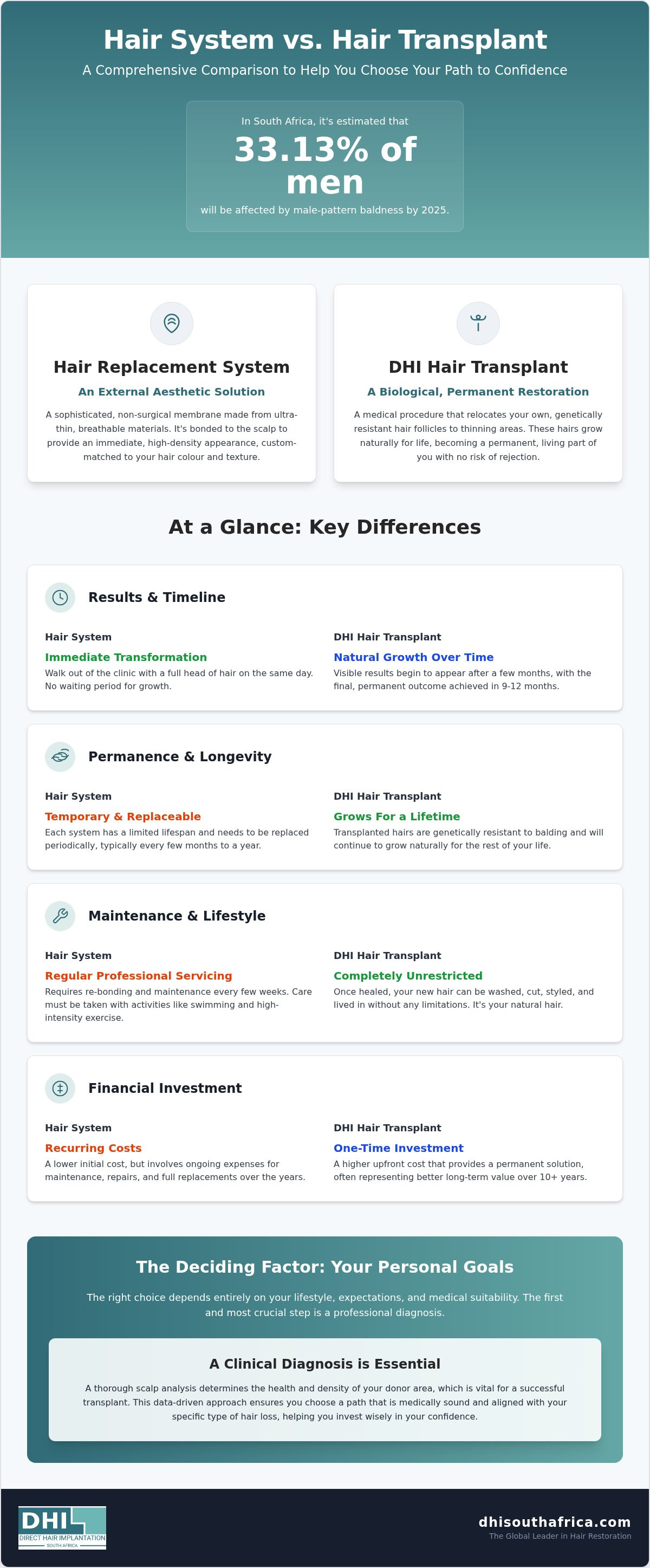
We believe in being candid about the long-term commitment required. When evaluating the hair system vs hair transplant south africa choice, the maintenance schedule is often the deciding factor for many patients. A hair system involves a regular routine, typically requiring a professional "rebonding" session every 4 to 6 weeks. During these visits, the system is removed, the scalp is cleaned, and the membrane is reattached with fresh medical-grade adhesive. This routine is vital for maintaining scalp hygiene and preventing irritation. You should also factor in that these systems have a finite lifespan. Depending on the material and your activity levels, a system needs replacement periodically to maintain its natural appearance. If you're curious about how this fits into your lifestyle, you can explore our non-surgical treatments for more detail.
Hair System vs Hair Transplant: A Comparative Framework
When navigating the choice of a hair system vs hair transplant south africa patients must weigh immediate volume against biological permanence. Think of it as a choice between a high-end accessory and a physical restoration. A hair system provides a solution regardless of your scalp's condition, whilst a transplant relies on your "donor hair"—the healthy hairs at the back and sides of your head. Established dermatological treatments for hair loss highlight that your donor supply is finite. If your hair loss is too advanced, a system might be your only path to high density. However, if you have sufficient donor hairs, a transplant offers a level of freedom that no prosthetic can match.
Biological Growth vs. Synthetic Density
There's a profound psychological shift that happens when you realise the hair you're washing and styling is actually yours. With Direct Hair Implantation, we don't just move hairs; we place them with surgical artistry. We control the angle, depth, and direction of every single one of the hairs implanted to ensure they mimic your original growth pattern. Synthetic systems, whilst visually impressive, remain external. In our intense South African sun or the humid coastal air of Durban, adhesives can sometimes feel heavy or uncomfortable. A transplant bypasses these climate concerns entirely because the hairs are rooted in your own living tissue.
Long-Term Cost Analysis for South African Patients
It's easy to focus on the entry price, but the real value reveals itself over time. A hair system has a lower upfront cost, yet it carries a "subscription" of recurring fees for rebonding, professional cleaning, and periodic unit replacements. In contrast, a surgical procedure represents a significant one-time investment. When you calculate the cumulative expenses over a five or ten-year period, the hair transplant cost in South Africa often proves to be the more economical choice. Most patients find that the financial "break-even" point occurs within the first few years. Beyond the money, you're also saving time; you'll no longer need to schedule monthly clinic visits just to maintain your appearance. You simply wake up, style your own hair, and get on with your day.
Lifestyle and Performance: Living with Your Restoration Choice
The true test of any restoration isn't how it looks in the clinic mirror, but how it performs during a morning run in Sea Point or a weekend at the Vaal River. When comparing a hair system vs hair transplant south africa patients often overlook the mental energy required to manage a prosthetic. With a hair system, you're always slightly aware of the bond. You might hesitate before diving into a pool or worry about how a restless night's sleep affects the attachment. In contrast, a DHI transplant becomes a physical part of you. Once the initial healing is complete, you treat those hairs exactly like the ones you were born with. You can scrub your scalp in the shower, style with heat, and wake up without a second thought about your hairline's position.
Your hairline should age as gracefully as you do. A transplant uses your own biological material, meaning those hairs will thin slightly and change colour naturally over the decades, maintaining a realistic look. A hair system, however, remains static. You'll need to constantly adjust the density and colour of your units to ensure they don't look unnaturally youthful as you enter new stages of life. This biological synchronicity is why many choose the permanent security of a medical procedure over the recurring adjustments of a system.
Active Lifestyles and High-Intensity Training
South Africa's climate and our culture of outdoor activity put immense pressure on restoration methods. High temperatures and sweat can soften medical-grade adhesives, potentially compromising the security of a hair system during intense gym sessions. For athletes and swimmers, the biological security of a transplant is a significant advantage. The hairs are rooted in the scalp, unaffected by chlorine or perspiration. If you're seeking improved density but aren't ready for surgery or the maintenance of a system, Scalp Micropigmentation offers a robust, non-surgical alternative that perfectly complements an active life.
The 'Secret' of Restoration: Privacy and Discretion
Many of our patients value discretion above all else. A hair system provides a dramatic "overnight" change, which can sometimes draw unwanted questions from colleagues or friends. A transplant follows a more subtle, natural timeline. Whilst the full results take about 12 months to manifest, the transition is so gradual that most people simply think you're looking healthier or more rested. For those who need absolute privacy, we offer "unshaven" DHI sessions. This allows us to place new hairs amongst your existing ones without a visible "buzz cut," ensuring your restoration journey remains your private business.
The DHI Philosophy: Finding Your Personal Path to Confidence
At DHI, we don't believe in a one-size-fits-all approach to restoration. The choice between a hair system vs hair transplant south africa isn't about which is objectively better; it's about which is medically and personally right for you. Our Total Care System is designed to guide you through this decision with the composure of a medical expert and the empathy of a trusted advisor. We provide both world-class Direct Hair Implantation and premium hair systems because we value your individual needs over a generic sales pitch.
Every journey begins with a certified medical doctor, not a sales consultant. This distinction is vital. Hair restoration is a medical journey that requires a deep understanding of your unique physiology and the behaviour of your follicles. By combining clinical precision with aesthetic artistry, we ensure that whichever path you choose leads to a restored sense of self-assurance. You deserve a solution that feels safe, ethical, and tailored to your life here in South Africa.
Why a Clinical Consultation is Non-Negotiable
We start every case with a deep-dive diagnostic process. This includes digital trichoscopy, which is a high-magnification analysis of your scalp and follicles to evaluate their health and density. Identifying the root cause of your hair loss is essential. Without this data, any treatment is merely guesswork. Whether your loss is genetic or stress-related, we need to ensure your donor area can support a permanent procedure. This unhurried, methodical assessment is part of our commitment to your safety. We invite you to contact DHI South Africa to begin this essential diagnostic step.
The Future of Your Hair: A Permanent Legacy
If surgery is your chosen path, our patented DHI technique offers industry-leading results. We achieve a survival rate of over 90% for the hairs we move, ensuring that your biological investment yields the highest possible return. This isn't just about density. It's about the meticulous artistry involved in designing a hairline that looks natural today and decades from now. We take pride in being a safe pair of hands for your transformation. We understand the anxiety that comes with visible thinning. Our goal is to replace that worry with the calm confidence of a permanent solution. Your journey to a fuller head of hairs starts with a single conversation.
Take the First Step Toward Your Restored Profile
Deciding on a hair system vs hair transplant south africa is a deeply personal choice that balances your immediate lifestyle needs with your long-term restoration goals. Whilst a hair system offers instant density, a DHI transplant provides a permanent, biological solution that ages naturally with you. It's about choosing between a prosthetic that requires monthly maintenance and a medical procedure that restores your own hairs for life. Both paths are valid, but the right one for you depends on your donor hair availability and your vision for the future.
Since 1970, DHI has been a global leader in hair restoration, ensuring every procedure is performed by certified medical doctors to maintain the highest standards of safety and artistry. We prioritise a patented technique that achieves a hair survival rate of over 90%, giving you the peace of mind that your investment is secure. Whether you seek the instant impact of a premium system or the lifelong freedom of a transplant, our team is here to guide you with transparency and clinical expertise.
You don't have to navigate this decision alone. Reclaiming your self-assurance starts with understanding your options and choosing the path that feels right for your future. We look forward to helping you rediscover a fuller, more confident version of yourself.
Frequently Asked Questions
Is a hair system better than a hair transplant for total baldness?
A hair system is often the only viable option for individuals experiencing total baldness or Alopecia Totalis. Because a transplant relies on redistributing your existing healthy hairs, total loss means there is no donor supply to move. In these cases, a premium hair replacement system provides the immediate density and coverage that a surgical procedure simply cannot achieve. It allows for a full restoration of your profile without the need for biological donor material.
Can people tell if I am wearing a hair replacement system?
Modern, high-quality systems are virtually undetectable when applied and maintained by specialists. We use ultra-thin, breathable membranes that mimic the appearance of a natural scalp, ensuring the transition between the system and your skin is seamless. By matching the colour, texture, and density of the hair to your remaining natural growth, we create a look that stands up to close inspection. Most people will only notice that you look more youthful and refreshed.
Does a hair transplant last forever?
Yes, a hair transplant is considered a permanent solution. The hairs we move from the donor area are genetically resistant to the hormones that cause male-pattern baldness. Once these follicles successfully take root in their new location, they continue to grow for a lifetime. Whilst your non-transplanted hair may continue to thin naturally as you age, the transplanted hairs remain robust and permanent, providing a stable foundation for your hairline.
Can I swim and exercise with a hair system?
You can certainly maintain an active lifestyle, including swimming and high-intensity exercise, whilst wearing a modern hair system. The medical-grade adhesives we use are designed to withstand moisture and perspiration. However, it's important to remember that frequent exposure to chlorine, salt water, and heavy sweat can affect the longevity of the bond. You may need more frequent rebonding sessions to ensure the system remains secure and the scalp stays healthy during your training.
How much does a hair system cost per month in South Africa?
Monthly costs for a hair system involve more than just the initial unit; they include regular maintenance and rebonding sessions. When evaluating a hair system vs hair transplant south africa, you should factor in the cost of professional cleaning, scalp treatments, and the eventual replacement of the hairpiece. These recurring expenses contribute to the long-term financial commitment. During a consultation, we can help you understand the maintenance schedule required to keep your restoration looking its best.
What happens if my hair transplant fails?
True failure is rare with the DHI technique, as we prioritise a survival rate of over 90% for the hairs we place. If the results don't meet expectations, it's usually due to underlying scalp health issues or improper aftercare. We perform a thorough diagnostic analysis before every procedure to minimise risks. If density is lower than planned, we work closely with you to identify the cause and determine if further treatment or medical support is necessary.
Is the DHI technique painful compared to other transplants?
Most patients find the DHI procedure surprisingly comfortable. We use a local anaesthetic to numb the area, so you won't feel pain during the extraction or implantation of the hairs. Because DHI is a minimally invasive technique that doesn't require scalpels or stitches, the recovery period is typically shorter and less uncomfortable than traditional methods. Most of our clients spend the time during their session relaxing, watching a film, or listening to music.
How long does it take to see results from a hair transplant?
Patience is key when waiting for biological growth. You'll typically see the first signs of new growth around three to four months after your procedure. The results continue to improve as the hairs enter the anagen phase, which is the active growth stage of the hair follicle. By the six-month mark, the change is usually quite noticeable, but the final, full density of your restoration will only be apparent after about 12 to 18 months of natural growth.


Comments