%20(1).jpg)
%20(1).jpg)
Hair Transplant Procedure Steps: A Clinical Guide to Permanent Restoration

What if the path to restoring your confidence didn't involve a single scalpel, stitch, or linear scar? It's perfectly normal to feel a mix of hope and anxiety when you're researching hair transplant procedure steps, especially if you're worried about surgical pain or results that look anything less than seamless. You want clinical clarity rather than a sales pitch, and you deserve to know exactly how your transformation will unfold before you step into a clinic.
We understand that the decision to undergo a medical procedure is deeply personal. That's why this guide provides a transparent, expert look at the Direct Hair Implantation (DHI) journey. You'll discover how we prioritise your comfort and the health of your follicles to ensure a survival rate of over 90% for the hairs we meticulously place. We'll walk you through everything from the initial digital trichoscopy, which is a high-tech analysis of your scalp health, to the final stages of permanent growth. By the end of this guide, you'll have a clear perspective on how we combine medical precision with artistic detail to restore your natural hairline safely.
Table of Contents
The Foundation: Clinical Diagnosis and Personalised Planning
The very first of the hair transplant procedure steps isn't actually surgery; it's a deep dive into medical science. Many patients arrive at our clinic feeling a sense of loss or frustration after years of trying temporary fixes or over-the-counter products that haven't delivered. However, a successful, permanent restoration requires a precise medical diagnosis before any follicle is moved. We don't just look at where hair is thinning; we investigate the underlying cause. This involves identifying your specific hair loss pattern to ensure that the treatment we provide is sustainable for your entire life. It is the difference between a quick fix and a clinical solution.
Digital Trichoscopy and Scalp Analysis
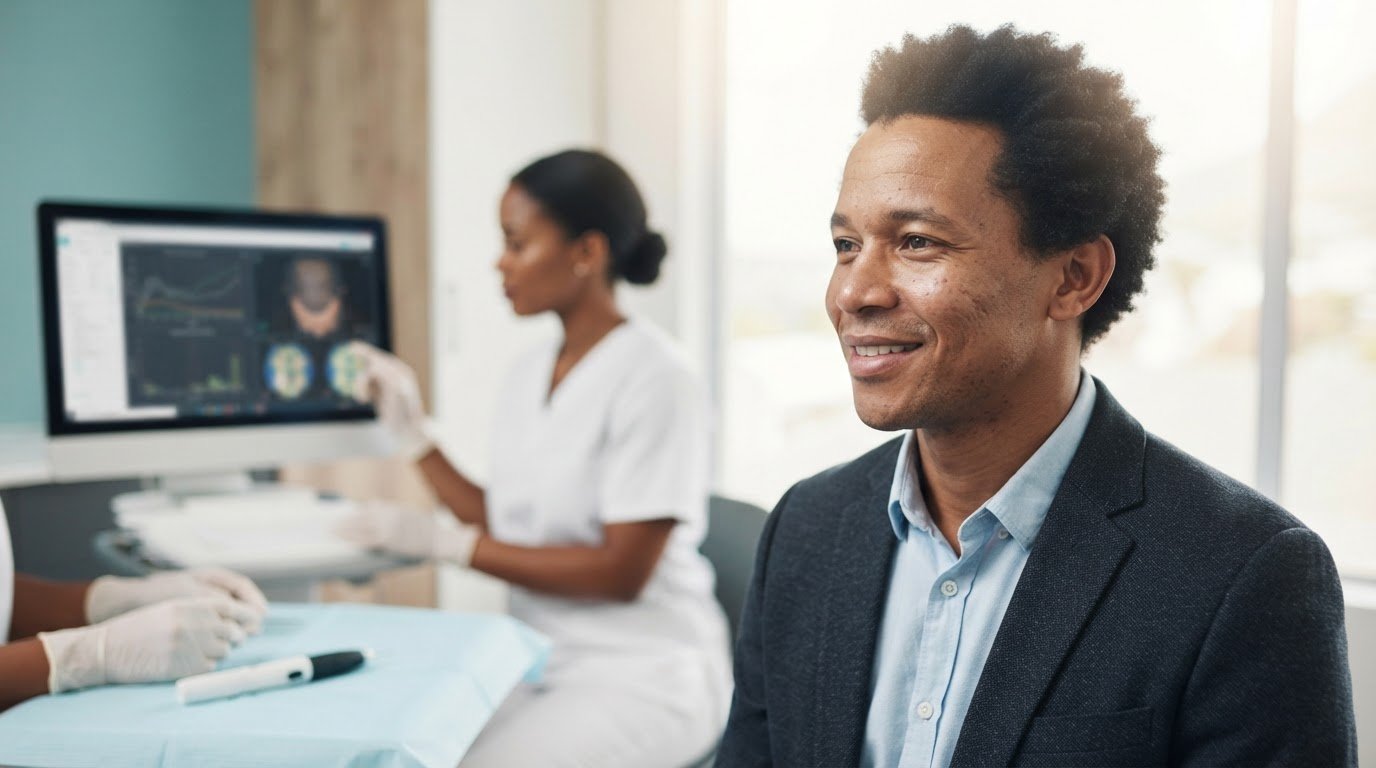
We utilise digital trichoscopy, a sophisticated, non-invasive diagnostic tool that allows our specialists to examine your scalp and follicles at high magnification. Think of it as a high-definition map of your scalp's health and potential. During this phase, we carefully assess the donor area, typically at the back and sides of the head. We're looking for hairs that are genetically programmed to grow for a lifetime. This scientific rigour is what separates world-class hair transplantation techniques from more traditional, less precise methods. Our analysis focuses on:
The density of healthy hairs available for relocation.
The overall health of the scalp tissue.
The specific growth patterns of your individual follicles.
By understanding your unique hair cycle, we create a bespoke plan tailored to your physiology. This ensures we only harvest what is necessary whilst maintaining a natural, dense look in the donor zone.
Designing Your Natural Hairline
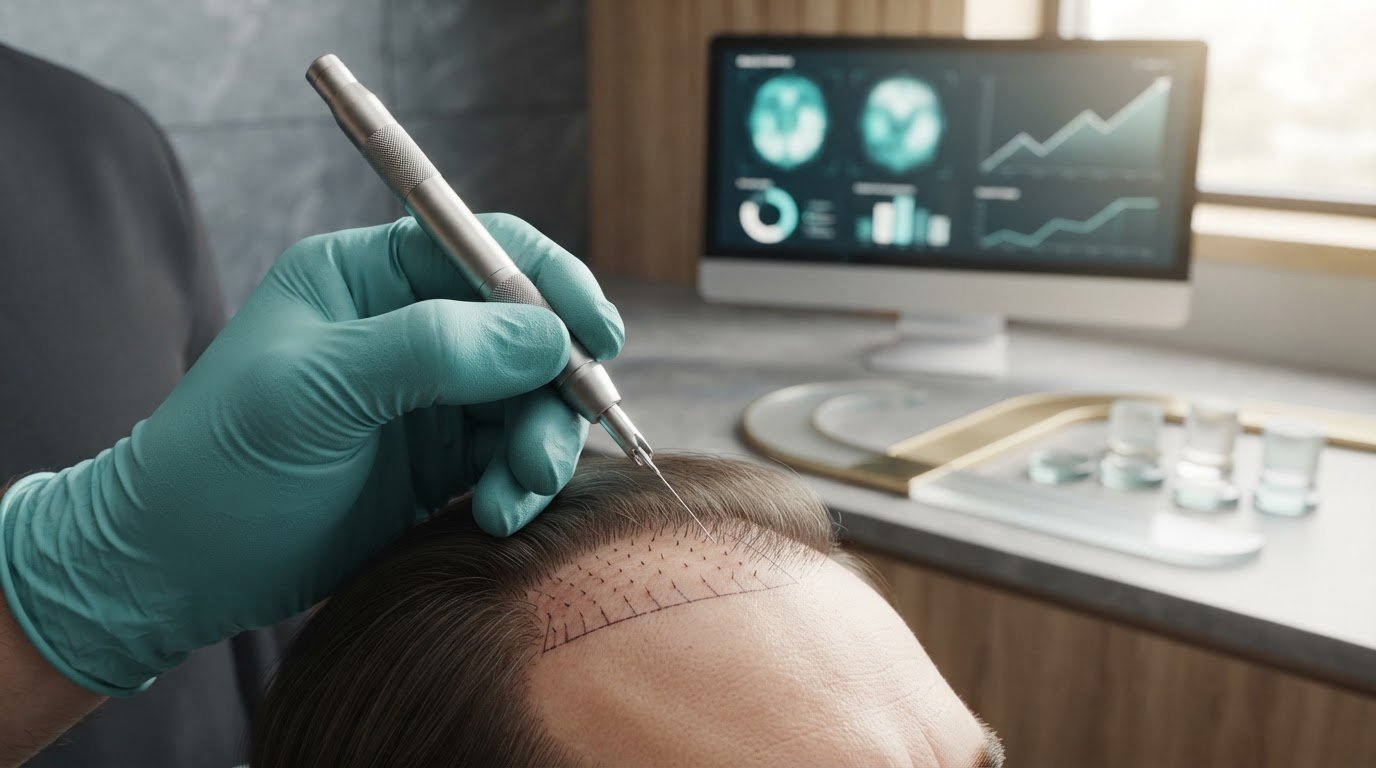
Designing a hairline is a delicate balance of clinical precision and aesthetic artistry. It's often the most emotional part of the planning phase because it involves restoring the natural frame to your face. We don't simply draw a straight line; we meticulously design a shape that respects your facial symmetry and future ageing patterns. A hairline that looks appropriate in your thirties must still look natural and graceful when you're in your sixties. The design phase is a vital part of the hair transplant procedure steps because it dictates the final aesthetic outcome. We calculate the exact number of hairs required to achieve your desired density, ensuring every placement has a purpose. This level of detail is how we achieve natural hair transplant results that are virtually indistinguishable from your original hair. It's about more than just coverage; it's about restoring the person you recognise in the mirror.
Precision Extraction: Harvesting Hairs with Patented Technology
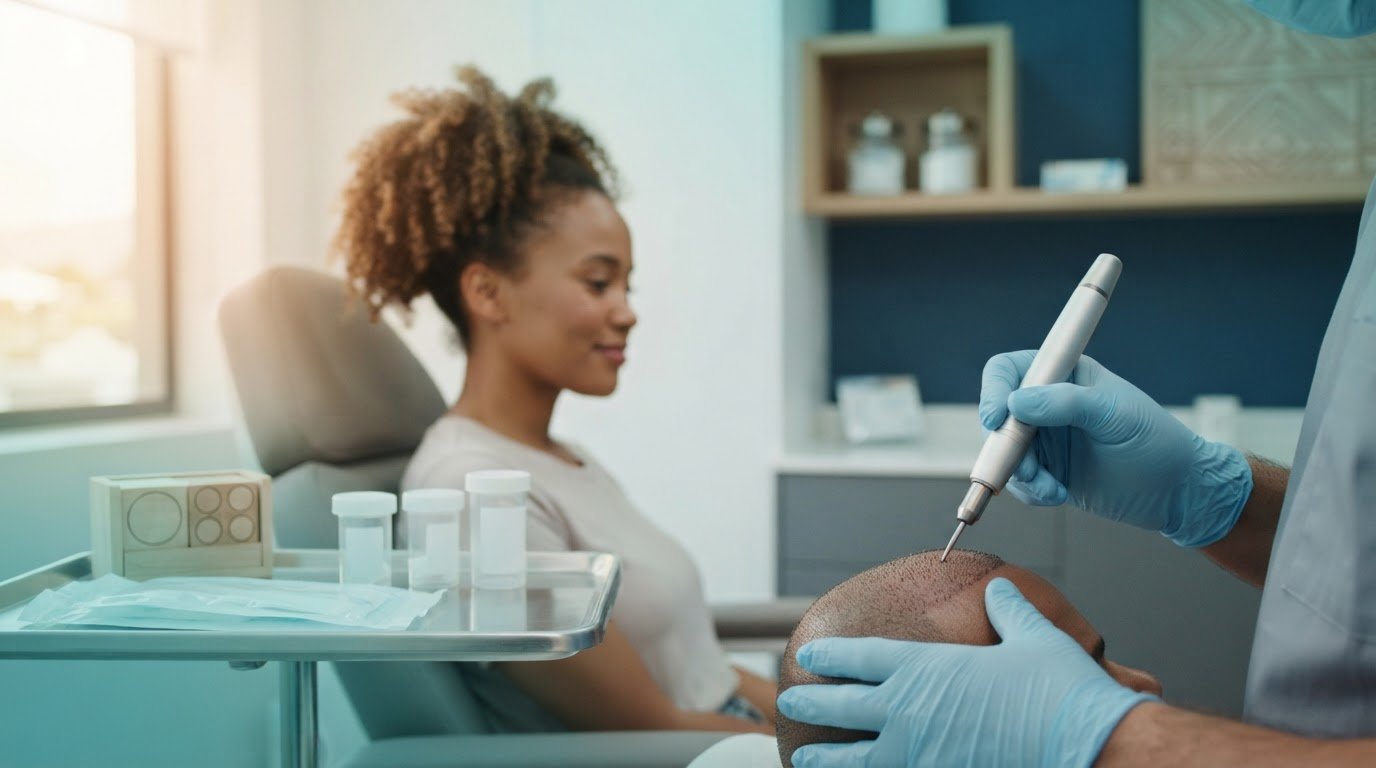
Once the clinical mapping is complete, the physical portion of the hair transplant procedure steps begins with your comfort as the priority. We start by administering a local anaesthetic to the donor area, typically the back of the scalp. This ensures you're entirely comfortable throughout the harvesting phase, often allowing patients to relax or listen to music whilst our specialists work. Unlike older techniques that might feel aggressive or clinical, our approach is meticulous and gentle, designed to feel more like a routine visit than an operation.
We use patented, single-use titanium-coated punches for micro-extraction. These precision tools allow us to lift individual hairs from the donor zone with incredible accuracy. Because these punches are extremely sharp and fine, they don't tear the surrounding tissue. This "Direct" advantage means there's minimal handling of the follicles. Keeping the biological material intact is essential for ensuring a survival rate of over 90%, which is significantly higher than the industry average of 50-60% seen in less specialised clinics.
The Science of Follicle Preservation
The moment a hair is removed from your scalp, it becomes a delicate living organism that requires protection. We maintain a strictly temperature-controlled environment for all extracted hairs to prevent any cellular degradation. Each hair is placed in specialised storage solutions that mimic the body's natural environment, protecting its biological integrity. The anagen phase is the active growth stage of the hair cycle. If you're curious about how this science translates to real-world growth, you can view our patient results to see the density we can achieve.
Minimising Donor Site Trauma
One of the biggest anxieties patients face is the fear of visible scarring. By using micro-punches that are less than 1mm in diameter, we effectively eliminate the risk of the "dot" scarring often associated with traditional FUE. These tiny extraction points heal rapidly and become virtually invisible once the surrounding hair grows. Our specialists carefully select hairs in a staggered pattern to ensure the donor area remains dense and natural-looking. Because we don't use scalpels, there are no stitches required. This significantly reduces recovery time and removes the need for follow-up appointments to have sutures removed, making the process feel much more like a routine visit than a major surgery.
The DHI Implantation Step: A Single-Step Process for Natural Results
Following the careful extraction and preservation of your follicles, we move to the most transformative phase of the hair transplant procedure steps: implantation. In traditional hair restoration, a surgeon typically creates small slits or holes in the recipient area before placing the hairs. This two-step approach can increase scalp trauma and lead to more significant inflammation. Direct Hair Implantation (DHI) changes this dynamic entirely by using a patented implantation method where hairs are placed directly into the scalp without any pre-cut incisions.
This single-step process is a hallmark of our clinical excellence. By eliminating the need for recipient-site incisions, we significantly boost the hair survival rate and reduce the time your follicles spend outside the body. It’s a more refined, patient-centric approach that prioritises both the health of your scalp and the longevity of your results. Because the skin isn't subjected to unnecessary trauma, the healing process is often much faster and more comfortable than traditional methods allow.
Why the DHI Implanter Matters
The core of our success lies in the DHI Implanter tool. This specialised instrument allows our experts to have total control over the depth, angle, and direction of every single hair. It’s a level of precision that traditional forceps-based placement simply can't match. By using this tool, we can:
Achieve much higher density by placing hairs closer together than methods requiring pre-cut slits.
Eliminate the risk of "pitting" or uneven skin texture in the recipient area.
Promote rapid healing, as the entry points are exactly the same size as the hair follicle itself.
This precision means we don't just fill gaps; we restore volume with a level of density that feels authentic to your original hair growth. It's about creating a result that looks as good up close as it does from a distance.
Artistry in Direction and Angle
A successful transplant isn't just about how many hairs we place, but how they are positioned. Our specialists focus on matching the natural exit angle of your existing hair to ensure a seamless blend. If the angle is even slightly off, the result can look "pluggy" or unnatural, which is a common anxiety for many patients. With Direct Hair Implantation, we can mimic the subtle directional changes of your natural growth pattern. This meticulous attention to detail ensures that as your hair grows, it follows the natural flow of your scalp, providing a result that is both permanent and undetectable.
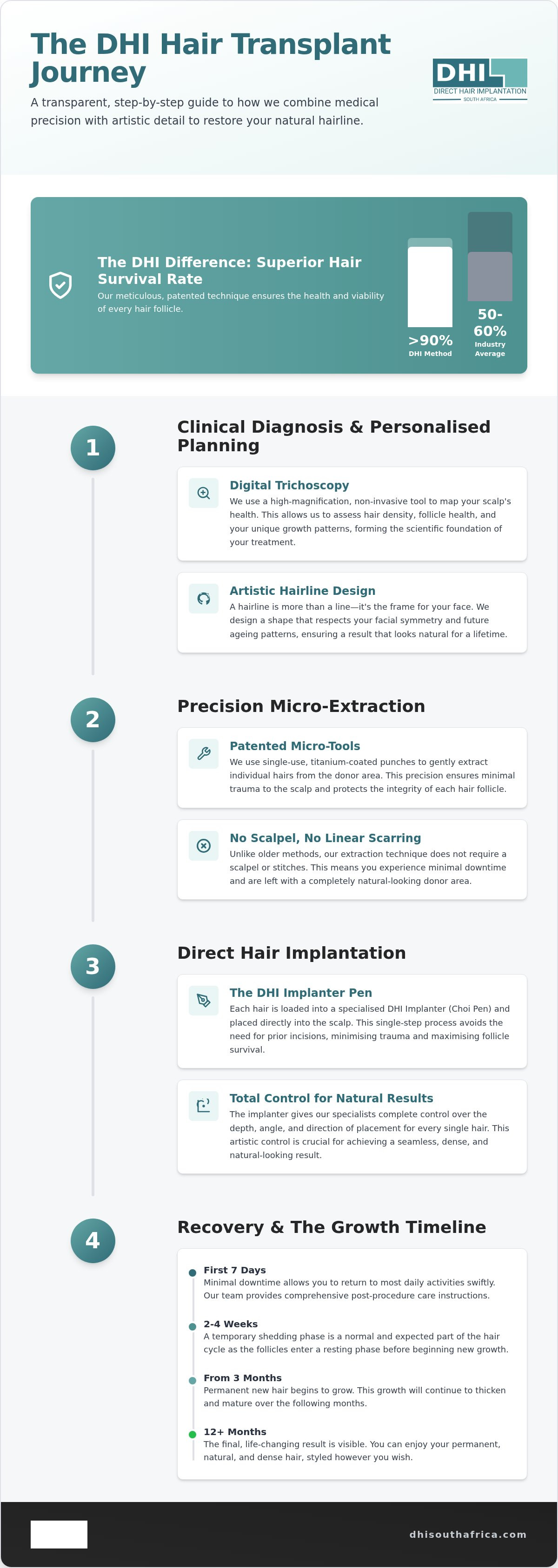
Recovery and Post-Procedure Care: The First Seven Days
Protecting your new hairs during the first week is just as vital as the implantation itself. The recovery phase is designed to be straightforward and manageable, ensuring your scalp heals whilst the follicles settle into their new positions. Most patients are pleasantly surprised by how quickly they return to their normal rhythm, provided they follow a few clinical guidelines. These hair transplant procedure steps are essential for securing the long-term success of your restoration and ensuring the survival of every follicle.
Your journey through the recovery phase involves several key milestones that we'll guide you through:
Step 1: Immediate aftercare begins with a gentle cleaning of the treated area at the clinic. This ensures the scalp is pristine and allows our team to monitor the initial placement.
Step 2: You'll follow a strict but simple washing routine at home using specialised products. We'll show you exactly how to clean the area without dislodging the newly placed hairs.
Step 3: Any mild swelling or redness typically subsides within 48 hours. This is a natural part of the healing response and is easily managed with the aftercare kit we provide.
Step 4: You must avoid strenuous exercise and direct sunlight for the first week. High blood pressure or UV exposure can irritate the delicate follicles during this critical window.
Step 5: We'll schedule a follow-up check to monitor your initial healing and ensure the stability of the hairs before you transition to long-term care.
The "Lunch-Hour" Recovery Reality
Because our method avoids incisions and stitches, the downtime is remarkably minimal. Many of our patients return to light work within 24 to 48 hours, making it a highly convenient option for those with busy schedules. Unlike traditional strip surgery (FUT), which leaves a linear scar and requires a longer healing period, our micro-extraction approach allows for a discreet recovery. We understand the need for privacy; you'll find that any signs of the procedure are easily managed, allowing you to go about your business without unwanted attention.
Essential Aftercare Protocols
Clinical success depends on maintaining the health of the scalp environment. We provide specialised post-operative sprays and shampoos that are essential for follicle health and preventing infection. It's imperative that you avoid scratching or touching the newly implanted hairs, as they need time to firmly anchor into the tissue. For a detailed breakdown of these steps, you can read our comprehensive guide on hair transplant aftercare.
The Growth Timeline: From Dormancy to Full Density
The final phase of the hair transplant procedure steps is often the most testing for your patience. You've completed the clinical mapping, the precision extraction, and the delicate implantation. Now, your biological clock takes over. It's important to remember that hair restoration is a journey of months, not days. Whilst the physical procedure is over in a matter of hours, the physiological transformation follows a very specific, natural rhythm that we will monitor with you every step of the way.
Your growth journey follows a predictable medical timeline:
2-4 Weeks: You'll experience the "shedding" phase, often called shock loss. This is a completely natural reaction where the hair shafts fall out, but the follicles remain healthy and rooted.
3-4 Months: You will begin to see the first signs of permanent new growth. These initial hairs may appear fine or light at first, but they are the foundation of your new density.
6-9 Months: This is the maturation stage. The hair shafts become thicker and darker, blending seamlessly with your existing hair as the density noticeably improves.
12-18 Months: You reach the final, permanent result. Your new hair is fully established, providing a natural look that you can cut, style, and treat just like the rest of your hair.
Managing the Shedding Phase with Confidence
It's perfectly normal to feel a moment of anxiety when you see hairs falling out a few weeks after your procedure. We want to reassure you that temporary shedding is a fundamental part of the hair cycle's transition. The follicle itself has already anchored into its new position; it's simply shedding the old shaft to make way for a stronger, permanent one. Because we utilise the DHI technique, we can provide data-driven reassurance that hairs implanted with our method have a survival rate of over 90%. Your restoration is secure, and this phase is merely a sign that the next stage of growth is about to begin.
Long-term Maintenance and Growth
The success of your transplant is built to last. We harvest hairs from the "permanent zone" at the back of your head, where follicles possess a genetic resistance to the hormones that cause common hair loss. This ensures that once your results reach full maturity, they are permanent. To support this new growth and protect your remaining original hair, we often suggest integrating non-surgical therapies. Treatments like GFC (Growth Factor Concentrate) or PRP can be highly effective in maintaining the health of your scalp and boosting overall density.
Ready to see what is possible? Book your digital scalp analysis today.
Your Path to Permanent Confidence Starts Here
Restoring your hair is a significant decision that deserves clinical clarity and empathetic care. By understanding the precise hair transplant procedure steps, you can approach your transformation with absolute confidence and peace of mind. We've explored how our patented DHI method prioritises follicle health, ensuring a survival rate exceeding 90% whilst avoiding the painful scarring associated with traditional techniques.
As global leaders in hair restoration since 1970, we combine decades of clinical experience with ISO and UK CQC-accredited safety protocols. You aren't just getting a procedure; you're receiving a bespoke medical plan designed to age gracefully and naturally with you. It's a life-changing shift delivered with the steady, measured composure of world-class experts.
You don't have to accept hair loss as an inevitable part of your story. Let's work together to restore the natural frame you recognise and the deep sense of self-assurance that comes with a full, healthy head of hair.
Frequently Asked Questions
Is the hair transplant procedure painful?
You won't feel any pain during the procedure because we use a local anaesthetic to numb the scalp. Most patients find the experience quite relaxing and spend the time listening to music or chatting with our specialists. You might feel a slight pressure during the implantation stage, but the process is designed for maximum comfort. We prioritise a gentle approach that avoids the aggressive techniques often found in traditional surgeries.
How long does a typical DHI session take?
A session can vary in length depending on the number of hairs we're moving, but many procedures are completed in just a few hours. Because DHI is minimally invasive and requires no stitches, it's often referred to as a lunch-hour transplant for smaller sessions. We focus on efficiency without ever rushing the artistic placement of your follicles. You'll be able to return to your daily routine almost immediately after the session concludes.
Will I have visible scars after the procedure?
One of the most significant benefits of the DHI technique is that it leaves no linear scars or noticeable marks. We use patented micro-punches that are less than 1mm in diameter to extract individual hairs. These tiny points heal rapidly and become virtually invisible within a few days. Unlike traditional strip surgery, which leaves a permanent line at the back of the head, our method preserves your scalp's natural appearance.
How many hairs can be transplanted in a single session?
The number of hairs we transplant in a single session depends on your specific needs and the density of your donor area. During your clinical analysis, we'll calculate the precise placement of hairs, which can range from a few hundred to several thousand. We always prioritise the long-term health of your donor site to ensure results look dense and natural. Our goal is to achieve the best possible aesthetic outcome while maintaining scalp sustainability.
When can I wash my hair normally after the transplant?
You can begin a gentle washing routine just a few days after your procedure using the specialised products we provide. It's vital to follow the specific hair transplant procedure steps for aftercare to protect the newly implanted follicles. Most patients return to their normal washing habits after about two weeks, once the hairs have firmly anchored. We'll give you a detailed guide and a post-op kit to ensure your scalp remains clean and healthy.
Can I have a hair transplant without shaving my head?
Yes, we can perform a hair transplant without requiring you to shave your entire head. This is a popular option for patients who want to keep their procedure discreet and maintain their current hairstyle. The DHI technique allows us to work between existing hairs with high precision. This approach is particularly effective for those with longer hair or those who only require restoration in specific thinning areas such as the hairline.
What is the success rate of a DHI procedure?
The DHI procedure offers an industry-leading survival rate of over 90% for the hairs we place. This is significantly higher than the industry average of 50-60% often seen with less specialised methods. Our success is built on patented tools and strict medical protocols that minimise follicle handling. By keeping the hairs in a temperature-controlled environment, we ensure they remain viable and healthy throughout the entire hair transplant procedure steps.
How much does a hair transplant cost in South Africa?
The total investment for hair restoration depends on the technique chosen and the number of hairs required to achieve your desired density. Whilst industry prices vary across South Africa, the most accurate way to understand the value of your treatment is through a professional consultation. We provide a personalised medical report after your digital scalp analysis. This ensures you receive a transparent, bespoke quote tailored specifically to your unique hair loss profile.
Comments