

Hidden Costs of Hair Transplant Surgery During Recovery

A hair transplant quote may not cover every cost involved in treatment and recovery. The hidden costs of hair transplant surgery can include aftercare, medicines, follow-up visits and optional treatments. If the result is unsatisfactory, repair surgery may add further expense.
It is understandable to focus on the procedure fee when comparing treatment proposals. But the surgical fee alone may not show what recovery and ongoing care involve, or what further treatment could entail.
This article explains which costs to look for, how to compare what each proposal includes and excludes, and what to clarify before paying a deposit. It also covers why repair surgery matters when considering the long-term commitment, helping you assess proposals in South African rand with a clearer picture of the potential costs.
Table of Contents
Comparing treatment proposals beyond price and graft count
A useful treatment proposal explains the planned design, donor-area limits and what the quoted amount covers. Comparing clinics by price or graft total alone can obscure differences in treatment area, hairline planning, recovery support and possible future sessions. Ask how many hairs the plan aims to place, and where, so you can compare intended coverage rather than treating a graft figure as a hair count.
Treating a large area may require two or more sessions on different days if one session cannot safely meet the agreed goals. A second session may be part of a staged plan to protect the donor area and address coverage over time. It is not automatically an unexpected charge, but the proposal should explain its purpose and how it relates to your goals.
For another perspective on how surgical proposals can differ, watch this comparison:
Donor hair is limited, so harvesting needs to account for future hair loss and possible further treatment. A plan that uses too much donor supply for initial coverage may leave fewer options if thinning progresses or repair becomes necessary. Ask how the proposed distribution balances the hairline, crown and any other areas you want treated.
Estimates based on photographs may change after an in-person assessment of the donor and recipient areas. Ask the clinic to explain how the proposed hair count and placement might change after examining your scalp. A photo estimate is a starting point; an in-person assessment may provide a different view of the treatment area and available donor hair.
Look beyond the number of grafts to the full scope of the proposal. Possible extra expenses fall into four categories: included, excluded, conditional and optional. Compare the planned hair placement and treatment areas with the written cost breakdown. Optional add-ons should remain a separate choice, made with your consent, rather than being treated as an automatic part of treatment.
Treatment area: Check whether the plan covers the hairline, crown or both.
Hair planning: Ask how the intended number of hairs is distributed across the treatment area.
Donor planning: Understand how harvesting is balanced against future needs.
Scope: Separate included care from conditional costs and optional add-ons.
For South African treatment information, the hair transplant page outlines the procedure. A clear comparison weighs hair placement, donor limits and the complete treatment plan, not just a graft estimate.
Post-operative aftercare and recovery timeline
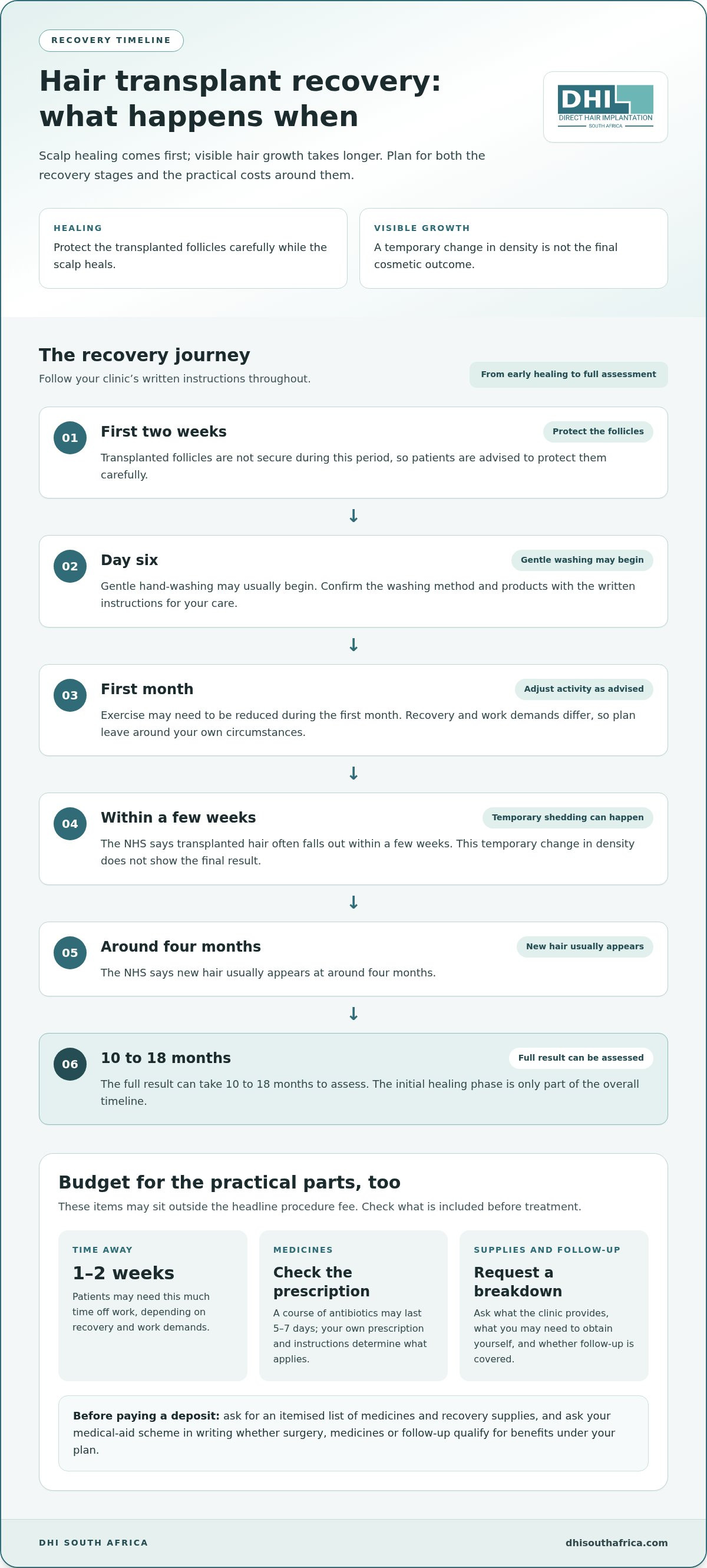
Recovery planning should account for time away from work, prescribed medicines, supplies and follow-up, not just the procedure. In South Africa, check the clinic’s registration and the operating surgeon’s professional registration and qualifications. Ask your medical-aid scheme in writing whether surgery, medicines or follow-up qualify for benefits under your plan.
Recovery and healing
Recovery is the period when the scalp heals and transplanted follicular units, natural groups of hairs that grow together, settle before visible growth develops. Patients are advised to protect the grafts carefully during the first two weeks, when they are not secure. Gentle hand-washing may usually begin on day six, while exercise may need to be reduced during the first month.
Plan for practical disruption as well as healing. After a hair transplant, patients may need one to two weeks off work, depending on their recovery and work demands. This can affect leave arrangements, travel and daily responsibilities. Include that time in your personal budget, even if it does not appear as a clinic charge.
Growth takes longer than the initial healing phase. The NHS says transplanted hair often falls out within a few weeks, with new hair usually appearing at around four months. The full result can take 10 to 18 months to assess. A temporary change in density during this process does not show the final cosmetic outcome.
Aftercare instructions should explain which changes need clinical attention. Hair transplant surgery carries a small risk of bleeding, infection or an allergic reaction to the anaesthetic. Knowing how to reach the care team and what follow-up is planned can help you respond appropriately if a concern arises during recovery.
Medicines and recovery supplies
Post-operative medicines and recovery supplies are used after the procedure to support care at home. They may include prescribed medication and products for washing or protecting the scalp. Their cost can depend on what the clinic provides, what the prescription requires and how long you need each item.
Ask for an itemised list before treatment, separating supplied items from anything you may need to obtain yourself. A course of antibiotics may last 5-7 days after surgery, according to the market facts for this topic; your own prescription and instructions determine what applies to you. Don’t assume that a medicine mentioned during planning is automatically included in the quote.
Build your home routine around the written instructions rather than buying extra cosmetic products. For example, confirm which shampoo or washing method to use on day six, and which items to keep away from the grafts during the first two weeks. This keeps recovery supplies relevant to the procedure and avoids unnecessary purchases.
Medical-aid benefits can differ by plan and by the way a procedure is classified. Ask whether the benefit covers the surgery itself, prescribed medicines and follow-up separately, and request the answer in writing. You can also review the available hair restoration treatments when considering what care may suit your needs.
Post-operative medication and follow-up expenses
Post-operative budgeting extends beyond prescriptions to follow-up appointments, maintenance treatments and, for overseas surgery, travel. Patients may need to budget an additional 15 to 30 percent of the quoted surgery price for medication, PRP therapy and follow-up care.
Ongoing medicine and maintenance costs have no single total. They depend on the prescribed treatment, how long it continues and how many appointments are planned.
Medication, tests and follow-up
These expenses include prescribed medicines, any requested blood tests and appointments after surgery. They matter because a quote may cover the operation while treating later care as a separate expense.
Medication may be included in a package or charged separately. Follow-up visits can also involve an additional cost, particularly when an in-person appointment is needed. Before paying, distinguish one-off tests from recurring prescriptions and scheduled reviews.
Blood tests may be arranged before surgery, with costs depending on the tests requested and where they are performed. Ask which tests are proposed and whether their cost appears in the treatment quote. For follow-up, establish whether appointments are remote or in person, how many are planned, and what happens if you need an extra review.
Ongoing medicines and maintenance
Ongoing medicines and maintenance are treatments continued after the operation to manage hair loss or support a broader plan. Their cost can add up over time, as recurring prescriptions or a series of sessions increase the initial surgical expense.
Prescription minoxidil or finasteride may be recommended as ongoing medication. The choice and duration depend on the treatment plan, so assess the recurring commitment rather than considering only the first supply. PRP therapy is another possible expense: patients may need 3-4 sessions in the first year. Ask how the proposed schedule is organised and whether sessions are included or billed separately.
Medical tourism adds another layer. Travel, accommodation and meals are separate from surgical care, and a return journey may also be needed for follow-up. If complications arise after returning to South Africa, distance can make a timely in-person assessment more difficult and may add travel or local medical expenses.
Legal recourse for complications abroad can depend on the treatment agreement and the country where surgery was performed. Before travelling, obtain written terms explaining who handles complications, how follow-up is arranged, and how concerns or complaints are managed. Keep copies of your treatment plan, receipts, prescriptions and clinical records. These documents can help clarify what care was agreed and which costs were paid.
Compare the full care pathway, not just the surgical fee. List medicines, tests, planned reviews, maintenance sessions and travel separately. This makes recurring expenses and potential additional appointments easier to identify before you commit.
Comparing quotes and asking questions before paying a deposit
A quote is useful only if it describes the planned treatment clearly enough to compare with another proposal. Look for the intended number of hairs, where they are to be placed, and how the proposed design addresses your goals. A deposit is a commitment, so understand the scope and terms before paying.
Comparing transplant quotes
A transplant quote sets out the proposed procedure and associated charges. Comparing quotes matters because similar headline figures can reflect different treatment plans and inclusions.
Read each proposal against your priorities. If your main concern is the hairline, for example, check that the treatment plan explains the intended design and how hairs will be distributed there. If you also want crown coverage, make sure that area is addressed separately rather than assumed to be included in the same plan.
Ask how the planned number and placement of hairs were assessed, and what might change after an in-person examination. Clarify which services are included, which depend on later findings, and which are optional. These distinctions can explain why proposals differ without relying on a single headline figure.
The price depends on the treatment plan, the area being restored, donor supply and the care included. Your quote should give the figure for your case. Compare proposals against the same priorities and scope, rather than treating the deposit as the total commitment.
Lifetime treatment costs
Lifetime treatment costs include the initial procedure and possible future care. This broader view matters because your hair restoration needs may change as hair loss progresses.
Compare how each proposal accounts for future planning. A clearly described design should show which areas are the focus now and how the remaining donor supply fits into the longer-term approach. Ask what the plan would mean if you later wanted additional coverage, without assuming another procedure will necessarily be needed.
Before paying, keep the written proposal and deposit terms together. Make sure the document records the agreed design, planned hair placement, included care and any conditions that could affect the plan. If a conversation changes your understanding, ask for that change to be reflected in the proposal before you commit.
Design: Confirm which areas are being treated and how the hairline is planned.
Hair placement: Understand the intended distribution of hairs across those areas.
Scope: Distinguish included care from conditional items and optional choices.
Deposit terms: Read what the payment secures and how changes to the plan are handled.
A clear comparison helps you judge whether a proposal fits your treatment priorities and longer-term plans, not simply whether its initial figure appears lower.
Costs of repair surgery after an unsatisfactory transplant
An unsatisfactory result can create expenses beyond the original procedure, especially if correction requires another session. Repair may address an unnatural hairline, visible scarring, uneven density or transplanted hairs placed in the wrong direction. The work depends on the original technique, the condition of the scalp and the donor hair still available. These are important hidden costs of hair transplant surgery to consider when weighing the long-term commitment.
Correction is a recognised part of hair restoration: 5-10% of people presenting for treatment seek correction of previous surgery. Repair-focused surgeons may see 30% to 40% of their current cases involving complications or unsatisfactory outcomes from earlier procedures. These figures describe different groups, but show why the possibility of repair belongs in a long-term cost comparison.
A touch-up is commonly considered 12-18 months after the original operation. Waiting allows the result to develop before further treatment is planned. A failed transplant can extend the treatment timeline by 2-3 years, adding time for assessment, healing and any further session. The financial impact may also include travel, time away from work and continued aftercare.
Repair is not simply a repeat of the first procedure. A specialist must assess the existing hairline, scar tissue, growth direction and remaining donor hair. If the donor area has been depleted or damaged, the plan may need to prioritise the most visible areas rather than attempt broad coverage. This can affect the technique and number of sessions required, and may mean reconsidering the original goal.
Before deciding on correction, gather the records from the first treatment. Keep photographs from before and after surgery, the treatment plan, consent documents, invoices and follow-up notes. These can help clarify what was performed and how the current result developed. An independent assessment can then identify whether the concern relates to design, growth, scarring or continuing hair loss.
Repair expenses vary with the work required, the donor area and the surgical plan. A quote for correction should set out the proposed changes, what each session addresses, and which aftercare or follow-up expenses are separate. To avoid underestimating the hidden costs of hair transplant surgery, compare the intended result and full care pathway, not just the correction’s headline figure.
Hairline: Identify whether the concern is shape, position or direction.
Donor hair: Establish what remains available for correction.
Session plan: Understand the purpose of each proposed stage.
Long-term view: Include recovery, follow-up and time before assessing the result.
If a transplant result is unsatisfactory, understand the cause before committing to further surgery. A careful assessment can distinguish a correctable design issue from limited donor supply or ongoing hair loss.
DHI South Africa: Direct Hair Implantation (DHI)
DHI South Africa offers Direct Hair Implantation (DHI) for people considering surgical hair restoration. After comparing potential recovery, follow-up and repair expenses, discuss your treatment goals and donor area to understand whether this option suits your needs.
Hair loss plans can differ. DHI South Africa also offers GFC Treatment, Regenera Activa and PRP Hair Loss Treatment. These are distinct options to discuss in relation to your hair restoration goals, rather than assuming surgery is the only route.
Before making a decision, bring your questions about the proposed treatment, aftercare and follow-up into the conversation. To discuss your hair restoration needs, contact DHI South Africa.
Make your next step an informed one
Planning for the hidden costs of hair transplant surgery is also an opportunity to decide what matters most to you: the result you hope to achieve, the recovery you can accommodate and the level of ongoing care that feels manageable. Keep those priorities central to any discussion so the treatment plan reflects your circumstances, not just a headline offer.
You do not need to settle every question at once. Start with the points that would affect your decision, then discuss them before committing. A considered conversation can help you understand your options and feel prepared to choose a path that suits your hair restoration goals.
Take the next step at your own pace. Clear information can make a personal decision feel more manageable.
Frequently Asked Questions
What Are the Hidden Costs of Hair Restoration Surgery?
The hidden costs of hair restoration surgery are expenses beyond the quoted procedure, such as prescribed products, tests, travel, time away from work or later corrective care. Which costs apply depends on your treatment plan and what the quote includes. To assess the full commitment, separate one-off expenses from recurring care, then note which costs are optional or may arise only if your plan changes.
The Verdict: Is a Hair Transplant Worth the Investment?
A hair transplant may be worthwhile if its likely benefits align with your goals, expectations and willingness to manage recovery. It is not purely a financial decision: consider the treatment plan, the effect you hope to achieve and the time involved. Compare these with non-surgical options and the possibility of further care. No procedure can promise a particular cosmetic result, so consider whether it is suitable for you.
What Is Usually Included in a Hair Transplant Package?
There is no universal package; inclusions depend on the treatment proposal. A package might set out the procedure and particular aftercare, while other items may be separate. Read the written terms for what happens on treatment day, what support follows, and how additional appointments or medicines are handled. Treat words such as “package” or “all-inclusive” as a starting point, then look for a clear description of each included item.
Who Really Performs the Procedure?
Your treatment information should make clear who is responsible for the clinical and surgical steps. At DHI South Africa, procedures are performed exclusively by trained, certified doctors. Direct Hair Implantation is performed under local anaesthesia and is practically painless. Knowing who performs the procedure helps you understand clinical responsibility and whose names will appear in your treatment records, rather than relying on a general clinic description.
Who performs the surgical steps when the price drops?
A lower quoted price does not, on its own, establish who performs each surgical step. Look for the named clinician and a clear description of their role in your treatment documents. At DHI South Africa, procedures are performed exclusively by trained, certified doctors. Compare the documented medical team and treatment plan, rather than making assumptions based on the quote alone.
What costs are included in a hair transplant quote, and what is charged extra?
The quote should distinguish the planned procedure from items that are excluded, conditional or optional. Check whether it describes medicines, appointments, tests, travel and any later treatment separately. Mark each item as included, a possible extra or an elective addition to make differences between proposals visible and avoid mistaking an optional service for a required part of treatment.
How do graft count and transplant size affect the total cost?
A larger treatment area or higher planned graft count can affect the scope of a procedure, but the count alone does not describe the full plan. The design, donor supply, method and whether treatment is staged also matter. Compare what each estimate is intended to achieve and whether it reflects an in-person assessment. This is a more meaningful basis for comparing proposals than the graft figure alone.
Are consultations, blood tests, medication, and follow-up visits included in the price?
They may be included or charged separately, depending on the proposal. Check whether the consultation is part of planning, whether tests are arranged within the quoted treatment, and how prescriptions and follow-up appointments are handled. Ask for each item to be labelled in the written breakdown. If you use medical aid, review your scheme’s terms for the specific service rather than assuming a benefit covers every part of treatment.



Comments