%20(1).jpg)
%20(1).jpg)
How to Stop a Receding Hairline: A Clinical Guide to Hairline Restoration in 2026
- Dhesan Moodley

- 3 days ago
- 11 min read
By the age of 35, approximately two out of three men will already be facing the reality of a thinning scalp. It's a frustrating moment when you first notice your forehead appearing slightly broader, and it's completely natural to feel a dip in your self-assurance whilst searching for answers. You've likely encountered a sea of conflicting advice online, but understanding how to stop a receding hairline starts with moving past the myths and looking at the clinical evidence. We understand the fear that a surgical fix might look obvious or unnatural, but modern restoration is about precise artistry as much as it is about medicine.
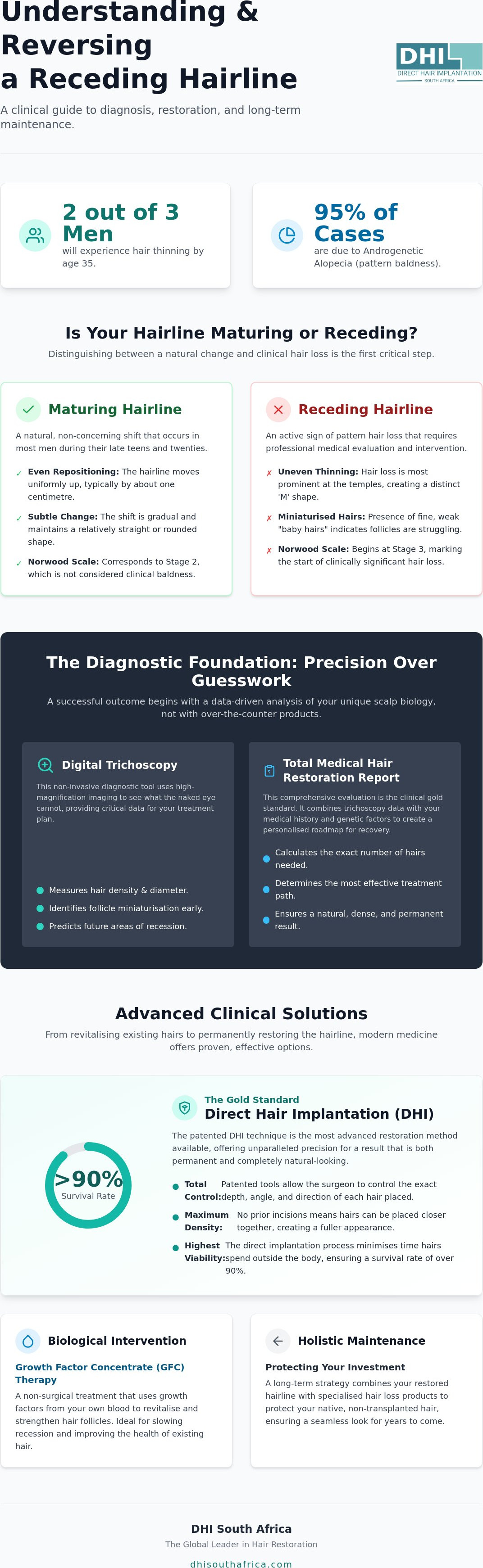
In this guide, you'll discover the medical science required to halt recession and the advanced clinical steps needed to restore a dense, natural-looking hairline in 2026. We'll explore why 95% of male hair loss is down to androgenetic alopecia, or common pattern baldness, and how targeted treatments like GFC therapy or the patented Direct Hair Implantation (DHI) technique can help. From the diagnostic clarity of a Total Medical Hair Restoration report to understanding the anagen phase, which is the active growth stage of your hairs, we're here to provide the expert guidance you need for a permanent transformation.
Table of Contents
Identifying the Shift: Is Your Hairline Maturing or Receding?
Noticing a change in the mirror can be unsettling. You might wonder if you're overthinking it or if it's the start of something permanent. For most men, a "maturing hairline" is simply a natural repositioning of the hair as they move from their late teens into their twenties. This usually involves the hairline moving about a centimetre higher than the original juvenile line. It's a subtle, even shift that doesn't necessarily mean you're going bald.
A receding hairline is a different story altogether. It's often characterised by uneven thinning, specifically at the temples, creating that classic deepening 'M' shape. This is generally the result of Pattern hair loss, a condition where a hormone called Dihydrotestosterone (DHT) begins to miniaturise hairs at the front of the scalp. If you want to know how to stop a receding hairline, the solution lies in a clinical approach that blocks this miniaturisation whilst revitalising the follicles before they close permanently. The emotional weight of this discovery is significant, but identifying the shift early is your greatest advantage.
The Norwood Scale: Mapping Your Progress
The Norwood Scale is the clinical benchmark we use to categorise these stages. Stage 2 represents a mature hairline, where there is slight recession at the temples but no significant loss. However, Stage 3 marks the clinical beginning of recession. A key indicator to watch for is the presence of "baby hairs." These aren't new growth; they are miniaturised hairs that have lost their density and pigment. If you see these at your temples, it's a clear sign that the follicles are struggling and require professional attention.
Why Genetics Aren't the Only Factor
Whilst your DNA provides the blueprint, it isn't the only factor at play. High stress levels, poor scalp circulation, and certain lifestyle behaviours can speed up a genetic predisposition. These factors can prematurely push hairs out of the anagen phase, which is the active growth stage, and into the resting phase. Taking a "wait and see" approach often feels like the easiest path, but it usually leads to more complex restoration needs later. Understanding how to stop a receding hairline effectively often requires addressing these external triggers alongside medical interventions to ensure the longevity of your hair.
The Diagnostic Foundation: Why Professional Analysis Trumps Guesswork
Guesswork is often the biggest obstacle to recovery. Many men spend months, even years, experimenting with over-the-counter solutions without knowing why their hair is thinning. If you're searching for how to stop a receding hairline, the journey doesn't begin with a generic bottle of shampoo from a retail shelf. It begins with data. True restoration requires a deep understanding of what's happening beneath the surface of your scalp.
The "Total Medical Hair Restoration" report serves as our clinical gold standard for diagnosis. This isn't a quick glance; it's a comprehensive evaluation of your hair's unique biology. By moving beyond surface-level observations, we can create a roadmap that addresses your specific pattern of loss. A personalised treatment plan is essential because your scalp's requirements are as individual as your fingerprint.
Digital Trichoscopy: Seeing the Invisible
Digital trichoscopy is a non-invasive diagnostic tool that uses high-magnification imaging to assess your scalp. It allows us to measure hair density and diameter with microscopic precision. This technology is vital because it can identify follicle miniaturisation before it's visible to the naked eye. We can see which follicles are struggling and predict future areas of recession before they actually happen. This data is what allows a doctor to prescribe the exact number of hairs needed for a successful restoration, ensuring the result looks natural and dense.
The Value of a Medical Hair Restoration Specialist
Whilst a general practitioner can offer broad advice, a certified medical hair restoration specialist provides the level of precision required for aesthetic success. A specialist looks at the 360-degree picture, combining your medical history, genetic factors, and current scalp health. They understand the nuances of FDA-approved treatments for hair loss and how to integrate them into a broader clinical strategy. This expert-led approach ensures that every step is grounded in science rather than marketing hype. If you're ready to move past the confusion of conflicting online advice, you can book a professional consultation to begin your diagnostic journey. This clarity is the first real step toward regaining your confidence.
Biological Interventions: Stimulating Follicles with Growth Factor Therapy
Early intervention is often the most effective way to address thinning before it becomes irreversible. When you're looking for how to stop a receding hairline without jumping straight to surgery, biological interventions offer a sophisticated, science-led path. These treatments focus on revitalising dormant follicles and thickening existing hairs by harnessing the regenerative power of your own body. Because these are autologous treatments, meaning they use your own biological material, the safety profile is exceptionally high and the results feel entirely personal.
Success with these therapies doesn't happen overnight. It's a methodical process that aligns with your natural hair growth cycle. Most patients find that a series of 3-4 sessions is the clinical sweet spot for seeing a visible improvement in hair density and scalp health. It's about creating a healthy foundation for your hair to thrive long-term.
GFC Therapy: The Science of Concentration
Growth Factor Concentrate (GFC) therapy represents a significant evolution of traditional PRP treatments. The process begins by extracting a small amount of your blood, which is then processed using advanced centrifugation to isolate and concentrate specific growth factors. Unlike standard PRP, which can vary in consistency, GFC provides a precise, highly concentrated dose of the proteins your scalp needs. These growth factors boost local circulation and provide the necessary signals to "wake up" follicles that have slowed down. It's a targeted approach that delivers the right nutrients exactly where they're needed most.
Regenera Activa: The Power of Micro-Grafting
For those seeking a multitargeted answer to androgenic alopecia, Regenera Activa offers a unique, regenerative approach. This procedure uses autologous micro-grafts, which are tiny samples of tissue taken from the back of the scalp where hair is genetically resistant to loss. These samples are processed into a solution rich in progenitor cells, which is then injected into the thinning areas. This stimulates the self-regeneration of the hair cycle, helping to push hairs back into the anagen phase.
Whilst these biological therapies are incredibly effective at maintaining your native hair, some individuals may eventually require a more permanent solution to your hair loss through implantation. Regenera Activa is frequently used alongside a transplant to improve hair survival rates, which currently exceed 90% with modern techniques. Whether used as a standalone treatment or as part of a broader 360-degree strategy, these interventions are a cornerstone of how to stop a receding hairline whilst preserving your natural appearance.
Direct Hair Implantation: Restoring the Hairline with Permanent Precision
When non-surgical interventions aren't enough to achieve the density you desire, the focus shifts to a more permanent structural solution. Direct Hair Implantation (DHI) has emerged as the gold standard for those specifically looking for how to stop a receding hairline whilst maintaining a completely natural appearance. Unlike traditional methods that often treat hair restoration as a generic volume game, DHI prioritises the artistry of the hairline. This technique offers total control over the placement of every hair, ensuring your new look is indistinguishable from your original one.
The Art of Hairline Design
A successful restoration isn't just about adding hairs; it's about the precision of their placement. Our doctors meticulously control the angle, depth, and direction of every hair to mimic the natural growth patterns of your native hair. This is particularly vital for the front of the scalp, where a "soft" transition is required to avoid the harsh, straight lines often seen in lower-quality procedures. Every DHI procedure is performed exclusively by certified medical experts, ensuring that the clinical standards match the aesthetic results and safety expectations of our patients.
The DHI Procedure: What to Expect
The procedure is designed to be minimally invasive, often referred to as a "lunch-hour" solution for busy South African professionals. The process follows three distinct clinical steps:
Step 1: Careful extraction of follicles from the donor area using patented, single-use titanium-coated punches that leave no visible scarring.
Step 2: Immediate preservation of the hairs in a specialised solution to maintain maximum vitality and health whilst they are outside the body.
Step 3: Direct implantation using the patented DHI Implanter, which allows for direct placement without the need to pre-create "slits" or holes in the scalp.
This "single-step" implantation significantly reduces trauma to the scalp and leads to a hair survival rate that often exceeds 90%. By avoiding the heavy handling of follicles, we ensure that the hairs remain strong and healthy throughout the transfer. This meticulous process is what allows for a "scar-free" and "no-downtime" experience, which is essential for busy professionals who cannot afford lengthy recovery periods. Most patients return to their normal behaviour and work routines almost immediately, confident that their results will be both seamless and permanent. You can explore the transformations of previous patients by viewing our DHI hair transplant results to see the level of density and naturalness possible.
A Holistic Strategy for Maintaining Your Results Long-Term
Restoring your hairline is a significant milestone, but it's only one part of a lifelong journey. Whilst the hairs we transplant are genetically resistant to the effects of DHT, your native hair surrounding the restoration site remains susceptible to further thinning. Understanding how to stop a receding hairline permanently requires a 360-degree approach that protects both your new and existing hair. We focus on a combination of clinical follow-ups, specialised hair loss products, and nutraceuticals to ensure your results look as dense and vibrant in ten years as they do today.
Daily behaviour plays a vital role in long-term maintenance. We recommend switching to gentle, medical-grade shampoos that support scalp health without stripping away natural oils. It's also important to avoid high-tension hairstyles or aggressive brushing, which can cause unnecessary trauma to the follicles. Regular photographic documentation and follow-up appointments allow us to monitor your progress with precision, ensuring that any shifts in your hair density are addressed before they become visible.
Post-Procedure Care and Maintenance
The first 18 months following your procedure are the most critical for monitoring growth and follicle health. During this period, we often prescribe DHI-specific topical solutions that are formulated to support the newly implanted hairs whilst they settle into their growth cycle. It's helpful to remember that transplanted hairs are taken from the back of the head, an area where follicles are naturally resistant to the hormones that cause loss. This genetic resistance is why they remain permanent, even whilst native hairs in the front might continue to recede without the right support.
Your Next Step: The Digital Scalp Analysis
Moving from curiosity to action is the most effective way to protect your appearance. If you've been wondering how to stop a receding hairline, a professional diagnostic session is the only way to get a clear, medical-grade answer. Early intervention is not only more cost-effective but also yields the most natural results by preserving as much of your native hair as possible. Our digital scalp analysis provides the data-driven clarity you need to make an informed decision about your restoration journey.
Your Path to a Permanent, Natural Transformation
Realising that your hairline is changing can be a heavy burden to carry, but it's a challenge with a clear, medical solution. We've explored the clinical difference between natural maturation and active recession, along with the diagnostic tools like digital trichoscopy that provide absolute clarity. Deciding how to stop a receding hairline isn't about trial and error with retail products; it's about choosing a clinical path backed by over 50 years of global medical expertise.
Whether you opt for non-surgical GFC therapy to revitalise thinning areas or the precision of a DHI procedure for structural restoration, your care is always in the hands of certified doctors. With a hair survival rate exceeding 90%, you can feel confident that your investment in yourself will yield dense, natural results that stand the test of time. You don't have to navigate this journey alone.
We're here to help you reclaim your confidence with a personal plan grounded in science and delivered with the care you deserve. Your transformation starts with a single, informed step.
Frequently Asked Questions
Can you actually stop a receding hairline once it starts?
Yes, you can stop a receding hairline provided the hair follicles haven't completely scarred over and ceased production. By identifying the cause through a digital scalp analysis, we can implement biological interventions like GFC therapy to revitalise dormant follicles. Understanding how to stop a receding hairline effectively requires early action to preserve your native hair before the recession becomes permanent.
What is the most effective medical treatment for a receding hairline?
The most effective treatment depends entirely on your specific stage of hair loss as mapped on the Norwood Scale. For early thinning, non-surgical GFC therapy or Regenera Activa provides the best results by stimulating natural growth factors. If the hairline has already receded significantly, Direct Hair Implantation (DHI) is the clinical gold standard for restoring density with permanent, natural-looking hairs.
Is a hair transplant for a receding hairline permanent?
Yes, the results of a hairline restoration are permanent because the hairs are relocated from the back and sides of the scalp. These specific follicles are genetically resistant to Dihydrotestosterone (DHT), which is the hormone responsible for pattern baldness. Once these hairs are successfully implanted into the hairline, they will continue to grow for a lifetime whilst maintaining their natural characteristics.
How many hairs are typically needed to fix a receding hairline?
The number of hairs required varies based on the depth of the recession and the desired density. A standard restoration typically requires between 1,500 and 4,000 hairs to create a seamless, natural transition. We use digital trichoscopy to measure your exact hair diameter and density, which allows our doctors to calculate the precise number of hairs needed for your individual case.
Will my hairline restoration look natural or 'pluggy'?
Modern restoration techniques like DHI ensure a completely natural appearance by giving doctors total control over the angle, depth, and direction of every hair. We avoid the "pluggy" look of the past by using specialised tools that don't require pre-cut slits in the skin. This allows for a soft, feathered hairline that mimics the natural growth patterns of your original hair amongst your peers.
How much does it cost to stop a receding hairline in South Africa?
The cost of learning how to stop a receding hairline through clinical treatment depends on the specific methodology and the volume of hairs required. Because every scalp is unique, we provide a personalised quote following a Total Medical Hair Restoration report. This ensures you only pay for the exact level of care and the number of hairs needed to achieve your desired aesthetic outcome.
Is there a non-surgical way to regrow hair on the temples?
Non-surgical treatments like GFC therapy and Regenera Activa are highly effective at regrowing hair on the temples if the follicles are still active. These therapies use your own biological material to "wake up" follicles that have entered a dormant phase. Whilst they cannot create new follicles where none exist, they are excellent for thickening existing hairs and halting further recession in the early stages.
What is the difference between DHI and traditional FUE for hairlines?
The primary difference is that DHI is a single-step implantation process that offers superior aesthetic control and a higher hair survival rate. Traditional FUE requires a doctor to create slits in the scalp before inserting the hairs, which can lead to less precision in the angle and direction. DHI uses a patented implanter to place hairs directly, resulting in less trauma and a survival rate exceeding 90%.


Comments