%20(1).jpg)
%20(1).jpg)
Traction Alopecia Treatment: A Clinical Guide to Restoring Your Hairline

Nearly 32% of adult women in South Africa are currently navigating the distressing reality of thinning hair caused by mechanical tension. It usually begins subtly at the temples or along the hairline, leaving many to wonder if their favourite braids or sleek ponytails have caused permanent damage. If you feel a sense of frustration or even guilt over this hair loss, please know that your experience is valid and, more importantly, often reversible with the right traction alopecia treatment strategy.
It's exhausting to sift through endless DIY oils and social media "miracles" that rarely deliver on their promises. We understand that you want more than just a temporary fix; you want your confidence back. This clinical guide will help you identify the early warning signs of follicle stress and provide actionable steps to halt further damage immediately. We'll also explore advanced medical solutions, such as GFC therapy and Direct Hair Implantation, designed to restore lost density and rebuild a natural, healthy hairline.
Table of Contents
Recognising Traction Alopecia: Signs Your Hairline is Under Tension
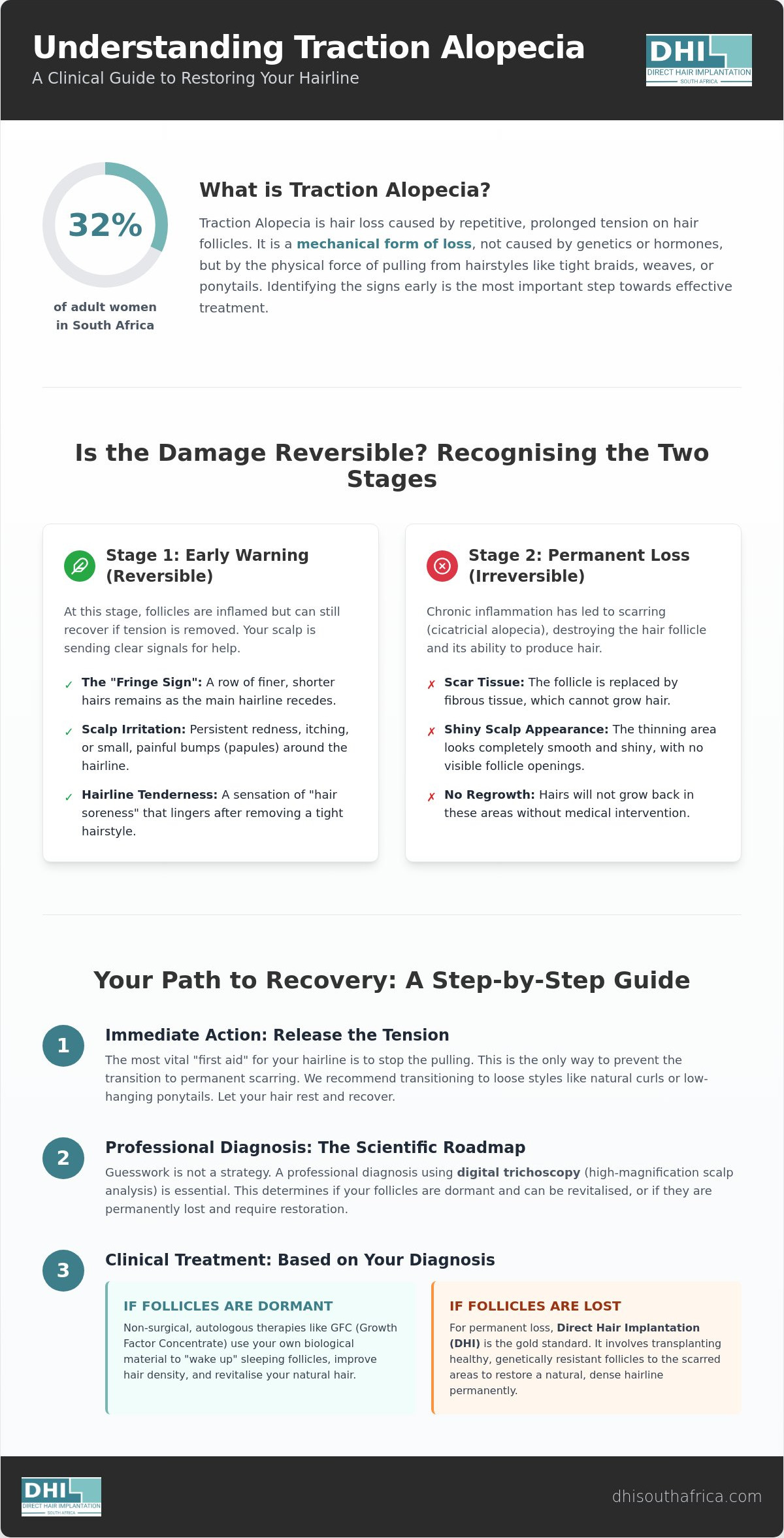
Traction alopecia is essentially hair loss caused by repetitive, prolonged tension on the hair follicles. It's a mechanical form of loss, which means it isn't caused by genetics or hormones, but by the physical force of pulling. Many of our patients feel a deep sense of emotional distress or even self-blame when they notice their hairline receding. We want you to know that this is a common challenge, especially in South Africa, and identifying the signs early is the most important step toward an effective traction alopecia treatment plan.
One of the most distinct clinical markers we look for is the "fringe sign." Have you noticed a small row of finer, shorter hairs that seem to stay behind while the rest of your hairline moves back? These hairs are often too short to be caught in tight braids or sleek ponytails, so they escape the tension that damages their neighbours. If you see this pattern, it's a clear signal that your follicles are under significant stress and need immediate relief to prevent permanent damage.
Early Warning Symptoms You Should Not Ignore
Before you see visible patches of skin, your scalp usually sends out warning signals. You might experience persistent redness, itching, or the appearance of small, painful bumps called papules around your hairline. Many women describe a specific sensation of "hair soreness" or tenderness that lingers after removing a tight hairstyle. If you notice your parting is becoming wider or your temples look slightly more translucent, your follicles are likely in an active state of inflammation. This stage is critical; your hair can still regrow if we intervene before the inflammation leads to scarring.
The "Point of No Return": When Thinning Becomes Permanent
There's a definitive biological shift that happens when tension is applied for too long. Chronic inflammation eventually leads to cicatricial alopecia, which is the medical term for scarring. During this phase, the hair follicle is destroyed and replaced by fibrous tissue, losing its ability to produce new hairs forever. You can often spot this yourself; if the thinning area looks completely smooth and shiny, without any visible follicle openings, the loss has likely become permanent.
Determining whether your follicles are dormant or truly gone requires a professional touch. We use a specialised diagnostic report that includes digital trichoscopy, a high-magnification scalp analysis, to see exactly what is happening beneath the surface. This clarity is essential because it dictates whether your traction alopecia treatment should focus on revitalising existing hairs or using medical restoration to transplant new ones into the scarred areas.
Immediate Steps to Halt Hair Loss and Protect Existing Follicles
The most vital "first aid" for your hairline isn't found in a bottle; it's a decision to release the tension. If your follicles are currently under strain, the most effective traction alopecia treatment you can perform today is to simply let your hair down. We know how much your hairstyle is part of your identity, but continuing to pull on weakened follicles is like trying to heal a wound whilst still picking at it. This clinical necessity is backed by medical experts in any clinical review of Traction Alopecia, which highlights that cessation of tension is the only way to prevent the transition to permanent scarring.
Many people turn to "miracle oils" or heavy greases, hoping they will "grow back the edges" overnight. Whilst some oils may improve the condition of the hair shaft, they cannot fix mechanical damage. If the tension remains, no amount of castor oil will stop the hair from being physically pulled or the follicle from becoming inflamed. True recovery starts with scalp rest and clinical intervention rather than superficial coatings that often just clog the pores.
Hairstyle Modifications for Recovery
Recovery doesn't mean you have to sacrifice your style forever, but it does require a period of scalp rehabilitation. We recommend transitioning to loose styles like natural curls, low-hanging ponytails, or silk-wrapped buns that don't pull at the perimeter. If you choose protective styles, ensure they aren't kept in for more than six weeks. You should also ask your stylist to avoid braiding the "baby hairs" at the front and to alternate the anchor points of your braids. This ensures the same hairs aren't constantly bearing the load of the extensions.
Scalp Hygiene and Inflammation Control
A healthy scalp environment is the foundation for follicle regeneration. During this time, it's best to avoid chemical relaxers or harsh dyes that can exacerbate inflammation in already stressed follicles. Instead, focus on medical-grade products that soothe the scalp and reduce redness without the use of heavy waxes. When cleansing, be incredibly gentle around the hairline; use your fingertips to massage rather than scrub. If you're unsure which products will best support your recovery, you can explore our range of specialised hair loss treatments designed to calm the scalp and nourish the roots.
Clinical Non-Surgical Treatments: Revitalising Dormant Follicles
If you've caught the thinning early, your follicles aren't necessarily dead; they're likely just dormant or "resting." This is where clinical traction alopecia treatment shifts from simple prevention to active revitalisation. Unlike over-the-counter shampoos that only sit on the hair's surface, autologous therapies use your own biological material to trigger healing at the root level. These treatments are specifically designed to curb miniaturisation, the process where follicles produce progressively thinner and shorter hairs until they eventually stop growing altogether.
Whilst pharmacy-bought lotions might provide a temporary boost to the hair's appearance, they lack the concentration of growth factors needed to wake up a follicle physically traumatised by tension. Clinical therapies are significantly more effective because they address the underlying biological slowdown directly. By restoring the natural hair cycle, we can often encourage these follicles to return to the anagen phase, which is the active growth period where hairs are produced at their full potential.
GFC (Growth Factor Concentrate) Therapy
GFC represents a significant evolution in regenerative medicine, offering a more refined and potent alternative to traditional PRP. The process begins with a simple draw of about 15-18ml of your blood, which is then processed using advanced centrifugation to isolate high concentrations of growth factors. Unlike standard methods, GFC ensures these growth factors are already released from the platelets before application, allowing for more direct stimulation of the scalp. This boost in circulation helps to thicken existing hairs and revitalise follicles that have begun to shrink due to mechanical stress. Most patients see the best results after a course of 3-4 sessions.
Regenera Activa: Autologous Micro-Grafting
For those needing a more intensive approach to regeneration, Regenera Activa offers a multitargeted solution. This procedure involves harvesting tiny tissue samples from a healthy area of the scalp to extract progenitor cells, which are then reintroduced to the thinning areas. These cells act as a biological "jumpstart," stimulating self-regeneration amongst follicles that have struggled under the weight of heavy styles. It's an incredibly effective way to improve density without surgery. We often combine this with other hair loss treatments for synergistic results, ensuring your scalp has every resource it needs to heal from the inside out.
Restoring Permanent Loss: The Role of Direct Hair Implantation
When you reach the stage where the skin along your hairline is smooth and shiny, non-surgical therapies likely won't be enough. This specific texture indicates that the follicles have been replaced by scar tissue, meaning they've lost their biological ability to produce hairs on their own. In these cases, Direct Hair Implantation (DHI) becomes the definitive traction alopecia treatment. It's the only medical way to physically relocate healthy, active follicles into the areas where they've been lost, providing a permanent and natural-looking solution to a receding hairline.
Unlike older methods that might leave visible scarring or look unnatural, DHI focuses on the individual placement of hairs to mimic your original growth pattern. We talk about hairs rather than grafts because it's the density and angle of those individual hairs that create a seamless result. These relocated hairs are taken from the back of the head, an area where follicles are genetically programmed to resist loss. This means once they're moved to your hairline, they'll continue to grow for a lifetime, regardless of the previous damage to the area.
The DHI Technique: Precision and Artistry
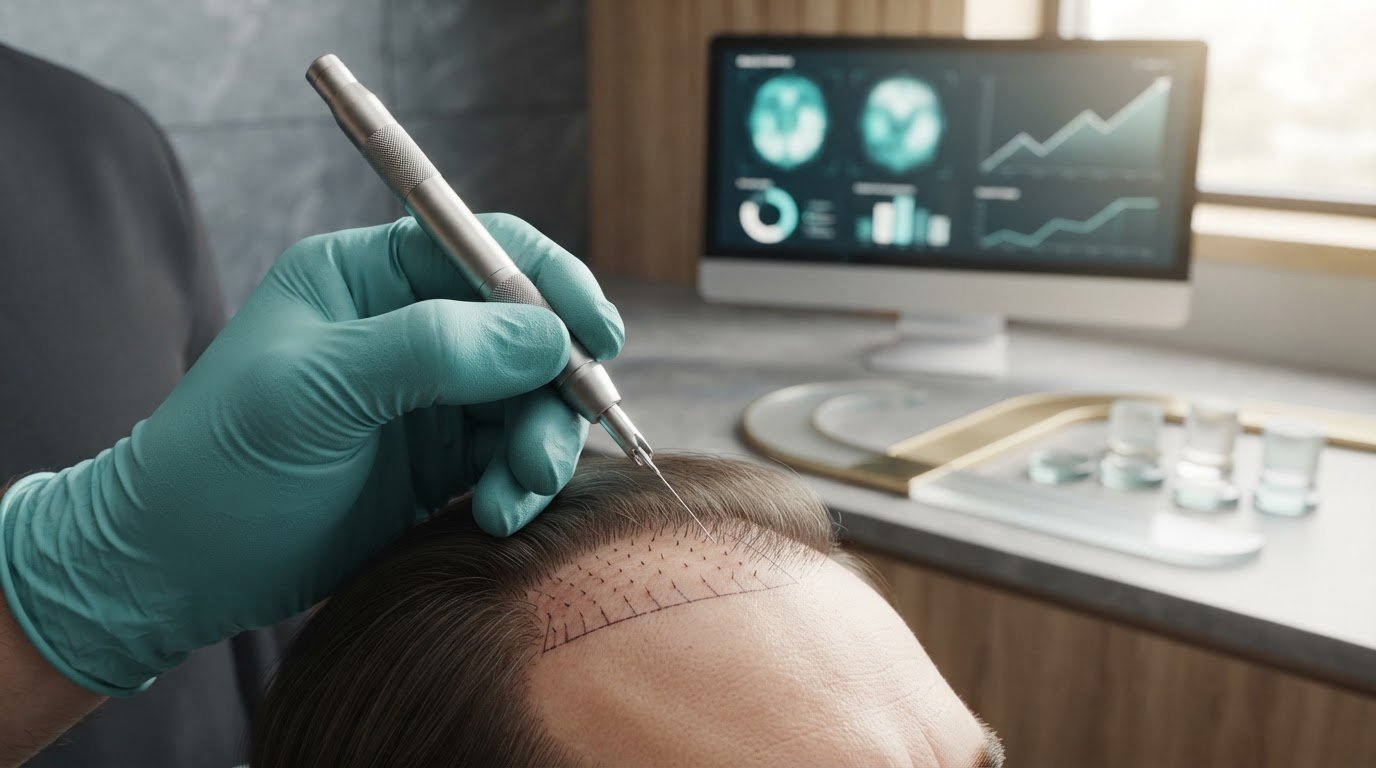
The success of this restoration lies in the patented DHI Implanter. This specialised tool allows our doctors to have total control over the depth, angle, and direction of every single hair placed. Because we don't need to create "reception holes" or incisions beforehand, the procedure is remarkably gentle on the scalp. This precision leads to a survival rate of over 90%, which is significantly higher than many industry standards. It's a scar-free process with virtually no downtime, allowing you to return to your routine whilst your new hairline begins its quiet transformation.
Restoring Your Natural Hairline Design
We understand that privacy is often a top priority for our patients in South Africa. That's why we offer an unshaven hair transplant option, meaning you don't have to cut your existing hair short for the procedure. Our certified medical experts don't just fill in the gaps; they meticulously design a hairline that complements your unique facial structure and age. For a typical restoration of the temples and frontal line, we might plan for the placement of 2,000 to 4,000 hairs. This ensures the density looks authentic and blends perfectly with your surrounding hair.
Your Journey to Recovery with DHI South Africa
Choosing a traction alopecia treatment is a deeply personal decision that requires both scientific rigour and emotional support. At DHI South Africa, we've built our reputation on a foundation of absolute transparency and global excellence. The science is clear. Every procedure we perform follows strict ISO and UK CQC-accredited protocols, ensuring that your safety is never compromised. We don't just provide a service; we offer a "safe pair of hands" to guide you through a life-changing transformation. Our global network has refined these techniques over decades, bringing world-class standards directly to the South African medical landscape.
The DHI Total Care System provides a comprehensive framework for your traction alopecia treatment, ensuring every aspect of your health is considered. Your results are our priority. Unlike many establishments where technicians might perform the heavy lifting, our certified medical experts personally manage every single step of your procedure. This level of individualised care ensures that the artistry of your hairline restoration matches the precision of our medical standards. We provide Total Medical Hair Restoration reports; these are medical-grade documents that track your follicle health, giving you a clear, data-driven view of your progress. We're here to help you move past the frustration of thinning and into a future where you can wear your hair however you choose.
What to Expect During Your Consultation
Your journey begins with a thorough diagnostic assessment. We use digital trichoscopy, a high-magnification scalp analysis, to provide a precise diagnosis of your follicle health. This allows us to see exactly which areas are dormant and which have transitioned to permanent loss. Based on these findings, we'll create a personalised 360-degree hair restoration plan. We'll take the time to answer every question, ensuring you feel fully informed and supported. Addressing your anxieties with empathetic, expert guidance is a cornerstone of our patient-centric approach.
The Path Forward: Booking Your Scalp Analysis
Taking the first step toward recovery is simpler than you might think. A professional assessment provides the clarity you need to stop the guesswork and start a proven medical path. With a strong national presence, we're accessible to all South Africans looking for world-class hair restoration expertise. Don't let another day of thinning affect your confidence. You're invited to contact DHI South Africa today to begin your transformation.
Reclaiming Your Natural Hairline and Self-Assurance
Thinning at the temples doesn't have to be your permanent reality. By understanding the mechanical nature of your condition and choosing a scientifically backed traction alopecia treatment, you can halt the recession and restore lost density. Whether your follicles require the regenerative boost of GFC therapy or the precision of a Direct Hair Implantation procedure, a world-class solution is within reach right here in South Africa. We focus on long-term health rather than quick fixes, ensuring your results look as natural as they feel.
Our approach prioritises your safety and aesthetic results through a patented technique that involves no stitches or scars. Every procedure is performed exclusively by certified medical doctors, delivering an industry-leading hair survival rate of over 90%. You've already taken the most important step by educating yourself on the clinical options available. Now, the path to restoration begins with a definitive, scientific assessment of your scalp's current state to determine which follicles can be saved and which need restoration.
We're ready to help you rediscover the confidence that comes with a full, healthy hairline. Your journey to recovery is a partnership, and we'll be with you every step of the way to ensure a seamless and life-changing transformation.
Frequently Asked Questions
Can traction alopecia be reversed naturally?
Yes, you can often reverse the condition naturally if you intervene during the early stages before permanent scarring occurs. The most effective natural traction alopecia treatment is the immediate and total cessation of high-tension hairstyles like tight braids, weaves, or sleek ponytails. If the follicles haven't been replaced by fibrous tissue, they'll usually begin to recover on their own once the physical stress is removed.
How long does it take for traction alopecia treatment to show results?
The timeline for recovery depends on whether you're using non-surgical boosters or medical restoration. For GFC therapy, most patients notice a visible improvement in density and hair quality after 3 to 4 sessions. If you undergo a DHI restoration, the new hairs follow a natural growth cycle; you'll see initial growth within 3 months, with the full, life-changing results appearing between 9 and 12 months.
Is a hair transplant the only way to fix a receding hairline from braids?
A hair transplant isn't always the only solution; the best approach depends on the current viability of your follicles. If your hair is thinning but the follicles are still active, non-surgical therapies can revitalise them and encourage regrowth. However, if the thinning area has become smooth and shiny, it suggests the follicles are no longer active, making a DHI restoration the only way to permanently restore density.
What are the best hairstyles to prevent traction alopecia whilst my hair recovers?
The best styles are those that place absolutely no tension on the perimeter of your scalp. We recommend wearing your hair in its natural state, opting for loose curls, or using a very low, relaxed ponytail secured with a silk scrunchie. It's vital to avoid any style that requires "laying your edges" with heavy gels or using heavy extensions that add weight to already weakened roots.
Are DHI treatments painful or do they require significant downtime?
DHI procedures are designed for maximum patient comfort and involve virtually no downtime. We use a local anaesthetic so you don't feel pain during the placement of hairs. Since the patented technique doesn't require incisions or stitches, there are no scars to manage, and most of our patients feel comfortable returning to their normal daily activities the very next day.
How much does traction alopecia treatment cost in South Africa?
The cost of traction alopecia treatment varies significantly based on the extent of the thinning and whether you require non-surgical therapy or a permanent DHI restoration. Every scalp is unique, so a fixed price doesn't exist without a clinical assessment. We recommend booking a professional diagnostic report to receive a personalised restoration plan and an accurate quote tailored to your specific needs.
Can I still wear braids or weaves after my hair has been restored?
You can return to protective styles, but you must adopt a "tension-free" approach to protect your new hairline. Whilst the transplanted hairs are genetically resistant to loss, the original hairs surrounding them remain vulnerable to mechanical stress. We advise discussing gentle techniques with your stylist and ensuring you give your scalp several weeks of rest between each style to maintain follicle health.
Is traction alopecia treatment suitable for all hair types and textures?
Clinical hair restoration is highly effective for all hair types, including tightly coiled Type 4 textures. Our certified doctors are specifically trained to manage the unique curvature of different hair follicles during the DHI process. This expertise ensures that the angle and direction of the placed hairs look completely natural and blend seamlessly with your existing hair, regardless of its texture.


Comments