%20(1).jpg)
%20(1).jpg)
Understanding Hair Graft Survival Rate: The Science of Permanent Restoration in 2026
- Dhesan Moodley

- 1 minute ago
- 11 min read
Did you know that in many traditional hair transplants, nearly half of the hairs moved during the procedure might never actually grow? It's a sobering statistic that often fuels the fear of wasting money on a result that looks sparse or patchy. When you're researching the hair graft survival rate, the conflicting numbers found online can feel overwhelming and confusing. You deserve to know exactly what happens to those follicles once they leave your scalp and what it takes to ensure they thrive in their new home.
We understand that this journey is about more than just aesthetics; it's about restoring the self-assurance that hair loss has taken from you. This guide will clarify the clinical factors that determine follicle viability in 2026, shifting the focus from hope to precise medical science. We'll examine how specific implantation techniques can push survival rates above 90 per cent, far beyond the 50 to 60 per cent industry average. By the end, you'll understand why genetically resistant hairs are the key to protecting your density for a lifetime.
Table of Contents
What is the Hair Graft Survival Rate and Why is it Critical?
It's easy to get caught up in the numbers when you're planning a hair restoration. Many people focus on how many hairs are being moved from the back of the head to the thinning areas, assuming that a higher number automatically equals a better result. However, the only metric that truly dictates your final appearance and the value of your investment is the hair graft survival rate. This figure represents the percentage of follicles that successfully take root and continue to grow in their new location after the procedure is finished.
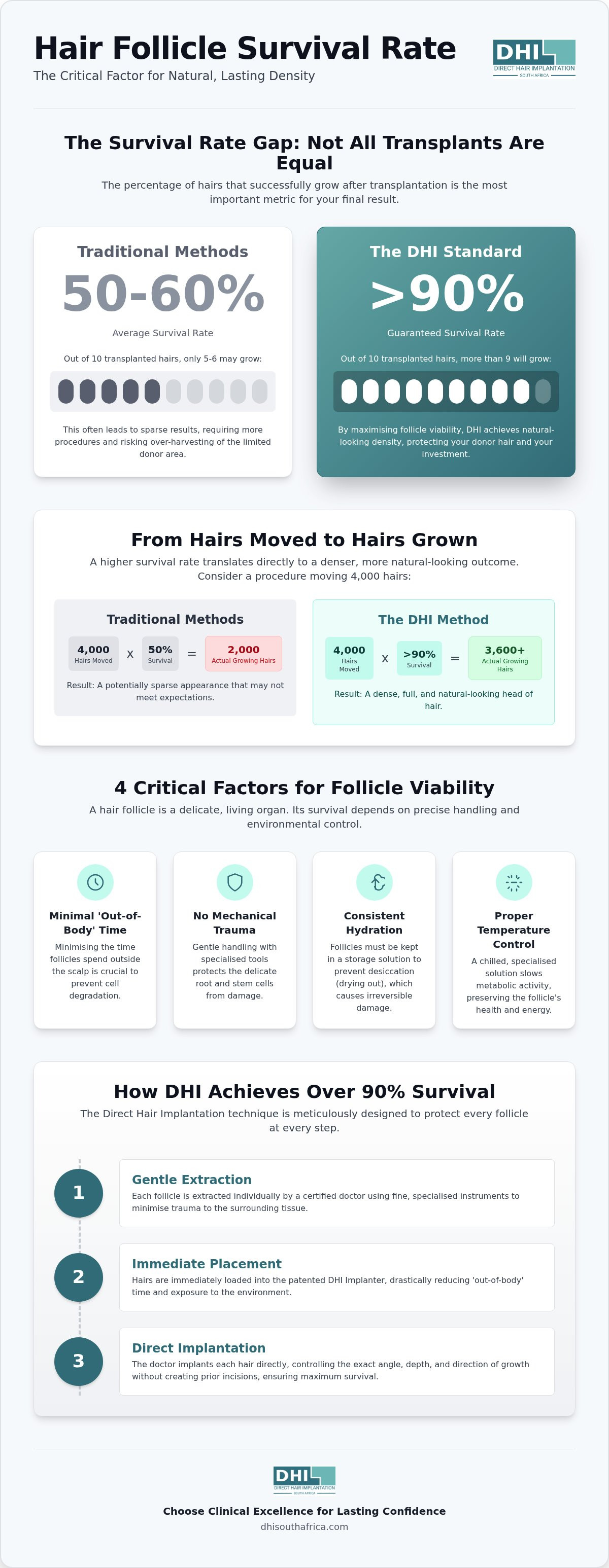
There's a significant difference between moving 4,000 hairs and having 4,000 hairs actually grow permanently. In many traditional clinics, industry averages for survival often hover around 50 to 60 per cent. This means that nearly half of the hairs moved may never sprout, leading to results that look sparse or "see-through" under bright office lights. We believe you deserve better than a coin-flip's chance of success. Understanding why these follicles fail is the first step toward achieving the natural density you're looking for.
To better understand this concept, watch this helpful video:
The Anatomy of a Successful Follicle Transfer
A hair follicle isn't just a simple strand of protein; it's a delicate, living organ that requires a constant blood supply to stay healthy. During a procedure like Follicular Unit Extraction (FUE), these units are carefully harvested from the donor site. For these hairs to thrive, they must ideally remain in the anagen phase, which is the active growth stage of the hair cycle. Once they're out of the body, they become incredibly sensitive to environmental changes. Factors like desiccation, which is the process of drying out, or improper temperature control can quickly damage the delicate stem cells inside the follicle's bulge area, preventing them from ever rooting successfully.
Why High Survival Rates Matter for Your Results
Achieving a high hair graft survival rate is the only way to ensure natural-looking density without needing multiple "top-up" procedures. If the survival rate is low, a surgeon might be tempted to over-harvest your donor area, taking more hairs than necessary to compensate for the expected loss. This is a risky strategy because your donor hair is a finite resource. Once it's gone, it's gone. By prioritising viability, we protect those limited hairs and ensure that every single one contributes to a fuller, more confident look. You can explore how we achieve these standards in our guide to Direct Hair Implantation: The Science of Natural Hair Restoration in 2026.
Biological and Technical Factors Influencing Follicle Viability
Achieving a high hair graft survival rate isn't merely a matter of surgical luck; it's a direct result of respecting the complex biology of the hair follicle. These tiny organs are incredibly resilient whilst in the scalp, but they become vulnerable the moment they're harvested. Desiccation, or the process of drying out, is perhaps the greatest threat during this transition. Even a few minutes of exposure to dry air can cause irreversible damage to the stem cells responsible for future growth. Scientific reviews on the factors affecting graft survival highlight that maintaining a precise balance of hydration and temperature is non-negotiable for success.
To combat these risks, follicles must be kept in a specialised, chilled storage solution that mimics the body's natural environment. This prevents the tissue from degrading whilst it waits to be placed. If you're concerned about how these biological factors might affect your specific situation, you can explore our hair loss information to better understand your unique scalp health. The difference between a lifetime of density and a disappointing result often comes down to these technical details that happen behind the scenes.
The Impact of 'Out-of-Body' Time
The clock starts ticking the second a follicle is removed. Ischemia is the lack of blood supply that begins the moment of extraction. As time passes, the follicle's energy reserves deplete, and the risk of "reperfusion injury" increases once it's replanted. DHI protocols are designed to keep this window as short as possible. By streamlining the workflow, our doctors ensure that hairs spend minimal time outside the body, which is a primary reason why we can maintain such a high hair graft survival rate compared to traditional methods.
Minimising Mechanical Trauma
Traditional extraction methods often rely on forceps to grasp and pull the follicles, which can easily crush the delicate bulge area. These hairs must be treated as living tissue, not just "plugs" to be moved from one spot to another. To avoid this, we use patented, single-use titanium-coated punches. These tools allow for a clean, sharp extraction that requires no manual handling of the follicle itself. This "touchless" approach eliminates the mechanical trauma that frequently leads to follicle death in standard procedures, ensuring that the hairs we place are healthy and ready to grow.
Comparing Implantation Techniques: How DHI Achieves >90% Survival
When you're evaluating your options, it's vital to understand that the method of placement is just as important as the extraction itself. In traditional procedures, a surgeon first creates thousands of tiny incisions, or "slits," in the recipient area. The hairs are then manually forced into these holes using forceps. This two-step process not only increases the risk of mechanical trauma but also leaves the follicles exposed to the air for longer periods. By contrast, Direct Hair Implantation (DHI) streamlines this into a single, seamless movement.
This efficiency is the primary reason why we consistently achieve a hair graft survival rate exceeding 90 per cent. When compared to the traditional FUE industry average of 50 to 60 per cent, the difference in final density is staggering. You aren't just getting more hairs; you're getting a more robust, healthier result because the tissue is handled with the respect it deserves. This precision allows us to control the angle, depth, and direction of every hair, ensuring your new growth follows the natural flow of your existing hairline.
The Patented DHI Implanter Advantage
The cornerstone of our success is the patented DHI Implanter. Think of this as a precision instrument designed to protect the follicle from any direct contact. Unlike other clinics that might use standard tools, our implanter allows the doctor to place the hair directly into the scalp without creating pre-made slits. This eliminates the "forceps trauma" that often damages the delicate root. You can learn more about this meticulous process in our guide on what to expect during a DHI procedure.
Total Care System and Safety Protocols
We don't leave your results to chance. Every procedure follows a rigorous Total Care System that includes 18 mandatory safety checks. Whilst some clinics might use technicians for the implantation phase, DHI ensures that certified doctors perform every single step. This "no-touch" technique maximises growth factor retention by keeping the follicle's protective sheath intact. It's this level of clinical excellence that provides the peace of mind you need when making such a life-changing decision.
Protecting Your Investment: The Patient's Role in Success
Once you leave the clinic, the responsibility for your results shifts into your hands. This can feel like a daunting transition, but protecting your investment is simpler than you might think. The first 72 hours are the most critical window for follicle rooting. During this time, the newly placed hairs are establishing their connection to your blood supply; any disruption can negatively impact your overall hair graft survival rate. We're here to guide you through every step of this recovery to ensure your new density is permanent.
You must strictly avoid any physical contact, rubbing, or scratching of the treated area. Even a gentle brush against a headboard or a tight cap can dislodge a follicle before it has had a chance to anchor. We also advise our patients to be mindful of lifestyle factors. Smoking and alcohol consumption both restrict blood flow to the scalp, which starves the hairs of the oxygen they need to thrive during this delicate phase. Choosing to prioritise your health during these first few weeks will pay dividends in the quality of your final result.
Post-Procedure Aftercare Essentials
Keeping the recipient area hydrated is essential for preventing the tissue from drying out. We provide a specialised saline spray that you'll use at regular intervals to maintain a moist environment for the follicles. This misting protocol prevents the formation of hard scabs that could otherwise pull on the hairs as they heal. Also, we'll show you a specific rinsing technique that avoids high-pressure water, which could dislodge the follicles. Sleeping in an upright position for the first few nights helps to reduce swelling and prevents unnecessary pressure on the newly implanted hairs. You can compare how different methods handle this recovery phase in our guide on high density hair transplant in South Africa.
Long-term Scalp Health and Monitoring
To ensure the best possible results, we often recommend supportive treatments like PRP or GFC (Growth Factor Concentrate). These therapies use your own blood plasma to boost the survival of newly moved hairs by providing a concentrated dose of nutrients directly to the root. We track your progress through regular follow-ups using digital trichoscopy; this is a high-resolution scalp analysis that monitors the health of your hairs at a microscopic level. This allows our doctors to ensure the anagen phase is progressing as expected and that your scalp remains healthy. Full results are typically visible after one year of growth.
Choosing Clinical Excellence for Lasting Confidence
Deciding to undergo a hair restoration is a significant milestone. It's an emotional and financial commitment that deserves the highest level of medical scrutiny. When you choose a provider, you're trusting a team with your future appearance and self-esteem. This is why the legacy of a global leader with over 50 years of experience matters.
The peace of mind that comes with a documented hair graft survival rate of over 90 per cent is invaluable. At DHI South Africa, we combine world-class technology with a compassionate approach that respects your unique journey. We understand the frustration of thinning hair and provide a steady, expert hand to guide you back to full density.
The DHI South Africa Difference
Our patented Direct Hair Implantation technique offers several distinct advantages over traditional methods. Because we don't create pre-made slits or use scalpels, there are no scars or stitches to worry about. This leads to a faster recovery and a much more comfortable experience overall.
Maximum survival is achieved by treating each hair as a delicate living organ. We have consultation centres across the country, allowing us to assess your unique donor density and scalp health in person. By controlling the depth, angle, and direction of every hair placed, we achieve a natural look that is indistinguishable from your original growth.
Your Path to Permanent Restoration
Your journey begins with a thorough diagnostic scalp analysis. This isn't a generic sales pitch; it's a clinical assessment to determine your suitability and create a personalised plan. We look at the health of your donor area and use digital tools to predict how your results will evolve.
Remember, this is a permanent investment in your self-confidence. Unlike temporary solutions, a successful DHI procedure provides a lifetime of natural density that grows and ages with you. It's time to start living with the assurance that comes from world-class medical excellence.
Secure Your Future with Scientific Precision
Choosing to restore your hair is a life-changing decision that shouldn't be left to chance. We've explored how a superior hair graft survival rate is the direct result of minimising out-of-body time and eliminating mechanical trauma through patented technology. By prioritising the biology of the follicle and following a disciplined aftercare routine, you can ensure that your investment leads to a lifetime of natural density and seamless growth.
Every procedure at our clinics is performed by certified DHI specialists to ensure we maintain our documented survival rates of over 90 per cent. This rigorous focus on follicle viability is why we maintain a 99 per cent customer satisfaction rate, as accredited by IMRB. You deserve the peace of mind that comes from world-class medical standards and a team that treats your restoration with the precision and artistry it requires.
You don't have to navigate the confusion of conflicting success rates alone. We're ready to help you take the first step toward a permanent, confident transformation. Let's work together to restore not just your hair, but your self-assurance too.
Frequently Asked Questions
What is a good survival rate for a hair transplant?
A world-class hair graft survival rate should ideally exceed 90 per cent to ensure the desired density and a natural appearance. Whilst traditional methods often see survival rates hovering between 50 and 60 per cent, advanced techniques like DHI aim for significantly higher viability. Achieving these high numbers ensures that the vast majority of the hairs moved will grow permanently, preventing the need for future corrective procedures.
Can transplanted hairs fall out after they have rooted?
Transplanted hairs will not fall out due to pattern baldness because they are harvested from areas genetically resistant to the hormones that cause hair loss. Once these hairs have successfully rooted and passed the initial shedding phase, they are a permanent addition to your scalp. Whilst you may notice some natural thinning as you age, the restored density remains stable because the follicles themselves are inherently resistant to balding.
How long does it take for a hair graft to be secure after surgery?
It typically takes about 7 to 10 days for the hairs to become fully secure in their new location. The first 72 hours are the most vulnerable window, which is why we ask you to avoid any physical contact or pressure on the recipient area. After the first week, the follicles have usually anchored themselves into the scalp's blood supply, allowing you to return to your normal routine with less anxiety.
Does the DHI technique guarantee a 90% survival rate?
DHI protocols are specifically designed to achieve a hair graft survival rate of over 90 per cent through meticulous handling and patented technology. Whilst no medical procedure can offer a 100 per cent guarantee due to individual biological variables, our standardised safety checks and certified doctors ensure the highest possible success. This focus on clinical excellence is what separates our results from the lower averages found in traditional clinics.
What happens if my hair graft survival rate is low?
A low survival rate often results in sparse, patchy growth that fails to provide the natural density you were expecting. This can be emotionally frustrating and may require a secondary procedure to achieve the desired look. If too many hairs were lost during the first attempt, your donor area might be depleted, which is why it's so critical to choose a high-viability technique from the very beginning to protect your finite donor hair.
Does smoking affect the survival rate of my hair transplant?
Yes, smoking significantly impacts the survival of your new hairs by constricting blood vessels and reducing oxygen delivery to the scalp. This lack of blood flow can starve the follicles during the critical rooting phase, leading to a lower hair graft survival rate. We strongly recommend that you stop smoking for at least two weeks before and after your procedure to give your body the best chance of successful healing.
Is the survival rate different for beard transplants vs scalp transplants?
The survival rate for beard restorations is generally as high as scalp transplants, often benefiting from the excellent blood supply in the facial area. Because beard hairs are typically thicker, the results can appear quite dense even with fewer hairs moved. Our technique is particularly effective for beards because it allows for precise control over the angle of growth, ensuring the new hair blends seamlessly with your natural facial features.
How can I tell if my hair grafts have survived?
You will know your hairs have survived when you see new, permanent growth appearing roughly three to four months after your procedure. It's normal for the initial hair shafts to shed in the first few weeks, but the living follicle remains beneath the skin. By the six-month mark, you should see significant coverage, with the final, high-density result becoming fully visible after a full year of healthy growth.


Comments