%20(1).jpg)
%20(1).jpg)
The Social Impact of Hair Restoration: Confidence, Identity and Connection

The social impact of hair restoration can reach beyond appearance: hair loss may affect self-image, confidence in social situations and a sense of identity. Restoring hair may help some people feel more comfortable with how they look, but no treatment can guarantee a particular emotional or social outcome.
Your feelings about hair loss are personal, and they deserve to be taken seriously. At the same time, pressure to meet appearance norms can make it difficult to separate what you want from what you feel expected to want. Hair may be meaningful to you, but it is only one part of who you are.
This guide looks at how hair loss and restoration may influence confidence, relationships and everyday life, while recognising that each person’s experience is different. It also offers practical ways to clarify your goals, consider treatment and prepare for a clinical discussion without treating a procedure as a promise of greater happiness or connection.
Table of Contents
How hair loss can shape confidence, identity and social life
Hair restoration may influence how you feel about your appearance, but the emotional response varies from person to person. For some, addressing a concern about their hair may ease self-consciousness. For others, confidence and social comfort are shaped by concerns that treatment alone cannot address. The social impact of hair restoration is personal, not guaranteed.
Here, “social impact” means the way hair loss or restoration may affect confidence, self-presentation, relationships and participation in everyday situations. It is different from a clinical treatment outcome, which concerns the physical changes a treatment aims to achieve. Neither automatically determines the other.
Why hair loss can feel personal
Hair can be closely tied to how you recognise and present yourself, so noticing a change may feel significant. That does not mean hair defines your identity or that everyone with hair loss feels distressed. Age, culture, gender and personal history can all influence what a change means to you. Hair loss is also associated with emotional distress for some people; psychological problems due to baldness are discussed in this broad overview.
Your feelings are real, but they do not prove that other people are judging your appearance. It can help to distinguish what you notice about yourself from what you know about others’ thoughts. Those are not always the same.
Where social effects may show up
You might feel more aware of your hair in photographs, at social events, while dating or when presenting yourself professionally. Perhaps you avoid certain angles in pictures or spend extra time deciding how to style your hair before meeting people. These are possible experiences, not universal ones, and they do not mean hair loss must lead to isolation, anxiety or relationship difficulties.
Consider what actually feels different in your day-to-day life. Is it a particular situation, such as being photographed, or a broader concern about your appearance? Naming the concern helps separate your own hopes from assumptions about what others notice. It also gives you a clearer starting point for deciding whether restoration relates to your personal goals.
Hair restoration may affect self-image for some people, but it cannot define the whole of social wellbeing. Connection, identity and confidence have many influences. A clinical assessment can discuss treatment suitability and likely physical outcomes; it should not be treated as a promise about how you will feel or how others will respond.
What changes after hair restoration, and what may not
Hair restoration aims to address a physical concern, and a visible change may influence how you feel about your appearance. Some people may feel more at ease with their reflection or choose not to conceal thinning hair. Others may not experience a change in confidence. A clinical outcome can be assessed medically; confidence, relationships and satisfaction with life are personal experiences, not treatment measures.
A medical result cannot guarantee a social or emotional result. A procedure cannot control how other people respond, resolve unrelated life pressures or ensure that you feel confident in every setting.
The role of self-image and confidence
Confidence is not fixed, and it is not a result that can be prescribed. It can shift with context: you might feel comfortable at home yet self-conscious in photographs, or feel differently about your appearance from one day to another. Some people may feel more comfortable after addressing a concern about their hair. That does not make confidence a measure of attractiveness, social success or personal worth.
Hair can hold personal meaning, which helps explain why a change may feel emotionally significant. A discussion of the psychological importance of hair also highlights that people’s responses and the pressures they experience can differ. This context can inform a conversation, but it cannot predict how any one person will feel after treatment.
Why the same result can feel different to different people
Two people may have a similar physical outcome and describe it differently. One may have sought treatment to feel more comfortable with a particular aspect of their appearance; another may have hoped for a broader change in dating, work or social life. Their expectations, reasons for seeking treatment and support networks can shape how they interpret the experience. If your hopes extend beyond what a clinical procedure can influence, it is useful to explore them openly, without treating them as wrong or blaming yourself for having them.
Social responses remain outside a treatment’s control. A change in appearance may be noticed, overlooked or met with different reactions. It cannot guarantee approval, closer relationships or new opportunities. The social impact of hair restoration is best understood as a possible personal effect, not a promised outcome.
Before deciding, write down what you hope might change and what would remain important to your wellbeing regardless of treatment. A clinical discussion can help clarify your goals, suitability, expected physical outcomes and follow-up. You can explore hair restoration treatment options as part of an informed decision, with emotional wellbeing viewed as broader than appearance alone.
Hair restoration expectations: addressing common social misconceptions
Restored hair may change how you feel about your appearance, but it will not automatically change how other people behave. Friends, colleagues or potential partners may respond in different ways, or not comment at all. Treatment can address a concern about hair; it cannot promise universal approval, a different identity or a transformed social life.
This distinction matters when you weigh the social impact of hair restoration. A personal goal might be to feel more comfortable with your hairline or spend less time trying to conceal thinning. Expecting everyone to notice, respond positively or treat you differently places the hoped-for outcome beyond what a medical procedure can control.
Does hair restoration guarantee greater confidence?
No procedure can guarantee a particular emotional response. Treatment may address an appearance concern, but confidence can also be shaped by relationships, work, health and other parts of life. If self-consciousness remains, that does not mean you have failed or that treatment has failed. Emotional wellbeing is individual and broader than a clinical result.
Testimonials and photographs can show examples of other people’s experiences, but they cannot predict yours. Each person has their own starting point, goals and circumstances. An image shows a visible change, not the full story of someone’s confidence, relationships or day-to-day wellbeing.
How social pressure can shape treatment decisions
It can be difficult to tell whether you are considering treatment because it feels right for you or because of pressure from a partner, peers, social media or wider appearance norms. Take time to reflect. Would you still want to explore restoration if nobody else had an opinion? What specific change are you hoping for, and is it within the scope of a hair treatment?
No particular appearance makes someone more deserving of connection or respect. Your reasons for considering treatment do not need to meet anyone else’s standards, but they should be yours to examine without urgency or fear-based pressure.
A balanced expectation: treatment may offer the possibility of addressing a hair-related concern and feeling more at ease with your appearance. It cannot promise that others will notice, that relationships will improve or that confidence will change in a particular way. A clinical discussion of your goals and suitability can help clarify what treatment may address and what it cannot. You can explore hair restoration treatment options as part of that considered decision.
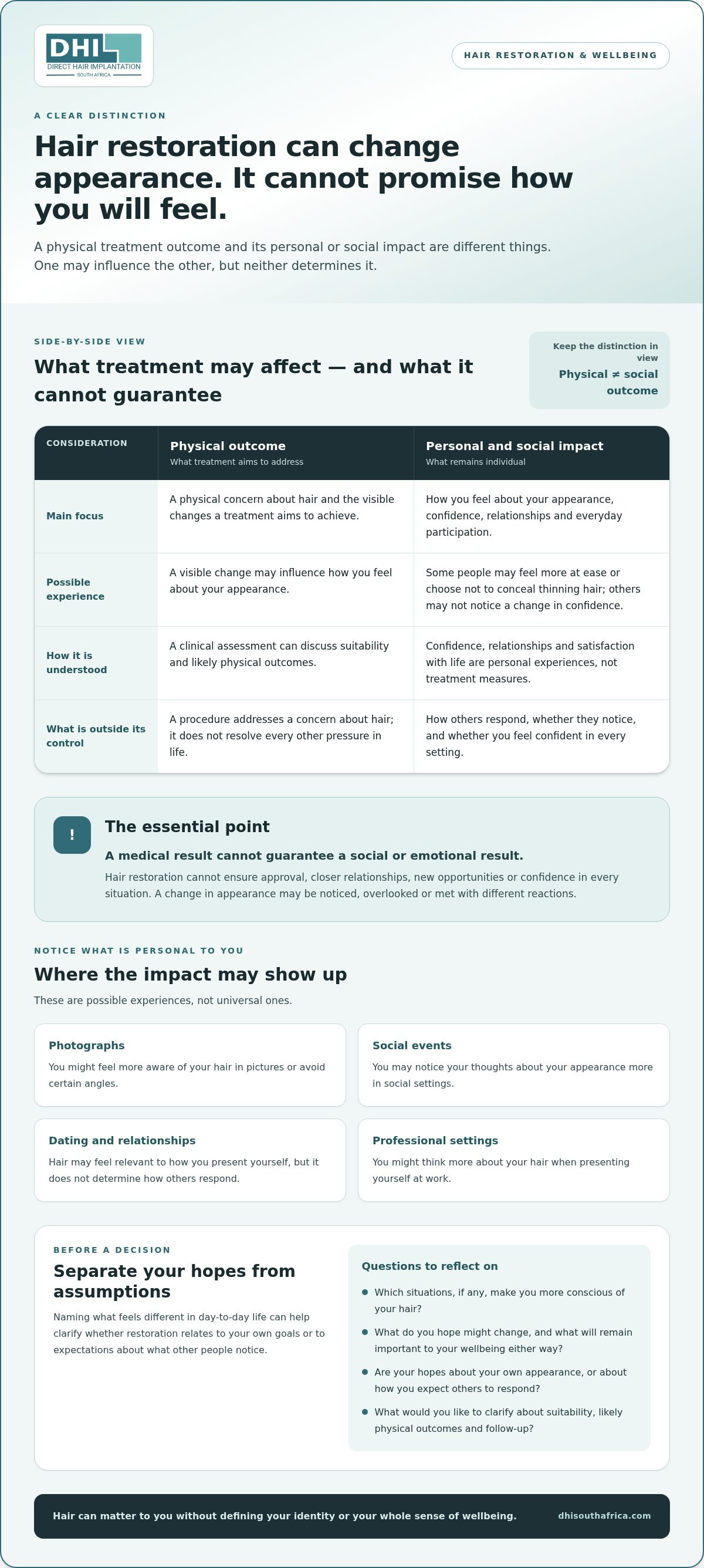
How to think through the social impact before choosing treatment
A thoughtful decision starts with your own experience, not pressure to match someone else’s expectations. The social impact of hair restoration may be part of your thinking. First identify what you would like to change and which hopes sit outside a treatment’s scope.
Clarify what you hope will change
Think about specific moments when hair loss affects your comfort. Is it seeing yourself in photographs, styling your hair for an event or feeling self-conscious in a particular setting? Naming the situation can make your concern clearer and help you explain it during a clinical consultation.
Then separate appearance-related aims from broader hopes. Wanting to feel more comfortable with your hair is different from expecting treatment to improve a relationship, secure a work opportunity or resolve questions of self-worth. You can discuss these hopes openly without needing to justify them. A medical professional can assess your individual suitability and explain relevant treatment considerations.
Use evidence and support to make an informed decision
Before-and-after photographs can help you understand examples of visible outcomes, but they cannot predict your result or show the full personal experience behind each image. Starting point, treatment plan and individual circumstances all matter. Similarly, hair restoration results offer examples to consider, not a guarantee of what you will experience. Patient experiences and reviews can provide another perspective, but one person’s account cannot stand in for yours.
Prepare questions for your consultation and write down the answers. For example, ask:
Which treatment options may suit my individual situation, and why?
What physical outcome is realistic for my goals?
What should I understand about recovery and follow-up?
How will progress be discussed and reviewed?
Clear answers can help you weigh medical information alongside your personal priorities. Take time to reflect after the discussion, especially if you feel rushed or are making the decision mainly to meet someone else’s expectations. An informed choice includes understanding what treatment may address and what it cannot promise.
A thoughtful path to hair restoration and lasting wellbeing
Hair restoration may be one part of your wellbeing, but it is not a substitute for the relationships, support and personal qualities that shape a life. Its social impact differs from one person to another. A considered decision starts with your own goals and a clear understanding of what treatment can and cannot address.
At DHI South Africa, the approach is consultation-led. A clinical discussion can help you understand your concerns, explore relevant options and consider whether a treatment may suit your individual situation. The aim is informed choice, not a promise that a procedure will change your confidence or social life.
What a personalised clinical discussion can cover
A specialist can discuss your hair-loss concerns, medical suitability, possible treatment options and realistic expectations for physical outcomes. No single technique is right for everyone. Your personal aims matter, as does an individual assessment of whether a particular approach is appropriate.
For people undertaking treatment, DHI South Africa uses structured photography and follow-up to document progress. These can help record and review physical changes over time. They do not measure confidence or predict how relationships and social experiences may change, which remain personal.
If you are learning about Direct Hair Implantation or considering hair-loss solutions, use reliable clinical information to understand the options. Ask about the treatment process, likely physical outcomes, recovery and follow-up. Bring your own questions too, especially if you are unsure whether your expectations are focused on your hair or on broader life changes.
Taking the next step at your own pace
Exploring options does not commit you to a procedure. Take time to reflect on what matters to you, talk through your concerns and decide whether pursuing treatment feels appropriate. If pressure from others is influencing your thinking, pause and bring the focus back to your preferences.
Hair may be meaningful, but it is only one part of identity and wellbeing. A careful clinical discussion can provide clarity about treatment suitability and physical outcomes, while leaving space for the rest of your life and the factors that support it.
Make a considered choice that reflects your goals
The social impact of hair restoration is personal. Treatment may address a concern about your hair, but it cannot guarantee greater confidence, stronger relationships or a change in how others respond. Your wellbeing is broader than appearance, and your reasons for exploring treatment deserve careful consideration.
Start by clarifying what you hope might change, then discuss your expectations and individual suitability with a qualified professional. DHI South Africa offers its patented, single-step Direct Hair Implantation technique as one medical option. Structured photographic documentation and follow-up can help record and review physical progress, but they are not measures of emotional wellbeing.
Learning about options does not commit you to a procedure. Take the time you need, ask questions and keep your own priorities at the centre of the decision.
A thoughtful next step is one that feels informed, unhurried and right for you.
Frequently Asked Questions
Can hair restoration improve confidence?
It may help some people feel more comfortable with their appearance, but confidence is personal and no procedure can guarantee a particular emotional response. Expectations, relationships and other parts of life also influence how you feel. Before exploring treatment, identify what you hope might change, such as feeling less self-conscious about your hairline. A specialist can discuss your goals, assess medical suitability and explain likely physical outcomes for your individual circumstances.
Does hair restoration change how other people treat you?
There is no reliable way to predict or control how other people will respond to a change in your appearance. Some people may notice a difference in how they present themselves or take part in social situations; others may experience little change beyond their hair. Do not assume treatment will improve relationships, work prospects or social acceptance. Focus instead on your own informed goals and discuss realistic expectations during a clinical consultation.
Is hair restoration only about appearance?
No. Deciding whether to explore restoration may involve appearance, identity, confidence and personal wellbeing, as well as medical suitability. Hair can have personal meaning, but treatment is a clinical intervention, not a complete answer to every emotional or social concern. Take time to consider why you are interested and what you hope to change. A specialist can discuss the medical aspects and help you understand whether an option may be suitable.
Can hair restoration make someone feel like themselves again?
Some people may feel more comfortable with their appearance after restoration, but there is no single emotional response. Identity is broader than hair, and a procedure cannot guarantee that you will feel a particular way. Consider what “feeling like yourself” means to you, perhaps being less preoccupied with a specific aspect of your appearance. You can discuss those hopes alongside realistic clinical outcomes during an individual consultation.
What should I consider before choosing hair restoration?
Start by identifying what concerns you, what changes you hope for and whether those goals are genuinely your own. Learn about treatment suitability, likely physical outcomes, limitations, recovery and follow-up. Before-and-after photographs and testimonials can offer context, but they cannot predict your personal experience. A clinical consultation can help you understand options relevant to your circumstances. Exploring them does not oblige you to proceed with treatment.
Can hair restoration help with social anxiety?
Hair restoration is not a guaranteed treatment for social anxiety. You may feel differently about your appearance after treatment, but anxiety can have many influences and may need support beyond a hair-restoration plan. If social anxiety is affecting your daily life, consider discussing it with an appropriate health professional. Separately, a hair-restoration consultation can address your appearance-related goals and medical suitability, without presenting treatment as a solution for anxiety.
How do I know whether my expectations are realistic?
Write down the changes you hope to see, then separate visible hair goals from hopes about confidence, relationships or other people’s reactions. Ask a specialist what treatment may address, what it cannot promise and how physical progress is monitored. A realistic discussion should take your circumstances into account. Testimonials can describe someone else’s experience, but they are not predictions of yours. This reflection can help clarify the social impact of hair restoration for you.


Comments